Christmas Dangle Earrings: 2026 Technical Guide to Metals & Fit
Master the mechanics of Christmas dangle earrings. Explore 2026 metal grades, weight distribution, gauge thickness, and secure backing systems.

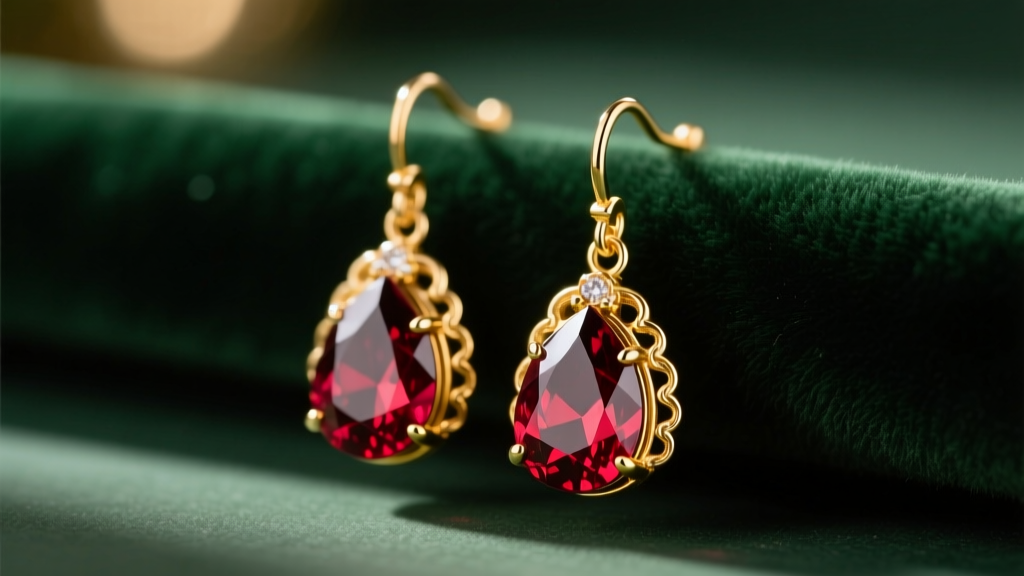
The Biomechanics of Dangle Earrings: Weight and Lobe Stress
When selecting Christmas dangle earrings for the 2026 holiday season, most consumers focus exclusively on aesthetic appeal—festive motifs, gemstone sparkle, and metallic shine. However, as jewelry professionals and materials engineers know, a dangle earring is fundamentally a kinetic pendulum. The physics of a suspended weight moving against the human earlobe introduces complex variables regarding tissue stress, metal fatigue, and structural failure.
The human earlobe is composed of fibrofatty tissue lacking cartilage, making it highly susceptible to mechanical creep—a time-dependent deformation under constant stress. A standard lobe piercing can comfortably support a static weight of 7 to 10 grams. However, Christmas dangle earrings are rarely static. As the wearer moves, talks, or dances at holiday gatherings, the earring acts as a pendulum. The dynamic kinetic force exerted on the piercing fistula can momentarily exceed the static weight by a factor of 1.5 to 2.0.
Therefore, an 8-gram dangle earring can generate downward shear forces equivalent to 12–16 grams during active movement. Over the course of a long holiday event, this repetitive micro-trauma accelerates tissue elongation, leading to permanent fistula stretching. To mitigate this, expert jewelers design dangles with a high center of gravity, keeping the densest components (such as gemstone settings) as close to the ear wire as possible, thereby reducing the pendulum's arc and minimizing kinetic torque on the lobe.
Metallurgy for the Holidays: 2026 Material Grades
The structural demands of dangle earrings dictate strict metallurgical requirements. While 18-karat gold (75% pure gold) is often marketed as a premium standard for fine jewelry, its high gold content makes it relatively soft, with a Vickers hardness (HV) of approximately 125. For the load-bearing ear wires and primary suspension links of heavy Christmas dangle earrings, 18k gold is prone to bending and deformation.
Instead, 14-karat gold (58.5% pure gold) is the superior technical choice for structural components. Alloyed with copper, silver, and zinc, 14k gold achieves a Vickers hardness of 135–160 HV, providing the necessary tensile strength to resist bending under dynamic loads. According to data published by the World Gold Council, the specific alloy mix in 14k gold also offers superior resistance to stress-corrosion cracking, a vital trait for jewelry exposed to winter climates, indoor heating, and varying humidity levels during the holiday season. For those requiring hypoallergenic options, Grade 23 Titanium (Ti-6Al-4V ELI) offers an exceptional strength-to-weight ratio, allowing for larger, more dramatic dangle silhouettes without exceeding the 10-gram lobe comfort threshold.
| Material Grade | Vickers Hardness (HV) | Tensile Strength | Best Application in Dangles |
|---|---|---|---|
| 18k Yellow Gold | ~125 HV | Low-Medium | Decorative drops, bezel settings |
| 14k Yellow Gold | 135–160 HV | High | Ear wires, jump rings, load-bearing links |
| 950 Platinum | ~130 HV (Work-hardens) | Very High | Heavy gemstone prongs, structural chains |
| Grade 23 Titanium | ~350 HV | Exceptional | Oversized structural frames, sensitive ears |
Structural Integrity: Wire Gauges and Jump Ring Failures
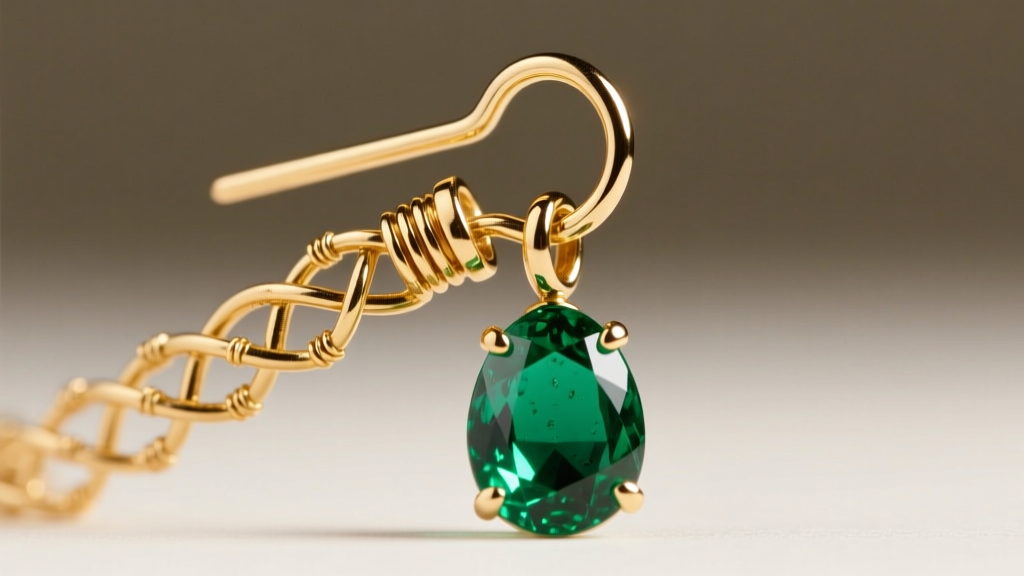
The most common point of catastrophic failure in dangle earrings is the jump ring—the small metal loop connecting the decorative drop to the ear wire. In mass-produced holiday jewelry, jump rings are often stamped and slit, leaving a microscopic gap. Under the kinetic stress of a swinging dangle, this gap can snag on clothing or hair, pulling the ring open and resulting in the loss of the earring.
For fine Christmas dangle earrings, all structural jump rings must be soldered closed or laser-welded. Furthermore, wire gauge thickness is critical. While standard stud earrings often utilize 22-gauge (0.64mm) wire, the primary ear wire of a dangle earring must be a minimum of 20-gauge (0.81mm). For dangles exceeding 12 grams, an 18-gauge (1.02mm) wire is mandatory to prevent permanent plastic deformation of the ear wire hook.
Gemstone Durability: Mohs Scale for Winter Festivities
Holiday jewelry heavily features red and green gemstones, but their physical properties vary drastically. When designing or selecting Christmas dangle earrings, one must consult the Mohs scale of mineral hardness and consider gemstone toughness (resistance to chipping and breaking).
Emeralds (Mohs 7.5–8) are a classic holiday choice, but they possess distinct cleavage planes and are heavily included, making them inherently brittle. A swinging emerald dangle that strikes a hard surface (like a glass table or stone countertop) is at high risk of catastrophic cleavage. Conversely, red garnets (Mohs 6.5–7.5) lack cleavage planes and exhibit superior toughness, making them far more resilient for the kinetic environment of a dangle earring. The Gemological Institute of America (GIA) emphasizes that gemstone durability is a combination of hardness, toughness, and stability; thus, garnets and rubies (Mohs 9) are technically superior to emeralds for suspended, high-impact jewelry designs.
Securing the Drop: Advanced Backing Systems
The ear wire backing is the final fail-safe against loss. Standard friction backs (butterfly clutches) are inadequate for heavy dangles, as the pendulum motion gradually works the clutch off the post or wire. For secure holiday wear, upgrade to advanced backing systems:
- La Pousette Locking Backs: These feature a mechanical spring-loaded locking mechanism that clicks securely into a grooved post, making accidental removal physically impossible without manual depression of the tabs.
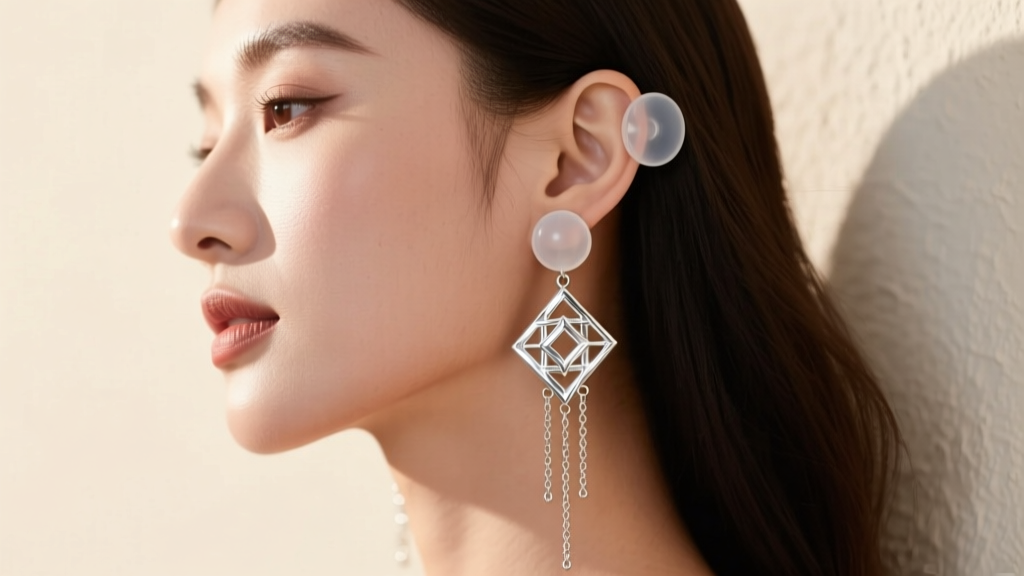
- Jumbo Silicone Friction Backs: Measuring 10mm to 12mm in diameter, these provide a massive surface area against the back of the earlobe. This not only increases friction to prevent the earring from sliding off but also distributes the dynamic weight of the dangle across a wider area of tissue, reducing localized pressure points.
- Screw Backs: Utilizing a threaded post and a threaded nut, screw backs offer the highest level of security for French wire conversions, though they require precise manufacturing to prevent thread stripping.
Maintenance and Winter Climate Tarnish Prevention
Winter climates introduce unique environmental stressors to fine jewelry. The rapid transition from freezing outdoor air to heavily heated, dry indoor environments causes microscopic expansion and contraction in metal alloys. For sterling silver (925) Christmas dangle earrings, this thermal cycling can accelerate tarnishing, especially when combined with the sulfur compounds present in certain holiday foods and indoor wood-burning fireplaces.
To preserve the structural and aesthetic integrity of your holiday dangles, implement a strict maintenance protocol. After each wear, wipe the ear wires and suspension links with a microfiber cloth to remove sebum and environmental sulfur. Store the earrings in an airtight, anti-tarnish bag equipped with activated charcoal or silica gel desiccants to control humidity. Avoid ultrasonic cleaners for dangles featuring emeralds, opals, or tension settings, as the high-frequency vibrations can fracture included stones or loosen structural adhesives.
Expert Insight: When evaluating the quality of a dangle earring, always inspect the connection points with a 10x jeweler's loupe. If the jump rings are not perfectly flush and soldered, or if the ear wire gauge appears visibly thinner than 0.81mm (20-gauge), the piece is engineered for static display, not dynamic human wear.
Conclusion: Engineering the Perfect Holiday Drop
Ultimately, the perfect pair of Christmas dangle earrings marries festive aesthetics with rigorous materials science. By prioritizing 14k gold or titanium for structural components, insisting on soldered 18-gauge jump rings, selecting tough gemstones like garnet, and utilizing mechanical locking backings, you ensure your holiday jewelry survives the season's kinetic demands. In 2026, true luxury is defined not just by the sparkle of the drop, but by the invisible engineering that keeps it securely and comfortably in place.


