Diamond Pearl Drop Earrings: Anatomy, Grading & Engineering
Explore the technical anatomy of diamond pearl drop earrings. Learn about pearl grading, diamond melee quality, and structural engineering.

The Structural Anatomy of a High-End Drop Earring
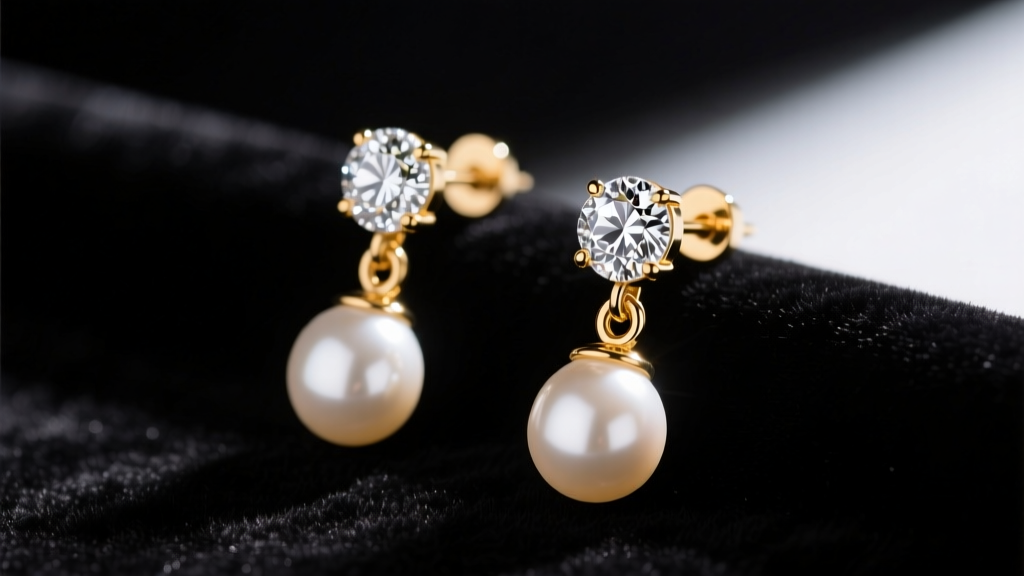
When evaluating fine jewelry, specifically diamond pearl drop earrings, the untrained eye focuses solely on the surface brilliance of the gemstones. However, from a master jeweler’s perspective, a drop earring is a kinetic sculpture subject to constant gravitational pull, friction, and lateral stress. The structural integrity of the articulation points, the precision of the peg setting, and the metallurgical composition of the post dictate whether a piece will become a lifelong heirloom or a frustrating repair liability.
Articulation Points and Kinetic Wear
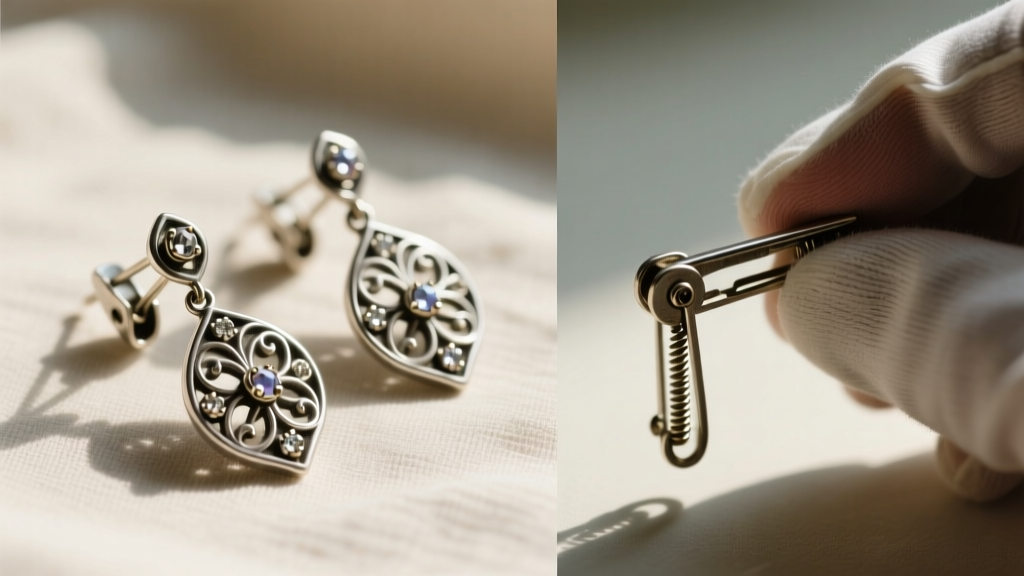
The defining feature of a drop earring is its movement. This requires an articulation point—typically a jump ring or a custom-milled hinge—connecting the diamond-set cap or post to the dangling pearl element. In superior manufacturing, this jump ring is forged from 18k gold or platinum and laser-welded shut. A soldered jump ring can weaken over time due to the thermal dynamics of the soldering process and the mechanical friction of the moving parts. The wire gauge of the jump ring should never be thinner than 22-gauge (0.64mm) to prevent ovalization, a common failure mode where the circular ring stretches into an oval, eventually snapping under the pendulum weight of a heavy South Sea pearl.
Pearl Grading: Beyond the 'AAA' Marketing Myth
The pearl is the focal point of the earring, yet the jewelry industry lacks a single, universally standardized grading system like the GIA 4Cs for diamonds. Many retailers use arbitrary 'A' to 'AAA' scales. As an informed buyer or appraiser, you must evaluate pearls based on the Gemological Institute of America’s (GIA) 7 Pearl Value Factors, with a hyper-focus on nacre thickness and luster quality.
Nacre Thickness and Overtone Analysis
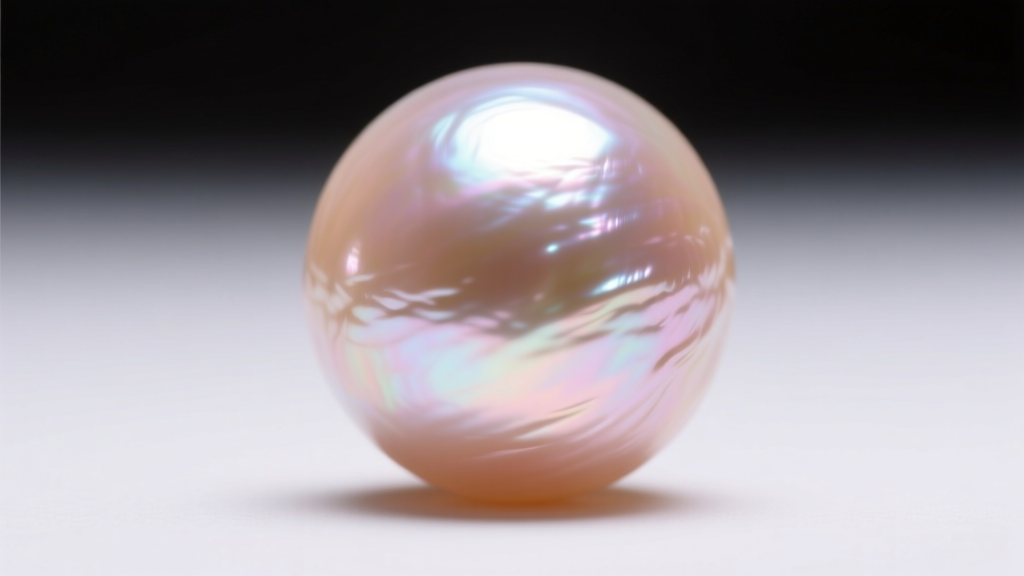
Nacre is the crystalline substance secreted by the mollusk. In bead-nucleated pearls like the Japanese Akoya, which are frequently used in diamond pearl drop earrings due to their perfect spherical symmetry, the nacre layer can be dangerously thin. An Akoya pearl with a nacre thickness of less than 0.4mm is prone to 'peeling' or delamination, where the outer layer chips off to reveal the dull shell bead beneath. High-end manufacturers mandate a minimum nacre thickness of 0.6mm for Akoya pearls, and upwards of 1.5mm for White South Sea pearls. Furthermore, top-tier pearls exhibit an 'overtone'—a translucent secondary color, such as a rose or silver-green hue, that floats on the surface of the pearl's body color, creating a multi-dimensional optical effect that flat, chalky pearls entirely lack.
The Mechanics of the Peg Setting
Unlike faceted gems held by prongs, pearls in drop earrings are typically half-drilled and mounted on a metal peg. The drill hole is usually 0.8mm to 1.0mm in diameter. The jeweler must ensure the peg is perfectly centered and that the depth of the drill hole provides exactly 0.2mm of clearance at the base to prevent hydraulic pressure from cracking the pearl when the peg is inserted. The bonding agent is critical: high-end ateliers use specialized two-part jeweler's epoxies that cure slowly, allowing for precise alignment, rather than fast-acting cyanoacrylates which can become brittle and degrade when exposed to cosmetics and UV light.
Diamond Melee: Evaluating the Accent Stones
The diamond elements in these earrings usually take the form of a pavé-set cap resting atop the pearl, or a delicate chain of bezel-set diamonds leading down to the drop. These small diamonds, known as 'melee' (typically weighing between 0.01 and 0.10 carats each), are where manufacturers often cut corners to preserve margins.
- Full-Cut vs. Single-Cut: A full-cut round brilliant diamond has 57 or 58 facets. A single-cut diamond has only 17 or 18 facets. For diamond pearl drop earrings, full-cut melee is mandatory. Single-cut stones lack the complex light return required to contrast beautifully with the soft, diffused luster of the pearl, often looking like flat chips of glass.
- Clarity and Color Matching: While flawless clarity is unnecessary for stones under 0.05 carats, the color grade must be strictly controlled. Melee graded in the G-H color range ensures the diamonds appear bright white against the pearl. If manufacturers mix in J-K tinted melee to save costs, the diamond cap will cast a sickly yellow shadow over the top hemisphere of the white pearl.
According to the GIA's diamond quality frameworks, the cut quality of melee directly impacts the overall brilliance of the piece. Poorly proportioned melee will suffer from 'extinction' (dark, lifeless areas), which disrupts the visual harmony of the earring.
Post, Clutch, and Gauge Engineering
The most overlooked aspect of drop earring design is the point of contact with the earlobe. Drop earrings suffer from a displaced center of gravity. The combined weight of the diamond cap, the gold articulation, and the pearl creates a forward-leveraging torque.
Failure Modes and Preventative Maintenance
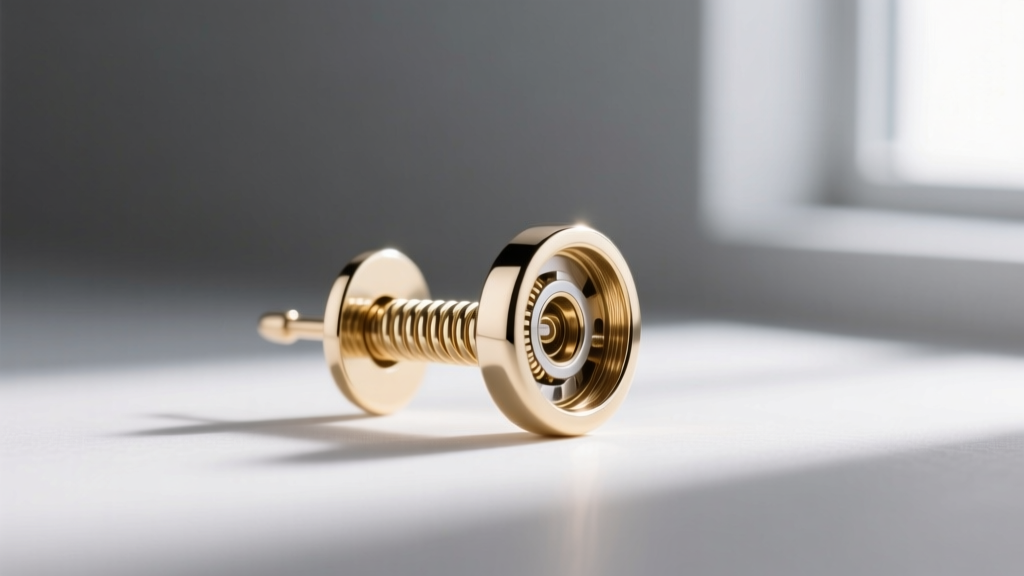
A standard 20-gauge (0.81mm) friction post paired with a standard butterfly clutch is entirely insufficient for diamond pearl drop earrings weighing more than 3.5 grams per earring. The post will bend, causing the earring to droop forward, hiding the diamond cap and forcing the pearl to rest awkwardly against the neck. To counteract this, expert jewelers utilize 18-gauge (1.02mm) or even 16-gauge (1.29mm) posts forged from platinum or hardened 18k white gold. Furthermore, the clutch must be upgraded. A La Pousette (locking) clutch, which features an internal spring-loaded mechanism that clicks securely into a grooved post, is the industry standard for securing heavy drops. Alternatively, an Omega-back clip with a hinged friction post provides a secondary anchor point on the rear of the earlobe, entirely neutralizing the forward droop.
Expert Maintenance Tip: Never clean diamond pearl drop earrings in an ultrasonic cleaner. The high-frequency vibrations will shatter the pearl's crystalline nacre structure and dissolve the epoxy bond securing the peg setting. Always use a soft, damp microfiber cloth and a specialized, non-ammonia pearl cleaner.
Market Pricing and Value Retention Matrix
Understanding the technical specifications allows buyers to accurately assess market pricing. The following matrix outlines the expected retail pricing ranges for high-quality diamond pearl drop earrings based on material grades and structural engineering, reflecting current 2026 fine jewelry market data.
| Pearl Type & Size | Diamond Melee Quality | Post/Clutch Engineering | Expected Retail Range (USD) |
|---|---|---|---|
| Akoya (7.5-8mm), 0.6mm+ Nacre | G-H Color, VS Clarity, Full-Cut | 18k Gold, 18G Post, La Pousette | $1,200 - $2,400 |
| Akoya (8.5-9mm), Hanadama Grade | D-F Color, VVS Clarity, Full-Cut | Platinum, 18G Post, La Pousette | $2,800 - $4,500 |
| White South Sea (11-13mm), 2mm+ Nacre | G-H Color, VS Clarity, Full-Cut | 18k Gold, Omega Clip + 16G Post | $5,500 - $9,500 |
| White South Sea (14-16mm), Gem Grade | D-F Color, VVS Clarity, Full-Cut | Platinum, Omega Clip + 16G Post | $12,000 - $22,000+ |
Ultimately, the true value of diamond pearl drop earrings lies not just in the raw carat weight or millimeter size, but in the meticulous engineering that allows the piece to hang perfectly, move gracefully, and endure decades of wear without structural compromise.