Pearl Wire Earrings: A Technical Guide to Gauges, Metals & Nacre
Master the mechanics of pearl wire earrings. Explore wire gauges, metal tempers, nacre thickness, and structural troubleshooting for lasting elegance.

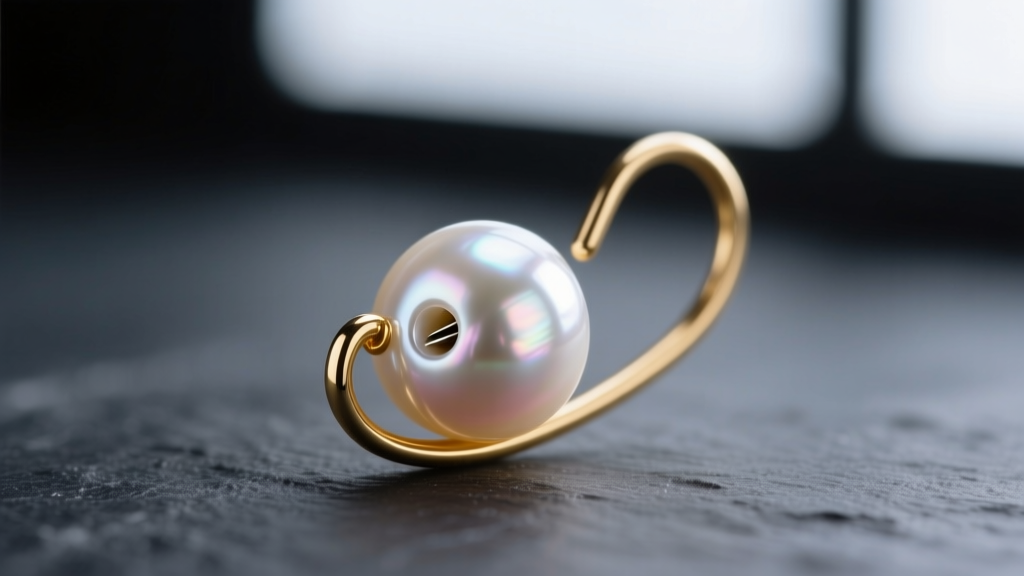
The Metallurgy of Ear Wires: Gauges, Tempers, and Tolerances
When evaluating pearl wire earrings, the structural integrity of the design begins with the wire itself. In 2026, advanced metallurgical standards dictate that jewelers must carefully match wire gauge and temper to both the wearer's anatomy and the pearl's physical properties. The most common gauges for ear wires are 20-gauge (0.81mm) and 22-gauge (0.64mm). According to technical guidelines from Rio Grande, wire temper—ranging from dead soft to spring hard—determines how the metal behaves under stress.
Work Hardening and the French Hook
For French wire hooks, half-hard temper is the absolute minimum requirement. Dead soft wire will easily bend when the earring is inserted into the earlobe, leading to a distorted hook that fails to secure the pearl. Half-hard wire has been partially work-hardened during the drawing process, providing the necessary tensile strength to maintain its curved silhouette while retaining enough malleability for the jeweler to adjust the loop. Using 22-gauge wire for heavy pearls (over 4 grams) introduces the 'cheese-cutter effect,' where the thin wire exerts excessive pressure on the earlobe tissue, eventually causing migration or tearing.
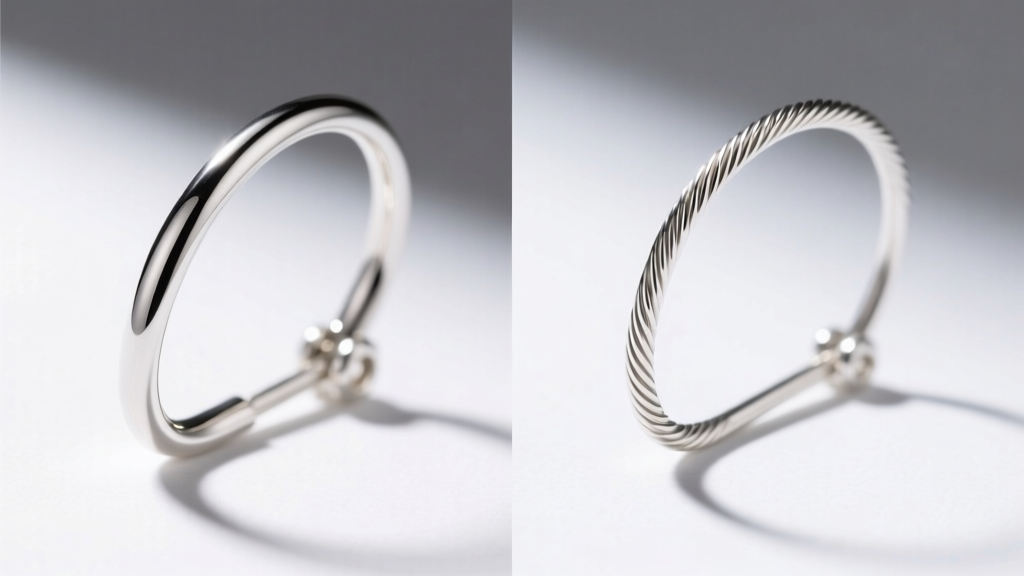
Pearl Selection: Drill Hole Tolerances and Nacre Integrity
The intersection of metal and organic gemstone is the most critical failure point in pearl wire earrings. Pearls are composed of microscopic aragonite platelets bound by conchiolin. This organic matrix is highly susceptible to micro-fracturing if a wire is forced through an undersized drill hole.
- Standard Commercial Freshwater Pearls: Typically drilled at 0.8mm. These require 22-gauge (0.64mm) wire to allow for a micro-layer of adhesive and to prevent nacre spalling.
- Akoya and Tahitian Pearls: High-grade pearls are often drilled at 1.0mm to 1.2mm to accommodate thicker 20-gauge (0.81mm) wires or specialized headpins with pearl cups.
As noted by the Gemological Institute of America (GIA), nacre thickness directly impacts durability. Tahitian pearls with a minimum nacre thickness of 0.8mm can withstand the torque of wire insertion far better than thin-nacre Akoya pearls (0.3mm), which risk 'blowout' at the exit hole if the wire is bent aggressively.
Structural Mechanics: Preventing the 'Spinning Pearl' Failure
A ubiquitous issue with basic pearl drop earrings is the spinning pearl. Because both the wire and the drill hole are perfectly cylindrical and smooth, the pearl rotates freely, causing the design to face sideways. Expert jewelers employ three technical solutions to arrest this rotation:
- The Pearl Cup and Pin: A metal cup with a center pin is soldered to the wire. The pearl sits flush against the cup, and friction prevents spinning.
- Wire Wrapping: Using a headpin, the jeweler creates a wrapped loop above the pearl, seating it on a small coil of wire that acts as a mechanical brake.
- Chemical Bonding: Applying a flexible jeweler's cement to the wire before sliding the pearl into place.
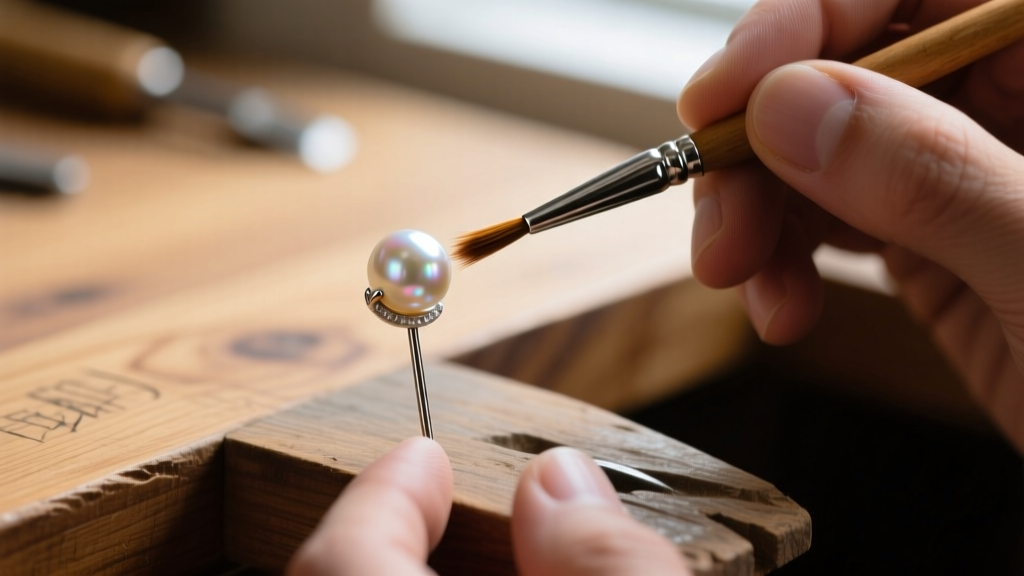
Adhesive Selection: Why Cyanoacrylate Fails
Never use standard cyanoacrylate (super glue) on pearl wire earrings. Cyanoacrylate cures into a brittle, glass-like plastic that expands and contracts at a different rate than the organic pearl. Temperature fluctuations will cause the glue to shatter internally, leaving a cloudy white residue that permanently ruins the nacre around the drill hole. Instead, professionals use G-S Hypo Cement or flexible two-part epoxies, which remain slightly pliable and absorb micro-shocks without transferring stress to the pearl.
The Anatomy of the Loop: Preventing Gap Failures
The connection point between the French hook and the pearl's mounting loop is a frequent site of structural failure. When forming the loop on a headpin, jewelers must use flush cutters rather than standard pinch cutters. Pinch cutters leave a sharp, angled burr on the wire end that prevents the loop from closing completely. This microscopic gap allows the ear wire to slip out during wear, resulting in a lost earring. A properly formed loop should meet perfectly flush, with no visible light passing through the seam.
Environmental Stressors: Humidity and pH Impact
The chemical environment of the human ear—characterized by moisture, sebum, and varying pH levels—demands careful metal selection. Sterling silver (925) ear wires are prone to sulfide tarnishing, which can transfer black oxidation to the porous nacre of a pearl over time. To mitigate this, modern pearl wire earrings frequently utilize niobium or 14k/18k gold. Niobium is highly biocompatible, resistant to tarnish, and can be anodized to create vibrant colors that complement the pearl's overtone without the risk of chemical degradation. Furthermore, acidic sweat can slowly degrade the conchiolin at the drill hole site if the pearl is not wiped clean with a damp microfiber cloth after wear.
Technical Specification Matrix
Use the following matrix to select the correct wire parameters based on your pearl inventory.
| Wire Gauge | Diameter (mm) | Temper | Ideal Pearl Type | Required Drill Hole |
|---|---|---|---|---|
| 20-Gauge | 0.81mm | Half-Hard | Tahitian, South Sea, Large Akoya | 1.0mm - 1.2mm |
| 22-Gauge | 0.64mm | Half-Hard | Freshwater, Standard Akoya | 0.8mm - 1.0mm |
| 24-Gauge | 0.51mm | Dead Soft | Seed Pearls, Keshi (for wrapping) | 0.6mm - 0.8mm |
Expert Maintenance Warning: Never place pearl wire earrings in an ultrasonic cleaner. The high-frequency cavitation will not only strip the pearl's delicate orient but can also shatter the adhesive bond inside the drill hole, causing the pearl to detach and be lost in the cleaning tank.
By respecting the precise tolerances of wire gauges, understanding the organic vulnerabilities of nacre, and utilizing proper mechanical and chemical bonding techniques, you can create or select pearl wire earrings that are not only visually stunning but structurally engineered to last generations.


