Sui Dhaga Earrings: A Technical Guide to Wire & Thread Craft
Explore the technical anatomy of sui dhaga earrings. Learn about wire gauges, silk thread tension, lobe health, and material grades in this expert guide.

The Anatomy of Sui Dhaga: Beyond the Thread
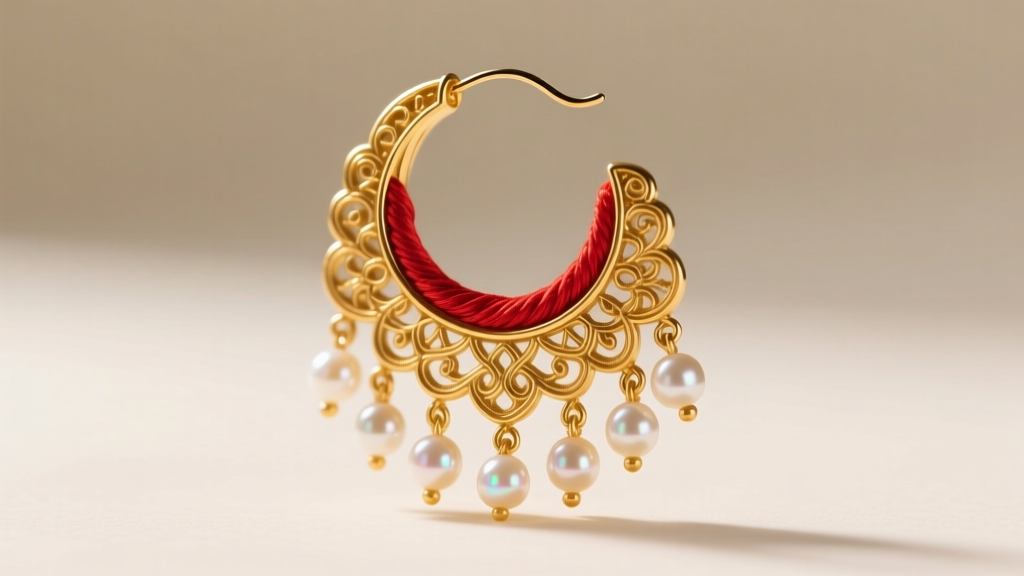
The term sui dhaga translates literally from Hindi to "needle and thread." Historically, these earrings consisted of a stiff gold needle (sui) attached to a flexible silk or zari thread (dhaga) that was pulled through the earlobe, secured by the tension of the decorative motifs at either end. In 2026, while the aesthetic remains deeply rooted in South Asian heritage, the engineering has evolved. Modern sui dhaga earrings frequently utilize micro-chains, 22-gauge alloy wires, and reinforced synthetic fibers to mitigate the structural vulnerabilities of traditional silk.
Understanding the mechanics of the sui dhaga requires analyzing its three primary components: the anchoring motif (which rests against the front of the lobe), the flexible conduit (thread, wire, or chain), and the terminal drop (which provides the counterweight). Unlike post-and-butterfly earrings, the sui dhaga relies on a dynamic equilibrium of weight distribution and friction to remain seated in the piercing fistula.
Traditional Silk vs. Modern Alloys
Authentic heritage pieces often employ pure silk cord or zari (a metallic yarn traditionally made of silver or gold-coated copper). While visually stunning, organic silk is highly susceptible to hydrolysis and degrades rapidly when exposed to the natural oils and slightly acidic pH of human skin. Modern master jewelers have largely transitioned to PVD-coated 316L stainless steel micro-cables or 18k gold-filled wire ropes for the conduit, reserving silk strictly for the decorative tassel elements.
Wire Gauge & Piercing Biomechanics
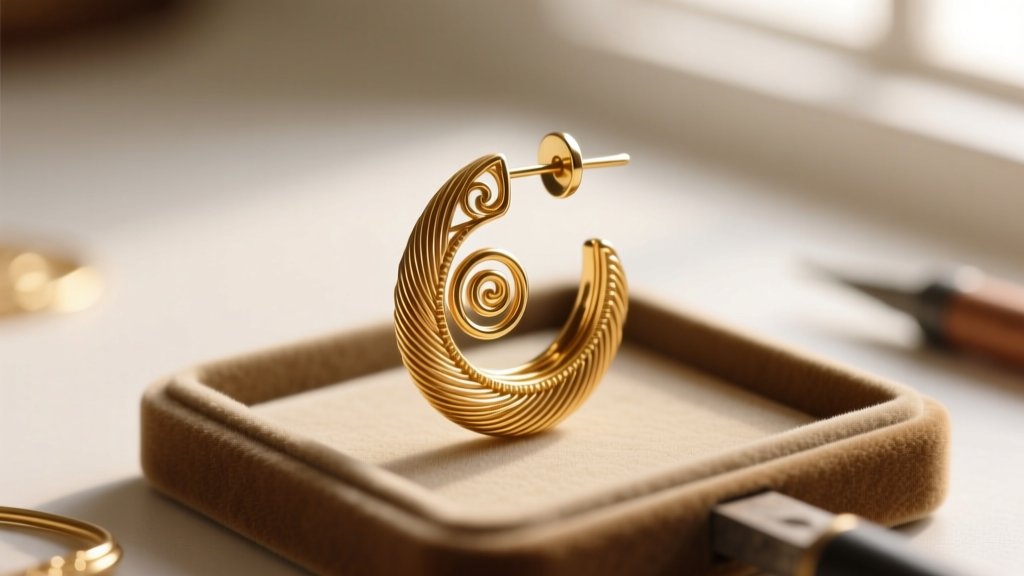
The most critical technical specification in any sui dhaga design is the gauge of the conduit passing through the earlobe. Standard lobe piercings are typically performed at 18G (1.02mm) or 20G (0.81mm). However, to achieve the signature fluid "drape" of a thread, jewelers often use much thinner wires—frequently 22G (0.64mm) or even 24G (0.51mm). This discrepancy introduces significant biomechanical risks.
The "Cheese Cutter" Effect and Lobe Health
When a thin wire supports a heavy terminal drop, the downward vector force concentrates entirely on the inferior margin of the piercing fistula. According to guidelines published by the Association of Professional Piercers (APP), sustained pressure from thin-gauge jewelry can cause tissue necrosis and lobe migration—a phenomenon commonly referred to as the "cheese cutter effect." To prevent permanent lobe splitting, the gauge of the wire must be strictly correlated to the mass of the terminal drop.
| Terminal Drop Weight | Minimum Safe Gauge | Wire Diameter (mm) | Material Recommendation |
|---|---|---|---|
| < 5 grams | 24G | 0.51mm | 18k Gold, Niobium |
| 5 - 12 grams | 22G | 0.64mm | 22k Gold, 316L Steel |
| 12 - 25 grams | 20G | 0.81mm | 14k Gold, Titanium |
| > 25 grams | 18G or thicker | 1.02mm+ | Reinforced Chain, Silk |
Material Metallurgy & Allergy Profiles
The metallurgy of the "sui" (needle) and the anchoring motif dictates both the longevity of the piece and its biocompatibility. The Gemological Institute of America (GIA) notes that 22-karat gold (91.6% pure gold) remains the industry standard for high-end Indian jewelry due to its rich color and cultural significance. However, 22k gold has a low yield strength, making it highly malleable.
Gold Purity and Tarnish Resistance
When a 22k gold wire is used as the conduit, it is prone to work-hardening and subsequent brittle fracture if repeatedly bent. To counter this, contemporary designers use an 18k gold alloy (75% gold, mixed with copper and silver) for the structural wire, which offers superior tensile strength while maintaining hypoallergenic properties. For the budget market, brass or copper alloys plated with a micron-layer of gold are common, but these pose a high risk of contact dermatitis once the plating wears through at the friction point of the earlobe.
Structural Failure Modes & Troubleshooting
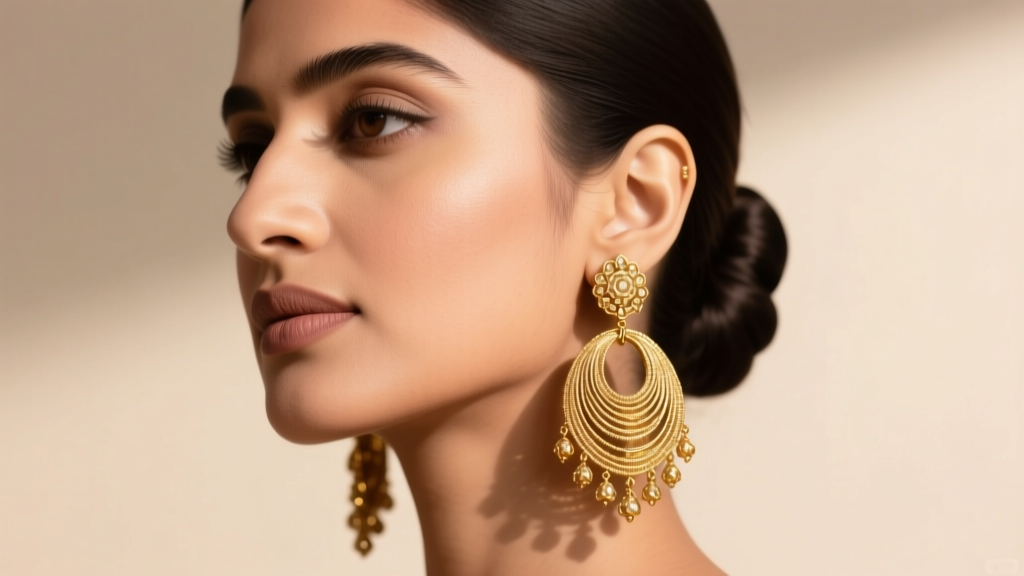
As a jewelry appraiser and stylist, I frequently encounter specific failure modes unique to the sui dhaga silhouette. Understanding these allows for better purchasing decisions and proactive maintenance.
- Fraying at the Crimp Bead: When silk or zari thread is secured to a metal motif using a crimp bead, the sharp internal edge of the metal can shear the organic fibers over time. Solution: Insist on pieces where the thread is looped through a smooth, soldered jump ring before crimping, or choose micro-chain conduits.
- Wire Kinking: Thin 24G gold wires easily kink if stored improperly, creating a weak point that will eventually snap. Solution: Always store sui dhaga earrings suspended vertically or laid perfectly flat; never coil the wire tightly.
- Galvanic Corrosion of Zari: Traditional zari contains a copper or silver core. When exposed to sweat (an electrolyte), it can rapidly oxidize and turn the skin green or black. Solution: For daily wear, opt for synthetic zari alternatives or PVD-coated stainless steel threads.
- The "Slip-Through" Risk: Because there is no butterfly backing, a sudden upward jerk can pull the entire earring out of the ear. Solution: Modern iterations often include micro-silicone stoppers on the rear motif, or utilize a subtle hook-and-loop tension mechanism at the top motif to anchor it securely.
Sourcing & Pricing Tiers (2026 Market Data)
The market for sui dhaga earrings has stratified significantly. Whether you are sourcing for a bridal trousseau or everyday office wear, understanding the pricing architecture ensures you pay for metallurgy and craftsmanship, not just brand markup.
- Entry-Level ($15 - $45): Brass/copper base metals with flash gold plating. Conduits are typically synthetic nylon threads. Suitable for occasional costume wear; high risk of skin irritation.
- Mid-Tier ($80 - $250): 18k gold vermeil over sterling silver, or solid 14k gold micro-chains. Features freshwater pearls or cubic zirconia motifs. Excellent for regular wear with proper care.
- Fine Jewelry ($600 - $2,500+): Solid 18k or 22k gold, natural Polki (uncut) diamonds, and genuine silk or pure silver zari. Handcrafted by specialized artisans. Represents the true heritage standard.
- Heritage/Bespoke ($3,000 - $10,000+): Museum-grade Kundan or Meenakari enamel work, utilizing 24k gold foil and museum-grade silk. These are investment pieces and heirloom assets.
Expert Takeaway: The sui dhaga is a masterclass in kinetic jewelry design. When evaluating a piece, always prioritize the structural integrity of the conduit and the weight-to-gauge ratio over the sheer carat weight of the gemstones. A perfectly balanced 5-gram earring on a 22G wire will sit elegantly on the lobe for decades, while a poorly engineered 30-gram piece will cause irreversible tissue migration in a matter of months.


