Tennis Racket Earrings: The Ultimate Budget & Value Guide
Discover the true value of tennis racket earrings. We break down materials, pricing tiers, gauge sizes, and failure modes to help you buy smart.

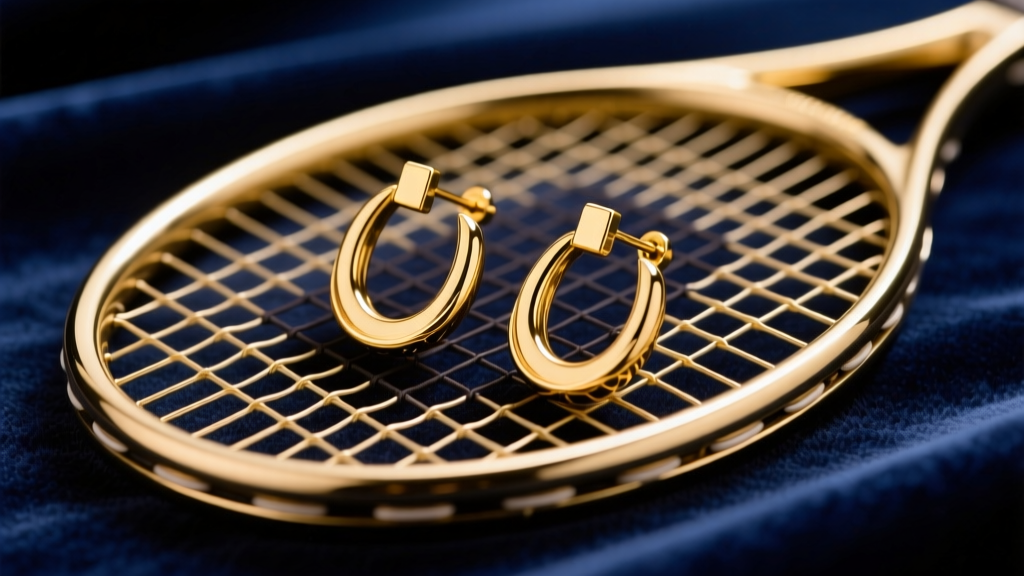
The Rise of Athleisure Jewelry: Beyond the Novelty
Tennis racket earrings have evolved from quirky novelty gifts into a staple of the 'country club core' and athleisure jewelry movements. Whether you are a competitive player, a weekend warrior, or simply a fan of sporty, preppy aesthetics, these miniature accessories offer a unique way to showcase your passion. However, because they feature intricate, fragmented designs—specifically the 'strings' of the racket head and the narrow handle—they are highly susceptible to structural failure if manufactured poorly. Assessing the budget and true value of tennis racket earrings requires looking past the initial price tag and examining the metallurgy, gauge thickness, and soldering techniques used by the jeweler.
In this comprehensive value assessment, we break down exactly what you get at every price point, the specific failure modes to watch out for, and how to choose a pair that will survive both daily wear and active lifestyles.
Material Breakdown: What You Actually Get at Every Price Point
When shopping for tennis racket earrings, the market is generally divided into three distinct tiers. The value proposition changes drastically as you move from fashion jewelry to demi-fine and fine jewelry categories. Below is a detailed comparison of what your budget actually secures in terms of material integrity and craftsmanship.
| Tier | Price Range | Base Material | String Construction | Best Use Case |
|---|---|---|---|---|
| Fashion / Novelty | $12 - $35 | Zinc Alloy / Brass | Cast solid metal (no actual gaps) | Occasional wear, gifts, costumes |
| Demi-Fine | $60 - $180 | Solid 10k or 14k Gold | Hand-soldered 0.4mm wire | Everyday wear, active lifestyles |
| Fine / Luxury | $400 - $1,500+ | 18k Gold / Platinum | Integrated wire with pave diamonds | Heirloom pieces, luxury gifting |
According to the Jewelers of America, understanding metal hallmarks and plating thickness is crucial for longevity. In the budget tier, 'gold-plated' usually means a microscopic flash plating over brass that will oxidize and turn your earlobes green within weeks of exposure to sweat. For genuine value, the demi-fine tier (solid 10k or 14k gold) offers the best balance of durability, hypoallergenic properties, and cost.
Critical Failure Modes: Why Cheap Rackets Break
The unique geometry of a tennis racket earring creates inherent structural vulnerabilities. If you are investing over $50, you need to know how these pieces fail so you can inspect them before purchasing.
1. The 'String' Snap (Cast vs. Soldered Wire)
In cheap alloy earrings, the racket strings are not actual strings; they are cast as a solid, flat piece of metal with stamped lines to mimic a grid. In mid-tier and luxury earrings, the strings are individual, ultra-fine wires. If these wires are made from lower-karat gold or are too thin (under 0.3mm), they will snap when the earring is bumped or when cleaning them with a jewelry cloth. High-value tennis racket earrings use 0.4mm to 0.5mm 14k gold wire, hand-soldered to the outer frame, providing enough tensile strength to flex slightly without breaking.
2. Post Shearing at the Solder Joint
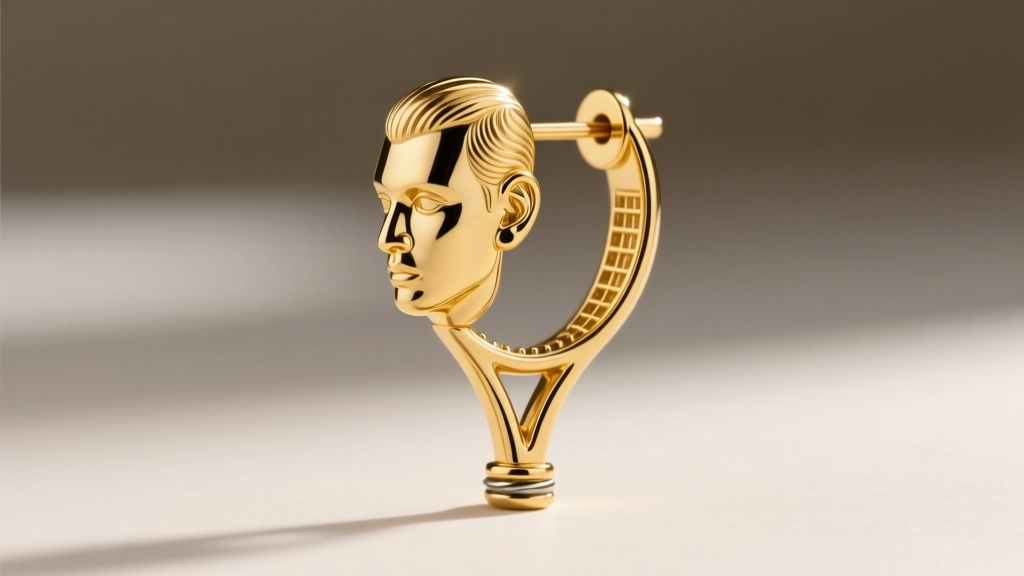
A solid 14k gold tennis racket earring can weigh between 1.5 and 3.5 grams. If the earring post is soldered directly to the very top of the racket handle using a weak laser weld or low-temperature solder, the sheer weight of the racket head will cause the post to bend or snap off entirely. Premium jewelers use a 'drop-solder' technique or integrate a hidden jump ring, allowing the racket head to hang freely from the post. This articulation absorbs kinetic energy and prevents the post from snapping.
3. Stone Loss in Pave Handles
For luxury rackets featuring diamond-encrusted handles, the micro-prongs used to hold 1mm to 1.5mm melee diamonds are incredibly small. The GIA Gem Encyclopedia notes that melee diamonds require precise setting to prevent loss. If the handle is too narrow (under 2.5mm wide), the jeweler cannot properly burnish the metal over the diamond girdles, leading to stones falling out during vigorous activity.
Gauge Sizing and Comfort for Active Lifestyles
The gauge (thickness) of the earring post is a critical, yet frequently overlooked, factor in the value assessment of sports-themed jewelry. The standard post size for most stud earrings is 20-gauge (0.81mm). However, for a top-heavy design like a tennis racket, a 20G post is often insufficient.
- 20-Gauge (0.81mm): Acceptable only for very small, lightweight racket studs (under 10mm in length and under 1 gram in weight). If you wear these to play tennis or sleep in them, the post will likely bend.
- 18-Gauge (1.02mm): The ideal standard for solid gold tennis racket earrings. The extra 0.2mm of thickness provides significantly more rigidity, keeping the post straight even if the heavy racket head gets snagged on a towel or hair.
- 16-Gauge (1.29mm): Rarely used for standard lobe studs, but sometimes found in cartilage or flat-back variations of sporty jewelry. Ensure your piercing is stretched to accommodate this thickness before purchasing.
Furthermore, consider the dimensions of the racket head itself. A 'subtle' everyday racket typically measures 12mm x 8mm, while a 'statement' piece can measure 25mm x 15mm. The larger the surface area, the more likely it is to catch on clothing, making the 18G post and secure backing even more vital.
Clutch and Backing Mechanics: Securing the Investment
The value of your tennis racket earrings is zero if they fall off and get lost on the court or the gym floor. The backing mechanism is just as important as the metal quality.
Standard Butterfly Friction Backs: These are included with 90% of earrings. They rely on the tension of the metal loops gripping the post's notch. Over time, and with exposure to sweat and friction, the metal fatigues, the loops spread apart, and the earring falls off. If you buy demi-fine or luxury rackets with butterfly backs, you must regularly squeeze the loops back together with pliers to maintain tension.
La Pousette (Spring-Loaded) Backs: Found on higher-end luxury pieces, these feature a tiny internal spring mechanism that locks securely onto the post. They are vastly superior for active wearers and justify a higher price point.
Screw Backs: The post is threaded, and the backing screws onto it. This is the ultimate security measure for heavy, solid gold tennis racket earrings, ensuring they will not come off unless intentionally unscrewed.

The Final Value Verdict: Where to Spend and Where to Save
If you are buying tennis racket earrings purely as a fun, temporary accessory for a tournament weekend or a themed party, the $15 to $30 fashion tier is perfectly acceptable. Just be mindful of skin sensitivities and avoid wearing them while sweating.
However, if you want a piece that integrates into your daily wardrobe and holds intrinsic value, the $80 to $150 demi-fine sweet spot is where you should allocate your budget. At this price, you are paying for solid 14k gold, which will not tarnish or cause contact dermatitis, and hand-soldered wire strings that offer authentic detailing and structural flex. Always inspect the solder joint where the post meets the handle, verify the post is at least 18-gauge if the piece is heavy, and upgrade to screw-backs or La Pousette clutches if you plan to wear them while playing sports. By prioritizing structural engineering over mere surface aesthetics, you ensure your tennis racket earrings remain a winning investment for years to come.


