How to Tell if Real Gold Earrings: The Beginner Guide
Learn how to tell if real gold earrings are authentic with our beginner-friendly guide. Discover hallmark checks, magnet tests, and expert verification.

The Anatomy of Gold Earrings: Karats and Alloys
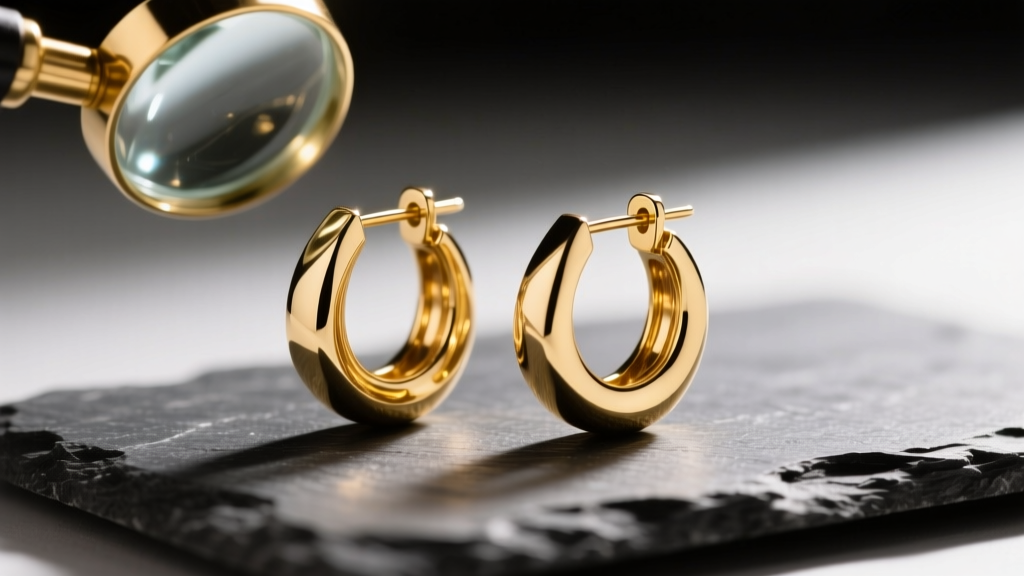
Before diving into testing methods, it is crucial to understand what you are actually looking for. Pure gold (24-karat) is 99.9% gold, but it is far too soft for jewelry. If you were to wear 24k gold earrings, the posts would bend under the slightest pressure, and the clasps would fail, leading to lost jewelry. Therefore, gold earrings are always alloyed with other metals like copper, silver, zinc, or nickel to increase durability and alter the color.
According to the Gemological Institute of America (GIA), the most common gold purities used in earrings are:
- 18K Gold (75% pure): Stamped 750. Rich in color but slightly softer, often used in high-end luxury earrings and stud settings.
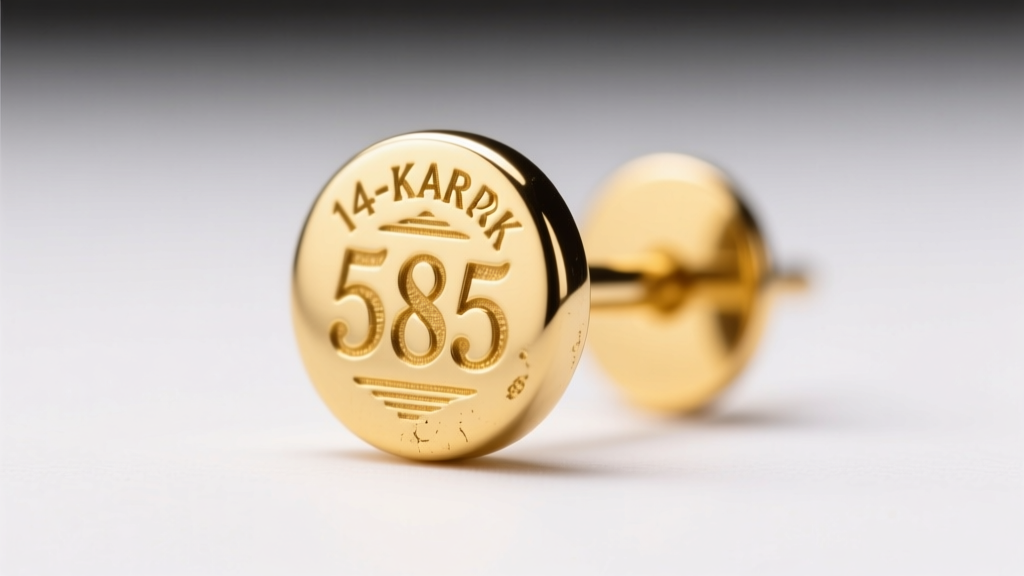
- 14K Gold (58.3% pure): Stamped 585. The standard for fine jewelry in the United States, offering an excellent balance of durability, rich color, and skin-safe properties.
- 10K Gold (41.7% pure): Stamped 417. The minimum karatage that can legally be sold as "gold" in the US. It is highly durable but has a paler yellow hue and a higher risk of causing allergic reactions due to the base metal content.
Step 1: Inspecting Hallmarks and Stamps
The most straightforward way to begin your investigation is by checking for hallmarks. A hallmark is a tiny stamp applied by the manufacturer or an independent assay office to certify the metal's purity. Use a 10x or 20x jeweler's loupe to inspect the earring closely.
Where to Look
- Stud Earrings: Check the flat end of the post, right where it meets the earring head, or the inside of the butterfly clutch backing.
- Hoop Earrings: Look near the clasp mechanism, on the inside curve of the hoop, or on the post that clicks into the hinge.
- Drop and Dangle Earrings: Inspect the jump rings connecting the components, the ear wire hook, or the small tag hanging near the clasp.
Decoding the Numbers
In Europe and many international markets, gold is stamped using a three-digit decimal system representing parts per thousand. If you see 750, it means 75% gold (18K). If you see 585, it means 58.5% gold (14K). If you see 417, it means 41.7% gold (10K). Be wary of earrings with no stamps whatsoever, or stamps that look blurry, uneven, or stamped over another mark, which often indicates a counterfeit or replated piece.
Step 2: At-Home Physical Tests (Safe for Earrings)
If the hallmark is missing, worn away, or you suspect it has been forged, you can perform a few non-destructive at-home tests. While these won't give you a definitive assay result, they are excellent for weeding out obvious fakes.
The Neodymium Magnet Test
Gold is diamagnetic, meaning it is not attracted to magnets. However, a standard refrigerator magnet is too weak to provide an accurate reading. You must use a strong rare-earth magnet, specifically an N42 or N52 grade neodymium magnet. Hold the magnet near the earring. If the earring snaps to the magnet or feels a strong pull, it contains ferromagnetic metals like iron, cobalt, or nickel. Note: Some vintage or heavy hoop earrings may have a tiny steel tension spring inside the hollow tube clasp mechanism, which will cause a slight pull. Test multiple points on the earring to isolate the spring from the main body.
The Skin Discoloration Check
Real gold is highly unreactive and will not oxidize or leave marks on your skin. If you wear the earrings for a few hours and notice a green, black, or dark gray smudge on your earlobes or cartilage, the earrings are likely made of a base metal like copper or brass and are merely gold-plated. The acids and sweat on your skin react with the copper, creating copper salts that stain the skin. Real 14k or 18k gold will never cause this reaction.
Step 3: Advanced Verification and Professional Appraisal
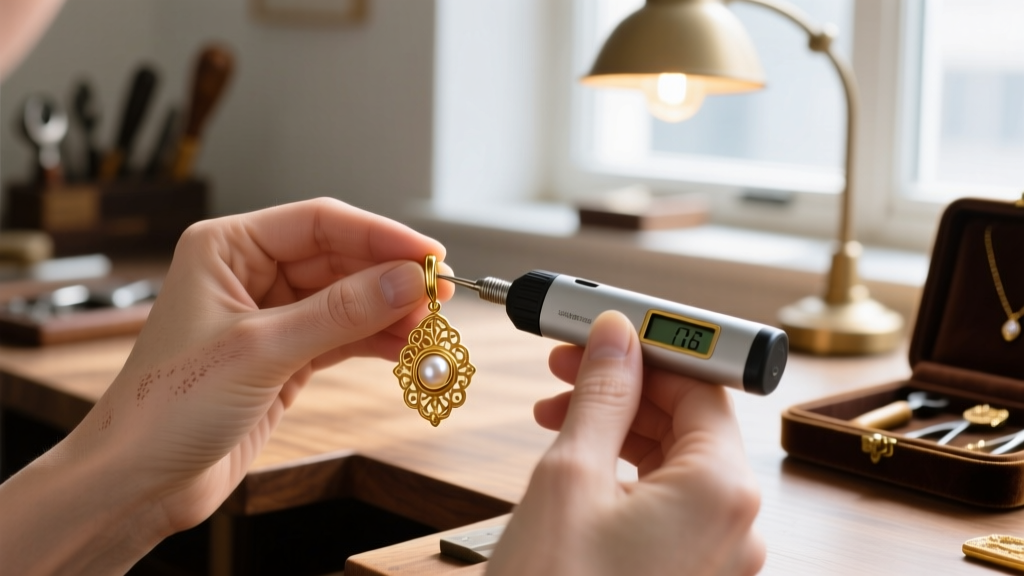
For absolute certainty, especially when dealing with expensive estate pieces or high-karat gold, professional testing is required. The Federal Trade Commission (FTC) Jewelry Guides strictly regulate how gold is marketed, and professional jewelers use scientific methods to ensure compliance and authenticity.
Comparison of Professional Gold Testing Methods
| Testing Method | Accuracy Level | Risk to Earring | Average Cost |
|---|---|---|---|
| XRF Analyzer | Extremely High (Exact elemental breakdown) | Zero (Non-destructive) | $25 - $50 per item |
| Electronic Tester | High (Measures electrical conductivity) | Low (Requires conductive gel) | $15 - $30 per item |
| Acid Scratch Test | Moderate to High (Visual color reaction) | Moderate (Leaves a tiny scratch) | Often Free with purchase |
Why Avoid the Ceramic Streak Test?
You may see online guides suggesting you drag the gold across an unglazed ceramic plate. Do not do this with earrings. Real gold will leave a golden streak, while pyrite or gold-plated brass will leave a black streak. However, this test is highly abrasive. Because earrings are relatively small and often feature delicate textures, polished finishes, or hollow tubing, dragging them across ceramic will permanently scratch and ruin the piece, destroying its resale value.
Red Flags: Spotting Gold-Plated and Gold-Filled Fakes
When learning how to tell if real gold earrings are authentic, you must also learn to read the stamps of gold alternatives. If you see any of the following stamps next to a karat mark, the earrings are not solid gold:
- GP (Gold Plated): A microscopic layer of gold electroplated over a base metal. It will eventually wear off, exposing the metal beneath.
- GF (Gold Filled): A thicker layer of gold mechanically bonded to a brass core. While durable and containing 5% gold by weight, it is not solid gold and cannot be melted down or refined for its gold value.
- HGE or HGP (Heavy Gold Electroplate): A slightly thicker plating than standard GP, but still just a surface treatment.
- Vermeil: Gold plated over sterling silver (usually stamped 925). While valuable and safe for sensitive ears, it is not solid gold.
Expert Tip: If an earring is stamped "14K" on the front but "925" on the back or the clutch, you are looking at gold vermeil, not solid 14-karat gold. Always check every single component of the earring, including the friction backs and jump rings.
Frequently Asked Questions
Can real gold earrings tarnish?
High-karat gold (18k and 24k) does not tarnish. However, lower karat gold (10k and sometimes 14k) contains higher amounts of copper and silver, which can react with environmental chemicals, perfumes, and sweat to create a slight tarnish or dullness over time. This can usually be polished away easily.
Why do my 14k gold earrings turn my ears black?
If your stamped 14k earrings leave a black mark, it is likely due to a reaction with cosmetics, lotions, or harsh soaps that contain abrasive metallic compounds. The gold itself is not turning black; rather, the microscopic makeup particles are rubbing off the soft gold alloy and lodging in the pores of your skin.
Are magnetic earring backs made of real gold?
No. Magnetic backs require ferromagnetic metals to function. If you are wearing magnetic earrings (often used for non-pierced clip-on conversions), the magnets themselves are not gold. The decorative front may be solid gold, but the backing mechanism will always contain iron or neodymium.
Conclusion
Determining the authenticity of your jewelry doesn't have to be a guessing game. By combining a thorough visual inspection of hallmarks with safe at-home tests like the neodymium magnet check, you can confidently filter out the vast majority of counterfeit pieces. When in doubt, or when dealing with high-value estate finds, always defer to a certified gemologist or professional jeweler who can utilize XRF technology for a definitive, non-destructive answer. Armed with this knowledge, you can build a genuine, high-quality earring collection that will last a lifetime.


