Thin Silver Hoop Earrings: Material Grades, Gauges & Durability
Discover how material grades, gauge sizes, and alloys affect the durability and tarnish-resistance of thin silver hoop earrings in our expert guide.

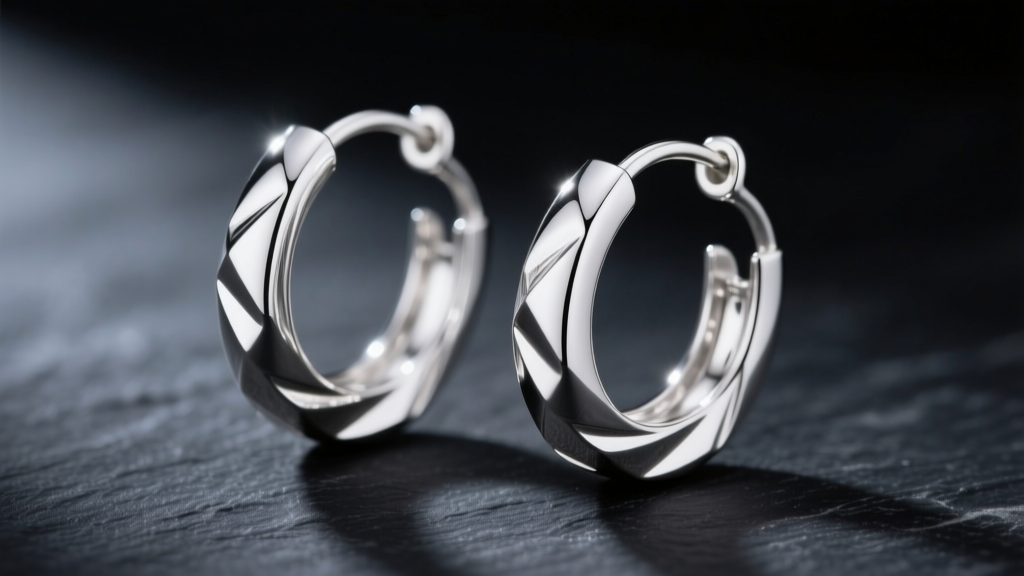
The Metallurgy of Thin Silver Hoops: Why Alloy Matters
When shopping for thin silver hoop earrings, most consumers focus exclusively on aesthetics, overlooking the structural vulnerabilities inherent to fine, slender wire. The term "silver" is a broad umbrella that covers vastly different metallurgical compositions. Because thin hoops lack the physical mass to absorb daily impacts, the specific alloy used dictates whether your earrings will maintain their perfect circular geometry or warp into an oval after a single week of wear.
Pure silver (999 fine) is exceptionally malleable, possessing a Vickers Hardness (HV) of roughly 25. While hypoallergenic and highly resistant to tarnish, it is entirely unsuitable for thin hoop earrings. A 20-gauge fine silver hoop will bend under the mere weight of a heavy towel drying your hair. To achieve the necessary tensile strength, silver must be alloyed with other metals, fundamentally altering its hardness, oxidation rate, and long-term durability.
Sterling vs. Argentium vs. Plated: A Material Breakdown
Understanding the differences between the most common silver alloys is critical when selecting thin hoops. The Silver Institute notes that while sterling silver has been the historical standard, modern metallurgical advancements have introduced superior alternatives for delicate jewelry.
| Material Grade | Composition | Hardness (HV) | Tarnish Resistance | Best Application |
|---|---|---|---|---|
| 925 Sterling Silver | 92.5% Ag, 7.5% Cu | 65 (Annealed) | Low (Copper oxidizes) | Standard lobe hoops (20g+) |
| 935 Argentium Silver | 93.5% Ag, Ge, Cu | 85-110 (Work-hardened) | Extremely High | Ultra-thin & cartilage hoops |
| 999 Fine Silver | 99.9% Ag | 25 | High | Not recommended for hoops |
| Silver-Plated Brass | Brass core, Ag flash | 100+ (Core dependent) | Moderate (Until worn) | Budget fashion jewelry |
The Argentium Advantage for Thin Wire
For thin silver hoop earrings, Argentium silver is the undisputed champion. By replacing a portion of the traditional copper alloy with germanium, Argentium develops a transparent, self-healing layer of germanium dioxide on its surface. This not only makes it up to seven times more tarnish-resistant than standard 925 sterling, but it also allows the wire to be work-hardened to a significantly higher degree without becoming brittle. If you are buying 22-gauge or 24-gauge thin hoops, insisting on Argentium or heavily work-hardened sterling is non-negotiable.
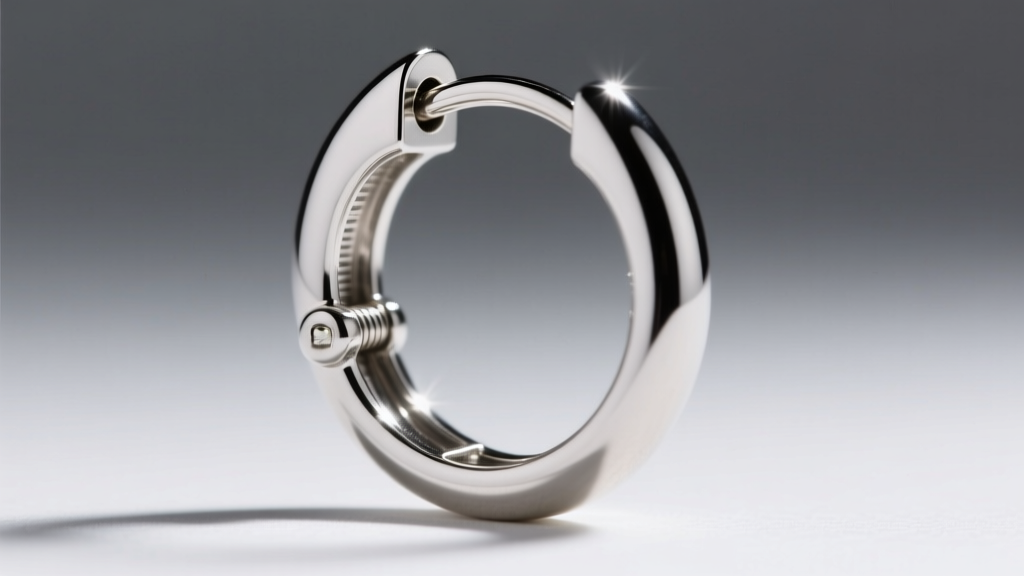
Gauge Thickness vs. Material Hardness
The "thin" aesthetic is defined by the wire gauge, but gauge size cannot be evaluated in a vacuum; it must be paired with the wire's temper (hardness). Jewelry wire is typically sold in dead-soft, half-hard, and full-hard tempers. The process of work-hardening—drawing the wire through successively smaller dies—aligns the metal's crystalline structure, increasing its yield strength.
- 18-Gauge (1.02mm): The standard for cartilage and helix piercings. Even in dead-soft 925 sterling, an 18g hoop possesses enough physical mass to resist casual bending.
- 20-Gauge (0.81mm): The most common size for standard lobe thin hoops. At this thickness, half-hard 925 sterling is required to prevent the hoop from pulling out of the tube catch during sleep.
- 22-Gauge (0.64mm): Ultra-thin and highly delicate. Standard sterling silver will warp at this gauge. You must seek out full-hard sterling or Argentium silver to maintain structural integrity.
- 24-Gauge (0.51mm): Rarely used for continuous hoops due to extreme fragility; usually reserved for wire-wrapping or decorative threading through beads.
Tarnish, Oxidation, and Real-World Failure Modes
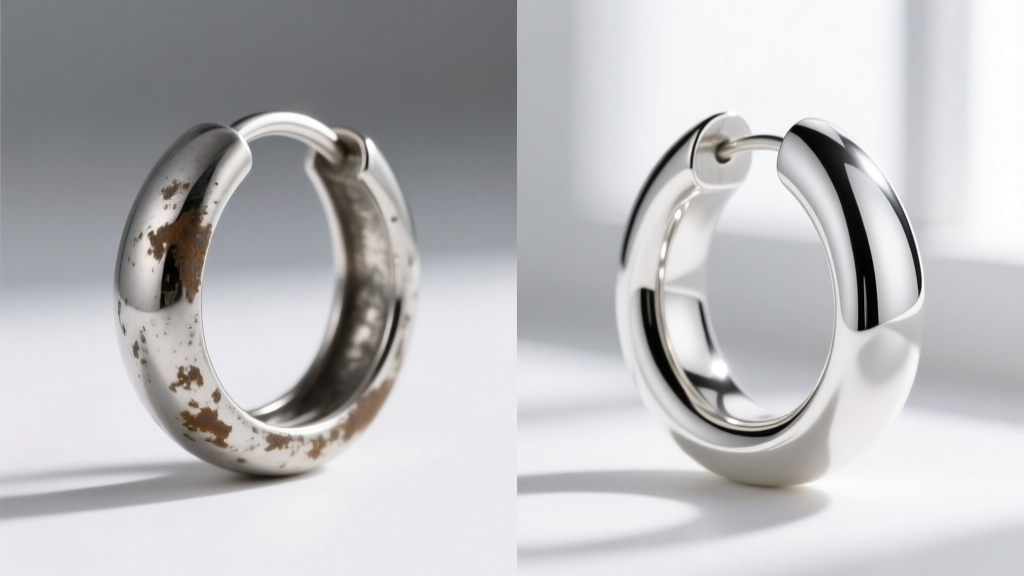
Beyond bending, thin silver hoops face specific environmental and mechanical failure modes. The copper in 925 sterling silver reacts with sulfur compounds in the air and the natural acids in human sweat, creating silver sulfide (tarnish). In thin wire, this tarnish layer can actually accelerate structural degradation through a process known as stress corrosion cracking if the wire is under constant tension at the clasp.
Expert Insight: "The most common point of failure on a thin silver hoop isn't the wire snapping; it's the loss of clasp tension. Repeated insertion and removal of a 20-gauge wire into a metal tube catch causes microscopic abrasions. Over time, the wire thins by fractions of a millimeter, leading to a loose fit and eventual loss of the earring."
To mitigate this, high-end manufacturers laser-weld a tiny spherical bead or create a flattened notch at the insertion point of the hoop, ensuring a mechanical lock rather than relying purely on the friction of the thin wire.
How to Verify Silver Purity and Avoid Fakes
The market is flooded with nickel-silver (which contains zero actual silver) and heavily plated base metals masquerading as genuine thin silver hoops. According to the Gemological Institute of America (GIA), proper hallmarking is your first line of defense, but it is not foolproof.
- Look for Specific Hallmarks: A simple "925" stamp can be easily forged. Look for the ".935" stamp or the registered Argentium trademark (a stylized 'A' with wings) for premium alloys.
- The Magnet Test: Silver is paramagnetic (essentially non-magnetic). If your thin hoops exhibit a strong pull toward a neodymium magnet, the core is likely steel or iron, not brass or copper.
- Thermal Conductivity: Silver has the highest thermal conductivity of any common metal. If you hold the hoop between your fingers, genuine silver will rapidly absorb your body heat and feel warm almost instantly, whereas stainless steel or titanium will remain cool to the touch for much longer.
Final Verdict: Choosing Your Everyday Thin Hoops
If you want thin silver hoop earrings that you can sleep in, shower in, and wear daily without constant maintenance, you must prioritize material science over basic aesthetics. Demand 20-gauge or 22-gauge wire crafted from Argentium silver or explicitly labeled as "half-hard" or "work-hardened" 925 sterling. Avoid dead-soft wires entirely, and always inspect the clasp mechanism for reinforced tension joints. By understanding the metallurgy behind the metal, you can invest in delicate hoops that defy their fragile appearance and last a lifetime.


