Tiger's Eye Earrings: Gemology, Cut Grades & Setting Guide
Discover the technical gemology, lapidary cuts, and setting durability of tiger's eye earrings. Expert guide to chatoyancy and metals.

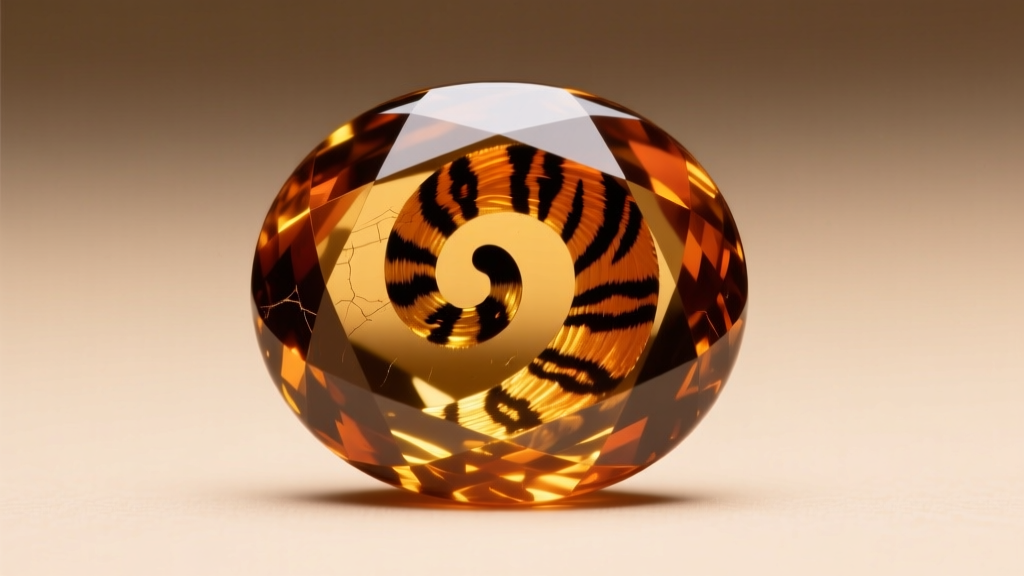
While often categorized simply as an earthy, bohemian staple, tiger's eye is a mineralogical marvel that demands precise lapidary and jewelry engineering. For collectors and daily wearers alike, understanding the technical nuances of tiger's eye earrings—from its pseudomorphic formation to the biomechanics of its hardware—is essential for acquiring pieces that are both optically stunning and structurally enduring. In this deep dive, we move past basic style guides to examine the exact gemological properties, cutting tolerances, and metallurgical requirements that define high-caliber tiger's eye earrings in the current market.
The Mineralogy of Pseudomorphism
Tiger's eye is not a primary mineral; it is a pseudomorph. According to the Mindat mineral database, it forms when quartz (SiO2) replaces the fibrous blue asbestos mineral crocidolite. During this replacement process, the quartz perfectly preserves the parallel fibrous structure of the original crocidolite. The signature golden-brown color is the result of iron oxidation—specifically, the alteration of iron within the fibers into limonite. When the iron remains unoxidized, the stone retains its blue hue, known in the trade as hawk's eye.
From a durability standpoint, tiger's eye registers a 7 on the Mohs hardness scale, making it theoretically suitable for everyday earlobe wear. However, its specific gravity (2.64 to 2.71) and internal fibrous architecture introduce unique structural vulnerabilities that jewelers must account for during the setting process.
Lapidary Engineering: Cutting for Chatoyancy
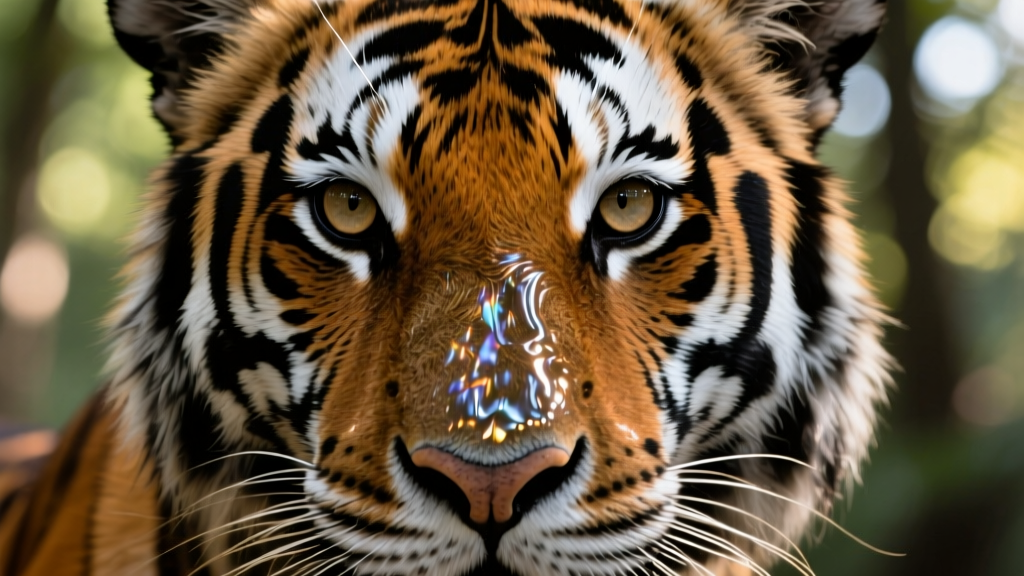
The defining optical phenomenon of tiger's eye is chatoyancy (from the French chatoyer, meaning 'to shine like a cat's eye'). This effect is caused by the reflection of light off the dense, parallel fibrous inclusions trapped within the quartz matrix. To maximize this optical band, lapidaries must cut the stone as a cabochon with a highly specific geometric orientation.
- Base Orientation: The base of the cabochon must be cut exactly parallel to the fibrous inclusions. A deviation of just 3 to 5 degrees will cause the 'eye' to migrate toward the edge of the stone rather than remaining perfectly centered.
- Dome Proportions: A high-dome profile is technically required. Flat or low-dome cabochons scatter the reflected light, resulting in a wide, diffuse, and weak band of light. A steep, symmetrical dome focuses the light into a sharp, singular, and highly mobile line.
- Polish Quality: Because quartz is relatively hard, achieving a mirror polish is standard. However, the fibrous parting planes can sometimes cause microscopic pitting during the final polishing stages if the lapidary uses overly aggressive diamond compounds.
When evaluating tiger's eye earrings, always inspect the stones under a single, directional light source (such as a penlight). The eye should bisect the stone symmetrically and glide smoothly across the dome as the earring is rotated.
Setting Architecture: Protecting Fibrous Cleavage
While tiger's eye lacks true crystalline cleavage (like a diamond or topaz), it exhibits structural parting along its fibrous layers. This means that if subjected to localized, high-pressure stress, the stone can delaminate or chip along these internal planes. This physical property heavily dictates the ideal setting architecture for tiger's eye earrings.
| Setting Type | Structural Protection | Light Intake | Expert Recommendation |
|---|---|---|---|
| Full Bezel | Excellent | Moderate | Highly recommended for daily-wear studs and active lifestyles. Distributes pressure evenly. |
| Half-Bezel | Good | High | Ideal for drop earrings where maximizing the chatoyant band is prioritized over impact protection. |
| Prong (4 or 6) | Poor | Maximum | Not recommended. Point-pressure from prongs risks delaminating the fibrous quartz layers. |
| Tension | Very Poor | Maximum | Avoid entirely. The extreme compression will fracture the stone's internal parting planes. |
As noted by the Gemological Institute of America (GIA), protecting the girdle and edges of chatoyant stones is paramount, as the fibrous ends are the most susceptible to chipping and fraying upon impact.
Hardware Specs: Post Gauges and Ear Lobe Biomechanics

Tiger's eye is a dense material. A standard 12x16mm oval cabochon weighs approximately 4 to 5 carats (0.8 to 1.0 grams). When set in a solid metal bezel with a drop assembly, a single earring can easily exceed 6 to 10 grams. This weight introduces kinetic torque on the earlobe during movement, necessitating specific hardware specifications to prevent post bending and lobe fatigue.
Post Gauge Requirements
The jewelry industry standard for lightweight studs is a 20-gauge (0.81mm) post. However, for tiger's eye drops or oversized hoops, a 20-gauge wire lacks the tensile strength to support the stone's mass without warping.
- Studs (Under 4g): 20-gauge (0.81mm) or 19-gauge (0.91mm) posts are sufficient.
- Drops & Dangles (4g - 8g): 18-gauge (1.02mm) posts are mandatory to resist bending.
- Statement Pieces (Over 8g): 16-gauge (1.29mm) posts or specialized French wire hooks with reinforced coils are required.
Friction Backs and Support
Standard butterfly friction backs often fail to support the weight of tiger's eye drops, causing the earring to droop forward. Experts recommend utilizing jumbo silicone friction backs or specialized locking disc backs (such as La Pousette or screw-backs) to distribute the weight across a wider surface area of the earlobe, maintaining the earring's vertical alignment and ensuring the chatoyant band catches the light correctly.
Authentication and 2026 Market Pricing
As demand for earthy, natural gemstones continues to evolve in 2026, the market has seen an influx of highly convincing simulants. The primary imposter is fiber-optic glass (often marketed as 'cathedral glass'). While visually similar, glass lacks the natural irregularities of pseudomorphic quartz.
According to the International Gem Society (IGS), natural tiger's eye has a refractive index (RI) of 1.54 to 1.55, whereas glass typically sits around 1.50. More importantly, under magnification, fiber-optic glass displays perfectly uniform, mathematically spaced lines. Natural tiger's eye will exhibit slight undulations, natural color zoning, and occasional dark iron oxide inclusions or quartz banding that disrupt the perfect parallel lines.
| Material Grade | Visual Characteristics | Avg. Price (Stud Pair) | Avg. Price (Statement Drop) |
|---|---|---|---|
| Fiber-Optic Glass | Perfectly uniform lines, flawless, unnaturally vibrant | $15 - $35 | $40 - $80 |
| Commercial Natural | Opaque bands, muddy brown tones, weak chatoyancy | $40 - $90 | $100 - $180 |
| Gem-Grade Natural | Sharp, centered eye, rich golden hues, high dome | $120 - $250 | $250 - $600+ |
| Dyed (Blue/Red) | Unnatural colors, dye concentration in fibrous cracks | $30 - $60 | $70 - $120 |
Expert Tip: When purchasing gem-grade tiger's eye earrings, always request a video of the stones in motion under a single light source. Static photographs cannot accurately convey the mobility, sharpness, and centering of the chatoyant eye, which are the primary drivers of the stone's value.
By prioritizing precise lapidary cuts, structurally sound bezel settings, and biomechanically appropriate hardware, you ensure that your tiger's eye earrings are not just visually striking, but engineered to withstand the rigors of daily wear while maintaining their optical brilliance for decades.