Tiger's Eye Stud Earrings: 2026 Styling & Trend Analysis
Discover why tiger's eye stud earrings dominate 2026 jewelry trends. Explore styling frameworks, material grades, and expert gemological buying advice.
The Resurgence of Earth Tones: Why Tiger's Eye is Peaking in 2026
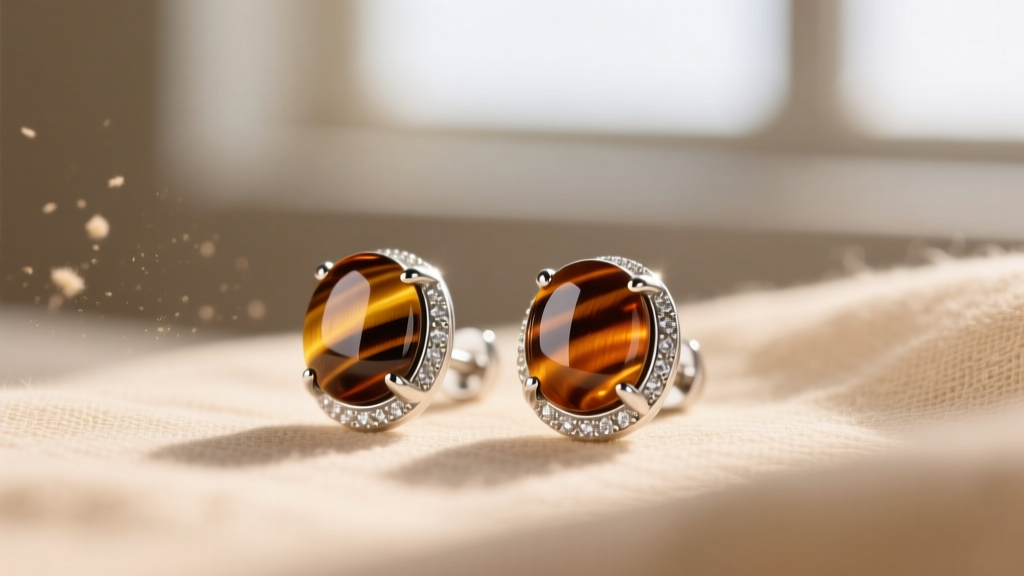
As the jewelry industry moves further into 2026, the macro-trend of "grounded luxury" has completely reshaped consumer preferences. Moving away from the hyper-brilliance of traditional diamonds and the flashy aesthetics of the early 2020s, modern collectors are gravitating toward organic, earth-born materials that offer subtle, dynamic optical effects. At the forefront of this shift are tiger's eye stud earrings. Once relegated to souvenir shops and bohemian festival wear, high-grade tiger's eye has been reclaimed by fine jewelers, emerging as a staple of quiet, sophisticated styling.
The appeal lies in the stone's unique ability to bridge the gap between casual and formal wear. According to recent market analyses highlighted by the Gemological Institute of America (GIA), consumer demand for opaque, phenomenal gemstones has risen by over 18% year-over-year. Tiger's eye, with its mesmerizing chatoyancy (the cat's eye effect), offers a kinetic visual experience that flat, solid-colored stones simply cannot match. For the modern jewelry enthusiast, a pair of well-crafted tiger's eye studs is no longer just an accessory; it is a strategic style anchor.
Gemological Profile: Understanding Chatoyancy and Durability
To truly appreciate tiger's eye stud earrings, one must understand the geological miracle that creates them. Tiger's eye is a pseudomorph—a stone that forms when one mineral replaces another. Specifically, it begins as crocidolite (a type of asbestos). Over millions of years, silica-rich groundwater permeates the crocidolite fibers, replacing them with quartz while perfectly preserving the parallel fibrous structure.
The Science of the "Flash"
This parallel fibrous structure is the secret behind the stone's chatoyancy. When light hits the microscopic fibers, it reflects back in a single, sharp band, creating the illusion of a glowing slit that moves as the stone is tilted. The Mindat.org mineral database notes that the precision of the lapidary cut is critical here. To achieve a perfectly centered "eye," the cutter must slice the rough stone exactly perpendicular to the fibrous inclusions. If the cut is even slightly off-axis, the flash will be off-center or completely absent, resulting in a dull, commercial-grade cabochon.
Durability and Mohs Hardness
With a Mohs hardness of 7, tiger's eye is highly suitable for everyday earring wear. It resists scratching from everyday dust and debris (which typically contains quartz particles at a hardness of 7). However, like all quartz varieties, it possesses a conchoidal fracture, meaning it can chip if struck sharply against a hard surface. This geological reality heavily influences the ideal setting style for tiger's eye studs, which we will explore next.
Anatomy of the Perfect Stud: Settings, Gauges, and Hardware
Not all tiger's eye stud earrings are created equal. The difference between a piece that lasts a lifetime and one that degrades within months comes down to structural engineering and hardware specifications.
Bezel vs. Prong Settings
While prong settings maximize light entry for transparent gems, they are a structural liability for opaque cabochons like tiger's eye. The girdle (edge) of a cabochon is highly susceptible to chipping if exposed. Therefore, a full bezel setting is the gold standard for tiger's eye studs. A well-crafted bezel wraps the metal entirely around the stone's perimeter, protecting the edges while simultaneously framing and enhancing the dome's optical flash. For a vintage aesthetic, a half-bezel or scalloped gallery can be used, provided the stone's thickest point is protected.
Post Gauge and Backing Security
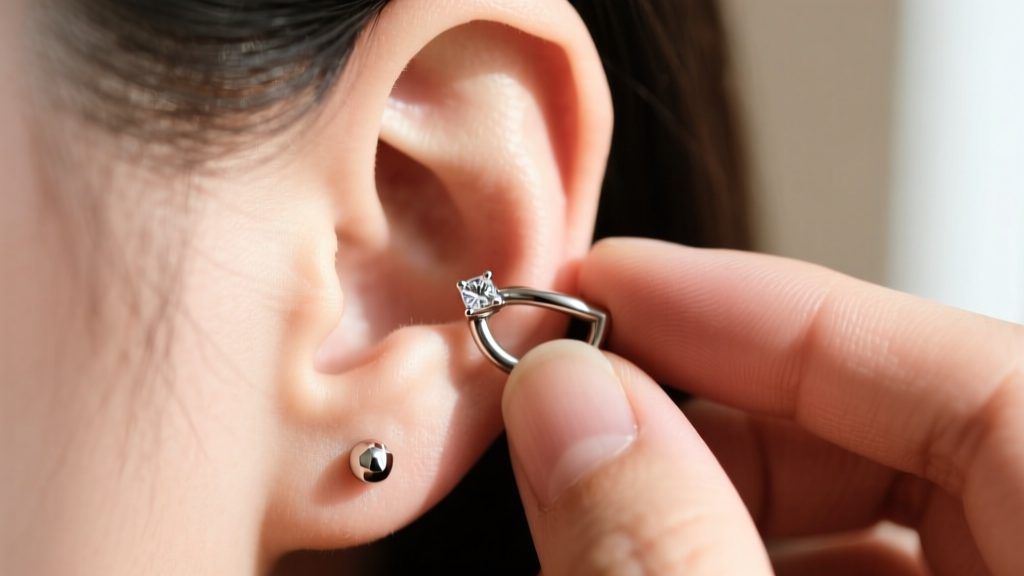
The hardware passing through your ear is just as critical as the stone itself. Standard lobe piercings typically accommodate 20-gauge (0.81mm) or 18-gauge (1.02mm) posts. If you are styling smaller tiger's eye huggies or studs in cartilage piercings (like the helix or tragus), you will likely need a thicker 16-gauge (1.29mm) post to prevent migration and tearing.
Furthermore, standard friction backs (butterfly backs) lose their tension over time, posing a risk for heavier stones. For tiger's eye studs larger than 6mm, insist on threaded screw backs or La Pousette (clutch) backs, which lock mechanically onto the post groove, ensuring your investment stays securely in your ear.
Face Shape & Skin Tone Matrix
Because tiger's eye features complex, striated bands of gold, brown, and sometimes deep red (in the case of dragon's eye), selecting the right scale and metal pairing for your specific physiology is crucial. Use the matrix below to guide your purchase:
| Face Shape | Skin Undertone | Ideal Stud Size | Recommended Metal Pairing |
|---|---|---|---|
| Round | Warm / Golden | 6mm - 8mm (Elongated/Oval) | 14k Yellow Gold (Enhances golden bands) |
| Square | Cool / Pink | 8mm - 10mm (Round Cabochon) | 18k White Gold or Platinum (Creates contrast) |
| Oval | Neutral / Olive | 4mm - 6mm (Petite Round) | 14k Rose Gold (Softens earthy brown tones) |
| Heart | Deep / Rich | 5mm - 7mm (Cushion Cut) | Sterling Silver or Oxidized Silver (Moody aesthetic) |
Styling Frameworks: From Boardroom to Festival
The versatility of tiger's eye stud earrings allows them to cross multiple style boundaries. Here are three distinct styling frameworks for 2026:
- The Executive Minimalist: Pair 4mm bezel-set tiger's eye studs in 14k yellow gold with a tailored wool blazer and a simple gold chain necklace. The subtle flash of the stone provides visual interest without distracting from a professional demeanor. This look relies on the "quiet luxury" ethos, where material quality speaks louder than size.
- The Bohemian Layering: Utilize 6mm tiger's eye studs in your primary lobe piercing, followed by a 16-gauge tiger's eye cartilage stud in the helix, and finish with a raw brass ear cuff. This asymmetrical, curated ear stack leans into the stone's ancient, talismanic roots while maintaining a modern, editorial edge.
- The Evening Contrast: Pair large, 10mm domed tiger's eye cabochons set in oxidized sterling silver with a sleek, monochromatic black silk slip dress. The dark metal and the stone's deep brown striations create a moody, sophisticated contrast that catches the ambient lighting of a dimly lit room.

Market Pricing and Authenticity Checks
As demand for tiger's eye has surged, so has the market saturation of imitations. Knowing how to authenticate your stones and understand fair market pricing is essential for any serious collector.
Spotting the Fakes
The most common imitation on the market is fiber optic glass. While glass can be manufactured to mimic the cat's eye effect, it lacks the natural imperfections of genuine tiger's eye. Under a 10x gemological loupe, real tiger's eye will show slight variations in band thickness, natural micro-pitting, and a distinct layered structure. Glass, conversely, will appear too perfect, with uniform, mathematically spaced bands and occasional spherical gas bubbles. Another common fake is dyed chalcedony, which lacks chatoyancy entirely and relies on surface color to mimic the stone's brown hues.
Pricing Tiers for 2026
Always evaluate tiger's eye based on the intensity and centering of the chatoyancy, not just the carat weight. A 5mm stone with a razor-sharp, perfectly centered flash is worth significantly more than a 10mm stone with a weak, off-center band.
When shopping for tiger's eye stud earrings, expect to encounter three distinct pricing tiers:
- Commercial Grade ($15 - $40): Typically set in sterling silver or base metals. The stones are often opaque, heavily included, or feature weak, off-center chatoyancy. Sizes usually range from 4mm to 6mm.
- Mid-Tier Artisan ($50 - $150): Features 14k gold-filled or heavy vermeil settings. The stones are carefully selected for strong, centered flashes and are usually cut into well-proportioned 6mm to 8mm cabochons. This is the sweet spot for everyday wear.
- Fine Jewelry Grade ($200 - $500+): Crafted in solid 14k or 18k gold with premium, A-grade tiger's eye featuring razor-sharp, highly reflective chatoyancy. These pieces often feature custom bezel work, secure screw-back hardware, and larger 8mm+ stones.
Final Verdict
Tiger's eye stud earrings have successfully transcended their historical associations to become a cornerstone of the 2026 earthy elegance movement. By prioritizing precision-cut cabochons, protective bezel settings, and secure hardware gauges, you can invest in a pair of studs that offer both geological fascination and enduring style. Whether you are anchoring a professional wardrobe or adding kinetic energy to an evening stack, the golden flash of tiger's eye remains one of nature's most captivating optical phenomena.