Too Heavy Earrings: The True Cost of Earlobe Damage and Value
Discover if your too heavy earrings are costing you more than their price tag. We analyze material value, weight limits, and earlobe repair costs.

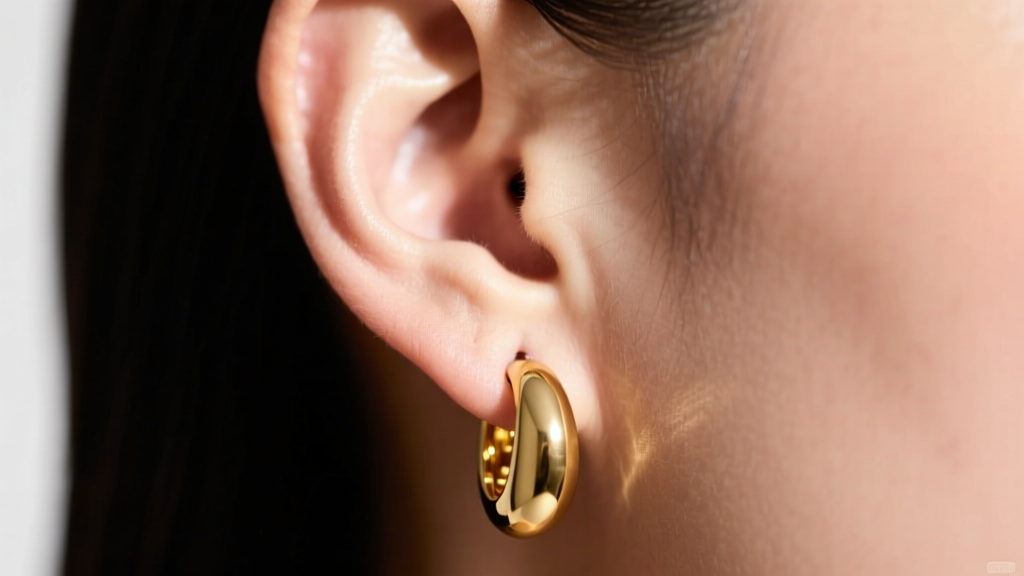
The Hidden Anatomy of Earlobe Tension and Financial Risk
When evaluating fine jewelry, buyers typically focus on karat purity, gemstone clarity, and brand prestige. However, a critical factor often ignored in the secondary market and boutique retail space is the physical weight of the piece. Wearing too heavy earrings is not merely a matter of temporary physical discomfort; it represents a significant, often hidden financial liability. The human earlobe is composed of areolar connective tissue and adipose (fat) tissue, entirely lacking the rigid cartilage structure found in the upper ear. This makes it highly susceptible to mechanical creep—a slow, progressive deformation caused by sustained gravitational stress.
From a budget and value assessment perspective, an earring that causes micro-tears, lobe elongation, or complete blowouts fundamentally destroys its own value proposition. The initial savings on a dense, poorly engineered statement piece are quickly eclipsed by dermatological interventions, surgical repairs, and the inability to wear standard jewelry in the future. In this guide, we break down the exact weight thresholds, material densities, and long-term financial impacts of heavy earlobe jewelry.
Defining the Threshold: When Are Earrings Actually Too Heavy?
To accurately assess value, we must first quantify the physical limits of a standard 18-gauge or 16-gauge lobe piercing. Jewelry weight is measured in grams (g), and the tolerance of the earlobe varies based on the wearer's tissue density and the earring's post thickness.
- Lightweight (1g - 6g): Ideal for everyday wear, fresh piercings, and sleepers. Includes standard studs, small huggies, and thin wire hoops.
- Medium Weight (7g - 14g): The standard range for most commercial drop and dangle earrings. Comfortable for 8-12 hours of wear for most individuals.
- Heavy (15g - 24g): Noticeable drag. Requires thicker posts (14g or 12g) to distribute weight and prevent the "cheese wire" effect, where thin metal slices through the tissue.
- Danger Zone (25g+): Universally considered too heavy for prolonged wear. Pieces in this category will cause immediate downward angling of the piercing channel and accelerate tissue thinning.
| Weight Category | Gram Range | Tissue Impact | Potential Hidden Costs |
|---|---|---|---|
| Optimal | 1g - 14g | Minimal stretch, healthy blood flow | $0 (Standard maintenance) |
| Heavy | 15g - 24g | Mild elongation, temporary redness | $20 - $50 (Silicone support discs, thicker replacement posts) |
| Excessive | 25g - 40g | Visible sagging, micro-tearing, pain | $150 - $300 (Dermatological steroid injections for keloids/scarring) |
| Extreme | 40g+ | Complete lobe blowout, bifid earlobe | $500 - $1,500+ per lobe (Lobuloplasty surgical repair) |
Material Density vs. Retail Price: The Value Disconnect
The core issue with too heavy earrings often stems from a misunderstanding of material density. A solid 14k gold statement earring is incredibly dense (approximately 12.9 g/cm³). A pair of solid 14k gold geometric drops measuring two inches in length can easily exceed 30 grams per earring, pushing a $600 investment into the realm of physical liability.
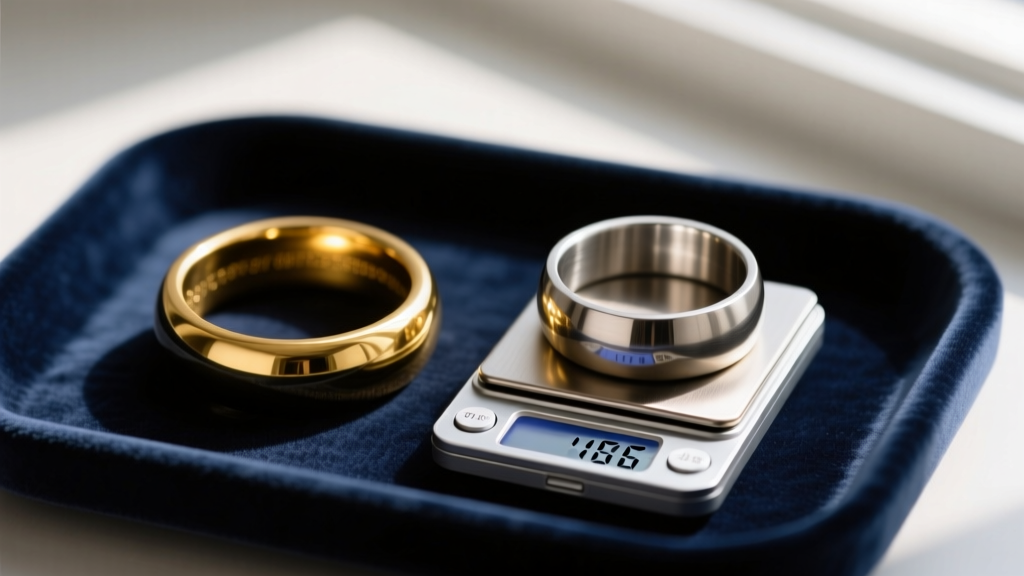
Value-savvy collectors and budget-conscious buyers must look toward alternative metallurgy and structural engineering to maximize visual impact without the punishing weight. According to the American Academy of Dermatology, minimizing mechanical stress on the piercing channel is paramount for long-term tissue health. This means prioritizing materials with lower specific gravity.
The Density Index: Comparing Jewelry Metals
- 24k Gold: 19.3 g/cm³ (Extremely heavy, soft, high risk of tearing)
- 14k Gold: 12.9 g/cm³ (Standard luxury, heavy in large volumes)
- Sterling Silver: 10.4 g/cm³ (Moderate weight, prone to tarnish)
- Brass/Bronze: 8.4 - 8.8 g/cm³ (Budget-friendly but heavy and potentially irritating)
- Grade 23 Titanium (6Al-4V): 4.43 g/cm³ (The ultimate high-value, low-weight metal)
A pair of large, architectural titanium dangle earrings might retail for $85, weighing a mere 8 grams. A visually identical pair in solid 14k gold could retail for $850 and weigh 28 grams. From a strict value and comfort assessment, the titanium option offers vastly superior cost-per-wear and eliminates the risk of costly earlobe repairs.
The Financial Impact of Earlobe Stretching and Tearing
What happens when you ignore the weight limits? The financial consequences of lobe damage are steep and rarely covered by health insurance, as they are classified as cosmetic or elective reconstructive procedures. When an earring is caught on clothing or simply succumbs to years of gravitational drag, the resulting split earlobe requires a surgical procedure known as a lobuloplasty.
"Reconstructive earlobe surgery typically involves excising the epithelialized tract of the torn piercing and suturing the healthy tissue margins back together. Patients must then wait a minimum of 6 to 8 weeks before re-piercing, and the structural integrity of the lobe is permanently altered." — American Society of Plastic Surgeons
If you purchase a $300 pair of heavy brass and resin statement earrings, wear them twice, and suffer a partial tear requiring a $1,200 surgical repair, the true cost of those earrings was actually $1,500. Furthermore, the scar tissue formed after a lobuloplasty is denser and less pliable, making future piercings more difficult and prone to rejection. This severely limits your future jewelry purchases, effectively locking you out of the standard fine jewelry market.
Smart Investments: High-Value, Low-Weight Alternatives
If your personal style demands large, dramatic silhouettes, you do not have to sacrifice your earlobes or your budget. The modern jewelry market offers several high-value engineering solutions that provide the illusion of mass without the physical penalty.
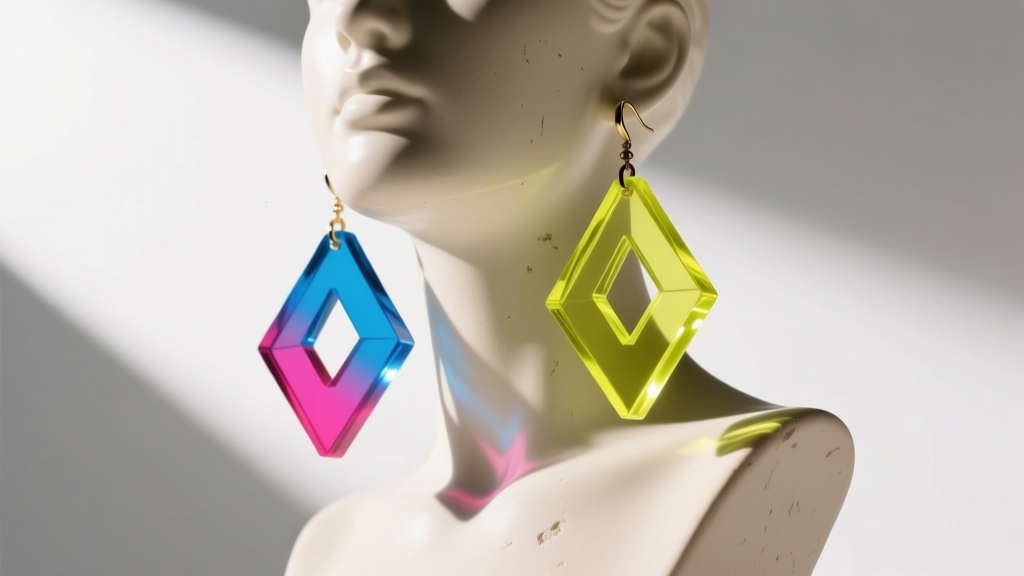
1. Hollow-Core and Tubing Construction
Many mid-to-high-tier jewelers now utilize hollow gold tubing or electroforming techniques. Electroforming allows jewelers to build up a microscopic layer of gold over a wax mold, which is later melted away. The result is a massive, 3D statement piece that weighs less than 5 grams. While electroformed pieces can dent if crushed, their value proposition for occasional, high-impact wear is unbeatable.
2. High-Grade Lucite and Acetate
Designer acrylics, such as hand-carved Lucite or bio-acetate, offer incredible visual depth and bold color blocking at a fraction of the weight of gemstones or enamel. A large, shoulder-dusting acetate hoop might weigh only 9 grams and cost between $60 and $150, offering immense stylistic value with zero risk of tissue damage.
3. The Omega Back and Support Discs
If you already own heavy earrings and want to salvage their value, invest in silicone earring support discs (often called "lobe patches" or "earring lifters"). These $10 accessories sit behind the earlobe, distributing the weight of the earring across a wider surface area of the neck and jawline rather than concentrating it on the 1mm piercing hole. Additionally, converting heavy drop earrings to Omega backs or leverbacks can help anchor the piece closer to the ear's natural center of gravity.
The Buyer’s Framework: Assessing Value Before Checkout
Before adding any statement piece to your cart, run it through this rapid value-assessment checklist to ensure you aren't buying a future medical bill:
- Request the Exact Gram Weight: If a retailer cannot or will not provide the weight in grams, walk away. Transparency is the first indicator of jewelry value.
- Check the Post Gauge: If an earring weighs over 15 grams, the post must be at least 16-gauge (1.2mm) or 14-gauge (1.6mm). A standard 20-gauge (0.8mm) wire holding a 20-gram earring is a structural failure waiting to happen.
- Calculate the True Cost Per Wear (CPW): Divide the price by the number of times you will realistically wear it. If the piece is so heavy that you can only tolerate it for 30 minutes at a time, your CPW will be astronomically high.
- Assess the Drop Length: The longer the drop, the more kinetic energy it generates when you move your head. A 20-gram earring that sits flush on the lobe is manageable; a 20-gram earring that dangles three inches down acts as a pendulum, multiplying the shear force on your piercing.
Final Verdict: When to Walk Away
Ultimately, jewelry should enhance your life, not detract from it through chronic pain or the anxiety of impending tissue damage. When assessing the budget and value of fine and fashion earrings, weight must be treated as a primary metric of quality, just like gold purity or diamond cut. By understanding the biomechanics of the earlobe and prioritizing advanced, lightweight materials like titanium, hollow-core gold, and designer resins, you can build a stunning, dramatic collection that protects both your physical anatomy and your financial bottom line.


