Tree of Life Earrings Gold: Troubleshooting Breaks & Tarnish
Fix common issues with tree of life earrings gold. Learn how to prevent branch breakage, stop gold plating tarnish, and support heavy lobe drops.

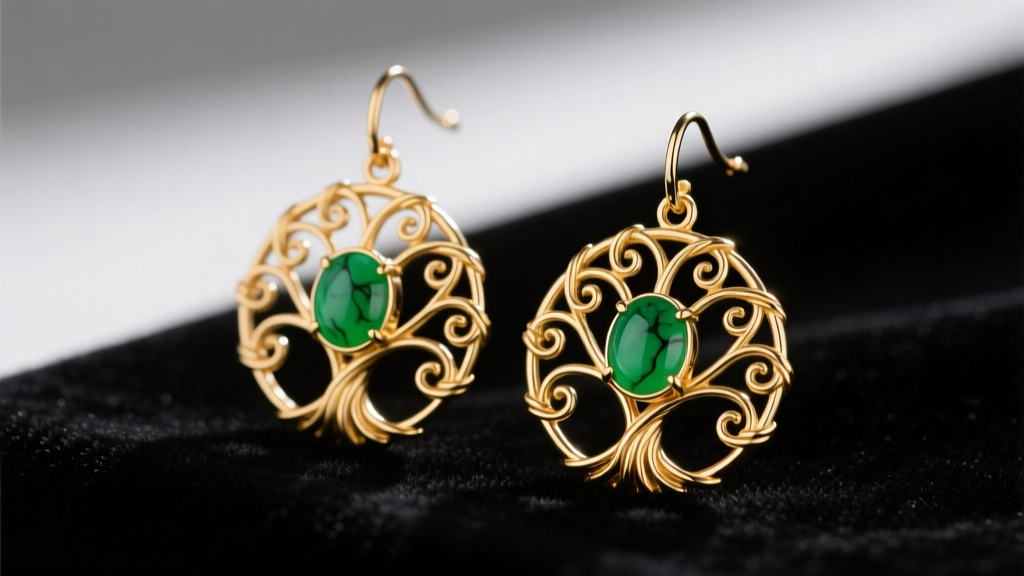
The Anatomy of a Fragile Motif: Why Tree of Life Designs Fail
Tree of life earrings gold designs are deeply symbolic and visually stunning, but their intricate aesthetics come with inherent structural vulnerabilities. Whether you own a pair of delicate wire-wrapped studs or heavy solid gold drop earrings, the motif's sprawling branches and exposed roots create multiple snag points. Furthermore, the metallurgical realities of gold alloys mean that not all karatages are suited for filigree work. Understanding why your favorite earrings are bending, breaking, or tarnishing is the first step toward proper troubleshooting and long-term preservation.
The primary failure point in these earrings is the branch structure. To achieve a lifelike, organic appearance, jewelers typically draw gold wire down to 24-gauge (0.51mm) or even 26-gauge (0.40mm). While this allows for intricate bending, it severely compromises tensile strength. According to the Gemological Institute of America (GIA), the higher the pure gold content, the softer the metal. Therefore, an 18k gold (75% pure) branch will bend and warp under significantly less pressure than a 14k gold (58.3% pure) branch, which benefits from the structural rigidity of copper and silver alloys.
Troubleshooting Branch Breakage and Hair Snagging
The most frequent complaint from wearers of tree of life earrings gold styles is hair snagging. The tiny gaps between the trunk, branches, and the outer circular frame act as microscopic hooks. When a strand of hair catches and pulls, the 24-gauge wire yields, resulting in bent branches or, in severe cases, a complete snap at the micro-solder joint.
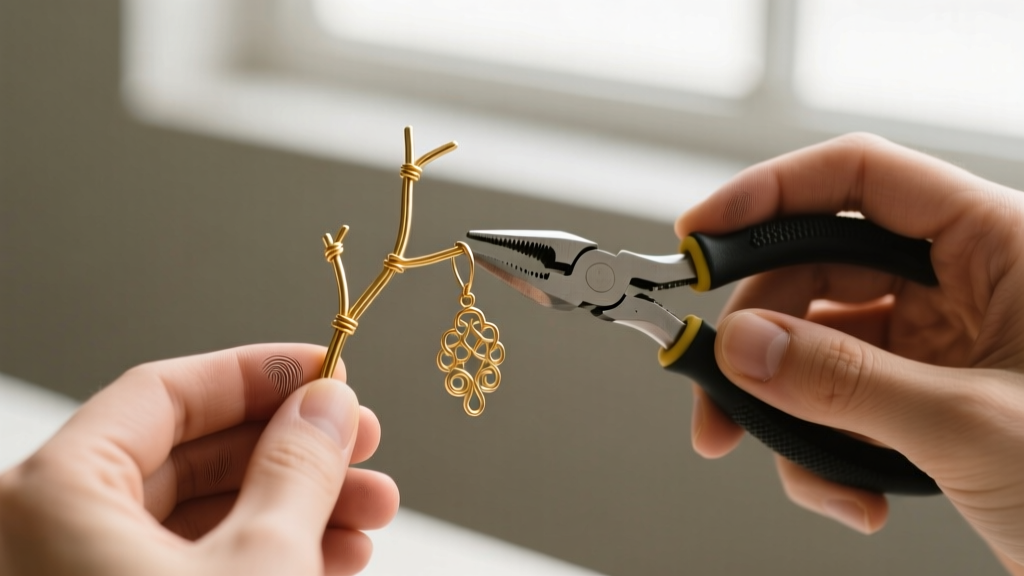
How to Safely Reshape Bent Branches
If a branch has bent out of place, do not use standard steel jewelry pliers. Steel is harder than gold and will instantly gouge, scratch, or mar the high-polish finish of your earrings. Instead, invest in a pair of nylon jaw pliers (typically $10–$15 at jewelry supply stores). The soft nylon grips the gold wire firmly without leaving tool marks. Gently apply pressure in the opposite direction of the bend, working in millimeter increments to avoid metal fatigue, which can cause the wire to snap.
Preventing Future Snags
To minimize hair snagging, pay attention to the earring's backing and your styling habits. If your tree of life earrings feature a butterfly clutch backing, the exposed post and sharp clutch edges will catch hair just as much as the front motif. Swap standard butterfly clutches for flat-back friction discs or silicone O-rings, which present a smooth, snag-free profile against the back of the earlobe.
Solving the Heavy Gold Lobe Sag (Tension & Gauge Issues)
Solid gold is remarkably dense. A 30mm solid 14k gold tree of life drop earring can easily weigh between 4 to 6 grams per ear. When this weight is suspended from a standard 20-gauge (0.81mm) ear wire, it creates a localized pressure point that leads to the dreaded 'cheese-cutter effect,' slowly stretching and tearing the earlobe piercing over time.
Weight-to-Gauge Support Matrix
Use the following troubleshooting table to determine if your earrings require hardware modifications or external support to prevent permanent lobe damage.
| Earring Weight (Per Ear) | Minimum Safe Post Gauge | Troubleshooting / Support Solution |
|---|---|---|
| Under 2.5 grams | 20-Gauge (0.81mm) | No extra support needed; standard ear wires are sufficient. |
| 2.5 to 4.5 grams | 18-Gauge (1.02mm) | Use silicone ear lift patches or jumbo friction backs to distribute weight. |
| 4.5 to 7+ grams | 16-Gauge (1.29mm) | Require French wire hooks with a thick gauge, or use an ear chain to transfer weight to the upper cartilage. |
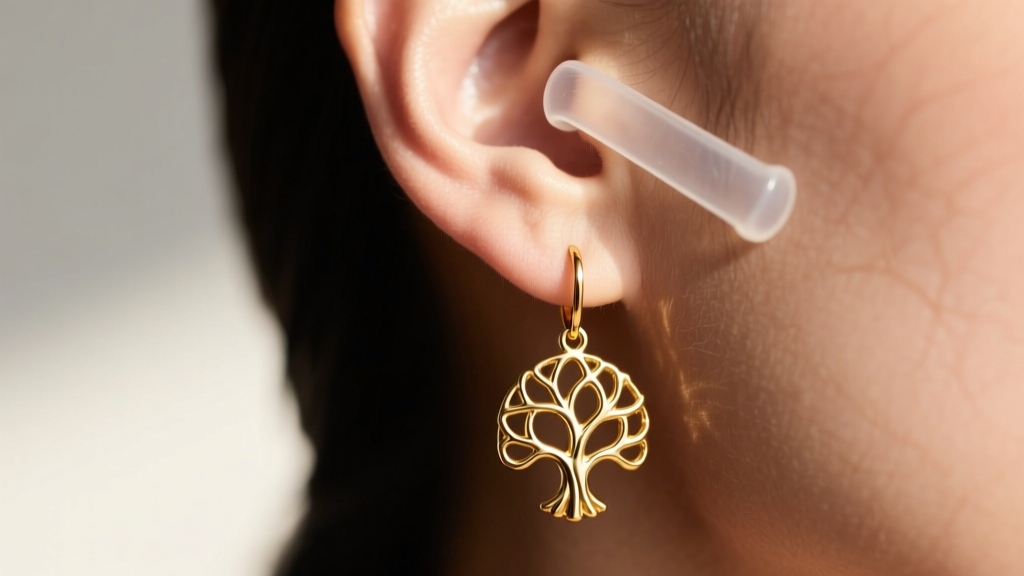
If your lobes are already showing signs of elongation from heavy tree of life drops, remove the earrings immediately and allow the tissue to rest for 48 hours. When you resume wearing them, apply an invisible silicone ear support patch behind the lobe. These patches feature a pre-punched hole for the earring post and distribute the 5-gram load across a 15mm surface area, completely eliminating the downward drag on the piercing fistula.
Tarnish and Skin Reactions: Plating vs. Solid Gold
Not all tree of life earrings gold styles are solid gold. Many affordable options are gold vermeil (gold plated over sterling silver) or gold-plated brass. The intricate crevices of the tree roots and bark textures trap sebum, lotions, and sweat. This trapped moisture accelerates galvanic corrosion, causing vermeil earrings to tarnish rapidly or turn the skin green due to copper alloys reacting with acidic sweat.
The Federal Trade Commission (FTC) Jewelry Guides mandate that for a piece to be legally sold as 'vermeil,' it must have a sterling silver base and a gold plating of at least 2.5 microns thick. However, even 2.5 microns will eventually wear away on high-friction areas like the earring post and the outer rim of the tree of life circle.
The Ultrasonic Cleaner Trap
A common troubleshooting mistake is placing dirty, tarnished tree of life earrings into an ultrasonic jewelry cleaner. Ultrasonic machines use high-frequency cavitation bubbles to blast away dirt. While this works well for solid diamond studs, the intense micro-vibrations can cause severe metal fatigue at the delicate micro-solder joints where the gold branches meet the outer frame. It is incredibly common for wearers to pull their tree of life earrings out of an ultrasonic bath only to find that three or four branches have snapped off entirely.
The Safe Cleaning Protocol
To clean intricate gold motifs safely, use a solution of warm water and a few drops of mild, phosphate-free dish soap. Soak the earrings for 10 minutes to loosen trapped sebum. Then, use an extra-soft baby toothbrush to gently agitate the crevices around the roots and branches. Rinse with distilled water (to prevent hard water spotting) and dry immediately with a microfiber cloth. If your vermeil earrings have worn down to the silver or brass base, a local bench jeweler can replate them with a fresh 2.5-micron layer of gold, typically costing between $35 and $60.
Expert Maintenance Checklist for Tree of Life Motifs
To ensure your gold tree of life earrings remain structurally sound and visually brilliant, integrate these specific troubleshooting habits into your jewelry care routine:
- The 'Last On, First Off' Rule: Always put your earrings in after applying hairspray, perfumes, and lotions, and remove them before taking off tight clothing like turtlenecks to prevent catastrophic branch snagging.
- Monthly Joint Inspection: Use a 10x jeweler's loupe to inspect the solder joints where the thickest branches meet the outer circle. If you see a dark hairline fracture, stop wearing them and take them to a jeweler for a quick laser weld before the branch snaps.
- Proper Storage: Never toss tree of life earrings loosely into a jewelry box. The branches will inevitably tangle with chains or other earrings. Store them in individual anti-tarnish flannel pouches, laid perfectly flat.
- Post Tightening: For stud versions, the friction notch on the post can wear down, causing the earring to droop forward. A jeweler can use a wire rounder to re-score the post, restoring the tight click of the earring back.
'The beauty of the tree of life motif lies in its sprawling, organic geometry, but that same geometry demands respect. Treat the branches like spun glass, support the weight of the gold, and keep the crevices free of moisture, and your earrings will easily outlast fast-fashion alternatives.' — Bench Jeweler & Metallurgy Specialist


