Seashell Earrings With Pearl: A Technical Guide to Materials & Craft
Discover the material science behind seashell earrings with pearl. Learn about nacre grading, shell carving techniques, and setting durability.

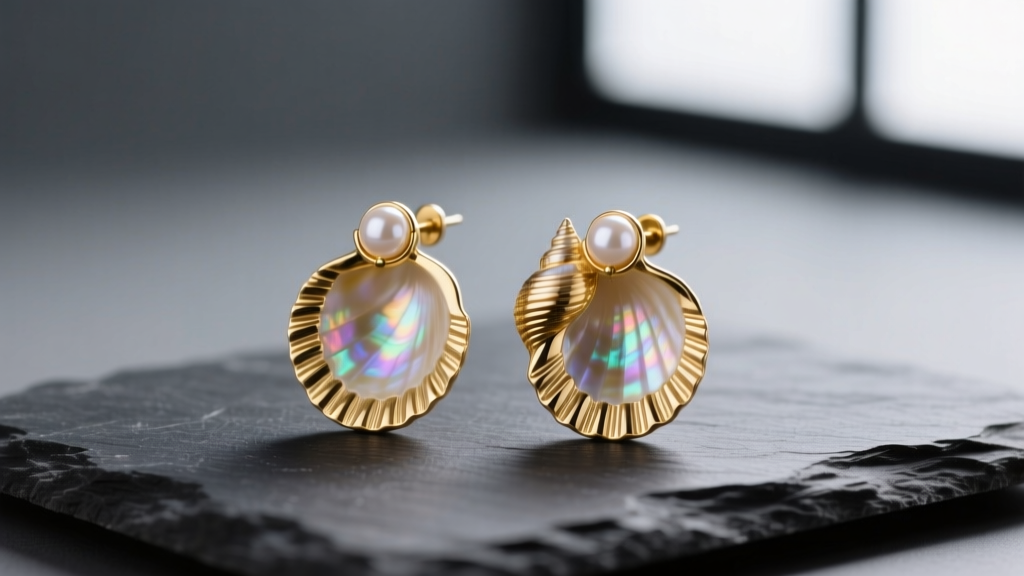
The Anatomy of Authentic Seashell Earrings With Pearl
The market for coastal-inspired jewelry is saturated with mass-produced resin casts, making the pursuit of authentic, lapidary-grade seashell earrings with pearl a study in material science and precision craftsmanship. True shell jewelry relies on the natural architecture of calcium carbonate, a crystalline structure that demands specific handling, setting, and wearing protocols. Unlike cast metals, organic gem materials possess distinct cleavage planes, variable Mohs hardness ratings, and unique chemical vulnerabilities that dictate how a jeweler must approach the design.
Mother-of-Pearl vs. Carved Conch: Material Hardness & Workability
The two most prominent shells used in high-end earring fabrication are Pinctada maxima (South Sea Mother-of-Pearl) and Strombus gigas (Queen Conch). From a lapidary perspective, they behave entirely differently under the carving burr.
- Mother-of-Pearl (MOP): Rates at 2.5 to 3.0 on the Mohs scale. Its nacreous layers are secreted in microscopic aragonite platelets bound by conchiolin. This gives MOP its signature iridescence but makes it highly susceptible to delamination if subjected to high-friction mechanical polishing.
- Queen Conch: Rates slightly higher at 3.0 to 3.5. Known for its non-nacreous, flame-like chatoyancy (the 'flame structure'), conch is denser but significantly more brittle. Drilling jump-ring holes in conch requires ultrasonic-assisted drilling to prevent micro-fractures that lead to catastrophic cracking under the weight of a pearl setting.
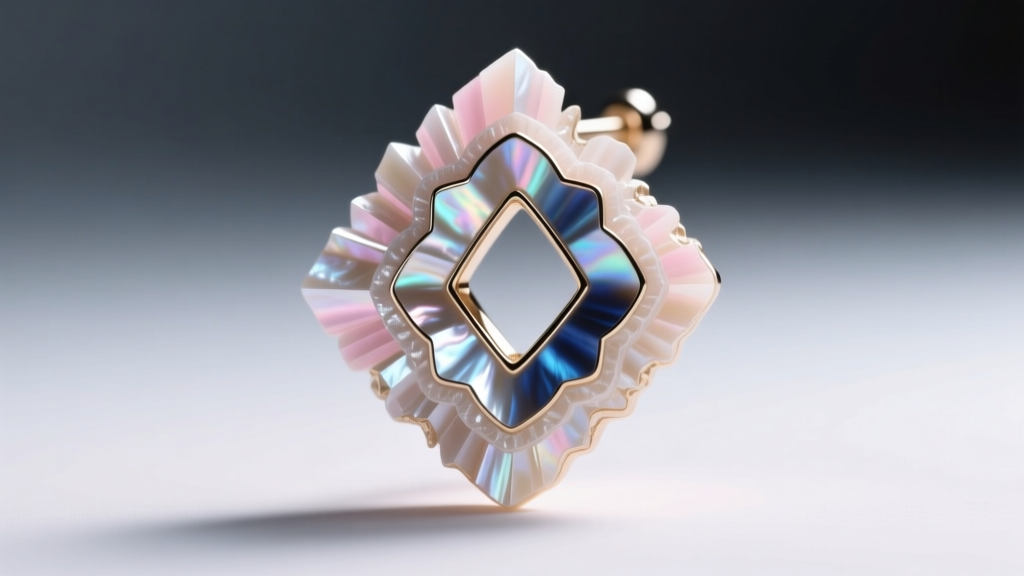
Pearl Selection: Nacre Thickness and Luster Grading
Pairing a pearl with a carved shell requires balancing visual weight and structural integrity. The primary technical metric for pearl longevity is nacre thickness. According to the Gemological Institute of America (GIA), nacre thickness directly influences both the optical luster and the physical durability of the gem. A pearl with thin nacre (under 0.4mm) is prone to 'peeling' when exposed to the micro-abrasions of daily wear, especially when mounted against a harder shell backing.
Technical Grading Matrix for Shell Pairings
| Pearl Type | Ideal Nacre Thickness | Mohs Hardness | Best Shell Pairing | Price Range (Per Pair) |
|---|---|---|---|---|
| Akoya (Saltwater) | 0.8mm - 1.2mm | 2.5 - 3.0 | Carved Queen Conch | $250 - $600 |
| Freshwater (Round) | Solid Nacre (100%) | 2.5 | Mother-of-Pearl | $85 - $200 |
| South Sea (White) | 2.0mm - 4.0mm | 2.5 - 3.0 | Pinctada Maxima MOP | $800 - $2,500+ |
For structural harmony, freshwater pearls are often the safest technical choice for MOP settings. Because modern freshwater pearls are tissue-nucleated, they are solid nacre throughout, eliminating the risk of a bead nucleus showing through if the outer layers wear down against the shell backing.
Metallurgy & Setting Architecture
The intersection of organic gems and metal alloys is where most commercial jewelry fails. When designing seashell earrings with pearl, the choice of metal and the method of attachment dictate the lifespan of the piece.
Prong vs. Bezel vs. Adhesive: Failure Modes
Organic gems expand and contract with ambient humidity and temperature fluctuations. Traditional prong settings, which rely on static metal tension, can loosen over time as the pearl or shell subtly shifts. Furthermore, prongs can dig into the softer calcium carbonate, causing stress fractures.
The Adhesive Problem: Many commercial manufacturers use cyanoacrylate (super glue) to attach pearls to shell bases. This is a critical failure point. Cyanoacrylate becomes brittle upon curing and degrades rapidly when exposed to the slightly acidic pH of human sweat. Expert jewelers utilize a two-part, flexible epoxy resin (such as G-S Hypo Cement or specialized jeweler's epoxies) that allows for microscopic thermal expansion without breaking the bond.
Thermal Shock in Soldering: If a jeweler must attach a gold jump ring to a silver shell backing, using a traditional butane torch will instantly shatter the shell due to thermal shock. Laser welding is the mandatory industry standard for assembling shell and pearl composites, as it localizes the heat to a sub-millimeter focal point, leaving the surrounding organic material entirely unaffected.
Gauge Sizing and Weight Distribution
Shells are inherently dense, and adding a solid nacre pearl compounds the mass. Lobe fatigue and piercing stretching are common complaints with poorly engineered drop earrings. The American Pearl Association notes that proper weight distribution is just as vital as the quality of the gems themselves.
Expert Specification: For daily wear shell-and-pearl drops, the total weight per earring should not exceed 7 grams. The ear wire or post must be forged from 20-gauge (0.81mm) or 18-gauge (1.02mm) wire. Anything thinner (like 22-gauge) will warp under the pendulum motion of a shell drop, eventually snapping at the stress point near the clasp.
To counterbalance front-heavy shell carvings, master jewelers will incorporate a heavier, solid gold or platinum counterweight bead at the rear of the ear wire. This shifts the center of gravity back to the piercing channel, ensuring the earring sits flush against the lobe rather than drooping forward and stretching the tissue.
Maintenance and Environmental Degradation
Both shells and pearls are composed primarily of calcium carbonate (CaCO3), making them highly reactive to acids. Understanding the chemical vulnerabilities of your jewelry is essential for preservation.
The Chemistry of Care
- Acidic Degradation: Perfumes, hairsprays, and even natural skin acidity (pH below 5.5) will slowly dissolve the polished surface of a shell, leaving it chalky and dull. Always apply cosmetics before donning your earrings.
- Ultrasonic Cleaners: Never place seashell earrings with pearl in an ultrasonic cleaner. The high-frequency cavitation bubbles will aggressively strip the conchiolin protein matrix binding the aragonite platelets, resulting in irreversible 'crazing' (a network of fine surface cracks).
- Hydration Loss: Shells and pearls contain trace amounts of water within their crystalline lattice. Storing them in airtight plastic bags or near heating vents will cause desiccation, leading to structural splitting. Store them in a breathable linen pouch with a lightly dampened (not wet) cotton ball to maintain ambient humidity.
By understanding the lapidary constraints, metallurgical requirements, and chemical realities of these organic materials, you can confidently select and maintain seashell earrings with pearl that will endure as heirloom-quality pieces rather than fleeting seasonal accessories.


