2026 Sterling Earrings Trends: Architectural Hoops & Alloy Guide
Discover 2026 sterling earrings trends, from architectural hoops to advanced .950 alloys. Expert styling, gauge guides, and tarnish prevention tips.

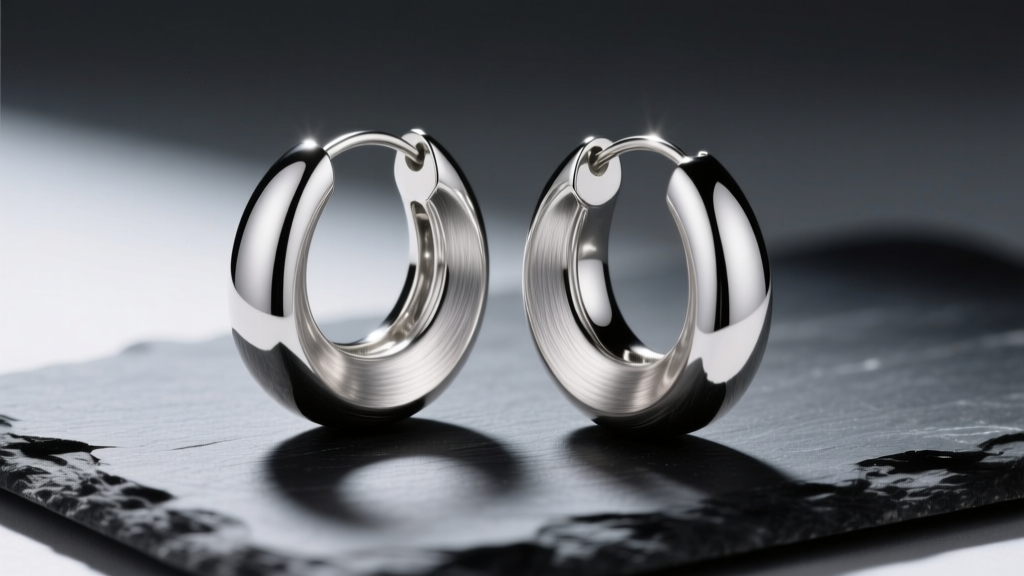
The landscape of fine jewelry has undergone a radical transformation as we move through 2026. While delicate, minimalist pieces dominated the previous decade, the current market is defined by sculptural volume, material innovation, and intentional weight. At the forefront of this movement are sterling earrings—specifically, architectural hoops and structural shields that challenge traditional silversmithing boundaries. This is no longer just about basic .925 studs; it is an era of advanced metallurgy, hollow-core engineering, and biomechanical design.
For collectors, designers, and everyday wearers, understanding the nuances of modern silver alloys and structural gauges is essential. Below, we deconstruct the 2026 trends shaping the sterling earrings market, providing a technical guide to alloys, weight distribution, and long-term care protocols.
The 2026 Shift: Why Sterling Earrings Are Getting Heavier
The "quiet luxury" trend of the early 2020s has evolved into what industry analysts now call sculptural minimalism. Consumers are moving away from accumulating dozens of cheap, lightweight pairs and are instead investing in fewer, high-impact pieces. In the realm of sterling earrings, this translates to a significant increase in gram weight and visual mass.
However, wearing an 8-gram solid silver hoop on a standard earlobe presents a biomechanical challenge: the "cheese-cutter effect." If a heavy earring is suspended on a thin 20-gauge (0.81mm) wire, gravity and kinetic movement will slowly slice through the piercing tissue over time. To combat this, 2026's premier silversmiths are engineering heavier pieces with thicker 16-gauge (1.29mm) or 14-gauge (1.63mm) posts and French wires, requiring either naturally robust lobes or intentionally stretched piercings. Alternatively, designers are utilizing seamless drawn tubing to create massive 12-gauge visual profiles that maintain the featherlight weight of a 20-gauge wire.
Decoding the Alloys: .925 vs. .950 vs. Argentium Silver
Pure silver (99.9%) is too malleable for functional jewelry; it will bend, warp, and lose its shape under minimal stress. Therefore, it must be alloyed with other metals. According to the Gemological Institute of America (GIA), the specific alloy mixture dictates the earring's durability, luster, and susceptibility to oxidation.
The Alloy Comparison Matrix
| Alloy Grade | Composition | Tarnish Resistance | Best Application in Earrings | Failure Mode |
|---|---|---|---|---|
| .925 Sterling | 92.5% Ag, 7.5% Copper | Low (Prone to blackening) | Cast hoops, intricate filigree, standard studs | Copper oxidation (firestain), structural fatigue at solder joints |
| .950 Sterling | 95% Ag, 5% Alloy | Medium | Bezel settings, hand-forged architectural cuffs | Surface scratching, post bending due to high malleability |
| Argentium™ | 93.5%+ Ag, Germanium, Copper | Extremely High | High-polish hoops, tension settings, everyday wear | Thermal shock cracking if soldered without specialized protocols |
The most significant breakthrough in modern sterling earrings is the widespread adoption of Argentium silver. By replacing a portion of the copper alloy with germanium, the metal forms a transparent, self-healing layer of germanium dioxide on its surface. As noted by The Silver Institute, this passivation layer actively blocks hydrogen sulfide and oxygen from reaching the silver atoms, effectively halting the chemical reaction that causes black silver sulfide (tarnish) to form.
Architectural Shapes Dominating the Market
If 2024 was the year of the micro-pave huggie, 2026 belongs to the architectural shield and the Möbius strip hoop. Designers are treating sterling earrings as wearable sculpture, utilizing negative space and asymmetrical geometry.
- Hollow-Core Tubing Hoops: Created using precision-drawn seamless silver tubes. These allow for massive outer diameters (40mm-60mm) with wall thicknesses of just 0.4mm, resulting in a bold look that won't drag down the earlobe.
- Asymmetrical Shields: Flat, geometric face-plates that are laser-cut and hand-finished with contrasting textures (e.g., a mirror-polished edge against a sandblasted matte center).
- Tension-Suspended Drops: Utilizing the natural spring-temper of work-hardened .950 silver to hold gemstones or geometric silver beads in place without the need for heavy bezels or prongs.
The Gauge and Weight Matrix: What to Expect
When investing in heavyweight sterling earrings, understanding the relationship between gauge (wire thickness) and gram weight is critical for comfort. The UK Assay Office strictly regulates hallmarking, but weight and gauge remain a matter of designer discretion and wearer anatomy.
| Earring Style | Typical Gauge (Post/Wire) | Average Weight (Per Pair) | Lobe Requirement |
|---|---|---|---|
| Micro Huggies | 20G - 18G (0.81 - 1.02mm) | 1.5g - 3.0g | Standard piercing |
| Solid Architectural Hoops | 16G - 14G (1.29 - 1.63mm) | 8.0g - 14.0g | Thick/robust lobe tissue |
| Hollow-Core Tubing Hoops | 18G (1.02mm) wire / 10G tube | 3.5g - 6.0g | Standard piercing |
| Heavy Shield Drops | 18G (1.02mm) French Wire | 6.0g - 10.0g | Standard, but may require silicone support discs |
Tarnish Mitigation and Long-Term Care Protocols
Even with advanced alloys, environmental factors play a massive role in the longevity of sterling earrings. Tarnish is not a defect; it is a predictable chemical reaction. Hydrogen sulfide in the air, combined with ambient moisture, creates silver sulfide. Furthermore, the amino acids and natural salts present in human sweat can accelerate copper oxidation in standard .925 alloys.
The Rhodium Plating Debate
Many mass-market brands electroplate their sterling earrings with rhodium (a platinum-group metal) to prevent tarnish and mimic the look of white gold. While effective in the short term, rhodium plating is fundamentally flawed for long-term archival jewelry. Once the microscopic plating wears away at friction points (like the post or clasp), moisture becomes trapped between the silver and the remaining rhodium, causing severe, localized pitting that is nearly impossible to polish out. For 2026's high-end market, collectors are rejecting rhodium in favor of raw, high-polish Argentium or intentionally oxidized .925 silver, which embraces the metal's natural lifecycle.
Actionable Storage Protocols
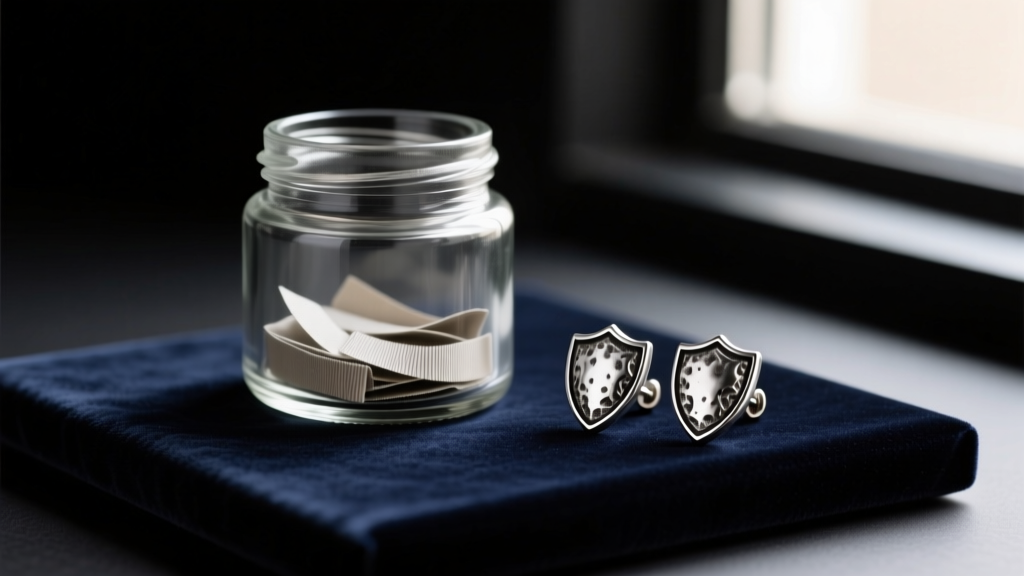
Expert Rule of Thumb: Never store sterling earrings in polyvinyl chloride (PVC) plastics or standard rubber bands. The sulfur compounds used in the vulcanization of rubber will cause rapid, aggressive blackening of the silver surface. Always opt for Pacific Silvercloth or activated charcoal-infused storage tabs.
Pricing Realities in the Current Market
The pricing of sterling earrings in 2026 is heavily bifurcated between mass-cast production and hand-fabricated artisanal work. With the spot price of silver experiencing volatility, the raw material cost is only a fraction of the final retail price.
- Mass-Cast .925 ($20 - $45): Produced via rubber mold injection and lost-wax casting. High porosity risk, lower structural integrity, usually finished via automated tumbling.
- Die-Stamped & Soldered ($50 - $90): Sheet silver is stamped under high pressure, work-hardening the metal and increasing durability. Solder joints are hand-finished.
- Hand-Fabricated Argentium / .950 ($120 - $300+): Cut, forged, and soldered from raw stock by a single bench jeweler. Features seamless joints, custom tension settings, and proprietary finishing techniques like magnetic tumbling or hand-burnishing.
As the sterling earrings market continues to prioritize architectural volume and material science over disposable fast-fashion trends, understanding these metallurgical and structural nuances is the key to building a curated, lifelong collection.


