Triangular Earrings: 2026 Budget & Value Buying Guide
Discover the true value of triangular earrings in 2026. Compare materials, pricing tiers, and gauge sizes to find geometric styles that fit your budget.

The Geometry of Value: Why Triangular Earrings Cost What They Do
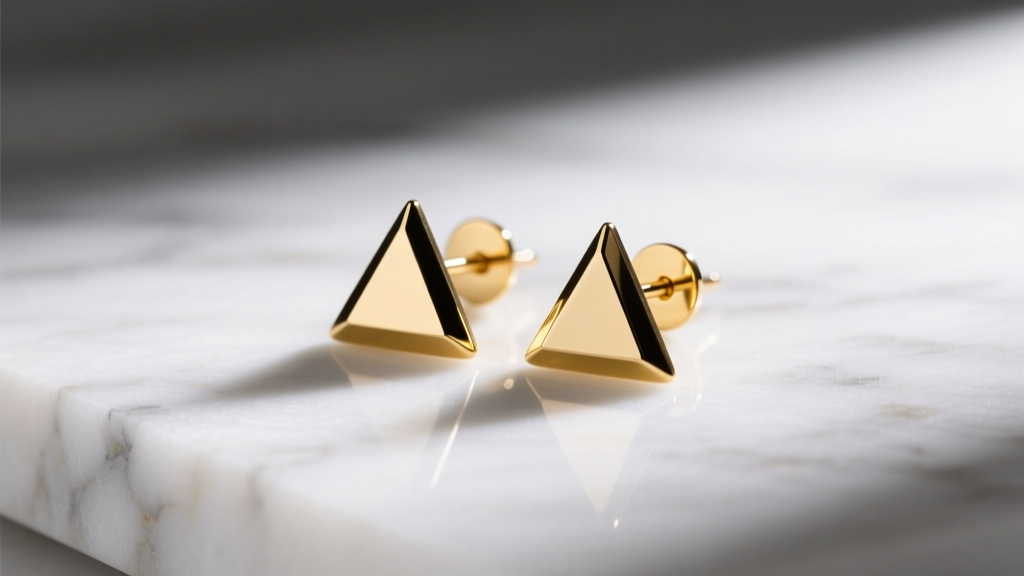
When evaluating jewelry, consumers often focus purely on the material—assuming that a gold earring is inherently more valuable than a steel one. However, with geometric shapes, the manufacturing process drastically alters the true value proposition. Triangular earrings introduce acute angles and sharp vertices that are notoriously difficult to execute well in mass production. Unlike circular hoops or simple spherical studs, which can be easily cast or spun, triangles require precise laser cutting or meticulous hand-filing to ensure structural integrity and wearer safety.
In the 2026 jewelry market, budget-friendly triangular earrings are often stamped from sheet metal. While this keeps the price under $30, it leaves the edges razor-sharp and the corners prone to micro-fractures. Conversely, high-value triangular earrings undergo extensive tumbling and hand-beveling to soften the vertices without losing the sharp geometric illusion. Understanding this distinction is the first step in assessing whether a pair of triangle studs or dangles is a genuine bargain or a cheap liability waiting to tear your earlobe.
Material Breakdown: Pricing Tiers for Triangle Studs and Dangles
To accurately assess value, we must cross-reference the base material with the expected lifespan and biocompatibility of the earring. Below is a comprehensive breakdown of the current market pricing for triangular earrings, categorized by material grade.
| Material Grade | 2026 Price Range | Longevity & Biocompatibility | Edge Finishing Quality |
|---|---|---|---|
| Brass / Base Alloy | $12 - $35 | Low. Prone to tarnishing; high risk of contact dermatitis due to copper/nickel content. | Poor. Often mass-stamped with sharp, unfinished corners. |
| 316L Surgical Steel | $25 - $60 | Medium. Highly durable and scratch-resistant, but contains trace nickel that triggers allergies. | Moderate. Machine-tumbled, but acute angles may still catch. |
| ASTM F136 Titanium | $45 - $95 | High. The gold standard for hypoallergenic wear. Lightweight, preventing lobe stretching. | Good. Precision CNC-milled or hand-finished for safe wear. |
| 14k Solid Gold | $130 - $350+ | Lifetime. Heirloom quality, completely non-reactive, and holds a mirror polish indefinitely. | Excellent. Hand-beveled vertices with seamless edge transitions. |
As noted by the Association of Professional Piercers (APP), the term "surgical steel" is largely a marketing misnomer when it comes to long-term wear in fresh or sensitive piercings. If you are buying triangular earrings for everyday wear, investing in ASTM F136 titanium or 14k solid gold provides exponentially better value over time, as you will not need to replace them due to skin irritation or rapid tarnishing.
Gauge Sizes and Piercing Placements: The Hidden Costs of Fit
The physical dimensions of a triangular earring directly dictate which gauge (thickness) your piercing must be to support it safely. A common mistake budget shoppers make is purchasing heavy, oversized solid metal triangles designed for standard 20-gauge (0.8mm) lobe piercings. The concentrated weight of a geometric shape pulling downward creates a "cheese-cutter" effect, slowly migrating the piercing hole downward and causing irreversible tissue damage.
Weight Distribution and Gauge Recommendations
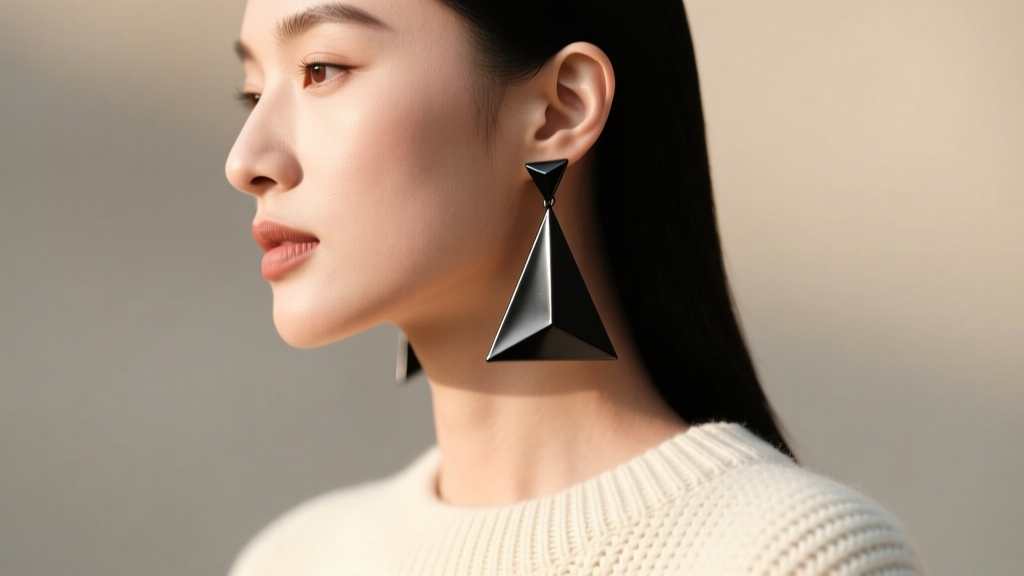
For any triangular dangle or drop earring exceeding 15mm in height, you should ensure your piercing is at least 18-gauge (1.0mm) or ideally 16-gauge (1.2mm). If your lobes are currently pierced at a delicate 20-gauge, the true cost of those heavy brass triangles includes the future expense of re-piercing or wearing glass retainers to stretch the tissue safely.
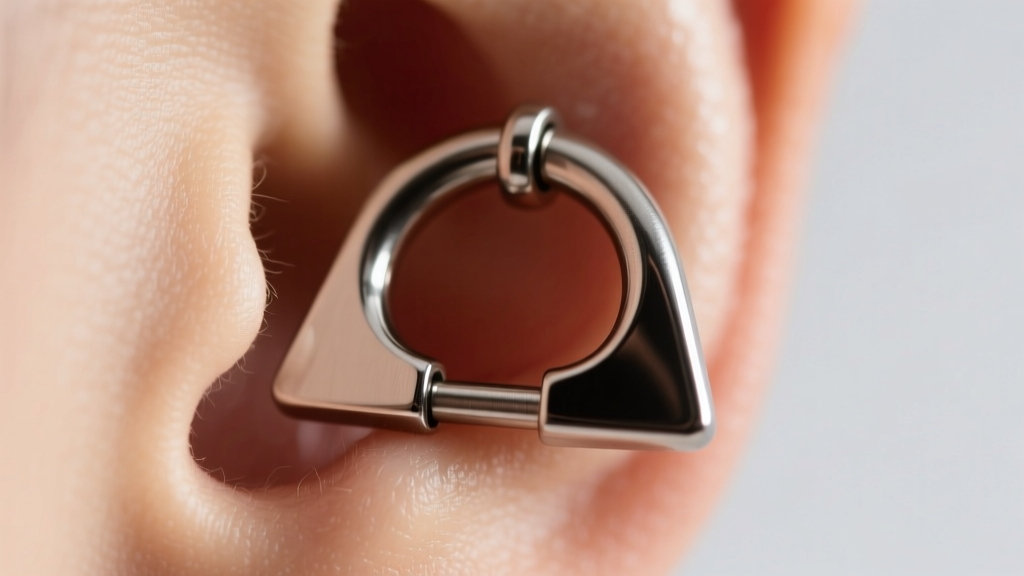
For cartilage placements, such as a helix or conch, triangular clicker hoops require precise inner diameter measurements. Because the triangle drops straight down from the hinge, a standard 8mm inner diameter will cause the top vertex to press painfully into the cartilage fold. A 10mm or 12mm inner diameter is usually required to accommodate the geometric drop, meaning you must carefully read product specifications rather than blindly ordering standard hoop sizes.
The "Snag Factor": Design Flaws That Destroy Value
Value is not just about the price tag; it is about wearability. Triangles are notorious for catching on hair, scarves, sweater threads, and even seatbelts. An earring that constantly snags is a poor investment. When shopping, look for designs described as "soft triangles" or "rounded triangles." These designs intentionally blunt the three vertices by 1 to 2 millimeters. This micro-adjustment preserves the sharp visual aesthetic of the geometry while eliminating the mechanical hook that causes snags and subsequent earlobe tearing.
2026 Market Assessment: Where to Spend and Where to Save
Navigating the current jewelry market requires a strategic approach to your budget. Not every earring needs to be a lifetime investment piece, but knowing where to cut corners is vital.
- Where to Save: Trendy, oversized acrylic, resin, or enamel triangular dangles. Because these materials are inherently lightweight, they will not tear your earlobe, and their lower price point ($15-$40) makes them perfect for seasonal, statement-making wear.
- Where to Spend: Everyday triangular studs, huggies, and cartilage clickers. These pieces sit flush against the skin, are exposed to daily sweat, oils, and friction, and require premium, non-reactive metals like 14k gold or implant-grade titanium.
- The Middle Ground: PVD-coated titanium. If solid gold is out of your budget, look for 14k gold PVD (Physical Vapor Deposition) coatings over an ASTM F136 titanium base. This offers the biocompatibility of titanium and the look of gold for roughly $50-$80, though the coating may eventually wear on the high-friction edges of the triangle over several years.
Maintenance: Caring for Angular and Geometric Jewelry
Geometric jewelry requires specific maintenance routines that differ from traditional curved pieces. The acute inner angles of triangular cutouts or the sharp corners of a solid triangle trap sebum, dead skin cells, and cosmetic products. Standard ultrasonic cleaners are highly effective for plain metal triangles, but if your triangular earrings feature pave diamonds or gemstones set near the sharp corners, the high-frequency vibrations can loosen the delicate prongs.
Instead, use a mild, fragrance-free liquid soap and a soft-bristled baby toothbrush to gently agitate the corners. Furthermore, standard flat jewelry polishing cloths cannot reach into sharp geometric recesses. To maintain the mirror finish of your 14k gold or titanium triangles, invest in specialized jewelry polishing swabs or use a microfiber cloth wrapped around a wooden toothpick to carefully buff the acute angles without scratching the flat faces.
Final Verdict: Maximizing Your Geometric Investment
Ultimately, the value of triangular earrings in 2026 is defined by the intersection of material purity, edge finishing, and structural weight. According to metallurgical guidelines referenced by the Gemological Institute of America (GIA), 14k gold is often superior to 18k gold for sharp geometric designs because the higher copper and silver alloy content in 14k makes the metal harder, allowing it to hold a crisp, sharp point without denting or rounding off over time.
By prioritizing hand-finished edges, selecting the correct gauge for the earring's weight, and choosing hypoallergenic base metals, you can confidently invest in triangular earrings that offer both striking modern aesthetics and lifelong durability. Do not let a low initial price tag blind you to the hidden costs of poor craftsmanship and reactive alloys.