Troubleshooting Caged Pearl Earrings: Cleaning & Repair Guide
Learn how to fix, clean, and maintain caged pearl earrings. Expert troubleshooting for tarnished cages, loose pearls, and bent earring posts.

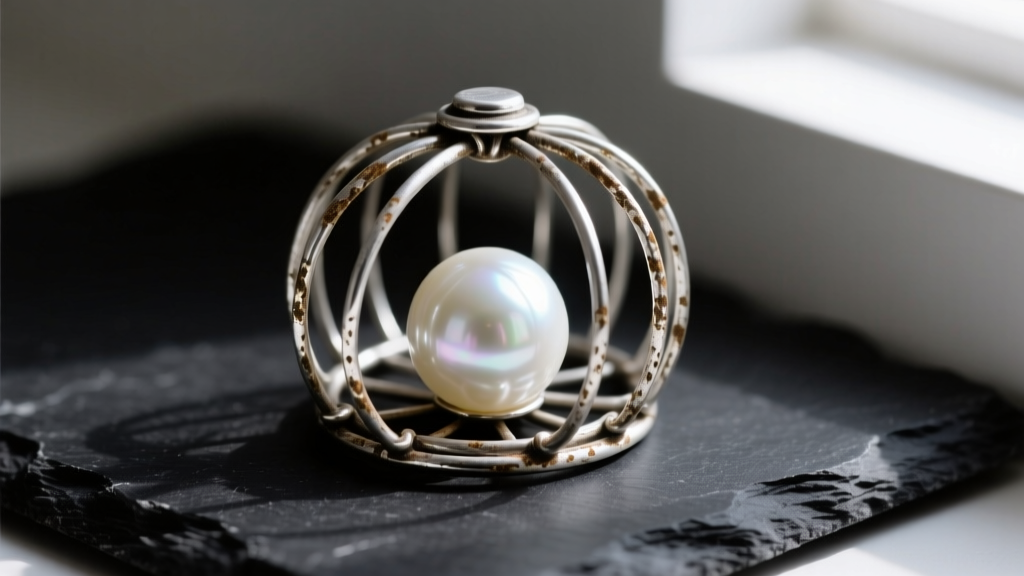
The Anatomy of Caged Pearl Earrings and Common Failure Points
Caged pearl earrings are a masterclass in jewelry tension and geometry. Unlike traditional prong settings that grip a gemstone by its girdle, a cage setting suspends the pearl within a three-dimensional lattice of wire. While this design maximizes light exposure and creates a striking modern silhouette, it introduces unique structural vulnerabilities. As we move through 2026, we see a split in manufacturing: newer models often utilize PVD (Physical Vapor Deposition) coatings to ward off tarnish, but traditional 925 sterling silver and gold vermeil cages remain highly prevalent and notoriously high-maintenance.
To effectively troubleshoot caged pearl earrings, you must first understand their three core components and their specific failure modes:
- The Cage (Wire Lattice): Typically crafted from 20-gauge (0.81mm) or 22-gauge (0.64mm) wire. Failure modes include metal fatigue, tarnish (silver sulfide formation), and plating wear on vermeil pieces.
- The Pearl: Usually an undrilled freshwater pearl held by tension, or a half-drilled Akoya pearl pegged and adhered to a central post. Failure modes include nacre etching from improper cleaning, dehydration, and surface scratching.
- The Post and Clasp: Standard friction posts that bend under pressure, or insecure butterfly backs that fail to grip the post groove.
Troubleshooting Tarnish on Metal Cages Without Damaging Pearls
The most frequent issue jewelry repair benches see with caged pearl earrings is severe cage tarnish. Sterling silver reacts with sulfur in the air to form silver sulfide, creating a blackened patina. The instinctive reaction is to use a commercial silver dip or an ultrasonic cleaner. Never do this.
Pearls are organic gemstones with a Mohs hardness of just 2.5 to 4.5. Their nacre is composed of microscopic aragonite platelets bound by conchiolin, an organic protein. Acids, ammonia, and ultrasonic vibrations will instantly dissolve the conchiolin, leaving the pearl dull, chalky, and permanently ruined.
— Gemological Institute of America (GIA)
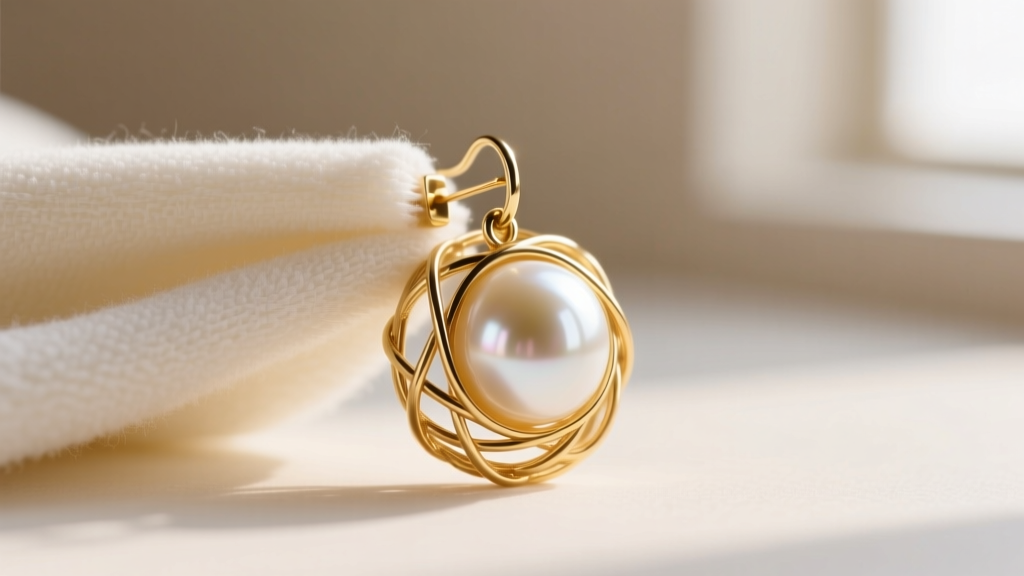
The Safe Cleaning Protocol
To remove tarnish from the wire cage without harming the pearl, you must rely on mechanical action rather than chemical baths. Follow this precise methodology:
- Isolate the Pearl: Wrap the pearl tightly in a piece of clean, lint-free jeweler's tape or plastic wrap to shield it from accidental abrasion or moisture.
- Apply a Mild Abrasive: Use a specialized silver polishing cloth impregnated with micro-abrasives (such as a Sunshine cloth). Do not use liquid polishes, which can wick into the wire joints and leak onto the pearl.
- Directional Polishing: Rub the cloth along the grain of the wire, not in circles. For intricate geometric cages, use a wooden toothpick wrapped in a thin layer of the polishing cloth to reach interior vertices.
- Final Wipe: Remove the tape and gently wipe the pearl with a damp microfiber cloth using only distilled water and a single drop of pH-neutral baby shampoo. Dry immediately.
Fixing Loose Pearls Inside the Wire Cage
If your caged pearl earrings rattle when you move, the tension holding the stone has compromised. In tension-set cages, the pearl is slightly larger than the interior diameter of the cage's equator. Over time, the metal wire experiences 'creep'—a gradual deformation under constant stress—causing the cage to expand by fractions of a millimeter.
Adjusting Tension Cages (Undrilled Pearls)
You can safely compress the cage using nylon jaw pliers. Never use standard steel chain-nose pliers, as they will gouge the silver and destroy any gold plating.
- Identify the equator (the widest part) of the cage.
- Place the nylon jaws on opposite sides of the wire lattice.
- Apply gentle, pulsing pressure. You are looking to compress the diameter by no more than 0.25mm to 0.5mm.
- Test the pearl. If it still spins freely, rotate the pliers 45 degrees and apply another micro-squeeze. Stop immediately once the pearl is snug but not under extreme pressure, which could crack the nacre.
Tightening Prong-Style Cages (Drilled Pearls)
If the cage features internal prongs that grip a drilled pearl, the prongs have likely lifted. Use a bezel pusher or a smooth-jawed flat-nose plier to gently press the prong tips back into the pearl's drill hole. If the pearl spins on its central peg, the adhesive bond has failed. This requires a professional jeweler to drill out the old epoxy and re-peg the pearl using a two-part jeweler's epoxy resin.
Resolving Post and Clasp Mechanism Failures
Because caged pearl earrings are often heavier and more voluminous than standard studs, they place disproportionate leverage on the earring post. A standard 20-gauge (0.81mm) post will easily bend if the earring is snagged on a sweater or hairbrush.
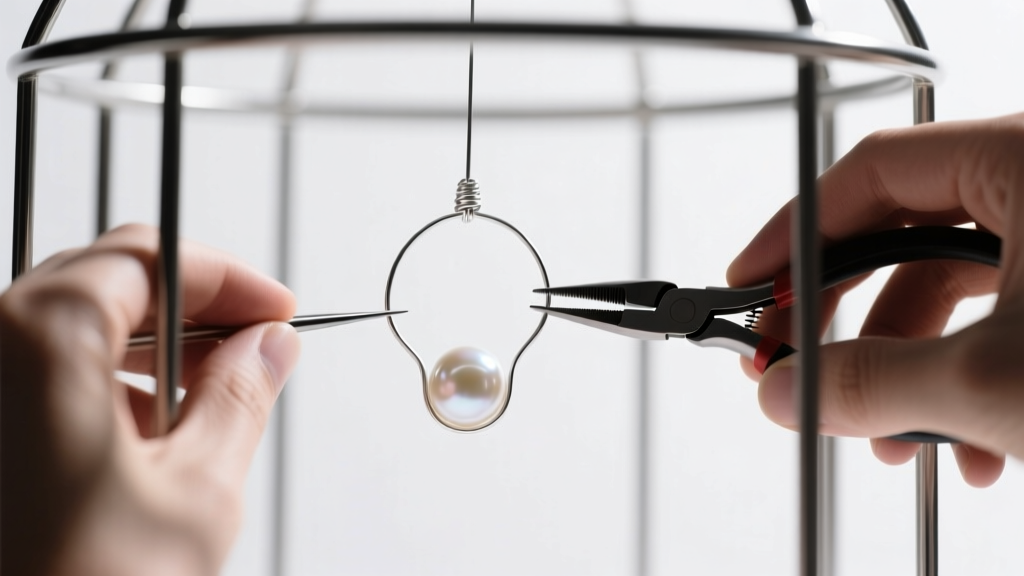
Earring Post Troubleshooting Matrix
| Issue | Root Cause | DIY Fix | When to see a Pro |
|---|---|---|---|
| Bent Post | Lateral torque on 20g wire | Roll on a flat steel block to check straightness; gently bend back using nylon pliers. | If the post shows a white stress mark or micro-fracture. |
| Earring Droops | Heavy cage + weak friction back | Switch to silicone disc backs or jumbo friction backs for increased surface area. | If the post itself is bent downward at the solder joint. |
| Post Won't Click | Worn groove on the post | Clean the post with rubbing alcohol to remove sebum buildup blocking the groove. | If the groove is entirely worn smooth; requires laser welding to re-notch. |
| Skin Irritation | Nickel allergy from base metal post | Coat the post in a medical-grade clear nail polish barrier (temporary). | Have a jeweler cut off the base post and laser-weld a titanium or 14k gold post. |
For heavy caged designs, upgrading to La Pousette backs or screw-backs is highly recommended. These mechanisms lock onto the post groove via a mechanical spring or thread, entirely eliminating the risk of losing a valuable pearl earring to a failed friction clutch.
Preventative Maintenance and Storage Protocols
Troubleshooting is reactive; proper storage is proactive. The conchiolin in pearls requires a slight amount of ambient moisture to prevent cracking, while the sterling silver cage requires a dry, sulfur-free environment to prevent tarnish. Balancing these opposing needs is the key to longevity.
- The Anti-Tarnish Solution: Store your earrings in an airtight ziplock bag with a 3M Anti-Tarnish Strip. These strips absorb airborne sulfur compounds before they can react with the silver cage. Replace the strips every 6 months.
- Humidity Control: Do not store pearls in a safety deposit box or a sealed plastic bag without a slightly damp cotton ball (placed in a separate tiny perforated bag inside the main container). Total desiccation will cause the pearl to craze and crack.
- The 'Last On, First Off' Rule: Hairspray, perfume, and lotions contain alcohols and volatile organic compounds that degrade both pearl luster and gold vermeil plating. Always put your caged pearl earrings on after your beauty routine is complete, and wipe them with a dry cloth before storing.
When to Seek Professional Jeweler Intervention
While tension adjustments and surface polishing are safe DIY tasks, certain failures require a professional bench jeweler. According to Jewelers of America, attempting to solder a broken wire cage while the pearl is still inside will result in catastrophic thermal shock, instantly destroying the gemstone.
If a wire in your cage snaps, the jeweler must carefully extract the pearl, use a laser welder to fuse the wire (which minimizes heat transfer compared to a traditional torch), re-polish the cage, and re-set the stone. Expect to pay between $45 and $85 for this specialized service, a worthwhile investment to salvage a beloved piece of architectural jewelry.


