Stop Annoying Earring Noise: The Ultimate Troubleshooting Guide
Discover practical solutions to stop distracting earring noise. Learn how to fix clinking, tapping, and scratching sounds from dangles and hoops.

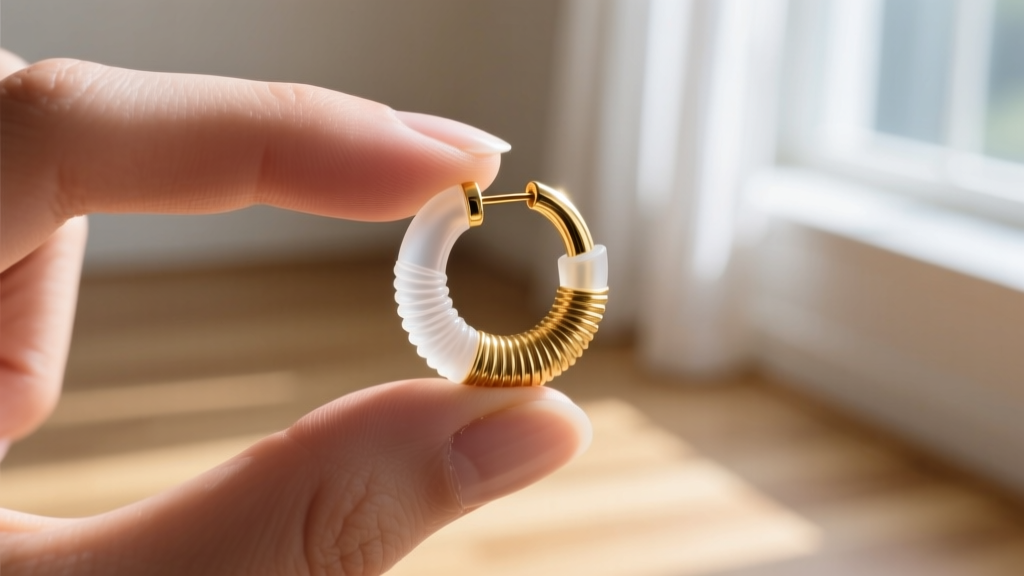
The Anatomy of Earring Noise: Why Do They Clink and Scratch?
For jewelry lovers, few things are as frustrating as the persistent, distracting earring noise that accompanies your favorite dangles and hoops. Whether it is a high-pitched metallic clinking that ruins your professional microphone audio on Zoom calls, a rhythmic tapping against your jawline that triggers sensory overload, or a subtle scratching sound that keeps you awake at night, acoustic jewelry flaws are a genuine problem. Troubleshooting earring noise requires understanding the intersection of metallurgy, pendulum physics, and human anatomy.
Earring noise generally falls into three categories: metal-on-metal friction (such as a charm sliding along a hoop), structural rattling (caused by a loose post inside the piercing fistula), and impact transients (heavy dangles striking the clavicle or jaw). Because the human ear is evolutionarily tuned to detect high-frequency transients in the 4kHz to 8kHz range, the sharp 'clink' of sterling silver or surgical steel hitting itself is magnified by our auditory processing, making it feel significantly louder and more annoying than it objectively is.
Microphone Pickup vs. Physical Discomfort
When addressing this issue, we must separate physical discomfort from audio broadcast problems. A heavy brass hoop might not make a loud noise to the naked ear, but its resonant frequency can easily trigger the compression algorithms in modern USB condenser microphones, resulting in harsh, piercing feedback for your listeners. Conversely, a lightweight titanium threadless end might be completely silent to a microphone but cause physical scratching against the neck due to sharp, unpolished machining edges. Identifying your primary nuisance is the first step in our troubleshooting framework.
Material and Gauge: The Hidden Acoustic Culprits
The metallurgical composition of your jewelry dictates its acoustic resonance. According to manufacturing standards detailed by Rio Grande Jewelry Supply, different alloys vibrate at vastly different frequencies when subjected to kinetic impact. High-karat gold (18k and above) and sterling silver are relatively soft, dense metals that produce a lower, duller 'thud' upon impact. In contrast, 316L surgical stainless steel and titanium are highly rigid, producing a sharp, high-pitched ring that acts much like a tuning fork.
If you are highly sensitive to earring noise, swapping your steel dangles for matte-finished acrylic, carved resin, or dense hardwood alternatives will immediately eliminate the metallic ringing effect. These non-metallic materials possess high internal damping coefficients, meaning they absorb kinetic energy rather than converting it into sound waves.
The Gauge Mismatch Rattle
One of the most common, yet least understood, causes of earring noise is gauge mismatch. The Association of Professional Piercers notes that standard lobe piercings typically heal around an 18-gauge (1.0mm) or 16-gauge (1.2mm) needle. However, many commercial fashion earrings feature ultra-thin 22-gauge (0.64mm) or 20-gauge (0.81mm) posts. When you insert a 22-gauge wire into an 18-gauge healed fistula, you create a 0.36mm gap. This microscopic void allows the earring post to vibrate and rattle against the interior of the piercing channel every time you move your head or speak, creating a localized, muffled buzzing sound that only the wearer can hear.
Troubleshooting Table: Diagnosing Your Specific Earring Noise
Use the diagnostic matrix below to identify the exact source of your earring noise and apply the corresponding mechanical fix.
| Noise Profile | Primary Cause | Material Culprit | Targeted Solution |
|---|---|---|---|
| Sharp, high-pitched clinking | Charms sliding on hoops or metal dangles colliding | 316L Steel, Brass, Titanium | Apply 1.5mm silicone O-rings as bumpers; swap to resin or acrylic charms. |
| Muffled, localized buzzing | Post rattling inside the piercing fistula due to gauge gap | Thin 22G or 20G commercial wires | Upsize to a 16G or 14G post; use a silicone post sleeve to fill the void. |
| Rhythmic scratching or tapping | Sharp wire ends or heavy pendulums striking the jawline | French wire hooks, heavy glass | File and tumble wire ends; apply clear rubber French wire caps. |
| Harsh microphone feedback | Resonant frequencies triggering condenser mic transients | Polished metals, hollow tubes | Switch to matte-finished, solid-core woods or dense polymers for calls. |
Step-by-Step Fixes for Dangles and Hoops
Once you have diagnosed the specific acoustic failure mode of your jewelry, you can implement physical dampening techniques. You do not always need to buy new earrings; often, a few cents worth of jewelry findings can completely silence a noisy pair.
Upgrading to Silicone and Teflon Components
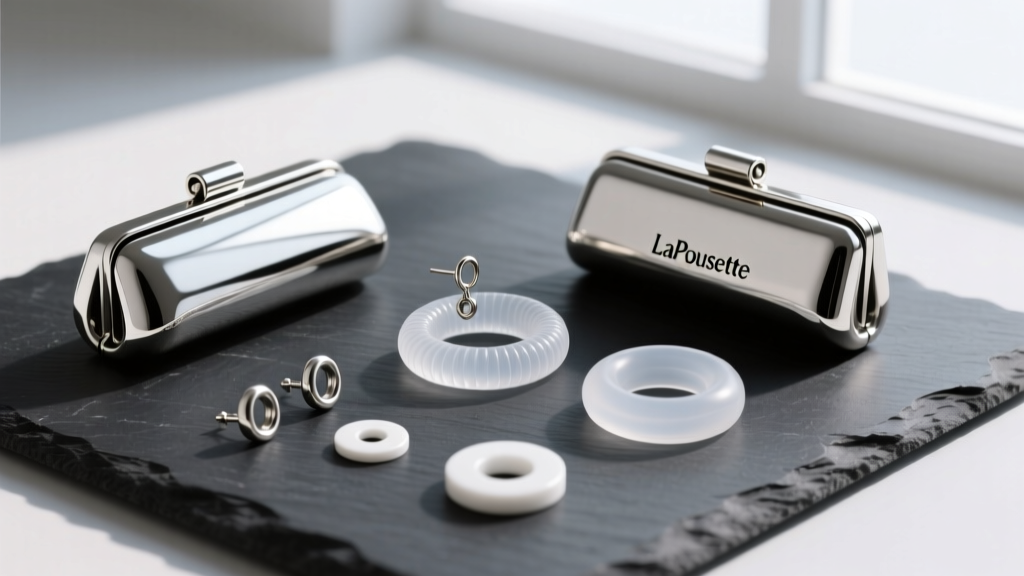
Traditional metal butterfly clutches and friction backs are notorious for creating a secondary noise source. As the metal clutch rubs against the metal post, it generates a subtle squeak. Replacing these with medical-grade silicone backs or Teflon (PTFE) washers introduces a frictionless, sound-absorbing barrier. Teflon is particularly effective for hoop earrings; threading a micro Teflon tube over the hoop wire before closing the hinge prevents the 'click-clack' sound of the metal latch seating into the catch.
The O-Ring Dampening Technique
For dangle earrings where the charm loops directly through an eye-pin or jump ring, metal-on-metal grinding is inevitable. The professional jeweler's trick is to introduce a microscopic elastomer barrier. Purchase a pack of clear silicone O-rings with a 1.5mm inner diameter and 0.5mm thickness. By carefully stretching the O-ring over the jump ring or eye-pin before attaching the charm, you create a permanent, invisible rubber buffer. This completely eliminates the high-frequency clinking without altering the visual drape or movement of the earring.

Professional Audio Hacks for Remote Workers
For remote workers, podcasters, and content creators, earring noise is a broadcast liability. High-end condenser microphones are incredibly sensitive to high-frequency transients. While audio engineers often rely on high-pass filters (HPF) to cut out low-end desk rumble, an HPF will do absolutely nothing to stop the 6kHz 'clink' of a silver hoop hitting a metal zipper or collarbone.
Audio engineers universally agree that fixing acoustic issues at the source is always superior to attempting to EQ them out in post-production. If your jewelry is generating transient spikes, physical dampening is the only reliable cure.
If you must wear metallic earrings on camera, opt for 'deadened' designs. Huggie hoops that sit flush against the earlobe with a secure, clicking hinge produce zero pendulum movement and are therefore entirely silent. Alternatively, threadless jewelry systems, which utilize a bendable pin that creates immense tension inside the post, eliminate the structural rattle that plagues traditional friction-backed studs.
When to Retire the Pair: Irreparable Acoustic Flaws
Not all earring noise can be engineered away. Hollow-tube metal hoops, for example, act as literal acoustic amplification chambers. When the thin metal walls of a hollow hoop strike a shoulder or hair clip, the hollow interior reverberates, magnifying the sound exponentially. No amount of silicone backing or O-ring dampening can fix the structural resonance of a hollow tube. Similarly, heavily oxidized or warped French wires will constantly scratch against the cartilage of the ear, producing an uncomfortable, localized grinding noise that can lead to piercing irritation.
In these cases, the most actionable advice is to retire the pair. Replace hollow hoops with solid-core alternatives, and swap warped French wires for lever-backs or secure locking LaPousette clutches. By understanding the physics of your jewelry and applying targeted mechanical fixes, you can curate an earring collection that is visually stunning, physically comfortable, and completely, blissfully silent.


