When Can You Change Earrings? The True Cost of Healing
Discover when can you change earrings safely. We analyze the hidden costs of premature swaps and budget for quality healing jewelry.


The Financial Risk of Premature Earring Changes
One of the most frequently asked questions in the body modification community is, "when can you change earrings?" While the excitement of swapping your initial jewelry for a new aesthetic is entirely understandable, approaching this milestone from a budget and value assessment perspective reveals a hidden financial trap. Changing your earrings before the fistula (the tube of healed tissue) has fully matured is one of the most expensive mistakes a jewelry enthusiast can make.
When you introduce a new piece of jewelry into an unhealed piercing, you risk micro-tears, bacterial introduction, and severe contact dermatitis. The financial fallout from these complications quickly eclipses the cost of the jewelry itself. An urgent care visit to treat a cartilage infection can range from $100 to $300 out-of-pocket, not including the $20 to $50 for prescription topical antibiotics. Furthermore, if a severe infection leads to hypertrophic scarring or piercing migration, you may face the cost of laser scar revision or surgical reconstruction, which can easily exceed $1,000. Patience is not just a biological necessity; it is a core financial strategy in jewelry curation.
Healing Timelines: Lobe vs. Cartilage Value Metrics
To accurately assess when your investment in a new piece of jewelry can be safely deployed, you must understand the biological timelines of tissue regeneration. The Association of Professional Piercers (APP) emphasizes that healing is a spectrum, not a strict deadline. The initial closure of the wound is vastly different from the complete maturation of the fistula.
| Piercing Location | Standard Gauge | Minimum Healing Time | Full Maturation (Safe to Change) |
|---|---|---|---|
| Standard Earlobe | 18g - 16g | 6 - 8 Weeks | 3 - 4 Months |
| Upper Lobe / High Lobe | 16g - 14g | 8 - 12 Weeks | 4 - 6 Months |
| Helix / Flat | 16g - 14g | 6 - 9 Months | 9 - 12 Months |
| Conch / Daith / Rook | 16g - 14g | 9 - 12 Months | 12 - 18 Months |
| Industrial (Scaffold) | 14g | 12 - 15 Months | 18+ Months |
From a value perspective, buying expensive 14k gold or gem-set jewelry for a helix piercing at the three-month mark is a poor allocation of funds. The tissue is still fragile, and the heavy weight of premium metals can cause the piercing angle to shift, leading to a crooked heal that ruins the aesthetic value of the placement.
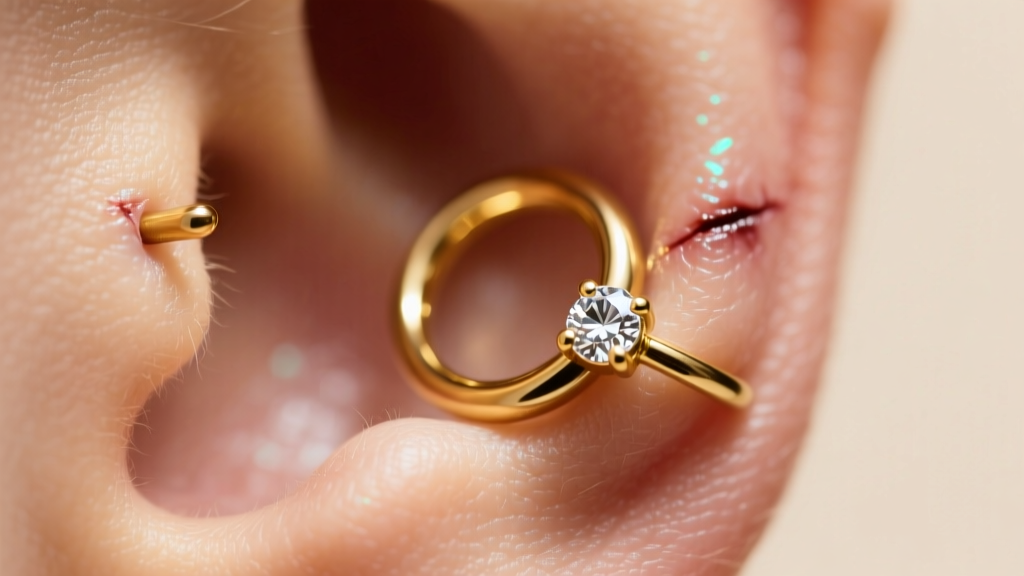
Budgeting for Implant-Grade Titanium: A Value Assessment
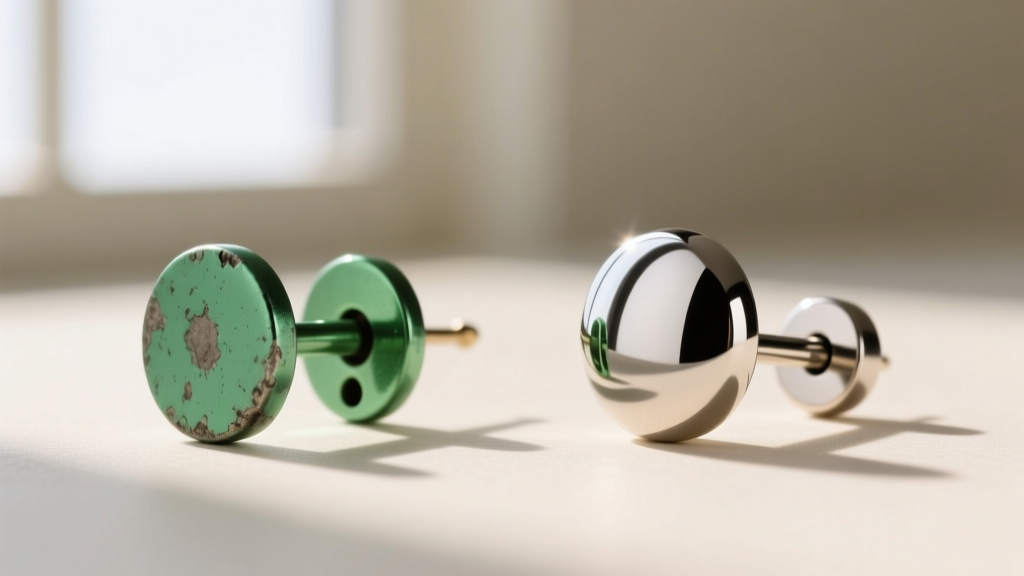
When evaluating when can you change earrings, the material of the new jewelry is just as critical as the timing. The market is flooded with "surgical steel" and "hypoallergenic" fashion jewelry that retail for $10 to $25. From a budget perspective, these are false economies. Most commercial surgical steel (316L) contains 8% to 12% nickel. According to the American Academy of Dermatology, nickel allergy is one of the most common causes of contact dermatitis, which can trigger chronic inflammation in a healing fistula.
The True Cost of Quality Materials
To protect your financial and biological investment, your first post-healing jewelry change should be ASTM F-136 implant-grade titanium. Here is how the value breaks down:
- Budget Fashion Alloys ($10 - $25): High risk of oxidation, nickel leaching, and poor finishing that harbors bacteria. High failure rate resulting in discarded jewelry.
- 316L Surgical Steel ($20 - $40): Acceptable for fully healed, mature lobes, but risky for fresh cartilage due to nickel content and microscopic surface porosity.
- ASTM F-136 Titanium ($30 - $60): The gold standard for value. Completely nickel-free, biocompatible, and features a mirror-polish that prevents biofilm adhesion. Brands like Anatometal offer exceptional baseline quality in this tier.
- Premium 14k/18k Gold ($120 - $300+): Best reserved for fully matured piercings (1+ years). Brands like BVLA (Body Vision Los Angeles) or Maria Tash offer heirloom-quality pieces that retain long-term value and can be safely swapped without irritation.
The Downsize Investment: Saving Money on Long-Term Care
A critical, often overlooked aspect of the "when can you change earrings" timeline is the mandatory downsize. When you are initially pierced, the piercer uses a longer post (often 5/16" or 3/8") to accommodate the inevitable swelling that occurs in the first two weeks. Once the swelling subsides, that extra post length becomes a financial and physical liability.
Excess post length catches on hair, towels, and headphones. This snagging causes blunt force trauma to the healing fistula, leading to irritation bumps (hypertrophic scarring). Scheduling a downsize appointment with your piercer—usually around the 4 to 8-week mark for lobes, and 8 to 12 weeks for cartilage—costs between $15 and $35 for a basic titanium labret. This minor expenditure secures the structural integrity of the piercing. Failing to downsize frequently results in the jewelry embedding into the tissue as it swells, requiring an emergency medical intervention to cut the jewelry out, effectively destroying both the piercing and the jewelry.
Signs Your Piercing is Ready for a Wardrobe Upgrade
Rather than relying on a strict calendar date, assess the biological indicators of your piercing to determine if it is financially and physically safe to introduce new jewelry. The Mayo Clinic advises looking for the complete cessation of inflammatory responses before manipulating the tissue.
The Value-Driven Readiness Checklist
- Zero Exudate: There is no lymph fluid (crusties) forming around the entry or exit points. The presence of lymph indicates the body is still actively fighting micro-trauma.
- Normal Tissue Color: The skin immediately surrounding the piercing matches your natural skin tone. Any redness, purplish hues, or hyperpigmentation means the tissue is still compromised.
- Pain-Free Manipulation: You can gently move the jewelry without experiencing sharp pain, dull aching, or a sensation of heat.
- Stable Fistula Diameter: The hole does not shrink or feel tight immediately after cleaning, indicating the tissue has established a stable, epithelialized tunnel.
Conclusion: Patience as a Financial Strategy
Ultimately, knowing when can you change earrings is about balancing your aesthetic desires with biological realities and financial prudence. Rushing the healing process to wear a trendy new piece of jewelry almost always results in a net financial loss through medical treatments, ruined premium jewelry, and the cost of re-piercing after a rejection. By investing in ASTM F-136 titanium, adhering to strict downsizing protocols, and waiting for full fistula maturation, you ensure that your jewelry collection remains a valuable, enduring asset rather than a source of costly complications.


