Troubleshooting Earrings Starfish Snags, Droop, and Tarnish
Troubleshoot common earrings starfish issues. Learn how to fix prong snags, prevent lobe droop, and stop cheap alloys from tarnishing your skin.

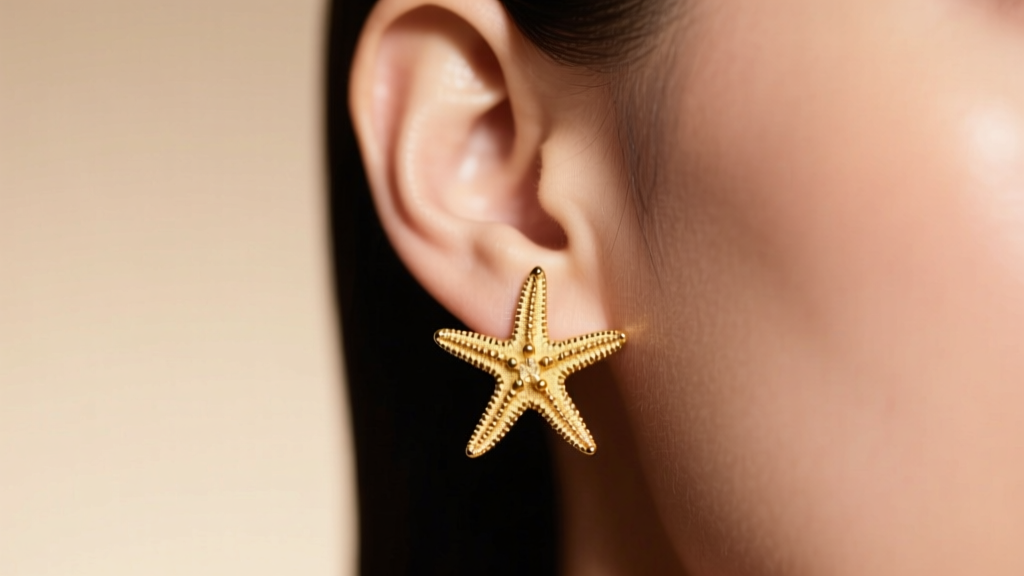
Marine-inspired jewelry remains a staple in both coastal and everyday wardrobes. However, when searching for the perfect oceanic motif, earrings starfish designs present unique structural and metallurgical challenges. Unlike symmetrical studs or perfectly balanced hoops, the asymmetrical, multi-armed geometry of a starfish creates specific wearability issues. From severe lobe droop and relentless hair snags to contact dermatitis, these beautiful pieces require targeted troubleshooting to remain comfortable and functional.
This comprehensive guide dives deep into the ergonomics, material science, and practical fixes for starfish earring owners, ensuring your jewelry looks as good as it feels.
The Physics of Lobe Droop: Weight Distribution Fixes
The most frequent complaint regarding starfish earrings is "lobe droop" or the earring facing downward. This is a simple matter of physics. A starfish has five arms radiating from a central disc. If the earring post is soldered dead center, the weight distribution is highly dependent on the orientation of the arms. Often, the bottom arms are cast slightly thicker or feature heavier gemstone accents, pulling the center of gravity downward. Furthermore, standard butterfly clutch backs offer a narrow surface area, allowing the heavy earring to pivot on the post axis.
Actionable Solutions for Lobe Support
- Upgrade to Wide-Base Clutches: Discard standard metal butterfly backs. Replace them with La Poussiere clutch backs or 6mm silicone O-ring backs. The wider 6mm base creates a larger fulcrum against the back of the earlobe, resisting the downward pivot of the heavy starfish face.
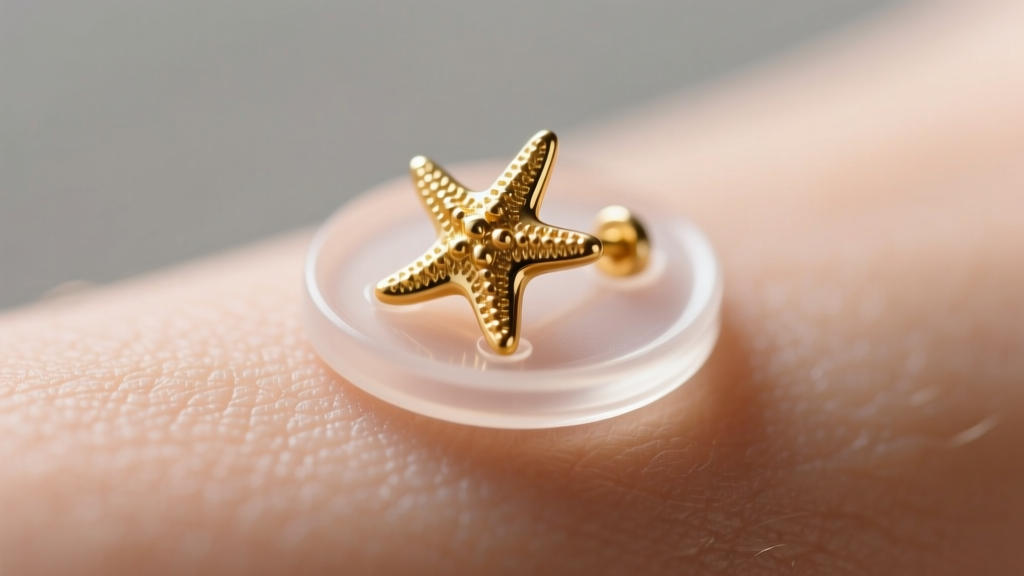
- Polyurethane Lobe Patches: For vintage or solid gold starfish pieces that exceed 8 grams, use invisible lobe support patches (like Blingwraps). These adhesive polyurethane strips distribute the weight across a 15mm diameter on the front of the lobe, preventing the piercing hole from stretching or tearing over time.
- Post Re-soldering: If you have a fine jewelry piece (14k or 18k gold) that persistently droops, take it to a bench jeweler. They can re-solder the post 1mm to 2mm higher on the central disc, artificially shifting the center of gravity to force the starfish to sit flush against the lobe.
Prong Snags and Hair Tangles: Smoothing the Edges
Starfish designs are notorious for catching on knit sweaters, silk blouses, and fine hair. This is especially true for pave-set starfish earrings, where dozens of tiny gemstones are held in place by microscopic metal prongs. Over time, these prongs can lift slightly due to everyday friction, creating microscopic hooks. Even solid cast starfish earrings with tapered, pointed arms can act like tiny combs, tangling hair that falls near the ear.
Diagnostic and Repair Protocol
To troubleshoot snags, you must first identify the earring's construction type. Use a 10x jeweler's loupe to inspect the perimeter of the starfish arms.
| Design Type | Snag Risk Level | Troubleshooting Fix |
|---|---|---|
| Solid Cast (Plain Metal) | Medium | Use a 600-grit jeweler's needle file to gently round off the sharp tips of the arms. Polish with a microfiber cloth. |
| Pave-Set Gemstone | High | Do not file. Take to a jeweler for "prong re-tipping and burnishing" to flatten lifted metal over the stones. |
| Filigree / Cut-Out | Very High | Avoid wearing with loose hair. Apply a micro-coat of clear jewelry sealant to blunt sharp interior edges. |
| Enamel Inlay | Low | Inspect the metal bezel holding the enamel. If the bezel is lifted, a jeweler must push it back down with a bezel roller. |
"Never attempt to file pave prongs yourself. The metal is often work-hardened and thin; a DIY file will sheer the prong off entirely, resulting in a lost diamond or sapphire. Always rely on a professional bench jeweler for prong maintenance." — Master Bench Jeweler Guidelines, Gemological Institute of America (GIA)
Contact Dermatitis and the "Green Ear" Effect
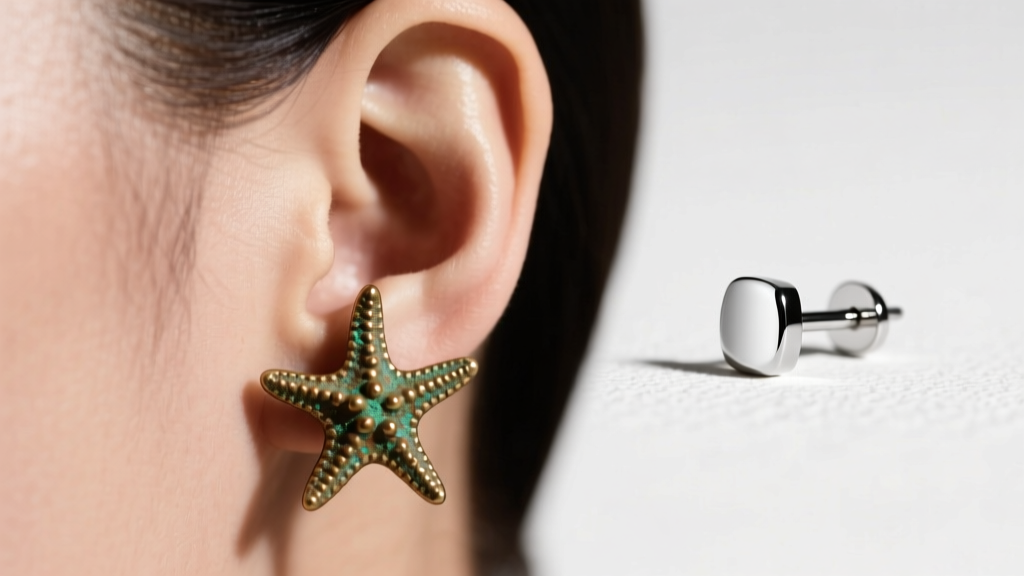
Many mass-produced earrings starfish pieces sold in fast-fashion or boutique settings are crafted from brass or zinc alloys with a microscopically thin flash-plating of gold or silver. When this plating wears away—often within weeks of daily wear—the underlying copper or nickel is exposed to the skin's sebum, sweat, and environmental chlorides. This chemical reaction creates copper chloride salts, which manifest as the dreaded "green ear" stain, alongside itchy, flaky contact dermatitis.
Identifying and Neutralizing Base Metal Reactions
If your starfish earrings are causing skin irritation, you must determine the base metal. Look for stamps on the post: "925" indicates sterling silver (which can still tarnish due to its 7.5% copper content but rarely causes green skin), while a lack of stamps usually implies brass or pewter.
- The Rhodium Plating Fix: If your starfish earrings are sterling silver or white gold but causing irritation due to nickel alloys in the solder, have them electroplated with rhodium. This platinum-group metal is completely hypoallergenic and creates a permanent, bright white barrier. Expect to pay between $35 and $75 for this service.
- The Clear Coat Barrier (Temporary): For inexpensive brass starfish earrings, painting the post and the back of the central disc with two coats of polyurethane-based clear nail polish creates a physical barrier against sweat. Reapply every 14 days, as friction will wear the coating away.
- The Ultimate Upgrade: If you suffer from severe nickel allergies, discard base-metal novelty pieces. Invest in starfish earrings milled from ASTM F136 implant-grade titanium or solid 14k/18k nickel-free gold. The American Academy of Dermatology strongly recommends these materials for patients with chronic allergic contact dermatitis.
Cartilage Migration: Why Starfish Shapes Fail in Helix Piercings
A dangerous trend involves forcing starfish studs into upper cartilage piercings, such as the helix or flat. This is a critical error in jewelry ergonomics. Cartilage piercings require jewelry that sits perfectly flush to avoid pressure necrosis and migration. Because starfish shapes are inherently irregular and often feature a slightly domed or uneven backplate, they create uneven pressure points against the rigid cartilage tissue.
Furthermore, standard starfish earrings utilize a thin 20-gauge (0.8mm) post with a butterfly back. Butterfly backs trap moisture and bacteria against the cartilage fistula, drastically increasing the risk of perichondritis (a severe cartilage infection). According to the Association of Professional Piercers (APP), cartilage jewelry should feature a flat back and be crafted from mirror-finished, implant-grade materials to promote tissue health.
How to Safely Wear Starfish in Cartilage
If you are determined to wear a starfish motif in your helix or flat piercing, you must have the piece custom-fitted or modified by a professional piercer:
- Convert to a Flat-Back Labret: Have a jeweler remove the standard post and laser-weld a 16-gauge (1.2mm) or 18-gauge (1.0mm) flat-back titanium labret post to the center of the starfish.
- Measure the Length Precisely: Cartilage thickness varies. The labret post must be exactly 6mm or 8mm in length to sit flush against the back of the ear without protruding and catching on hair or pillowcases.
- Ensure a Flat Backplate: The back of the starfish central disc must be completely flat or slightly concave to hug the natural curve of the ear. If it is domed, it will act as a lever, slowly forcing the piercing channel to migrate downward and reject.
Quick Reference Troubleshooting Chart
| Problem Identified | Root Cause | Immediate Action Required | Long-Term Solution |
|---|---|---|---|
| Earring faces downward | Top-heavy arms; narrow clutch back | Switch to 6mm silicone O-ring backs | Re-solder post 1mm higher on the disc |
| Catching on hair/sweaters | Lifted pave prongs or sharp cast tips | Inspect with 10x loupe; avoid loose hair | Professional prong burnishing or filing |
| Green skin / Itching | Copper/nickel base metal reacting to sweat | Apply polyurethane clear coat to post | Rhodium plate or upgrade to solid 14k gold |
| Cartilage pain / swelling | Uneven pressure from domed backplate | Remove immediately; clean with saline | Convert to 16g flat-back titanium labret |
By understanding the structural nuances and metallurgical realities of marine-themed jewelry, you can salvage your favorite pieces and ensure they remain a comfortable, staple part of your rotation. Proper maintenance, from upgrading your earring backs to professional prong inspections, transforms problematic novelties into heirloom-quality treasures.


