Are Magnetic Earrings Safe? A Value & Cost Guide
Are magnetic earrings safe for daily wear? We analyze the hidden costs, material risks, and true value of magnetic earrings versus traditional options.

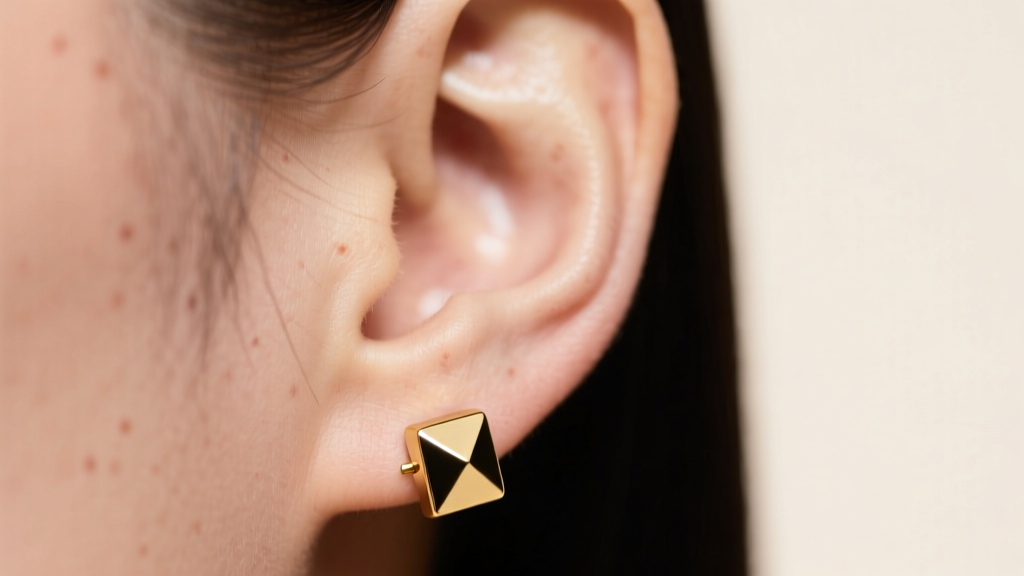
The True Cost of Non-Pierced Jewelry: Are Magnetic Earrings Safe?
For consumers exploring non-pierced jewelry options on a strict budget, a critical question frequently arises: are magnetic earrings safe for daily wear? While the upfront cost of magnetic studs is undeniably appealing—often ranging from $8 to $20 for a multi-pack—evaluating their true financial and practical value requires looking far beyond the initial price tag. As a budget and value assessment, we must weigh the immediate savings against the hidden costs of material degradation, high loss rates, and potential dermatological expenses.
The non-pierced jewelry market is flooded with inexpensive magnetic alternatives that promise the look of a traditional stud without the commitment or pain of a needle. However, the intersection of magnetism, human tissue, and cheap metallurgy creates a complex value proposition. To determine if magnetic earrings are a smart financial choice or a false economy, we must break down the physics of magnetic pinch, the realities of base metal plating, and the long-term cost-per-wear metrics compared to traditional clip-ons and professional piercings.
Magnetic Physics and Tissue Health: The Hidden Medical Risks
To assess safety, we first have to understand the mechanics of magnetic earrings. These pieces rely on neodymium magnets (NdFeB) to clamp the earlobe between a decorative front and a metallic or silicone back. The strength of these magnets is measured in Gauss or Tesla ratings, and this is where budget manufacturing becomes a severe liability.
Cheap magnetic earrings often utilize high-grade N52 neodymium magnets to ensure the earring does not fall off during transit or initial wear. However, an N52 magnet generates an immense localized clamping force. When applied to the delicate vascular network of the earlobe, this excessive pressure can restrict capillary blood flow, leading to localized ischemia. Over a period of 4 to 6 hours, sustained ischemia can result in pressure necrosis—essentially, the tissue begins to die from oxygen deprivation.
According to FDA safety warnings regarding high-powered neodymium magnets, the pinching force of these rare-earth magnets is strong enough to cause severe tissue damage. While the FDA primarily targets ingestion risks, the dermatological principle of pressure necrosis remains identical for earlobe clamping. Safe magnetic earrings should utilize lower-grade magnets (such as N35 or N38) paired with a wider surface area to distribute the clamping force evenly, keeping the pressure below the threshold of capillary restriction.
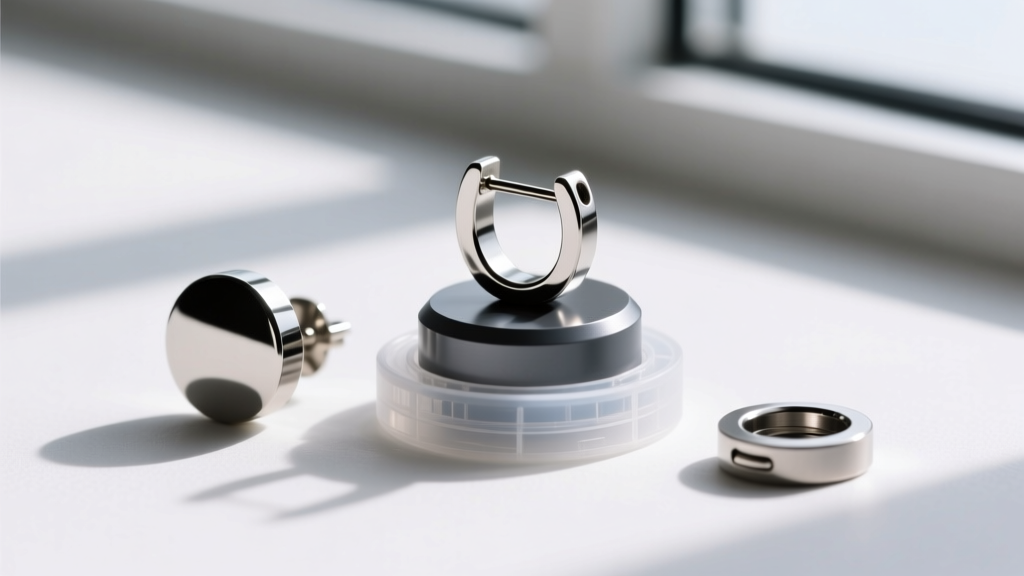
Material Degradation and the Cost of Contact Dermatitis
Beyond the physical clamping force, the metallurgical composition of budget magnetic earrings poses a significant financial risk disguised as a medical one. The decorative front of a magnetic earring is rarely solid gold or platinum. Instead, budget manufacturers use brass, copper, or zinc alloy bases that are flash-plated with a microscopically thin layer of gold or silver.
When this plating wears away—often within just a few weeks of daily wear—the base metals are exposed to the skin's natural oils and sweat. This exposure frequently triggers allergic contact dermatitis, primarily due to nickel leaching. The American Academy of Dermatology notes that nickel allergy is one of the most common causes of allergic contact dermatitis, resulting in itchy, blistered, and hyperpigmented skin.
From a budget perspective, the cost of treating a severe contact dermatitis flare-up (including over-the-counter hydrocortisone, antihistamines, or a dermatologist copay) can easily exceed $50 to $150. Therefore, a $12 pair of magnetic earrings that causes a nickel allergy is actually a $162 liability. To mitigate this, value-conscious buyers must seek out magnetic earrings that explicitly use 316L surgical stainless steel or solid titanium for the skin-facing cap, bypassing the flash-plating trap entirely.
Budget Comparison: Magnetic Studs vs. Clip-Ons vs. Piercing
To accurately assess value, we must compare the total cost of ownership across the three primary non-pierced and pierced earring categories over a one-year period. The following table breaks down the average market pricing, expected lifespan, and associated hidden costs.
| Earring Type | Average Upfront Cost | Expected Lifespan | Loss Rate | Hidden/Medical Risks |
|---|---|---|---|---|
| Budget Magnetic Studs | $10 - $18 | 2 - 4 Months | High (40%+) | Nickel dermatitis, tissue necrosis |
| Premium Magnetic (Titanium) | $35 - $60 | 1 - 2 Years | Medium (20%) | Mild pressure fatigue |
| Traditional Screw-Back Clip-Ons | $25 - $80 | 3 - 5+ Years | Low (5%) | Mechanical pinching, cartilage pain |
| Professional Lobe Piercing | $40 - $90 (w/ jewelry) | Lifetime | N/A | Infection risk during healing |
As the data illustrates, budget magnetic earrings suffer from a catastrophic loss rate. Because they rely on friction and magnetic attraction rather than a mechanical hinge or a physical piercing, they are easily dislodged by hair brushing, winter scarves, or even vigorous nodding.
The Economics of the 'Loss Rate'
If you purchase a $15 multi-pack of budget magnetic earrings and lose half of them within the first three months, your annualized replacement cost skyrockets. Furthermore, the Mayo Clinic's overview on contact dermatitis emphasizes that repeated exposure to allergens worsens the immune response over time. What starts as a mild itch in month one can develop into chronic weeping sores by month three, forcing you to discard the jewelry entirely and seek medical treatment.
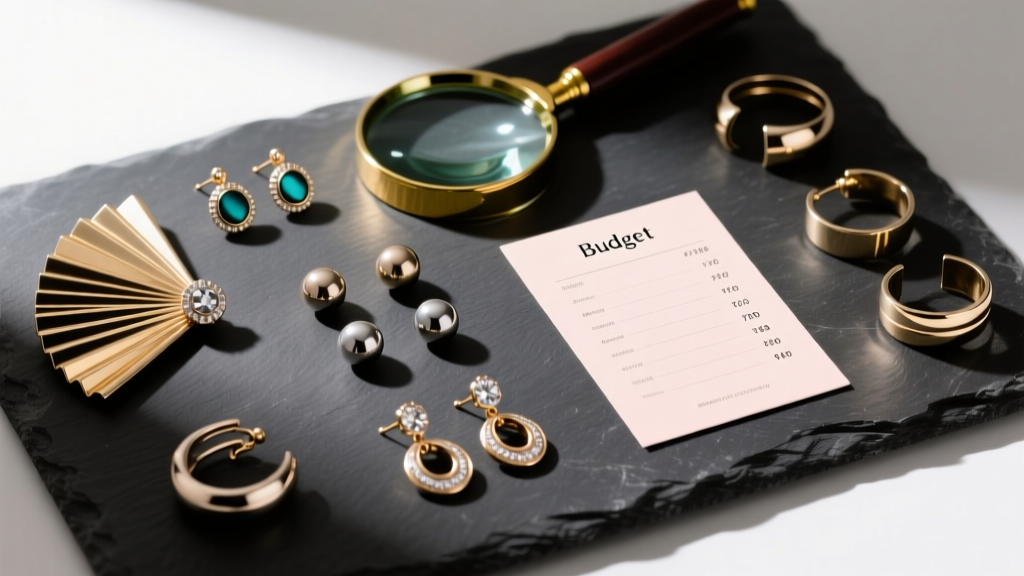
Expert Buying Framework: Maximizing Your Budget Safely
If your lifestyle, profession, or personal preference dictates the use of magnetic earrings, you can still extract genuine value from the market by applying a strict purchasing framework. Do not buy blind multi-packs from unverified online marketplaces. Instead, evaluate potential purchases against these three non-negotiable criteria:
- Verify the Metal Grade: The product description must explicitly state '316L Surgical Steel,' 'Implant-Grade Titanium (ASTM F136),' or 'Solid 14k Gold.' Avoid terms like 'gold-plated,' 'alloy,' or 'stainless steel' (without the 316L designation, as 304 steel still contains trace nickel that can leach).
- Check the Magnet Housing: The magnet itself should never touch your skin directly. Neodymium oxidizes rapidly and can cause chemical burns. Ensure the magnet is fully encapsulated in a resin or plastic housing, and that the back piece features a soft silicone sleeve to increase friction and reduce localized pressure.
- Assess the Surface Area:Avoid tiny, pinpoint magnetic backs. A wider, disc-shaped back (at least 6mm in diameter) distributes the magnetic pull across a broader area of the earlobe, significantly reducing the risk of ischemic tissue damage.
Final Verdict on Value and Safety
So, are magnetic earrings safe? The answer is entirely dependent on the manufacturing quality and the specific magnetic grade used. Budget-tier magnetic earrings (under $20) represent a poor financial investment and a tangible health risk. The combination of high-powered N52 magnets and nickel-leaching flash plating creates a scenario where the hidden medical and replacement costs far outweigh the initial savings.
However, premium magnetic earrings crafted from implant-grade titanium with calibrated N35 magnets and silicone friction sleeves offer a safe, viable alternative for temporary non-pierced wear. For long-term, lifelong value, a professional needle piercing performed by an APP-certified piercer remains the undisputed champion of cost-per-wear economics. But for those strictly committed to non-pierced aesthetics, investing $40 to $60 in a single, high-quality magnetic pair will ultimately save you money, protect your skin, and provide a vastly superior wearing experience.


