How to Fix Flower Earrings Dangle Styles That Sag or Snag
Learn how to troubleshoot flower earrings dangle styles. Fix sagging lobes, bent wire petals, and snagging hooks with our expert jewelry repair guide.

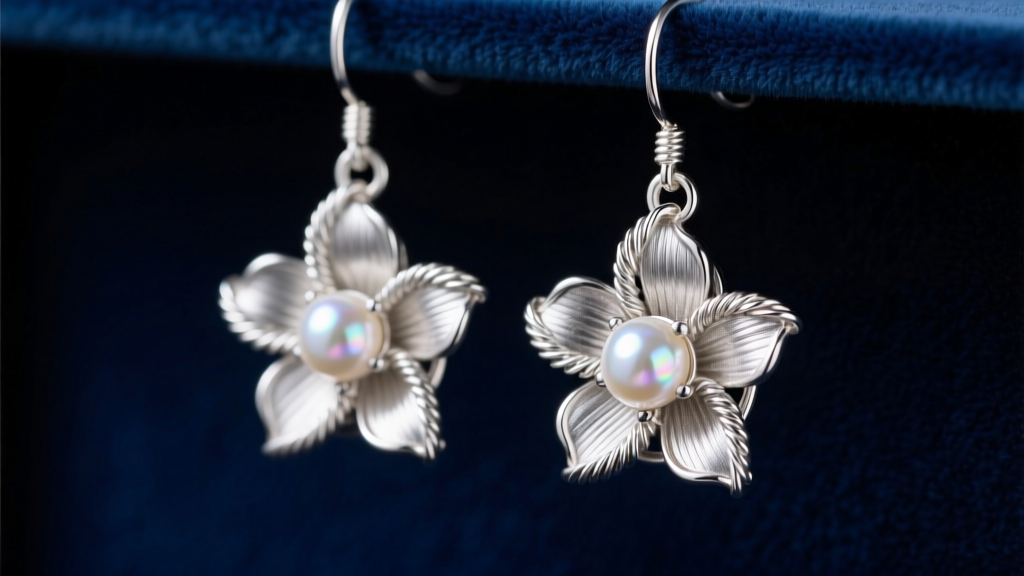
Floral motif jewelry remains a perennial favorite, but the intricate construction of flower earrings dangle styles introduces a unique set of mechanical and structural vulnerabilities. Unlike simple studs or rigid hoops, dangle earrings with floral heads act as pendulums. They feature multiple moving parts, delicate wire-wrapped petals, and top-heavy center stones. Over time, this biomechanical stress leads to stretched earlobes, forward-tilting hooks, snagged hair, and trapped tarnish in deep metallic crevices.
As a jewelry repair specialist, I see these specific failure modes constantly. Whether you are dealing with a vintage 925 sterling silver rose drop or a modern titanium daisy chandelier, understanding the physics and metallurgy of your earrings is the first step toward restoring them. This comprehensive troubleshooting guide will walk you through diagnosing and fixing the most common issues associated with floral dangle designs, utilizing professional jeweler techniques and material science.
The Biomechanics of Floral Dangles: Why They Fail
To troubleshoot effectively, we must first understand why flower earrings dangle designs are inherently prone to damage. A standard floral dangle consists of three main components: the ear wire (or post), the primary jump ring connector, and the floral body. The floral body itself is often constructed using 22-gauge (0.64mm) or 24-gauge (0.51mm) dead-soft wire to form delicate petals around a heavier central gemstone.
This creates a severe center-of-gravity imbalance. The heavy floral head pulls downward, while the thin ear wire attempts to pivot inside the ear piercing. According to Rio Grande, a leading jewelry supply authority, using wire thinner than 20-gauge (0.81mm) for structural connectors in heavy dangles guarantees eventual metal fatigue and deformation. When the connector jump ring is left unsoldered, the constant pendulum swinging slowly pries the metal apart, leading to catastrophic loss of the earring.
Troubleshooting Forward Tilt and Lobe Sag
The most frequent complaint regarding flower earrings dangle styles is the "forward tilt," where the weight of the flower pulls the earwire forward, causing the earring to face the floor rather than dangling gracefully. This is exacerbated by heavy materials like solid brass, thick glass, or large natural turquoise cabochons.
The Silicone O-Ring Counterweight Method
Before attempting to bend or reshape your ear wires—which can cause work-hardened metals to snap—try adjusting the posterior counterweight. Standard metal butterfly backs or thin silicone stoppers are insufficient for heavy florals.
- Step 1: Purchase medical-grade silicone O-rings (specifically 2mm outer diameter with a 0.8mm to 1.0mm inner hole to fit standard 20G or 18G wires).
- Step 2: Slide two O-rings onto the back of the ear wire. The added friction and slight posterior weight will force the floral head to pivot upward.
- Step 3: If the tilt persists, the issue is a stretched piercing. Switch from a standard fishhook wire to an 18-gauge (1.02mm) leverback finding. Leverbacks feature a hinged, closed loop that sits higher on the lobe, physically preventing the forward pivot point from dropping below the earlobe's center of mass.

Solving the Snagging Nightmare: Hair and Lace
Intricate floral designs, particularly those featuring filigree work or wire-wrapped stamens, are notorious for catching on fine hair, knitwear, and lace. This is rarely an issue with the petals themselves; the culprit is almost always the connecting hardware and unfinished wire ends.
Identifying and Filing Wire Burrs
When mass-produced flower earrings are stamped or cut, microscopic metal burrs are left on the edges of the petals. Run a piece of silk fabric or a cotton swab over the edges of your floral dangles. If the cotton snags, you have sharp burrs. Use a fine-grit jeweler's needle file (specifically a #6 cut barrette or round file) to gently smooth the edges, followed by polishing with a micro-mesh pad to restore the shine without removing the metal's protective oxidation layer.
The Jump Ring Soldering Fix
The loop connecting the ear wire to the flower is usually a split jump ring. As the earring swings, hair slips into the microscopic gap of the split ring, eventually pulling it open. The permanent fix is to replace the split jump ring with a soldered closed jump ring. If you must use a split ring, ensure the cut is perfectly flush. You can seal the gap temporarily using a microscopic drop of cyanoacrylate (jeweler's epoxy), though professional silver or gold soldering is the only permanent solution recommended by the Jewelers of America for high-value pieces.
Deep-Cleaning Textured Petals and Crevices
The very textures that make floral dangles beautiful—hammered finishes, engraved veins, and clustered stamen beads—are magnets for sebum, dead skin cells, and lotion buildup. This organic matter accelerates the oxidation of sterling silver and brass, turning intricate crevices black and dulling the metal's reflectivity.
Safe Cleaning Protocols by Material
Never blindly toss floral dangles into an ultrasonic cleaner. The high-frequency cavitation can shatter porous gemstones often used in floral centers, such as opals, pearls, and turquoise. The Gemological Institute of America (GIA) strictly advises against ultrasonic and steam cleaning for any organic or porous gems.
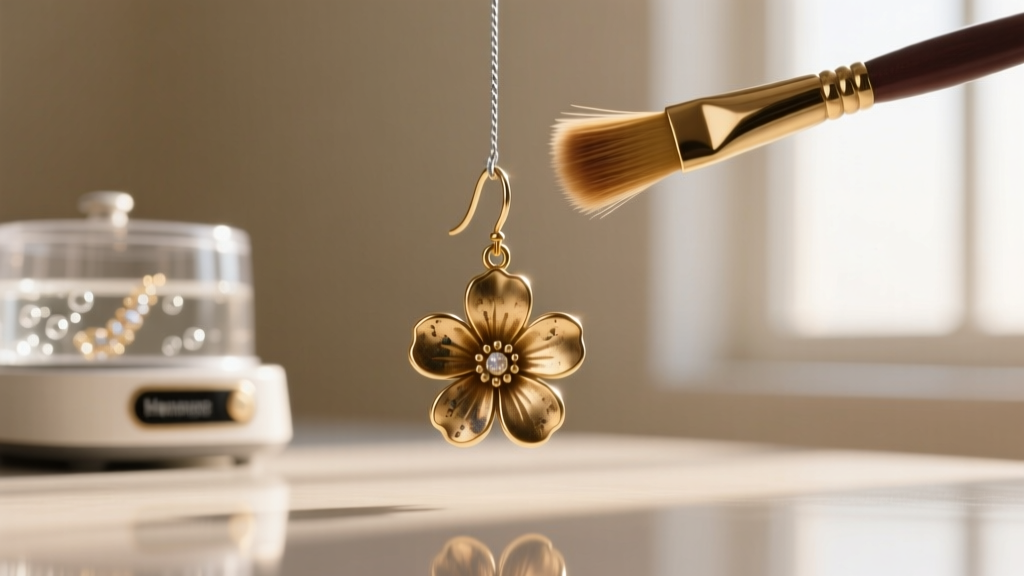
- For All-Metal Florals (No Stones): Submerge in a warm bath of distilled water and a few drops of ammonia-free dish soap. Use a soft-bristled baby toothbrush to gently agitate the crevices. Rinse and dry immediately with a microfiber cloth to prevent water spots.
- For Silver with Porous Stones: Apply a silver polishing paste to a cotton swab (Q-tip) and carefully trace the metal veins, avoiding the stone. Wipe away residue with a damp cloth.
- For Gold Vermeil Florals: Avoid abrasive pastes entirely, as they will strip the thin gold layer (usually 2.5 microns) off the sterling silver base. Use only a mild soap solution and a lint-free cloth.
Quick-Fix Troubleshooting Matrix
Use the following diagnostic table to quickly identify the failure mode of your floral dangles and apply the correct intervention.
| Problem Symptom | Root Cause | At-Home DIY Fix | Professional Jeweler Fix |
|---|---|---|---|
| Earring faces the floor (Forward Tilt) | Top-heavy floral head; thin 22G ear wire | Add 2mm silicone O-rings to the back post | Swap to 18G leverback findings or add posterior metal counterweights |
| Constant hair snagging | Open split jump rings; stamped metal burrs | File burrs with #6 needle file; seal jump ring gap with jeweler's epoxy | Laser weld split rings closed or replace with solid soldered rings |
| Petals bend out of shape easily | Dead-soft wire used for structural petals | Gently reshape by hand; avoid repeated bending | Replace petals with half-hard wire or cast metal components |
| Black grime in petal veins | Trapped sebum and accelerated silver oxidation | Swab with silver polish and baby toothbrush | Professional ionic cleaning and rhodium plating (for silver) |
Structural Upgrades for Longevity
If you frequently wear flower earrings dangle designs and are tired of constant repairs, consider upgrading the base hardware. Many affordable floral dangles are constructed with brass or copper wire that is merely plated. Once the plating wears off at the high-friction pivot points, the base metal reacts with your skin's pH, causing green discoloration and rapid structural degradation.
Upgrading the ear wires to niobium or Grade 23 titanium (Ti-6Al-4V) not only eliminates allergic contact dermatitis but also provides a significantly higher tensile strength than standard sterling silver. Titanium ear wires will not stretch or deform under the pendulum weight of a heavy floral head. When attaching the floral body to these upgraded wires, always use a closed, soldered jump ring to ensure the structural integrity of the entire piece.
Expert Insight: The longevity of a floral dangle earring is rarely determined by the beauty of its petals, but rather by the metallurgical integrity of its connecting jump rings and the gauge of its ear wire. Treat the hardware with the same scrutiny as the gemstones.
By understanding the specific mechanical stresses placed on floral motifs, you can transition from constantly replacing broken jewelry to maintaining a pristine, heirloom-quality collection. Regular inspection of connecting rings, mindful cleaning protocols, and strategic weight distribution will ensure your favorite botanical dangles remain as vibrant and functional as the day you acquired them.


