Buying Guide: Choosing the Best 1/4 Carat Diamond Earrings
Discover what to look for when buying 1/4 carat diamond earrings. Expert advice on cut, color, clarity, settings, and pricing for 0.25ctw studs.

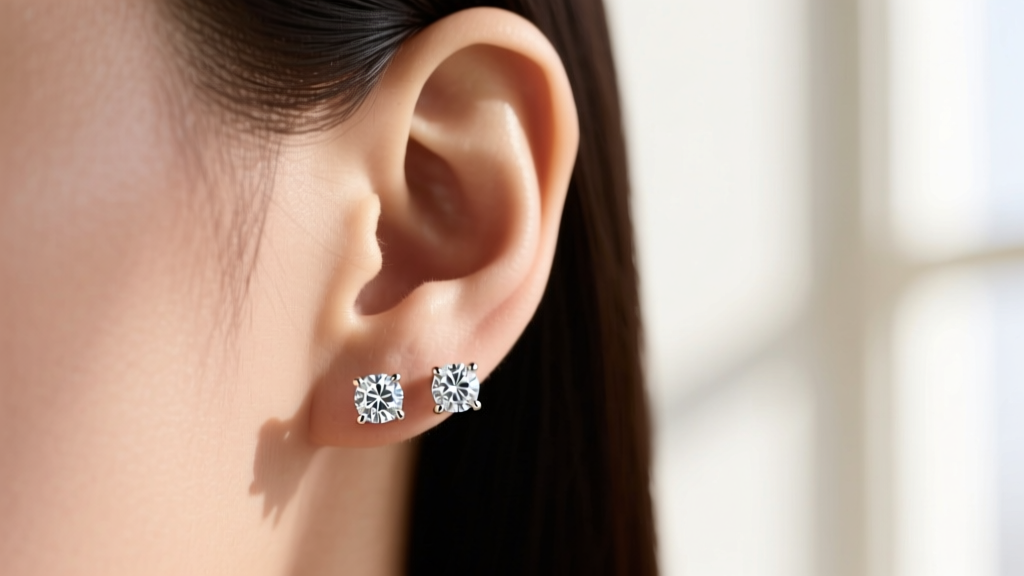
The Appeal of the Quarter-Carat Sweet Spot
When consumers search for 1 4 carat diamond earrings, they are typically looking for the ultimate everyday luxury: a pair of studs that offer brilliant sparkle without the overwhelming price tag or the heavy, drooping feel of larger stones. In the jewelry industry, a 1/4 carat (0.25 CTW) diamond earring set represents the perfect entry point into fine jewelry. They are lightweight, sit flush against the earlobe, and provide a sophisticated glimmer suitable for both the boardroom and the gym.
However, buying small diamonds comes with its own set of pitfalls. Because the stones are smaller, light performance is heavily dependent on precision cutting, and misleading marketing regarding total weight versus per-ear weight is rampant. This comprehensive guide will break down exactly what to look for, how to allocate your budget across the 4Cs, and how to navigate the 2026 market landscape for quarter-carat studs.
Decoding the Weight: CTW vs. Per-Ear
The most critical mistake buyers make is misunderstanding carat weight terminology. When a retailer advertises '1/4 carat diamond earrings,' they are almost always referring to the Total Carat Weight (CTW).
- 0.25 CTW (Total): This means each individual earring features a diamond weighing approximately 0.12 to 0.13 carats. The combined weight of both stones is 0.25 carats. This is the industry standard for 'quarter-carat studs.'
- 0.25 Carats Per Ear (0.50 CTW): If a listing specifies 0.25 carats per ear, the total weight of the pair is actually a half-carat (0.50 CTW). These will be noticeably larger and significantly more expensive.
Always verify the product description to ensure you are buying 0.25 CTW (the pair) and not 0.25 per ear, unless the latter is exactly what you intend to purchase.
The 4Cs for Small Diamonds: Where to Spend and Save
Grading small melee and semi-melee diamonds requires a different strategy than buying a one-carat engagement ring center stone. According to the Gemological Institute of America (GIA), the visual impact of the 4Cs shifts dramatically at the 0.12-carat mark per stone.
Cut: The Non-Negotiable Priority
Do not compromise on cut. A 0.12-carat diamond lacks the physical surface area to hide poor proportions. If the cut is graded 'Fair' or 'Poor,' the stone will appear dull, glassy, and lifeless, effectively looking like a tiny chip of ice rather than a brilliant gem. Always demand an 'Excellent' or 'Ideal' cut grade. A perfectly cut 0.12ct stone will face up whiter and larger than a poorly cut 0.15ct stone.
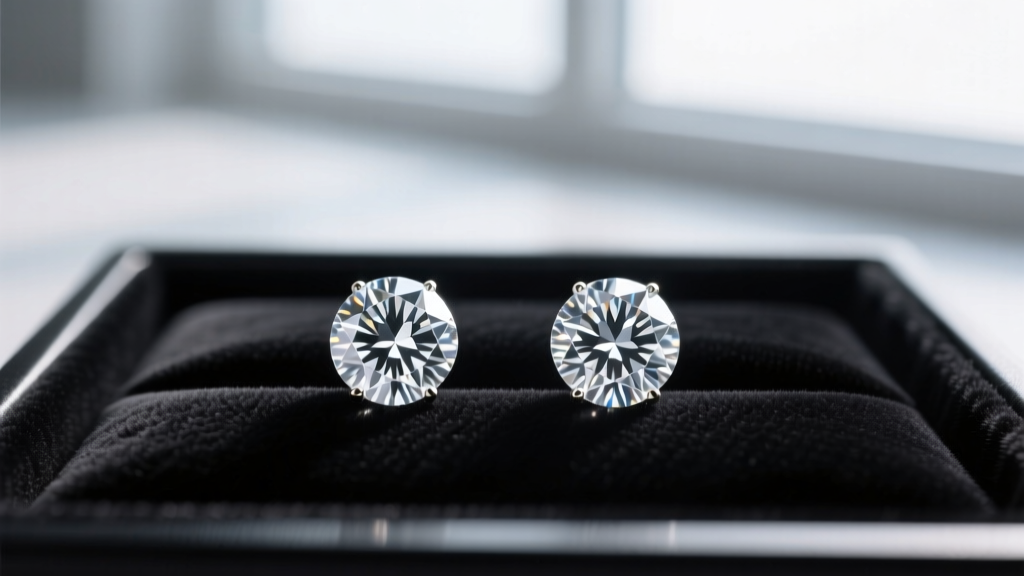
Color: The Metal Illusion
Because 0.12-carat diamonds are so small, the human eye struggles to detect subtle color differences once they are set in metal.
- White Gold or Platinum Settings: Target a color grade of G or H. These are near-colorless and will face up bright white against the rhodium-plated or platinum backdrop.
- Yellow or Rose Gold Settings: You can safely drop down to an I or J color. The warm reflections from the gold prongs will mask the faint yellow tint of the diamond, allowing you to reallocate your budget elsewhere.
Clarity: The Ultimate Money-Saver
This is where you can save the most money. Inclusions that would be glaringly obvious in a 1.00-carat diamond are completely invisible to the naked eye in a 0.12-carat stone. An SI1 or SI2 (Slightly Included) clarity grade is the smartest choice for 1/4 carat studs. As long as the diamond is 'eye-clean' (meaning no black carbon spots are visible without a 10x jeweler's loupe), there is zero visual benefit to paying a premium for VVS or Flawless grades at this size.
Setting Styles and Metal Durability
The setting dictates both the security of your small stones and their perceived size.
- 3-Prong Martini: The classic choice. By using only three prongs, more of the diamond's surface is exposed to light, maximizing sparkle. It also creates a subtle triangular profile that makes the stone appear slightly larger.
- 4-Prong Basket: Offers superior security. If you lead an active lifestyle or plan to wear these daily, the four-prong basket provides a stronger grip on the girdle of the diamond.
- Bezel Setting: A rim of metal surrounds the diamond. While it offers the highest security and a modern, sleek look, it can reduce the diamond's light return and make a 0.12ct stone look closer to 0.08ct.
Metal Choice: For lightweight 1/4 carat studs, 14k gold is often superior to 18k gold or platinum for the post and backing. 14k gold is alloyed with stronger metals, making the thin earring posts much more resistant to bending when pushed through the earlobe.
2026 Pricing Expectations: Natural vs. Lab-Grown
The diamond market has shifted dramatically. As reported by JCK Online, lab-grown diamonds have captured a massive share of the sub-half-carat market due to their affordability and identical physical properties. Below is a realistic pricing framework for 0.25 CTW (0.12ct per ear) round brilliant studs in 2026.
| Feature | Natural Earth-Mined (0.25 CTW) | Lab-Grown (0.25 CTW) |
|---|---|---|
| Retail Price Range | $600 - $1,100 | $150 - $350 |
| Optimal Color/Clarity | G-H / SI1-SI2 | E-F / VS1-VS2 |
| Resale Value | 20% - 35% of retail | Negligible |
| Best For | Heirlooms, traditionalists | Everyday wear, budget-conscious |
Note: Because lab-grown diamonds are so affordable at this size, buyers can often upgrade to higher color (E/F) and clarity (VS) grades without breaking the $350 ceiling, something impossible in the natural market.
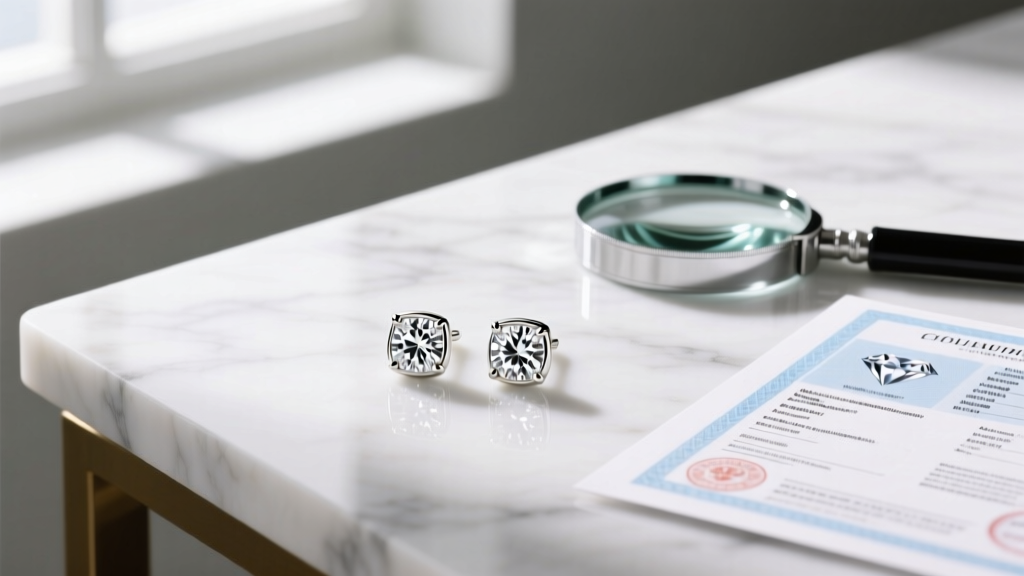
Certification and Red Flags
Unlike one-carat diamonds, 0.12-carat stones rarely come with individual GIA or IGI grading reports. The cost of grading a single small melee stone exceeds its wholesale value. Instead, reputable jewelers will provide a Certificate of Authenticity or an Appraisal Document that guarantees the total carat weight, the metal purity (e.g., 14k), and the estimated color/clarity ranges.
Red Flags to Avoid:
- Vague Weight Descriptions: Avoid listings that say '1/4 carat diamond' without specifying 'CTW' or 'Total Weight.' This is a common tactic to sell a single 0.12ct stone disguised as a pair.
- Promotional 'I3' Clarity: If a retailer is pushing I3 (Included 3) clarity, walk away. At this grade, the diamond may have structural weaknesses or heavy black inclusions that ruin the brilliance, even in a tiny stone.
- Hollowed Backings: Check the earring backs. Cheap manufacturers hollow out the backing to save on gold weight, which causes the earring to droop forward on the earlobe. Look for solid, heavy friction backs or secure screw-backs.
Final Verdict
Purchasing 1/4 carat diamond earrings is an exercise in balancing optical illusions and budget. By prioritizing an Excellent cut, dropping to an SI1/SI2 clarity, and choosing a 3-prong martini setting in 14k gold, you maximize the visual footprint and sparkle of your 0.25 CTW pair. Whether you opt for the traditional romance of natural diamonds or the pragmatic brilliance of lab-grown stones, understanding these nuances ensures your everyday studs will deliver a lifetime of fire and scintillation.


