Troubleshooting Pave Diamond Hoop Earrings: Lost Stones & Dullness
Lost a stone or dealing with dullness? Learn expert troubleshooting, cleaning, and repair tips for your pave diamond hoop earrings to restore sparkle.

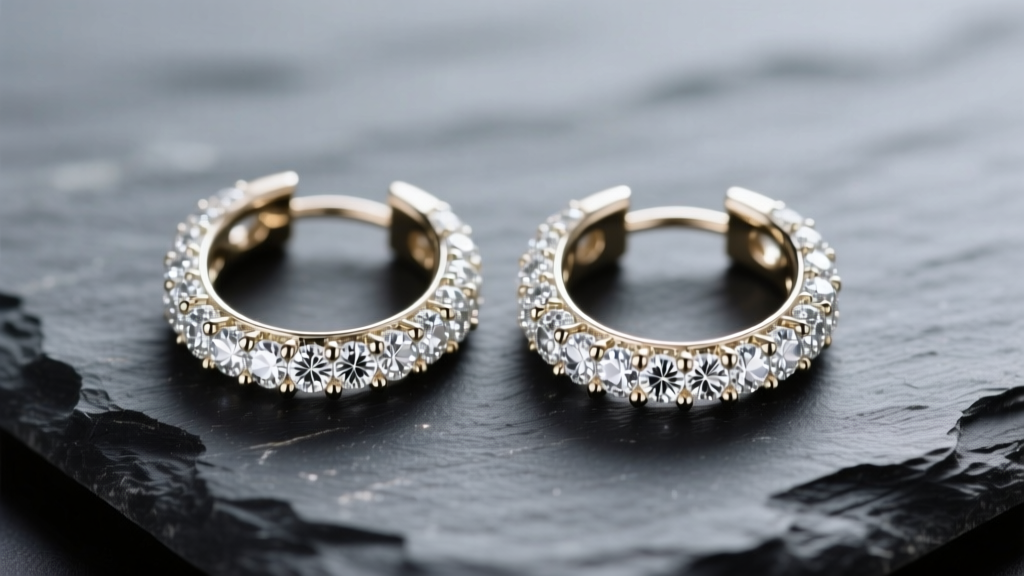
Pavé diamond hoop earrings are a staple of modern fine jewelry, offering continuous, edge-to-edge sparkle that catches the light from every angle. The word 'pavé' (French for 'paved') refers to a setting technique where small melee diamonds—typically ranging from 0.005 to 0.02 carats—are set closely together, creating a surface that looks like it is paved with diamonds. However, this intricate metalwork comes with unique vulnerabilities. Whether you are dealing with a missing stone, sudden dullness, or annoying snags on your clothing, troubleshooting pavé settings requires a precise understanding of jewelry metallurgy and diamond optics.
The Anatomy of Pavé Settings: Why Stones Fall Out
To troubleshoot a lost stone, you must first understand how it was secured. Unlike traditional prong settings that use four or six substantial metal claws, pavé settings rely on microscopic metal beads or micro-prongs. A master jeweler uses a hardened steel beading tool to push tiny amounts of the surrounding gold or platinum over the girdle (the widest edge) of the diamond.
There are three primary pavé styles used in hoop earrings:
- Traditional Bead Pavé: Metal is raised from the surface to form beads. This is the most common but also the most susceptible to wear over time.
- Micro-Prong Pavé: Tiny, distinct prongs are cut into the metal. This allows more light to enter the stone but increases the risk of snagging.
- French Pavé (or Fishtail): The metal is cut away in a U-shape beneath the stones, maximizing light return from the pavilion (the bottom half of the diamond) while minimizing the visible metal.
The most common cause of stone loss in hoops is metal fatigue and alloy degradation. According to the GIA 4Cs of Diamond Quality guidelines, while diamonds are incredibly hard, the metals holding them are not. If your hoops are crafted in 18k yellow gold, the higher gold content makes the metal softer and more malleable. A slight bend in the hoop—caused by sleeping in them or dropping them—can warp the pavé channel just enough to pop a bead loose. Conversely, 14k gold contains more copper and zinc, making it harder and more secure for pavé, though it requires occasional rhodium plating if it is white gold.
Troubleshooting Dullness: The Ultrasonic Trap
If your pavé diamond hoop earrings have lost their fire and look cloudy, your first instinct might be to drop them into an ultrasonic jewelry cleaner. Do not do this. Ultrasonic cleaners use high-frequency sound waves (typically 40 to 45 kHz) to create microscopic cavitation bubbles in a liquid solution. While excellent for cleaning solid diamond solitaires, these violent vibrations can literally shake poorly seated melee diamonds right out of their tiny metal beads.
Furthermore, harsh chemical dips can degrade the copper and zinc alloys in your gold, weakening the micro-prongs. The GIA Diamond Cleaning Guide explicitly warns against using harsh chemicals or ultrasonic machines on fracture-filled diamonds or stones with fragile settings.
The Safe Cleaning Protocol for Pavé Hoops
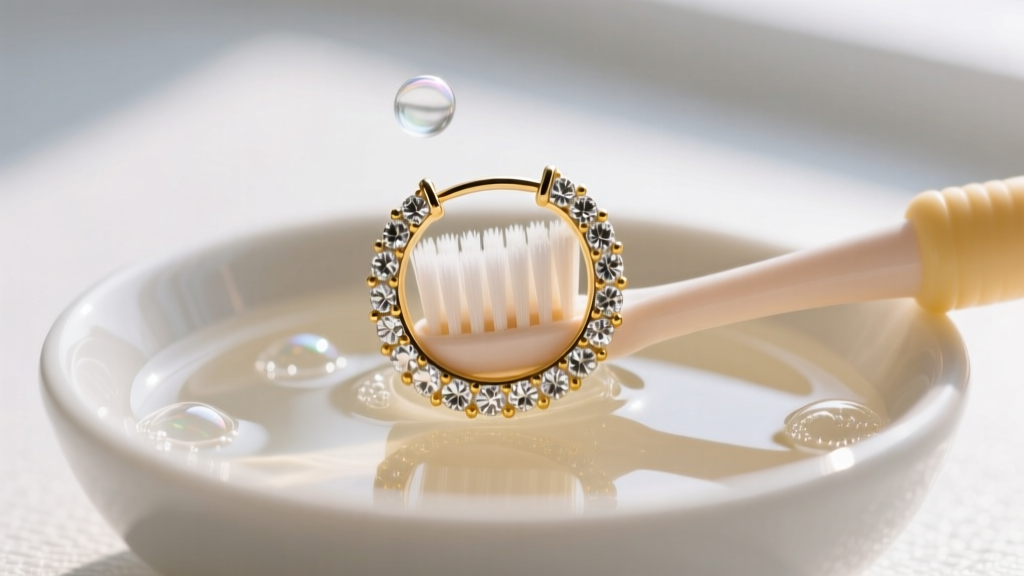
Dullness in pavé earrings is almost always caused by a buildup of lotions, dead skin cells, and sebum on the pavilion of the diamonds. Diamonds are lipophilic (oil-attracting), meaning they naturally grab onto skin oils, which blocks light from entering and exiting the stone. Follow this expert protocol to restore brilliance safely:
- Prepare the Solution: Mix lukewarm water with a few drops of ammonia-free, mild dish soap (like original Dawn). Avoid soaps with heavy moisturizers.
- Soak Briefly: Submerge the hoops for 3 to 5 minutes to soften the debris.
- The Pavilion Scrub: Using an extra-soft baby toothbrush, gently scrub the underside (the pavilion) of the hoop where the diamonds are set. Do not scrub the top aggressively, as this can bend micro-prongs.
- Rinse and Dry: Rinse under lukewarm running water (ensure the drain is plugged!) and pat dry with a lint-free microfiber cloth. Avoid paper towels, which can snag on micro-prongs.
Diagnosing Snagging and Bent Prongs
Pavé diamond hoops should feel completely smooth to the touch. If your earrings are catching on silk blouses, sweaters, or your own hair, you have a lifted micro-prong or a worn bead. Ignoring this will inevitably lead to a lost stone.
The Silk Test: Take a piece of thin silk fabric or a sheer nylon stocking and gently drag it across the surface of the diamonds. If the fabric catches or pulls, you have pinpointed the exact location of a lifted prong.
| Snagging Symptom | Likely Cause | Immediate Action Required |
|---|---|---|
| Catches on hair/clothing | Lifted micro-prong from impact | Stop wearing; place in a soft pouch; take to a jeweler for prong tightening. |
| Rough texture, no catch | Worn metal bead flattening over time | Schedule a professional 're-beading' service. |
| Visible gap between stones | Stone has already fallen out | Do not wear; adjacent stones are now structurally compromised. |
What to Do When a Stone Goes Missing
'The structural integrity of a pavé setting relies on the continuous tension of neighboring stones. When one melee diamond falls out, the stones immediately adjacent to it lose lateral support and are at a 90% higher risk of falling out next.' — Master Bench Jeweler
If you lose a stone, remove the earrings immediately and store them in a soft jewelry box where they won't rub against other pieces. Replacing a melee diamond is a routine and relatively affordable repair. Depending on the color and clarity grade of your existing stones, a jeweler will typically charge between $15 and $45 for the replacement stone, plus $20 to $50 for the bench labor to set and re-bead it.
Ensure your jeweler uses a microscope for the repair. Setting stones by eye or with a standard 10x loupe is insufficient for modern micro-pavé, where tolerances are measured in fractions of a millimeter.
Preventative Maintenance Checklist
To maximize the lifespan of your pavé diamond hoop earrings and minimize trips to the repair bench, adopt these preventative habits:
- The Lotion Rule: Always put your earrings on after applying skincare, makeup, and hairspray. Hairspray, in particular, creates a cloudy, lacquer-like film over melee diamonds that is difficult to remove without professional steam cleaning.
- Avoid Chlorine Exposure: Never wear your hoops in a swimming pool or hot tub. Chlorine reacts with the copper and zinc alloys in 14k and 18k gold, causing 'stress corrosion cracking.' This microscopic degradation makes the metal brittle and causes beads to crumble away.
- Sleeping and Showering: Take your hoops off before bed. Tossing and turning can bend the hoop's shank, warping the pavé channel. Similarly, hard water minerals from the shower will leave a dull, chalky residue on the stones.
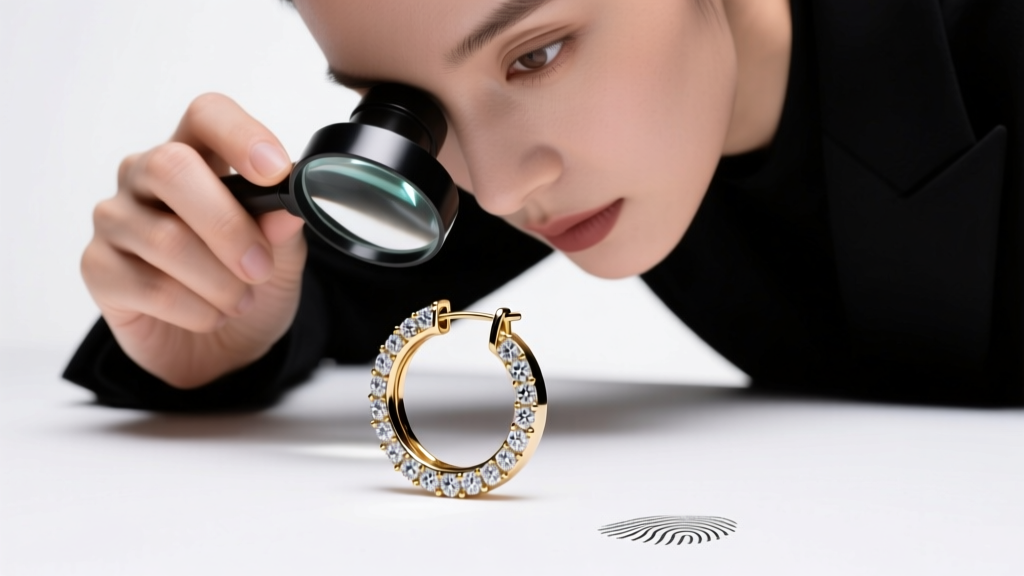
- Annual Loupe Check: Once a year, take your earrings to a trusted bench jeweler to have the settings checked under a gemological microscope. A 15-minute tightening session can prevent the loss of hundreds of dollars worth of diamonds.
By understanding the delicate mechanics of pavé settings and treating your hoops with the specific care they require, you can ensure they remain a brilliant, continuous circle of light for decades to come.


