Troubleshooting 14mm Hoop Earrings: Fit, Closures & Irritation Fixes
Struggling with stuck closures or cartilage irritation? Our expert guide troubleshoots 14mm hoop earrings, covering gauge sizing, metals, and fit fixes.

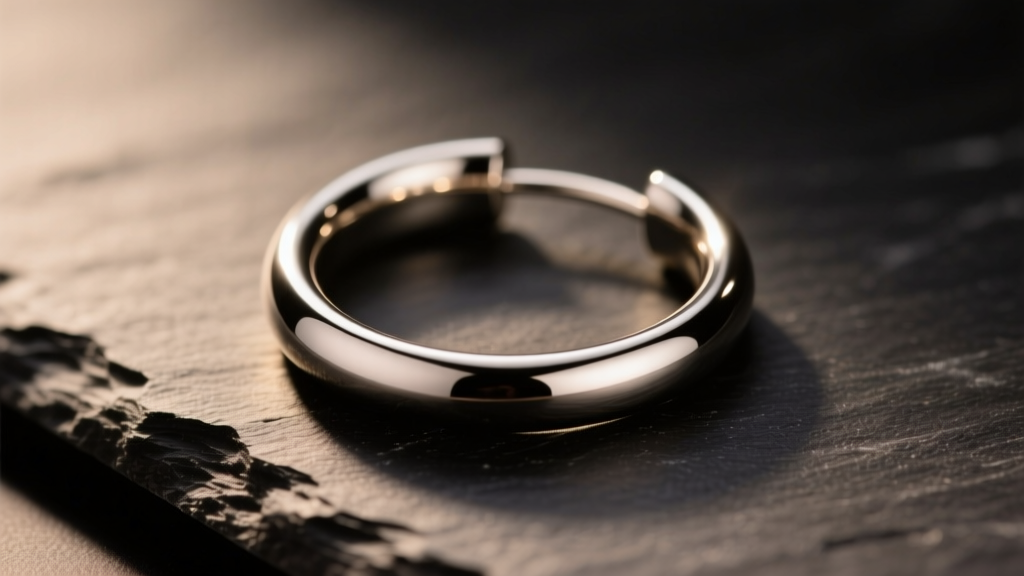
At exactly 0.55 inches in diameter, 14mm hoop earrings occupy a notoriously frustrating middle ground in body jewelry. They are slightly too large to function as a snug 'huggie' for standard earlobes, yet often too small to dangle comfortably through thicker cartilage folds like the conch or daith. Because of this awkward geometry, 14mm hoops are the number one culprit for friction-related irritation bumps, choked fistulas, and warped closure mechanisms. Whether you are dealing with a hinged snap that refuses to click shut or a continuous hoop that is slowly migrating through your lobe, solving these issues requires an understanding of jewelry mechanics, metallurgy, and piercing anatomy. This guide provides actionable, expert-level troubleshooting for the most common 14mm hoop earring failures.
The 14mm Dilemma: Why This Size Causes Unique Fit Issues
The primary issue with 14mm hoops stems from the confusion between inner diameter (ID) and outer diameter (OD). When you purchase a 14mm hoop, that measurement refers to the empty space inside the circle. However, the thickness of the wire itself drastically alters how the earring sits on your ear. A standard 16-gauge (1.2mm) wire adds 2.4mm to the total width, meaning the outer footprint is actually 16.4mm.
In a standard earlobe that is 6mm thick, a 14mm hoop leaves only 4mm of drop before the bottom of the hoop rests against the skin. If the lobe swells due to heat, hydration, or minor trauma, that 4mm clearance vanishes. The hoop begins to press upward into the piercing channel, creating a pressure point that restricts lymphatic drainage and triggers localized edema. According to the Association of Professional Piercers (APP), jewelry that restricts tissue movement or applies upward pressure is a primary catalyst for hypertrophic scarring and irritation bumps.
Troubleshooting Closure Mechanisms on 14mm Hoops
Because 14mm hoops are small, the mechanical components of their closures are miniaturized, making them highly susceptible to debris buildup and tension loss.
Continuous (Endless) Hoops
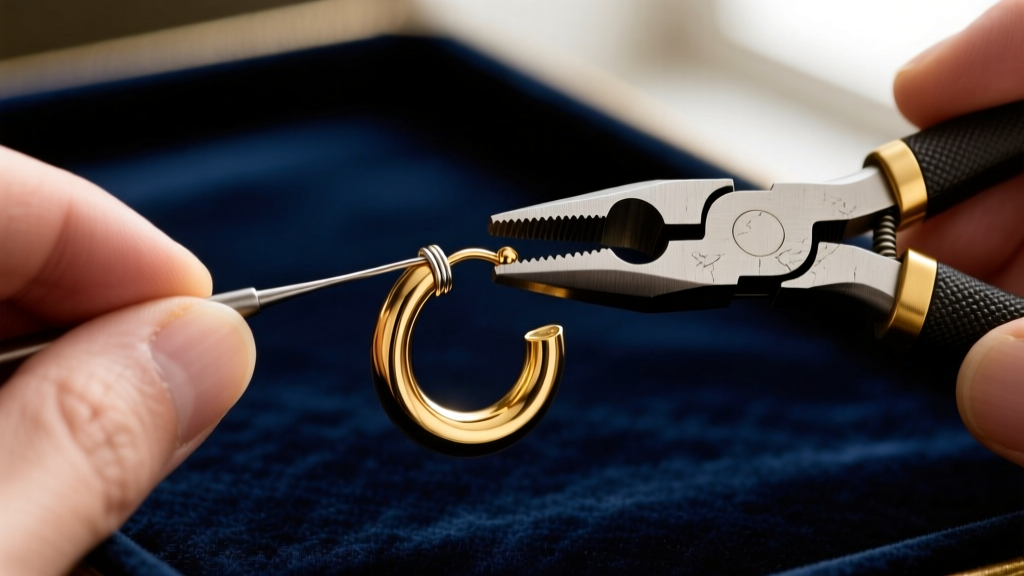
Continuous hoops rely on a thin wire post that slots into a hollow tubing receiver. The most common failure mode is the post bending outward, preventing it from seating flush. The Fix: Do not use your fingers to force it, as this will warp the circle into an oval. Instead, use nylon-jaw jewelry pliers to gently squeeze the post back into alignment with the main circle. If the hoop feels too tight to close, slightly twist the post laterally (left or right) by one degree to increase the gap without compromising the circular shape.
Hinged Snap Closures
Hinged 14mm hoops feature a tiny machined groove that 'clicks' into a corresponding bead or notch. When these fail to close, it is almost always due to sebum, dead skin cells, or hard water scale lodging in the micro-groove. The Fix: Submerge the earring in an ultrasonic cleaner filled with warm distilled water and a drop of mild castile soap for three minutes. If the click is still weak, the hinge pin may be slightly bent. Use a loupe to inspect the seam; if the metal is fatigued, the earring must be retired, as a failing hinge in a 14mm hoop will inevitably snag and tear the fistula.
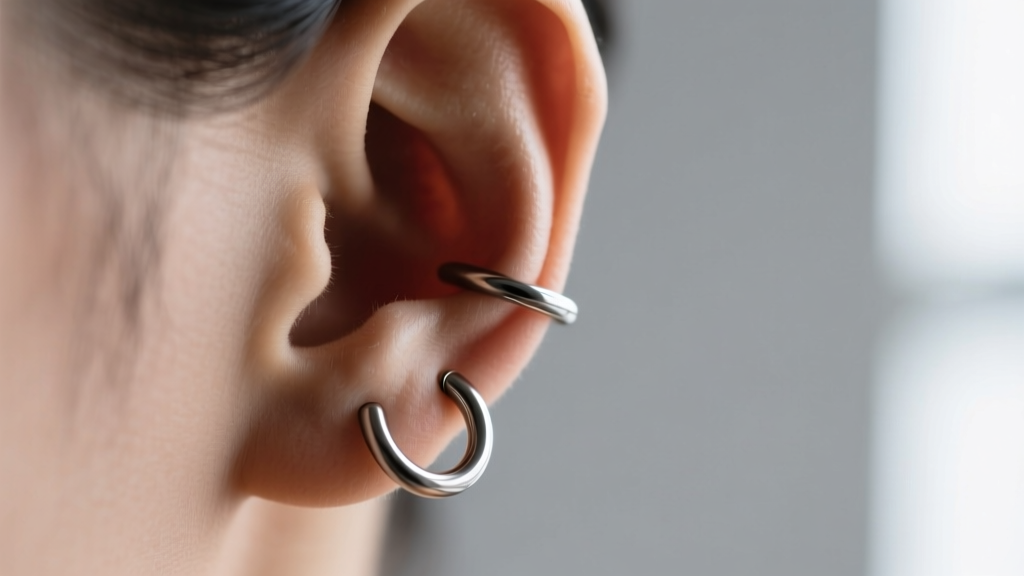
Gauge Thickness vs. Piercing Fistula: Solving the Migration Risk
The 'cheese-cutter effect' is a severe complication where thin jewelry slowly slices through the tissue. This is exceptionally common with 14mm hoops worn in heavier earlobes or high-tension cartilage piercings. The smaller the diameter of the hoop, the more concentrated the gravitational pull on the bottom of the piercing channel. To counteract this, you must increase the gauge (thickness) of the wire to distribute the weight over a wider surface area of the fistula.
| Gauge Size | Wire Thickness | Best Use Case for 14mm Hoops | Migration / Tearing Risk |
|---|---|---|---|
| 20g | 0.81mm | Nose hoops, secondary upper lobe piercings | High (Avoid in primary lobes) |
| 18g | 1.02mm | Standard helix, forward helix, thin lobes | Moderate |
| 16g | 1.29mm | Standard lobes, conch, rook | Low (Industry Standard) |
| 14g | 1.63mm | Stretched lobes, daith, industrial anchors | Very Low (Requires 14g piercing) |
Note: Never force a 16-gauge 14mm hoop into an 18-gauge piercing channel. The friction will cause immediate micro-tearing and delayed healing.
Material Reactivity: When 14mm Hoops Cause Contact Dermatitis
If your 14mm hoops are causing itching, flaking, or a clear fluid discharge, you are likely experiencing allergic contact dermatitis. Many commercial jewelry brands market 'surgical steel' or '316L stainless steel' as hypoallergenic. This is a dangerous misnomer. 316L steel contains up to 14% nickel, and because the surface of the metal is porous at a microscopic level, nickel ions leach into the moist environment of the piercing channel. The American Academy of Dermatology identifies nickel as the leading cause of metal-related contact dermatitis.
The Troubleshooting Protocol:
- Step 1: Immediately remove the 316L steel or mystery-metal hoops.
- Step 2: Cleanse the area with sterile saline solution (0.9% sodium chloride) twice daily.
- Step 3: Replace the jewelry with Implant-Grade Titanium (ASTM F136) or solid 14k/18k nickel-free gold. Titanium is entirely biocompatible and contains zero nickel, making it the gold standard for resolving metal-induced irritation bumps.
- Step 4: Avoid plated jewelry. Gold-plated or PVD-coated brass will eventually wear down at the friction points of a 14mm hoop, exposing the reactive base metal directly to the fistula.
Step-by-Step Fix for Warped or Stuck 14mm Hoops
If your 14mm hoop has been crushed in a pillow or snagged on a sweater, it will lose its perfect circular geometry. A warped hoop will not close properly and will twist inside the piercing, causing chronic friction.
- Assess the Warp: Lay the earring flat on a piece of graph paper. Identify where the circle deviates from the grid lines.
- Protect the Metal: Wrap the jaws of your flat-nose pliers in microfiber cloth or use specialized nylon-jaw pliers to prevent scratching the metal or compromising an anodized finish.
- Apply Rotational Pressure: Never bend the metal by pulling it apart like a C-clamp. Instead, grip the warp point and apply a gentle twisting (torsional) force to coax the metal back into a single flat plane.
- Test the Closure: Once the hoop lies flat on the graph paper, test the click or post insertion. If it catches, use a jewelry file to lightly bevel the edge of the post.
Final Verdict: When to Size Up or Down
Troubleshooting can only take you so far; sometimes, 14mm is simply the wrong anatomical match. If you have a thick earlobe (over 8mm) or a deep conch fold, a 14mm hoop will act as a tourniquet. In these cases, sizing up to a 16mm or 18mm hoop is mandatory to allow for natural tissue swelling and movement. Conversely, if you are wearing a 14mm hoop in a tight helix or tragus and it is sliding out of the piercing channel due to excess movement, you need to size down to a 12mm or 10mm huggie to eliminate the friction track. Listen to your tissue: if a 14mm hoop requires force to close, it is time to change your geometry.


