Solving Snags & Rashes: 18k Gold Earrings for Baby Girl Guide
Fix common issues with 18k gold earrings for baby girls. Learn to prevent allergic rashes, hair snags, and lost studs with expert troubleshooting tips.

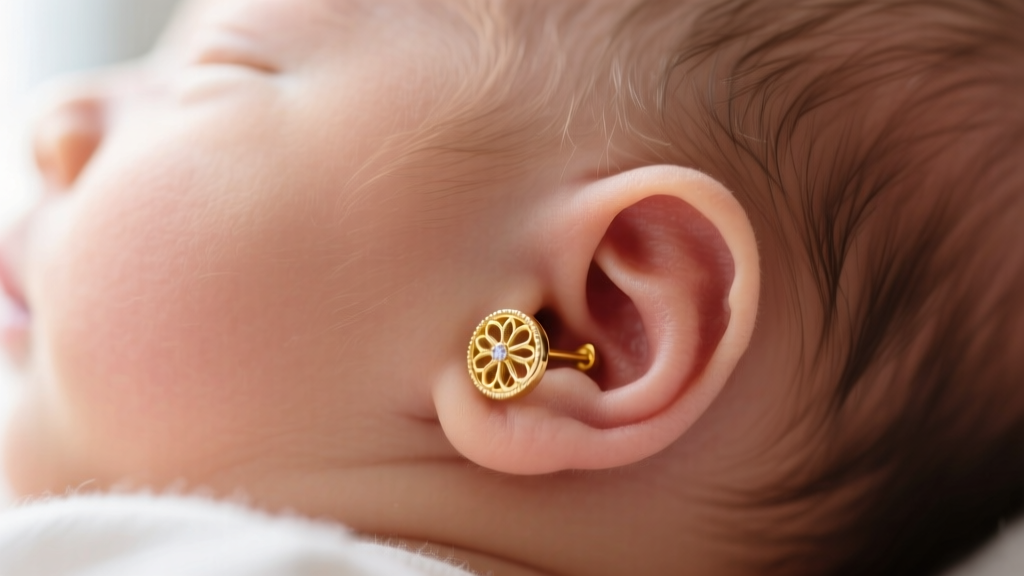
When parents search for the perfect first piece of jewelry, 18k gold earrings for baby girl infants often top the list. The appeal is undeniable: 18-karat gold offers a rich, buttery yellow hue, exceptional heirloom value, and a higher purity level than standard 14k alternatives. However, infant earlobes present a unique matrix of biomechanical and dermatological challenges. Babies grab, pull, and roll on their ears, while their developing immune systems can react unpredictably to trace metals.
As a jewelry specialist, I frequently consult with parents dealing with bent posts, tangled hair, mysterious rashes, and lost heirloom studs. This troubleshooting guide bypasses generic advice and dives deep into the metallurgical, mechanical, and dermatological realities of outfitting infant ears with 18k gold, providing actionable solutions for every common failure mode.
The Metallurgical Reality: Softness vs. Durability
To troubleshoot bending and breakage, we must first understand the material science of 18k gold. Pure 24k gold is far too malleable for body jewelry, so it is alloyed with other metals to increase structural integrity. According to the Gemological Institute of America (GIA), 18k gold consists of 75% pure gold and 25% alloy metals (typically copper, silver, or zinc for yellow gold).
This 75/25 ratio results in a Vickers Hardness (HV) of approximately 135 to 150 HV. By comparison, 14k gold (58.5% pure gold) boasts a hardness of around 170 HV. This means 18k gold is inherently softer and more prone to deformation when subjected to the lateral force of a toddler pulling on their ear.
Troubleshooting Bent Posts
If your baby’s 18k gold earring posts are constantly bending, the issue is likely the gauge (thickness) of the wire, not just the karat weight. Standard baby earrings are often manufactured with 20-gauge (0.81mm) or 22-gauge (0.64mm) posts to minimize piercing trauma. However, in soft 18k gold, these thin wires act like paperclips.
- The Fix: Upgrade to 18-gauge (1.02mm) or 16-gauge (1.29mm) posts. The exponential increase in cross-sectional area provides the necessary rigidity to resist bending, even in softer 18k yellow gold.
- Realignment: If a post bends, do not repeatedly bend it back, as this causes work-hardening and eventual snapping. Have a bench jeweler anneal and straighten it professionally.
Troubleshooting Contact Dermatitis and 'Gold Rashes'
A common misconception is that 18k gold is universally hypoallergenic. While pure gold is biologically inert, the 25% alloy mix can trigger reactions. When a parent reports a rash, we must differentiate between two distinct dermatological conditions.
| Condition | Symptoms & Onset | Root Cause in 18k Gold | Troubleshooting Solution |
|---|---|---|---|
| Irritant Contact Dermatitis | Redness, mild swelling, crusting behind the lobe. Occurs within hours of exposure to moisture. | Trapped soap, hard water, or sweat between the lobe and the earring backing causing maceration. | Remove earrings, clean with sterile saline, and ensure the lobe is 100% dry before re-inserting. Use spacers or silicone O-rings to create airflow. |
| Allergic Contact Dermatitis | Itchy, blistering, or weeping rash. Type IV delayed hypersensitivity reaction appearing 24-72 hours after contact. | Sensitization to copper, zinc, or trace nickel used in the 25% alloy mix of the 18k gold. | Switch to 18k gold alloyed exclusively with palladium or silver, or downgrade to implant-grade titanium (ASTM F136) until the allergy is confirmed via patch testing. |
The American Academy of Dermatology (AAD) notes that nickel is the most common culprit in jewelry allergies. While reputable jewelers avoid nickel in 18k yellow gold, 18k white gold is frequently alloyed with nickel to achieve its silvery color. Never use 18k white gold for a baby's first earrings unless it is explicitly certified as nickel-free and alloyed with palladium.
Eliminating Hair Snags and Tangles
Fine baby hair (vellus hair) and rapidly growing terminal hair are notorious for wrapping around earring settings. This isn't just a nuisance; a tangled earring can lead to sudden, forceful pulling that tears the delicate infant lobe.
The Setting Mechanics
The failure mode here is almost always the setting style. Traditional 4-prong or 6-prong martini settings elevate the gemstone and leave microscopic gaps between the metal prongs and the stone. These gaps act as grappling hooks for fine hair and lint.
The Solution: When sourcing 18k gold earrings for baby girl infants, strictly limit your selection to bezel, flush (gypsy), or burnished settings. A bezel setting encircles the gemstone with a continuous rim of 18k gold, leaving zero exposed edges. A flush setting embeds the stone directly into the metal face. Both designs create a smooth, continuous dome that allows hair to glide over the surface without catching.
Solving the 'Lost Earring' Epidemic
Losing an expensive 18k gold heirloom to a crib sheet or a car seat is a frequent and frustrating problem. The culprit is the clasp mechanism.
Why Standard Backs Fail on Infants
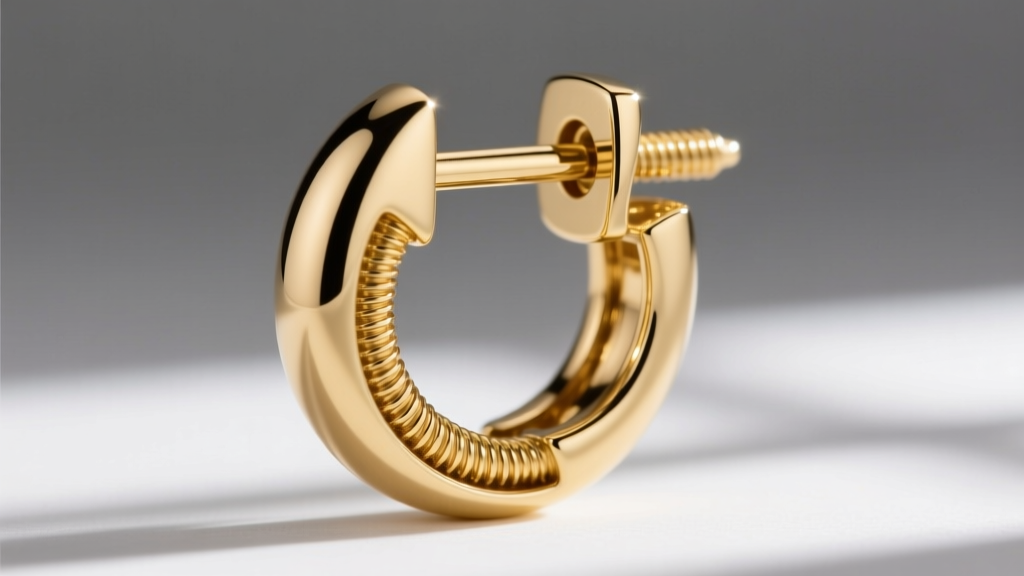
Standard 'butterfly' or friction backs rely on a tiny metal spring mechanism gripping a notched post. Babies frequently rub their ears against mattresses or grab at their lobes, generating enough lateral friction to push the butterfly back down the post and off the ear.
Upgrading the Hardware:
- Screw Backs: These feature threaded posts and backs that screw together. While secure, they require precise alignment and can be difficult for parents to fasten on a squirming infant. Furthermore, the threads can harbor bacteria if not cleaned meticulously.
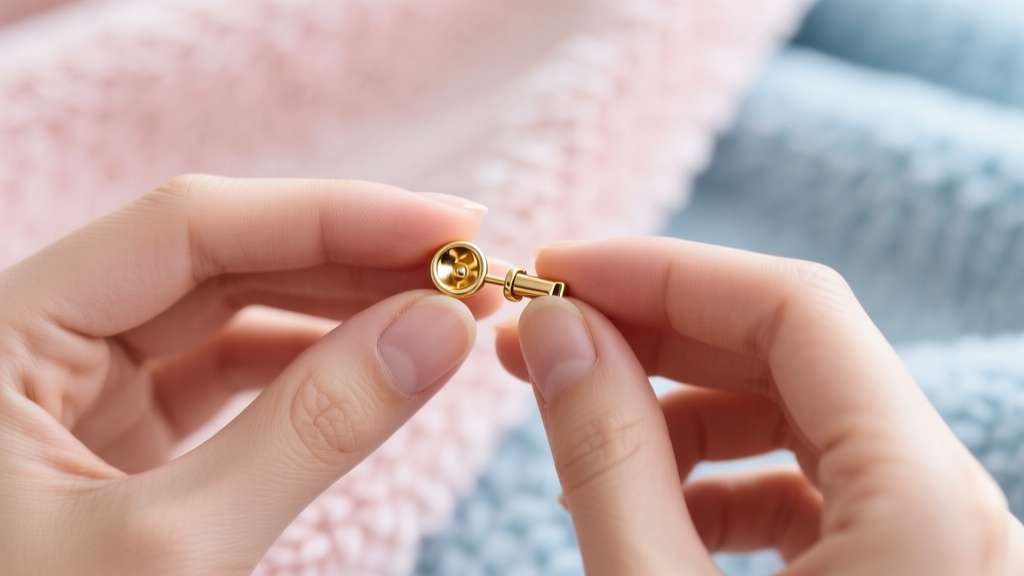
- La Pousette (Locking) Backs: This is the gold standard for infant jewelry. These backs feature a dual-spring locking mechanism that snaps securely into a groove on the post and requires a simultaneous two-handed pinch to release. They offer the security of a screw-back with the ease of a friction back, entirely eliminating the 'lost earring' variable.
Weight Distribution and Lobe Elongation
Infant earlobes are composed of delicate adipose tissue and lack the dense fibrous cartilage found in adult ears. Hanging heavy 18k gold drop earrings or oversized hoops on a healing or newly pierced lobe will cause immediate micro-tearing and long-term lobe elongation.
Even for standard studs, the gram weight matters. Because 18k gold is denser than 14k gold (due to the higher concentration of heavy pure gold atoms), an 18k stud of the exact same physical dimensions will weigh more. Rule of Thumb: The total weight of the earring, including the backing, should never exceed 1.5 grams per ear for infants under 24 months. Opt for low-profile, solid-cast designs rather than hollowed-out or oversized novelty shapes.
Daily Maintenance and Care Protocol
Proper maintenance prevents 90% of the issues outlined above. However, many parents use harsh chemicals that damage both the baby's skin and the 18k gold alloy.
- Avoid Alcohol and Peroxide: Rubbing alcohol strips the natural lipid barrier of infant skin, leading to dryness and irritant dermatitis. It can also prematurely oxidize the copper alloys in 18k yellow gold, leading to a dull, brassy appearance over time.
- The Saline Soak: Use a sterile, preservative-free 0.9% sodium chloride (saline) wound wash. Spray it onto a cotton swab and gently wipe the front and back of the 18k gold setting. This removes sebum, dead skin cells, and milk residue without degrading the metal or irritating the skin.
- Ultrasonic Caution: While ultrasonic cleaners are great for adult jewelry, they can loosen the adhesives or micro-bezels in delicate baby earrings. Stick to manual, gentle cleaning with a soft-bristled infant toothbrush and mild, fragrance-free castile soap.
By understanding the specific material properties of 18k gold and the biomechanics of infant ears, parents can move past the frustration of rashes and lost jewelry. Selecting the correct gauge, prioritizing bezel settings, and utilizing locking clasps ensures that those precious 18k gold earrings for baby girl wearers remain safe, comfortable, and securely in place for years to come.


