Troubleshooting Hoop Earrings Medium Size: Fit & Comfort
Solve common fit and comfort issues with hoop earrings medium size. Expert fixes for loose clasps, earlobe sag, snagging, and metal allergies.

The Anatomy of a Medium Hoop Failure
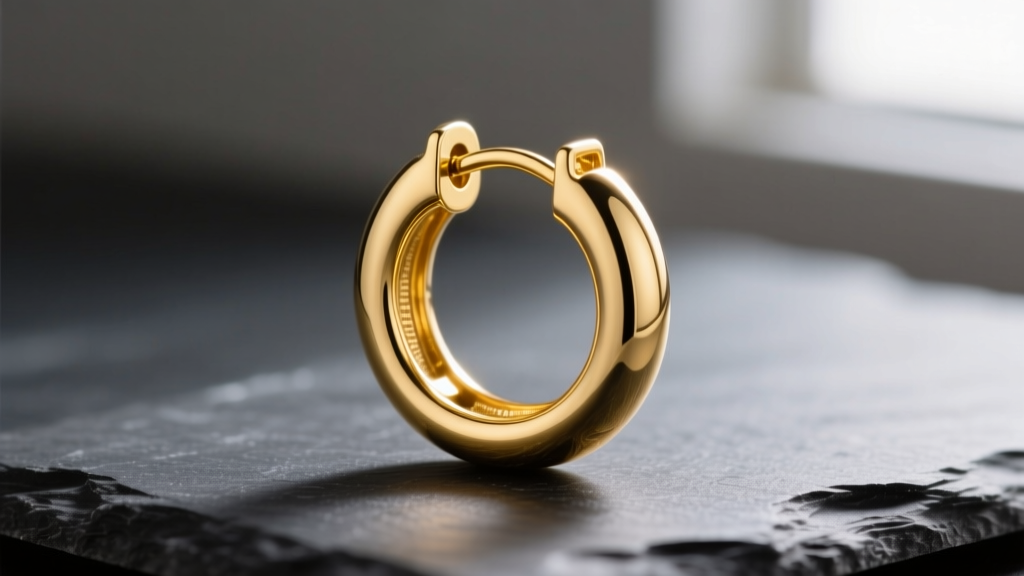
When it comes to everyday jewelry, the market for hoop earrings medium size is vast, but buyers frequently encounter structural and anatomical issues. In the jewelry industry, "medium" typically refers to hoops with an outer diameter ranging from 20mm to 40mm. This is the Goldilocks zone: large enough to be noticed, yet small enough for daily wear. However, this specific size range introduces unique physics problems. A 15mm huggie sits tightly against the lobe, distributing weight evenly. A 60mm large hoop swings freely, dissipating kinetic energy. But a 30mm medium hoop acts as a lever, applying concentrated downward and rotational torque directly to the piercing fistula.
Troubleshooting hoop earrings medium size requires understanding the relationship between diameter, wire gauge, and clasp mechanics. Whether you are dealing with earlobe sagging, persistent hair snagging, or clasp failures, this guide provides actionable, metallurgical, and anatomical solutions to fix your favorite everyday hoops.
Clasp Malfunctions: Latch-Backs vs. Hinged Snaps
The most common complaint with medium hoops is the closure mechanism failing to secure the earring, leading to lost jewelry. Medium hoops predominantly use two types of clasps: the latch-back (a straight post that clicks into a hollow wire catch) and the hinged snap (a hinged post that snaps into a grooved receiver on the opposite side).
Fixing a Loose Latch-Back
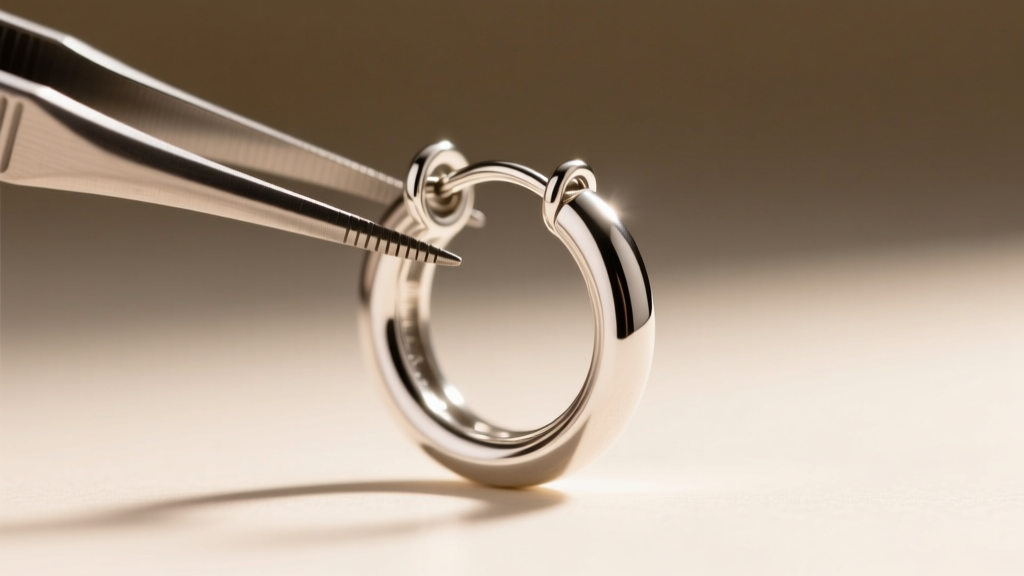
If your latch-back post no longer "clicks" or falls out during the night, the issue is rarely the post itself; it is the tension wire on the catch. Over time, the V-shaped tension spring inside the hollow tubing compresses. The Fix: Using a pair of flat-nose jewelry pliers, gently squeeze the top and bottom of the catch mechanism (the hollow tube) to narrow the gap. This restores the friction fit against the post's groove. Do not bend the post itself, as this will warp the hoop's perfect circle.
Unclogging a Hinged Snap Closure
Hinged snaps rely on a microscopic ball-bearing or tension pin. If the earring refuses to snap shut, it is usually clogged with dead skin cells, lotion, or sebum. The Fix: Soak the closure in a solution of warm water and a drop of dish soap for 10 minutes. Use a soft-bristled baby toothbrush to scrub the receiver groove. If the hinge is stiff, apply a microscopic drop of mineral oil to the hinge pin—never use WD-40, which contains harsh solvents that can strip gold plating or damage porous gemstones.
Earlobe Sagging and the "Cheese Cutter" Effect
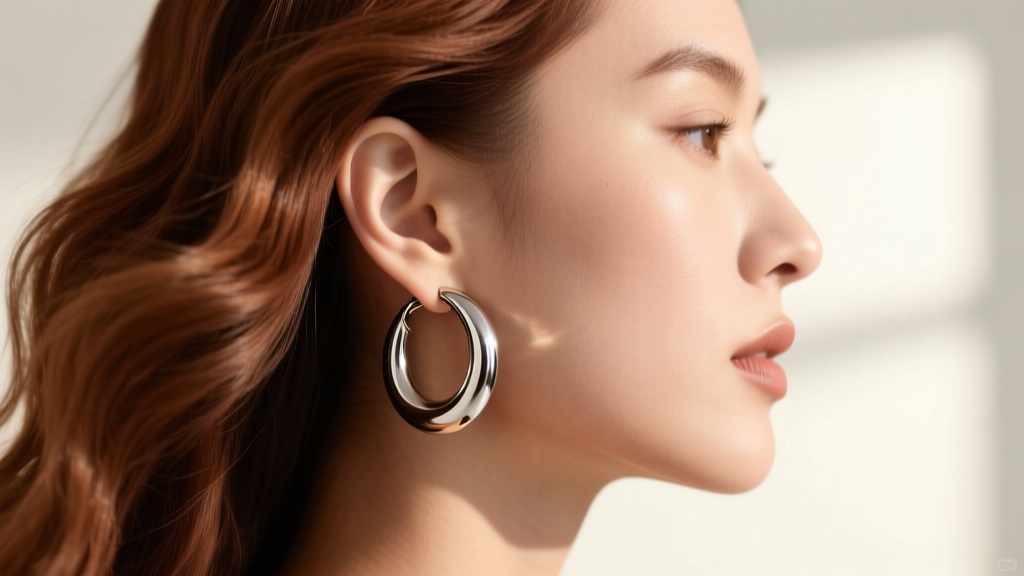
Many buyers specifically search for hoop earrings medium size because they want the visibility of a statement piece without the heavy drag of a dramatic drop. However, weight distribution is where many manufacturers cut corners. To save on precious metal costs, brands often cast 30mm hoops in thin 20-gauge (0.81mm) or 22-gauge (0.64mm) wire. When a 30mm hoop made of solid 14k gold hangs from a 20G wire, the narrow surface area acts like a cheese cutter against the delicate tissue of the earlobe, leading to micro-tears, elongation, and eventual lobe splitting.
Gauge Thickness and Lobe Support Matrix
| Wire Gauge | Thickness (mm) | Best For Diameter | Lobe Stress Level | Troubleshooting Fix |
|---|---|---|---|---|
| 22 Gauge | 0.64mm | Under 15mm (Huggies) | High (Tearing Risk) | Retire for lobe use; move to upper cartilage |
| 20 Gauge | 0.81mm | 15mm - 25mm | Moderate | Use silicone o-ring stoppers for support |
| 18 Gauge | 1.02mm | 25mm - 40mm | Low (Ideal) | Standard for healthy, healed lobes |
| 16 Gauge | 1.29mm | 30mm - 50mm+ | Minimal (Supportive) | Required for stretched lobes or heavy metals |
Pro-Tip for Sagging Lobes: If you already own a pair of 20G medium hoops that pull on your lobes, purchase invisible silicone earring support patches (like the brand LobeWonder). These adhesive shields distribute the weight of the wire across a 10mm surface area on the back of the ear, completely neutralizing the cheese-cutter effect.
The Hair Snag Dilemma: Seamless vs. Clicker
Medium hoops (specifically the 25mm to 35mm range) sit at the exact length of a typical bob or layered haircut. This makes them notorious for catching on hair strands, sweater threads, and even seatbelts. The culprit is usually the visible seam or the protruding clasp mechanism.
If you are tired of untangling your hair from your jewelry, it is time to audit your hoop styles. Traditional latch-backs leave a 1mm gap at the closure point, acting as a microscopic hook. To solve this, transition to Continuous (Seamless) Hoops or Front-Facing Clickers.
- Seamless Hoops: These feature a hollow tube with a slightly thinner, curved wire insert that slides perfectly inside the tubing. The tension of the metal holds it in place, creating a 360-degree smooth surface with zero snag points.
- Hinged Segment Rings: Often used in cartilage piercings, these feature a hinged segment that clicks into place with a flush, invisible seam. They are incredibly secure and glide through hair effortlessly.
Contact Dermatitis and the "Green Ear" Phenomenon
If your medium hoops are leaving a green or black smudge on your neck, or if your earlobes are itching and weeping clear fluid, you are experiencing a metallurgical failure. According to the American Academy of Dermatology, nickel allergy is the most common cause of allergic contact dermatitis, affecting roughly 18% of adults. Furthermore, the Mayo Clinic notes that prolonged exposure to base metals mixed with sweat accelerates the oxidation process, leading to the dreaded "green skin" effect caused by copper alloys reacting to acidity.
Many budget-friendly "gold-plated" medium hoops use a brass or nickel-silver base. Because medium hoops swing and rub against the neck and jawline, the friction wears away the microscopic layer of gold plating much faster than it would on a stationary stud.
The Permanent Fix: Upgrade Your Alloys
Stop buying plated base metals for everyday wear. If you want a hypoallergenic, non-tarnishing medium hoop, look for these specific material grades:
- ASTM F136 Implant-Grade Titanium: The absolute gold standard for sensitive skin. It contains zero nickel and will never turn your skin green.
- Niobium: A highly reactive metal that is naturally hypoallergenic and can be anodized into vibrant colors without using dyes or plating.
- Solid 14k or 18k Gold (Nickel-Free): Ensure the manufacturer explicitly states their white gold is alloyed with palladium, not nickel, as standard white gold relies on nickel for its silvery color.
Troubleshooting Decision Matrix
Use this quick-reference framework to diagnose and fix your specific medium hoop issues:
Symptom: The earring falls out while sleeping.
Diagnosis: Latch-back tension loss or friction-fit wear.
Action: Squeeze the catch tube with flat-nose pliers or switch to a locking hinged clicker.
Symptom: The piercing hole feels sore and stretched by 4:00 PM.
Diagnosis: Wire gauge is too thin (20G or higher) for the hoop's diameter and metal density.
Action: Apply silicone support patches or upgrade to an 18G/16G hollow-tube design to reduce weight while increasing surface area.
Symptom: Constant snagging on hair and clothing.
Diagnosis: Protruding clasp mechanism or warped hoop circle.
Action: Replace with a continuous seamless hoop or a hinged segment ring with a flush closure.
By treating your jewelry as a mechanical system rather than just an accessory, you can extend the lifespan of your favorite pieces and protect your anatomy from unnecessary stress. Medium hoops should feel like a second skin, not a daily battle against physics.


