How to Style and Maintain Delicate Gold Feather Earrings
Learn how to style, wear, and clean delicate gold feather earrings. Our step-by-step guide covers karat choices, face shapes, and maintenance.

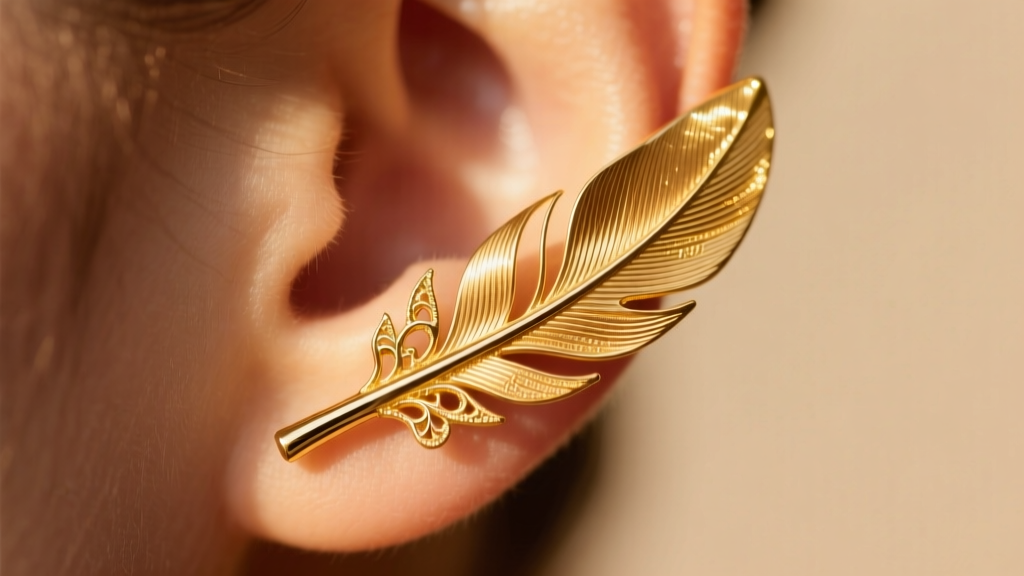
The Allure of Avian Elegance in Modern Jewelry
Nature-inspired jewelry remains a dominant force in 2026, with gold feather earrings standing out as a versatile staple. Whether you are drawn to the sweeping grace of a heron motif or the structured symmetry of an eagle plume, these delicate pieces require specific care and styling knowledge. Unlike solid geometric studs, feather designs feature intricate, thin metal barbs that are prone to bending, snagging, and structural fatigue if mishandled. This comprehensive, step-by-step guide will walk you through selecting the right metallurgical grade, styling them for your unique facial structure, and executing a safe cleaning protocol to ensure your avian-inspired pieces last a lifetime.
Step 1: Selecting the Right Karat and Construction
The most critical mistake buyers make with intricate nature motifs is prioritizing pure gold content over structural integrity. According to the Gemological Institute of America (GIA), the alloy composition drastically affects the Vickers hardness of the metal, which dictates how well thin elements like feather barbs will hold their shape.
14k vs. 18k Gold for Delicate Barbs
While 18k gold (75% pure gold) offers a richer, deeper yellow hue, it is inherently softer. A feather earring crafted in 18k gold with barbs thinner than 0.6mm will easily bend if caught on a wool sweater or tangled in hair. Conversely, 14k gold (58.5% pure gold) is alloyed with copper, silver, and zinc, providing the tensile strength necessary to maintain the crisp lines of the feather's edge.
| Material Grade | Gold Purity | Hardness & Durability | Best Feather Style |
|---|---|---|---|
| 14k Solid Gold | 58.5% | High (Excellent for thin barbs) | Intricate dangles, ear cuffs |
| 18k Solid Gold | 75.0% | Medium (Prone to bending) | Thick studs, chunky hoops |
| Gold Vermeil | Sterling Base | Variable (Coating can wear) | Occasional wear, wide shapes |
Pro Tip: Look for 'electroformed' gold feathers. This technique allows jewelers to create hollow, 3D feather structures that are incredibly lightweight (often under 2 grams) while maintaining a substantial visual footprint, preventing lobe fatigue.
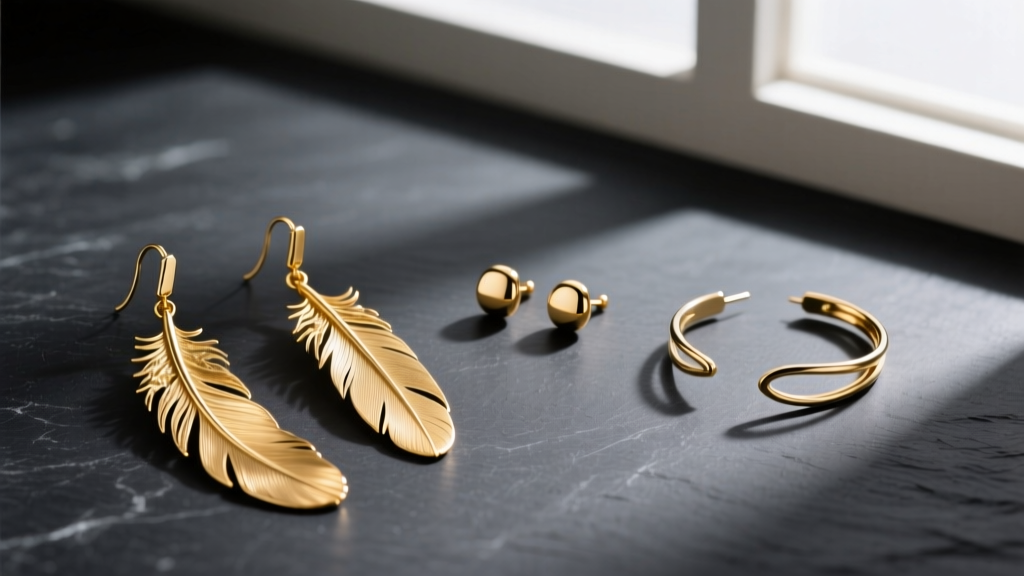
Step 2: Styling Gold Feather Earrings for Your Face Shape
Feather earrings are inherently directional, meaning they draw the eye along their longitudinal axis. Styling them correctly requires understanding how their silhouette interacts with your natural facial geometry.
- Round Faces: Opt for long, narrow drop feathers (such as pheasant or hawk motifs) that extend at least 1.5 inches below the earlobe. The vertical line creates an optical illusion that elongates the face and sharpens the jawline.
- Square Faces: Choose feathers with soft, sweeping curves and rounded tips. Avoid rigid, geometric cuts. A gently curving peacock feather design softens strong angular features.
- Heart-Shaped Faces: Balance a wider forehead and narrow chin with shorter, wider feather studs or huggies that sit close to the lobe. This adds visual weight to the lower half of the face without dragging it down.
- Oval Faces: You have the versatility to wear any style, from dramatic shoulder-dusting plumes to minimalist micro-studs.
Step 3: Piercing Placement and Gauge Considerations
Weight distribution is paramount when wearing elongated dangles. The Jewelers of America recommends keeping everyday earring weights under 5 grams per ear to prevent irreversible lobe stretching.
Lobe vs. Cartilage Placement
For standard lobe piercings (typically 20-gauge or 0.81mm), ensure the feather earring has a secure friction back or a screw-back mechanism. Because feathers catch the wind and hair, a standard butterfly back can easily be pulled off. We highly recommend using silicone O-rings or specialized locking earring backs for added security.
If you are placing a feather charm on a cartilage piercing (like a helix or forward helix), avoid dangles entirely. Cartilage is highly susceptible to irritation bumps from movement. Instead, opt for a 16-gauge (1.2mm) flat-back labret post with a stationary, micro-pave feather charm that sits flush against the ear.
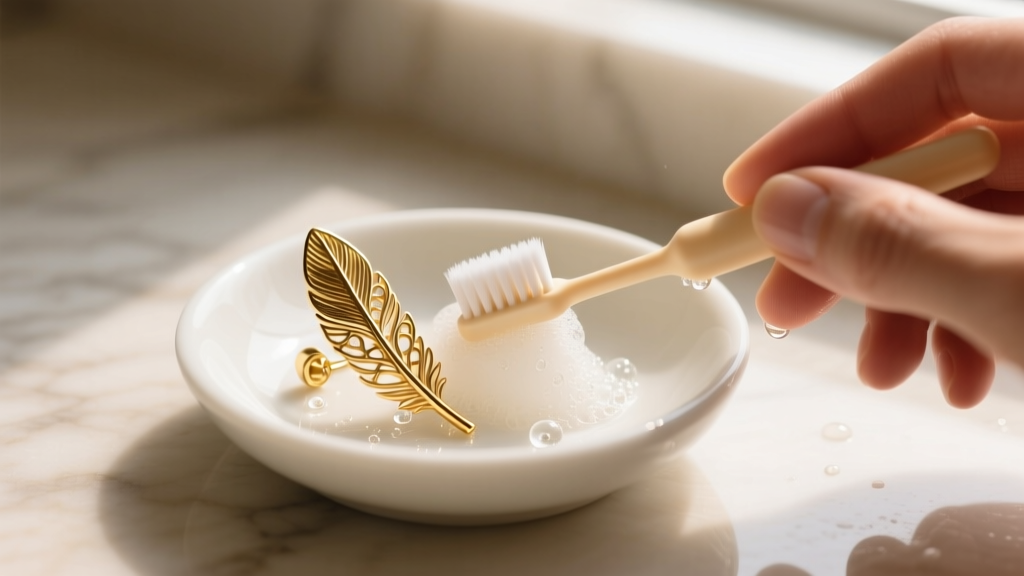
Step 4: The Safe Cleaning Protocol (Do Not Use Ultrasonics)
Cleaning intricate metalwork requires a gentle touch. The natural oils from your skin, combined with hairspray and environmental pollutants, will quickly dull the high-polish quill and matte-finished barbs of your earrings.
Critical Warning: Never place gold feather earrings in an ultrasonic jewelry cleaner. The high-frequency sound waves create microscopic cavitation bubbles that can easily snap the delicate micro-welds where the individual barbs connect to the central quill, permanently ruining the piece.
Step-by-Step Manual Cleaning
- Prepare the Solution: Fill a small ceramic bowl with lukewarm water and add three drops of pH-neutral, lotion-free dish soap (like original Dawn).
- Soak Briefly: Submerge the earrings for exactly 3 to 5 minutes to loosen surface oils. Do not exceed this time, especially if the quill features micro-pave diamond accents, as prolonged soaking can weaken the adhesive or prong tension.
- Brush with the Grain: Using an extra-soft baby toothbrush, gently brush the metal. Always brush downward, parallel to the barb grain. Brushing upward or against the grain will catch the bristles and bend the metal.
- Rinse and Dry: Rinse under a gentle stream of distilled water to prevent hard water spots. Pat dry immediately with a lint-free microfiber cloth, and use a hair dryer on the 'cool' setting to blow out any trapped moisture from the crevices.
Step 5: Proper Storage to Prevent Barb Bending
The final step in maintaining your gold feather earrings is proper storage. Tossing them into a communal jewelry box is a guaranteed way to ruin them; the barbs of one earring will interlock with chains, rings, or the other earring, resulting in severe bending.
Store each earring individually in a soft, anti-tarnish flannel pouch. If you prefer to display your collection, invest in a multi-tiered hanging earring tree or a slotted leather roll where the feathers can hang freely without touching adjacent pieces. By treating these delicate nature motifs with the metallurgical respect they demand, your gold feather earrings will remain a breathtaking, flawless staple in your wardrobe for decades to come.


