Troubleshooting Mistletoe Earrings: Tangles & Repairs
Learn how to detangle, repair, and reinforce intricate mistletoe earrings. Expert fixes for lost berries, broken jump rings, and heavy earlobe sag.

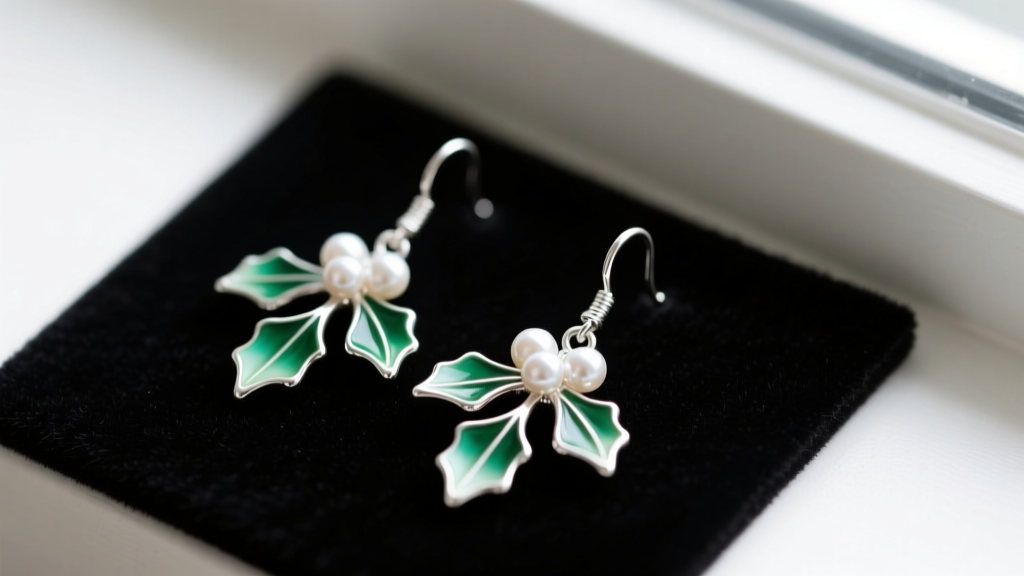
The Anatomy of Mistletoe Earrings & Common Failure Points
Mistletoe earrings are a beloved staple of botanical and holiday jewelry, characterized by intricate clusters of berries (often freshwater pearls, opaque glass, or resin) suspended from delicate metallic leaves. As we navigate the 2026 jewelry landscape, vintage-inspired and multi-component dangle styles remain highly sought after. However, their complex architecture makes them uniquely prone to specific failure modes. Unlike simple studs or solid hoops, mistletoe drops rely on a network of fine cable chains, micro-jump rings, and adhesive-set cup pins.
Before attempting any repairs, it is crucial to understand the structural stress points of these earrings. The most common issues reported by jewelers and collectors include:
- Chain Tangles: Fine chains (typically 0.8mm to 1.2mm rolo or cable) easily knot around the central jump ring, especially when stored improperly.
- Berry Loss: Half-drilled pearls or glass spheres glued to metal cup pins frequently detach due to adhesive degradation or impact.
- Jump Ring Warping: The lateral stress of heavy dangles can pull open unsoldered jump rings, causing the entire mistletoe cluster to detach.
- Earlobe Sagging: Multi-component drops can weigh between 8 to 14 grams per earring, causing the "cheese-cutter" effect on standard piercings.
Troubleshooting Tangled Chains on Dangling Mistletoe Drops
Because mistletoe designs often feature multiple articulated leaves and berry clusters hanging from a single bail, the chains are highly susceptible to static and friction-induced tangling. Pulling at a knot with standard steel tweezers will often kink the fine metal, permanently weakening the chain links and potentially snapping the connection to a delicate pearl setting.
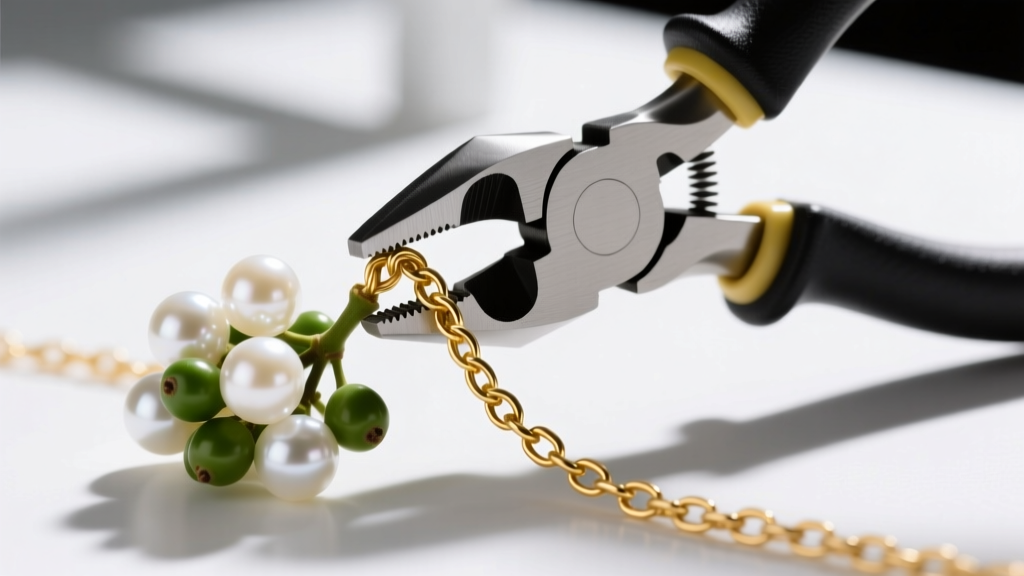
The Talcum Powder & Needle Method
To safely detangle your mistletoe earrings without stressing the jump rings, follow this jeweler-approved framework:
- Lubricate the Knot: Lay the earring flat on a non-porous surface. Apply a small pinch of talcum powder or cornstarch directly to the knot. This reduces the friction coefficient between the metal links.
- Use Non-Marring Tools: Avoid steel tweezers. Instead, use a pair of nylon-jaw pliers or two fine sewing needles. Nylon jaws grip without scratching gold-filled or vermeil finishes.
- Work from the Outside In: Gently wiggle the outermost links of the knot to create slack. Never pull the ends of the chain taut, as this will tighten the knot around the central mistletoe bail.
- Inspect for Micro-Fractures: Once untangled, use a 10x jeweler's loupe to inspect the chain links for stress fractures. If a link is warped, it must be replaced to prevent future breakage.
Reattaching Loose Berries: The Adhesive Matrix
The "berries" on mistletoe earrings are typically half-drilled pearls or resin spheres mounted on a metal cup pin (a small metal post with a concave base). When a berry falls off, you will see a bare metal pin protruding from the leaf cluster. Reattaching it requires the correct chemical adhesive; using the wrong glue will ruin the nacre of a pearl or leave a permanent white residue.
| Adhesive Type | Best Used For | Cure Time | Warning / Avoid On |
|---|---|---|---|
| G-S Hypo Cement | Freshwater pearls, glass berries | 10-15 mins (set) | Heavy structural stress; avoid on porous stones |
| Two-Part Jeweler's Epoxy | Resin berries, heavy glass spheres | 5 mins (working), 24 hrs (full) | Pearls (can yellow over time and damage nacre) |
| UV Resin | Sealing metal leaves, filling gaps | 60 seconds (under UV lamp) | Pearls and porous gems (clouds the surface) |
| Cyanoacrylate (Super Glue) | None (Avoid entirely) | Instant | Causes "blooming" (white haze) and destroys pearl nacre |
According to the Gemological Institute of America (GIA) Pearl Care Guide, pearls are highly sensitive to harsh chemicals and acids. G-S Hypo Cement is the industry standard for pearl cup pins because it remains slightly flexible upon curing, absorbing the micro-shocks of daily wear without cracking the pearl's drill hole.
Pro Tip: Before applying adhesive, lightly roughen the metal cup pin with a fine-grit diamond file and clean it with isopropyl alcohol. This removes manufacturing oils and increases the surface area for a stronger mechanical bond.
Fixing Earlobe Sag: Reinforcing Heavy Holiday Drops
A fully articulated mistletoe earring featuring sterling silver leaves, multiple pearl clusters, and gemstone accents can easily exceed 10 grams. Standard earwires are typically manufactured at 20-gauge (0.81mm) or 21-gauge (0.72mm). When a heavy drop hangs from a 20-gauge wire, the downward force concentrates on the bottom of the piercing fistula, leading to gradual stretching, micro-tearing, and the dreaded "cheese-cutter" effect.
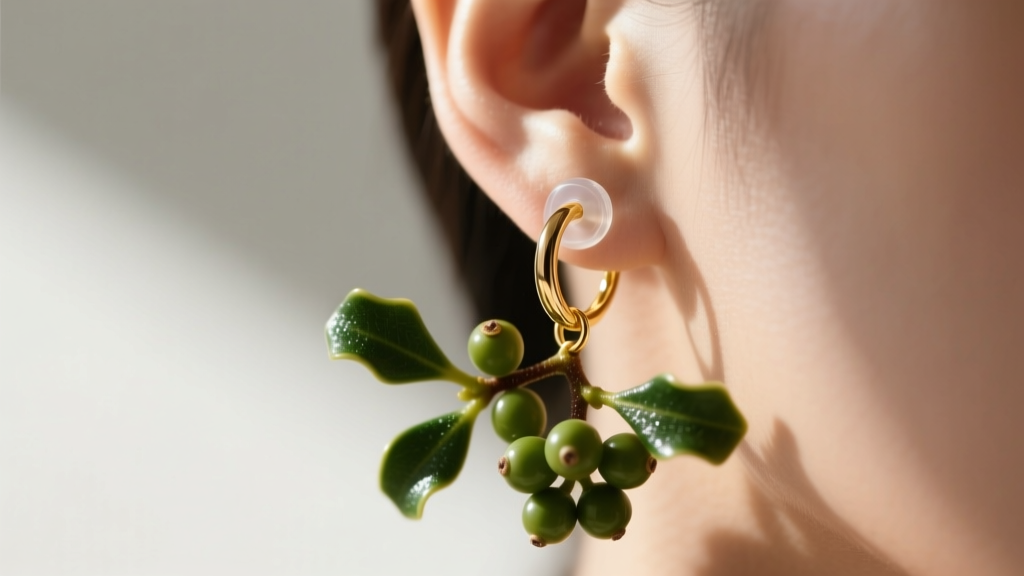
Upgrading Wire Gauges and Support Systems
To troubleshoot earlobe sag without sacrificing the aesthetic of your mistletoe earrings, implement the following structural reinforcements:
- Upgrade to 18-Gauge Earwires: If your piercing allows, swap the standard hooks for 18-gauge (1.02mm) or 16-gauge (1.29mm) French wires. The thicker metal distributes the weight across a wider surface area of the fistula, drastically reducing downward pressure.
- Utilize Silicone Friction Backs: For leverback or post-style mistletoe earrings, use 6mm silicone O-rings or specialized earlobe support patches (such as LobeWonder). These adhesive patches sit behind the earlobe, providing a rigid scaffold that prevents the metal from slicing through the skin.
- Check Jump Ring Metallurgy: Ensure the jump rings connecting the earwire to the earring body are made of "half-hard" sterling silver or gold-filled wire. "Dead soft" rings will easily pull open under the swinging momentum of a heavy dangle. For expert insights on wire hardness and jump ring fabrication, refer to the Rio Grande Jewelry Supply technical guides.
Preventative Care: Protecting Enamel and Mixed Metals
Many mistletoe earrings feature vibrant green leaves created with cold enamel (an epoxy-based resin) or vitreous enamel (kiln-fired glass powder). The troubleshooting protocol for tarnished metal must be carefully adjusted to avoid destroying these colored surfaces.
Never place enameled mistletoe earrings in an ultrasonic cleaner. The high-frequency cavitation bubbles can easily shatter vitreous enamel or lift cold enamel right off the metal base. Instead, use a specialized silver polishing cloth that is completely free of abrasive liquid compounds. If the silver around the enamel has heavily oxidized, apply a tiny amount of mild dish soap and warm water with a soft-bristled baby toothbrush, carefully avoiding prolonged soaking. For more information on preserving treated gemstones and enameled metals, consult the GIA Gem Encyclopedia.
Final Storage Framework
To prevent future tangles and material degradation, store your mistletoe earrings individually in anti-tarnish flannel pouches. Hang the dangles from a dedicated jewelry tree or lay them completely flat in a compartmentalized box, ensuring the chains are fully extended and the berry clusters are not resting on top of one another. By understanding the specific mechanics and material vulnerabilities of these botanical designs, you can ensure your mistletoe earrings remain a flawless, trouble-free staple for years to come.


