How to Authenticate and Style Authentic Turkey Earrings
Learn how to authenticate, style, and care for genuine turkey earrings. Our step-by-step guide covers Oltu stone, 22k vermeil, and bazaar haggling.

The Allure of Turkish Metalwork and Gemstones
In the global jewelry market of 2026, the demand for artisan-crafted, culturally rich accessories has reached an all-time high. When collectors and stylists search for authentic turkey earrings, they are typically seeking pieces that reflect the deep, centuries-old heritage of Anatolian metalwork and regional gemology. Unlike mass-produced fast fashion, genuine earrings sourced directly from Turkish artisans—whether from the bustling stalls of Istanbul's Grand Bazaar, the silversmiths of Mardin, or the Oltu stone carvers of Erzurum—offer unparalleled craftsmanship.
However, the influx of tourist-grade imitations makes authentication a critical skill. This step-by-step guide will teach you how to verify material grades, decode traditional motifs, and properly care for your Turkish jewelry investments.
Step 1: Decoding Hallmarks and Material Grades
The foundation of authentic turkey earrings lies in their metallurgy. Turkish silversmiths are renowned for their high-karat gold vermeil and intricate Telkari (filigree) work. To avoid purchasing brass or copper alloys plated with flash gold, you must know what hallmarks to look for.
- 925 Sterling Silver: Look for the '925' stamp, often accompanied by a maker's mark or the Turkish assay office symbol (a crescent and star or a specific artisan's cipher).
- 22k and 24k Vermeil: Traditional Turkish gold dipping uses high-karat gold. Genuine vermeil must have a base of 925 silver and a gold plating of at least 2.5 microns. Artisan pieces from the Grand Bazaar often boast up to 5 microns of 22k gold, giving them a distinct, rich yellow hue that differs from standard 14k Western plating.
- Nickel-Free Guarantees: Modern Turkish export standards strictly regulate nickel in 925 silver, but always verify with the vendor if you have contact dermatitis.
Material Comparison and Pricing Guide (2026)
| Material / Technique | Hallmark / Identifier | Average Price Range (USD) | Best For |
|---|---|---|---|
| 22k Gold Vermeil over 925 | '925' + '22k' stamp | $120 - $350 | Statement drops, bridal, heirloom |
| Telkari (Silver Filigree) | '925' + Artisan mark | $80 - $250 | Everyday elegance, lightweight dangles |
| Oltu Stone (Black Jet) | Brown streak on porcelain | $40 - $150 | Minimalist studs, men's jewelry |
| Nazar (Cobalt Glass) | Hand-blown glass layers | $25 - $90 | Casual wear, travel, gifting |
Step 2: Selecting Authentic Motifs and Gauges
Turkish jewelry is heavily symbolic. Choosing the right motif not only aligns with your personal style but also dictates the structural requirements of the earring, particularly the gauge size.
The Nazar (Evil Eye) Drops
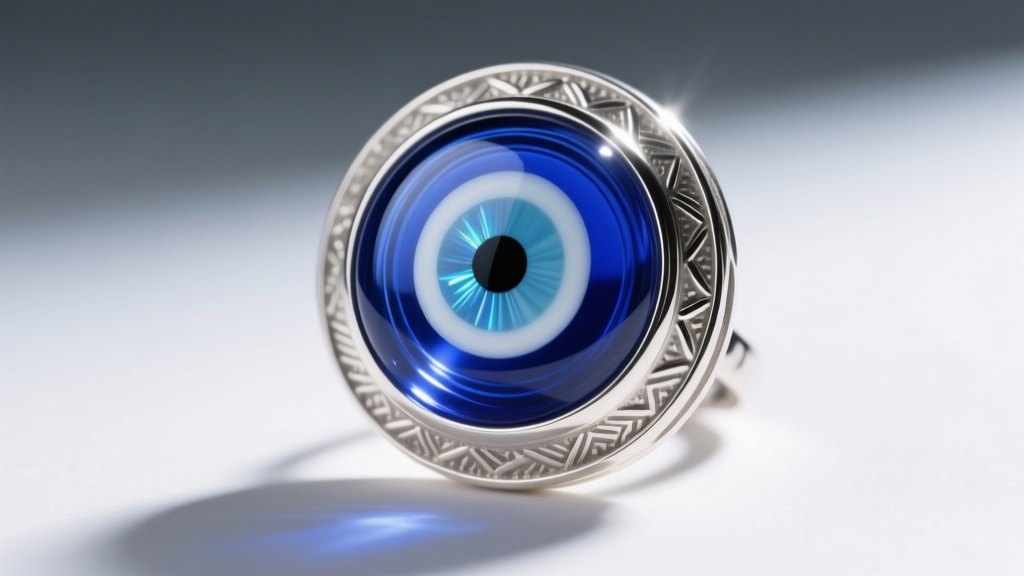
The Nazar boncuğu is arguably the most recognized Turkish motif, designed to ward off negative energy. Authentic Nazar beads are hand-blown from layered cobalt, white, and black glass. When set in sterling silver drops, these earrings typically require an 18-gauge (1.02mm) hook to support the weight of the glass without bending. Avoid pieces where the 'eye' is painted on resin or plastic; true Turkish glass has a slight seam and natural variations in the cobalt center.
Ottoman Tulip and Kazazlık Studs
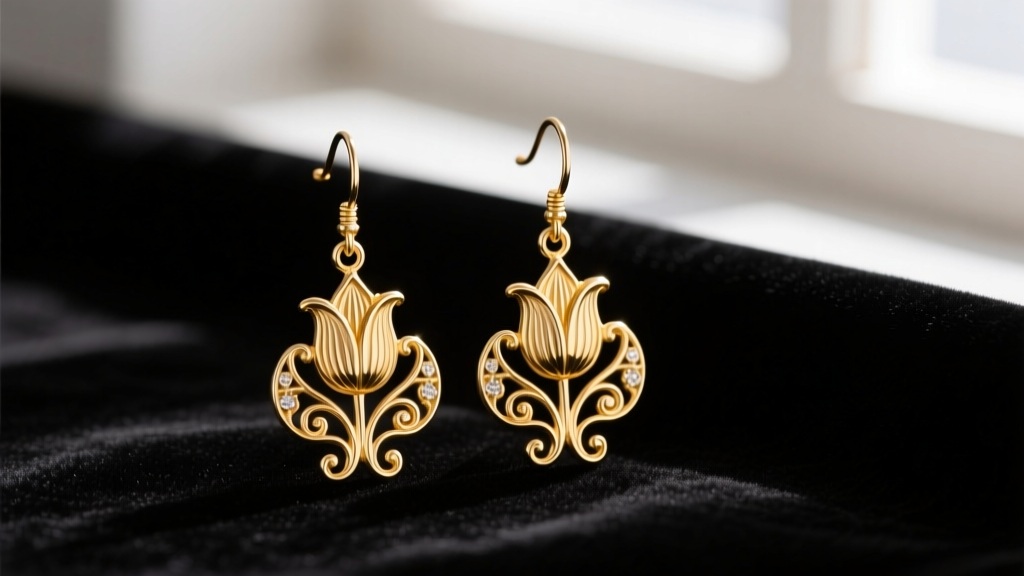
The tulip (lale) is a sacred motif in Ottoman art, symbolizing divine perfection. Studs and small huggies featuring the tulip are often crafted using Kazazlık, an ancient technique of weaving ultra-fine 22k gold or 925 silver wires into 3D textures. Because these pieces are incredibly lightweight, they are usually fitted with standard 20-gauge (0.81mm) posts, making them comfortable for all-day wear on standard lobe piercings.
Step 3: Authenticating Oltu Stone (The Black Amber of Erzurum)
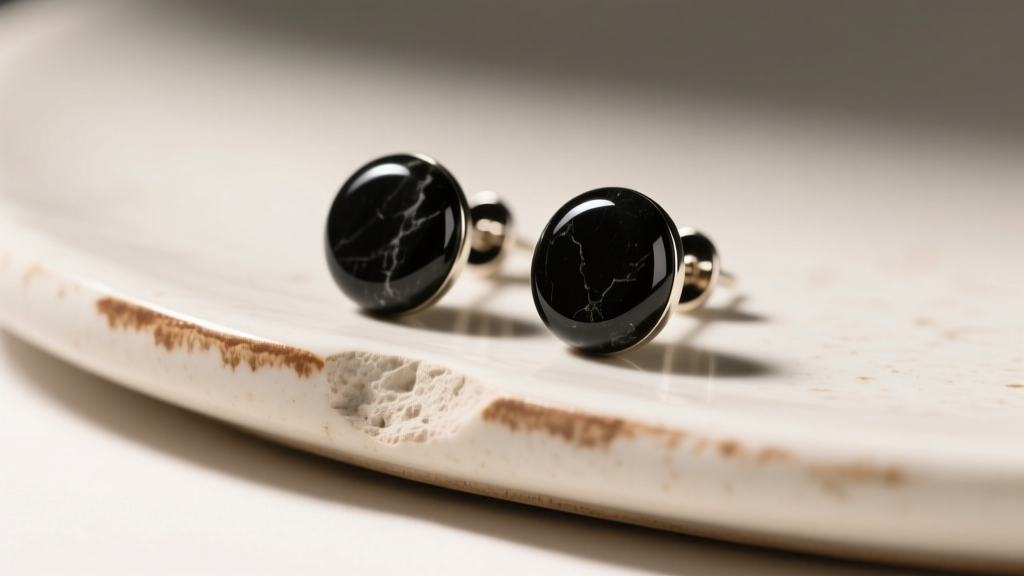
Oltu stone is a rare, organic gemstone found exclusively in the Oltu district of Erzurum, Turkey. Often referred to as 'black amber' or Turkish jet, it is carved into geometric studs, hoops, and elaborate dangles. Because black glass and dyed howlite are frequently passed off as Oltu stone in tourist markets, you must know how to perform the streak test.
The Streak Test: Oltu stone has a Mohs hardness of 2.5 to 4.0. If you gently rub a genuine piece of Oltu stone against an unglazed porcelain tile, it will leave a distinct, chocolate-brown streak. Black glass will not leave a streak (or will scratch the tile), and dyed plastics will melt or leave a synthetic smudge. Furthermore, genuine Oltu stone is warm to the touch and has a specific gravity of roughly 1.30 to 1.40, making it significantly lighter than glass or onyx. For deeper gemological verification, consult resources like the GIA Gem Encyclopedia regarding jet and lignite identifiers.
Step 4: Caring for High-Karat Vermeil and Glass
Maintaining the luster of turkey earrings requires specific care protocols, especially when dealing with high-karat gold vermeil and porous organic stones.
- Avoid Ultrasonic Cleaners: Never place Nazar glass or Oltu stone in an ultrasonic cleaner. The high-frequency vibrations can shatter the layered glass or fracture the microscopic fissures inherent in organic Oltu stone.
- Cleaning Vermeil: To clean 22k vermeil filigree, use a solution of warm water and a single drop of pH-neutral dish soap. Gently agitate with a baby-hair brush (the softest bristle available) to reach the deep crevices of the Telkari wirework. Pat dry immediately with a microfiber cloth to prevent water spots on the silver base.
- Oltu Stone Polishing: Oltu stone naturally oxidizes and can lose its mirror-like polish over time. Restore its shine by gently rubbing it with a soft cloth dampened with a tiny amount of natural olive oil—a traditional Erzurum jeweler's secret.
Step 5: Navigating the Grand Bazaar and Sourcing Ethically
If you are sourcing turkey earrings in person or via direct-to-consumer artisan platforms in 2026, understanding the economics of the Turkish bazaar is essential. According to the official Turkish tourism portal, the Grand Bazaar houses thousands of shops, but not all are manufacturing jewelers.
Haggling Framework: When purchasing high-end artisan pieces (like heavy 22k vermeil chandelier earrings), the initial asking price often includes a 'tourist premium' of 30% to 50%. A respectful and effective negotiation strategy involves admiring the craftsmanship, asking about the artisan's specific workshop (e.g., 'Is this made in the Kuyumcukent district?'), and offering 60% of the asking price, expecting to settle around 75% to 80%. Always request a receipt that explicitly states '925 Ayar Gümüş' (925 Sterling Silver) and the gram weight of the piece.
By mastering these authentication techniques and care protocols, you ensure that your collection of turkey earrings remains a vibrant, culturally significant, and structurally sound testament to Anatolian artistry for decades to come.


