Pearl Dangle Earrings Silver: Technical Guide & Buyer's Specs
Explore the metallurgy, pearl grading, and structural mechanics of silver pearl dangle earrings. Expert specs on gauges, alloys, and settings.

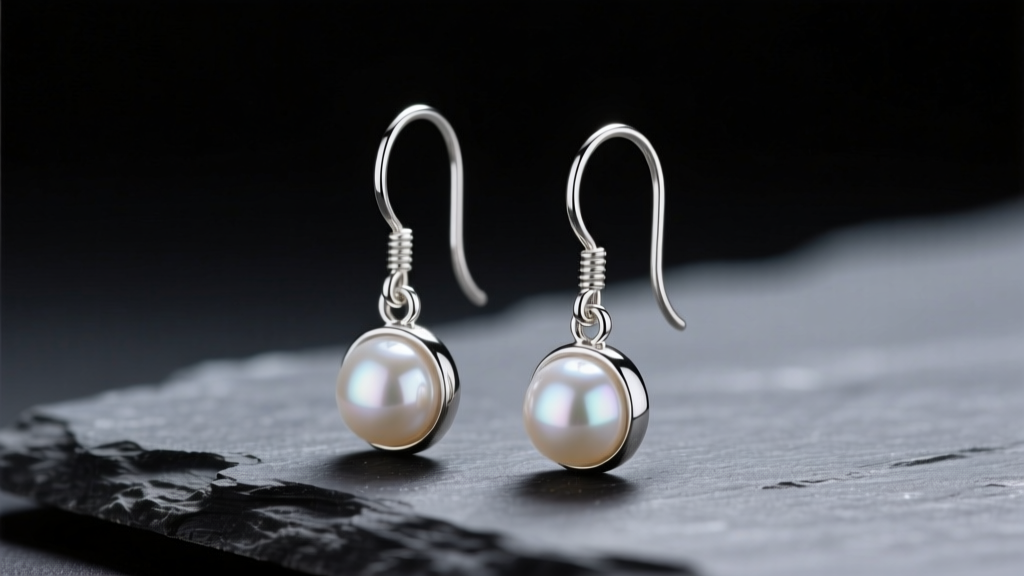
When evaluating pearl dangle earrings silver settings, most buyers focus solely on surface luster and basic aesthetics. However, as a structural jewelry piece, a dangle earring is a dynamic mechanical system. The kinetic energy transferred from the earlobe to the pearl during movement places unique tensile and shear stresses on the silver alloy, the wire gauge, and the adhesive bond. In this 2026 technical deep dive, we deconstruct the metallurgy, gemological grading, and mechanical engineering required to manufacture and select high-performance silver pearl dangles.
The Metallurgy of Silver Alloys in Dangle Designs
Not all silver is engineered for kinetic jewelry. The standard 925 Sterling Silver (92.5% silver, 7.5% copper) offers excellent malleability but suffers from copper-induced oxidation (tarnish) and lower tensile strength. For dangle earrings, which experience constant micro-frictions at the jump ring and ear wire, modern jewelers increasingly turn to 935 Argentium Silver.
Argentium replaces a portion of the copper alloy with germanium. This metallurgical shift creates a transparent germanium dioxide layer on the surface, drastically reducing tarnish and increasing the metal's hardness. According to the FTC Jewelry Guides, both alloys can legally be stamped "925" or "Sterling" depending on the exact assay, but Argentium's superior yield strength makes it the definitive choice for heavy pearl dangles that require thin, resilient wire hooks.
Furthermore, buyers should be wary of rhodium-plated silver for dangle designs. While rhodium provides a bright, white-gold-like finish and initial tarnish resistance, the constant friction at the ear wire hinge and jump rings will inevitably wear the plating away within months. This creates an unsightly two-tone effect where the yellowish-grey sterling silver is exposed beneath the bright rhodium. Unplated, high-polish Argentium or carefully maintained Sterling silver remains the superior long-term choice for kinetic jewelry.
Pearl Classification and Drill Mechanics
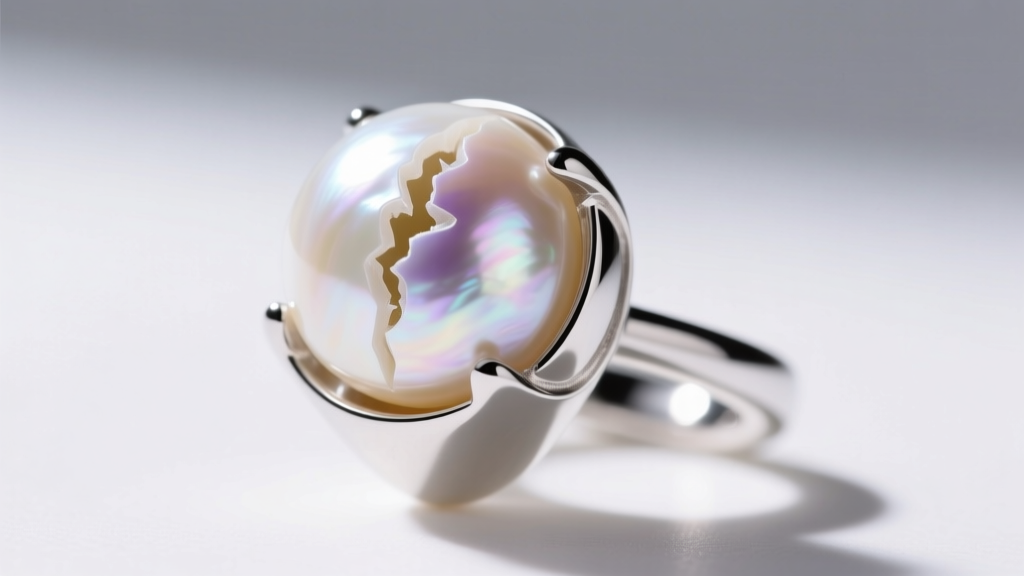
The structural integrity of pearl dangle earrings relies heavily on how the pearl interfaces with the silver mount. The Gemological Institute of America (GIA) categorizes pearls by nacre thickness and origin, which directly dictates the drilling method.
Half-Drilled vs. Fully-Drilled Mechanics
For premium dangles, half-drilled pearls mounted on a silver peg (cup and post setting) are vastly superior to fully-drilled pearls strung on a headpin. A half-drill hole (typically 0.8mm to 1.0mm deep) preserves the structural core of the pearl, preventing the "spin" effect common in fully-drilled beads where the metal wire wears away the nacre from the inside out. Furthermore, a half-drilled mount provides a flat, flush surface area for adhesive bonding, distributing shear stress evenly across the pearl's base.
The Adhesive Bond: Cyanoacrylate vs Epoxy
A critical failure point in silver pearl dangles is the adhesive. Amateurs often use cyanoacrylate (super glue), which cures into a brittle plastic that shatters under the kinetic impact of a swinging dangle. Expert bench jewelers exclusively use two-part jeweler's epoxy (such as Devcon 5-Minute or G-S Hypo Cement for micro-dabs). Epoxy retains a slight flexibility upon curing, absorbing the micro-shocks of daily wear while maintaining a waterproof seal that prevents silver tarnish from creeping into the drill hole and staining the nacre.
Structural Mechanics: Wire Gauges and Hinge Points
The silver wire used for the ear hook and the connecting jump rings must be calibrated to the exact carat weight of the pearl. South Sea pearls (10mm-15mm) can weigh upwards of 4-6 grams each, requiring a thicker gauge to prevent the ear wire from permanently deforming (stretching open) under the pendulum effect of walking.
| Wire Gauge | Diameter (mm) | Pearl Type / Weight Limit | Best Earring Style |
|---|---|---|---|
| 22-Gauge | 0.64mm | Lightweight Freshwater (Under 2g) | Delicate chain dangles, minimalist drops |
| 20-Gauge | 0.81mm | Akoya / Standard Freshwater (2g - 4g) | Classic French wire hooks, leverbacks |
| 18-Gauge | 1.02mm | South Sea / Tahitian (4g - 8g) | Heavy statement dangles, reinforced omega backs |
Common Failure Modes and Preventative Engineering
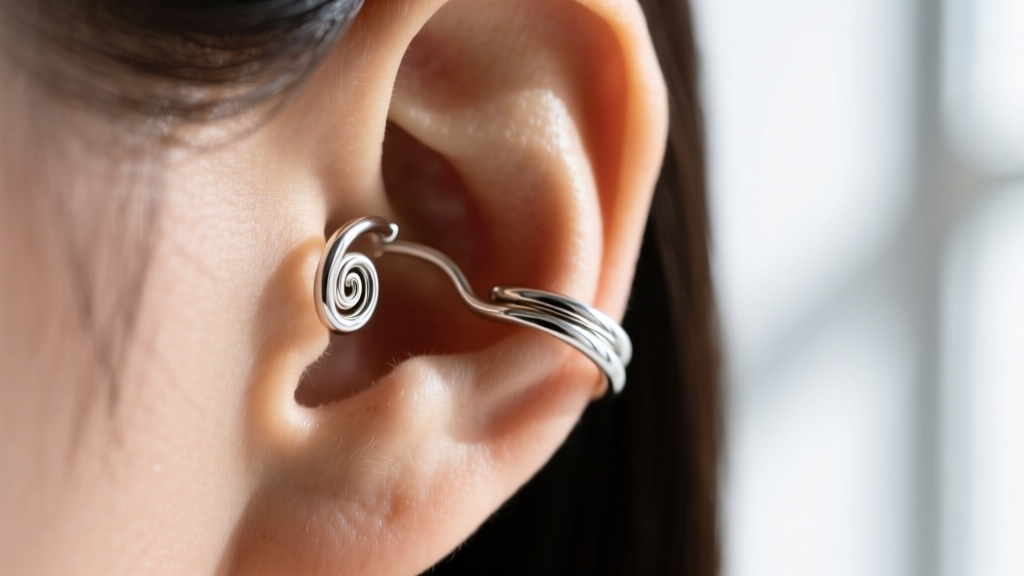
Understanding how pearl dangle earrings silver settings fail allows buyers to inspect jewelry with a critical eye. Here are the primary mechanical failure modes and their engineering solutions:
- Metal Fatigue at the Loop: The tight loop connecting the French wire to the dangle component experiences repetitive bending. Solution: High-quality manufacturers anneal the silver wire before forming the loop, then work-harden it by tumbling, preventing stress fractures.
- Pearl Spin and Detachment: If the silver peg is perfectly smooth, the epoxy bond can twist. Solution: Expert silversmiths use a burr to create microscopic cross-hatching (knurling) on the silver peg, increasing the surface area and mechanical grip for the epoxy.
- Jump Ring Distortion: Standard butt-cut jump rings can pull apart, dropping the pearl. Solution: Soldered jump rings or interlocking oval links must be used for any dangle exceeding 3 grams.
Pricing Matrix by Material Grade (2026 Market)
The cost of pearl dangle earrings in silver is dictated by the nacre quality, pearl origin, and silver alloy complexity. Below is a current market matrix for retail pricing of standard 8mm-9mm dangle drops.
| Pearl Origin | Silver Alloy | Nacre Quality | Estimated Retail Price (Pair) |
|---|---|---|---|
| AAA Freshwater | 925 Sterling | Thick, slight blemishes | $85 - $140 |
| AA+ Akoya | 925 Sterling | Mirror luster, 0.4mm nacre | $250 - $450 |
| Gem-Grade Akoya | 935 Argentium | Flawless, 0.6mm+ nacre | $600 - $950 |
| White South Sea | 935 Argentium | Heavy, 2.0mm+ nacre | $1,200 - $2,500+ |
The Physics of Luster in Kinetic Settings
Unlike static stud earrings, dangle earrings are kinetic. This movement is not just a stylistic choice; it is a functional mechanism for maximizing a pearl's optical properties. The GIA notes that a pearl's "orient" (the iridescent play of colors just below the surface) and "overtone" are best observed when the gem is in motion. As the silver dangle swings, it alters the angle of incident light hitting the aragonite platelets within the nacre. High-grade Akoya and South Sea pearls possess tightly packed, hexagonal aragonite crystals. When mounted on a freely swinging silver hinge, the continuous rotation allows the human eye to perceive the full depth of the nacre's light refraction, creating a dynamic visual depth that static settings simply cannot achieve.
Expert Care and Ultrasonic Warnings
"Never subject mounted pearls to ultrasonic cleaning. The high-frequency cavitation will degrade the epoxy bond and cause irreversible micro-fractures in treated nacre." — Bench Jeweler Standard Operating Procedure
Maintaining silver pearl dangles requires a bifurcated approach. The silver components can be polished with a treated jeweler's cloth (impregnated with anti-tarnish compounds), but care must be taken to avoid the pearl. Silver dip solutions and ultrasonic cleaners are strictly prohibited; the chemicals will strip the pearl's orient, and the vibrations will shatter the adhesive bond. For routine cleaning, a slightly damp microfiber cloth with a drop of pH-neutral castile soap is the only safe method to remove sebum and environmental pollutants from the nacre without compromising the silver mount.
Proper storage is equally critical. Dangle earrings should never be tossed loosely into a jewelry box where the silver wires can become tangled and bent. The ear wires should be hung on a dedicated rack or laid perfectly flat in a lined compartment. Inserting small silicone friction backs onto the silver hooks during storage prevents them from catching on other pieces and preserves the exact curvature of the French wire. Always store silver pearl dangles with 3M anti-tarnish strips in an airtight polyethylene bag to neutralize sulfur compounds in the air that cause silver sulfide (black tarnish) to form.


