2026 Value Guide: Buying 0.75 Carat Diamond Earrings
Are 0.75 carat diamond earrings a smart buy in 2026? Compare natural vs. lab-grown prices, cut grades, and settings to maximize your jewelry budget.

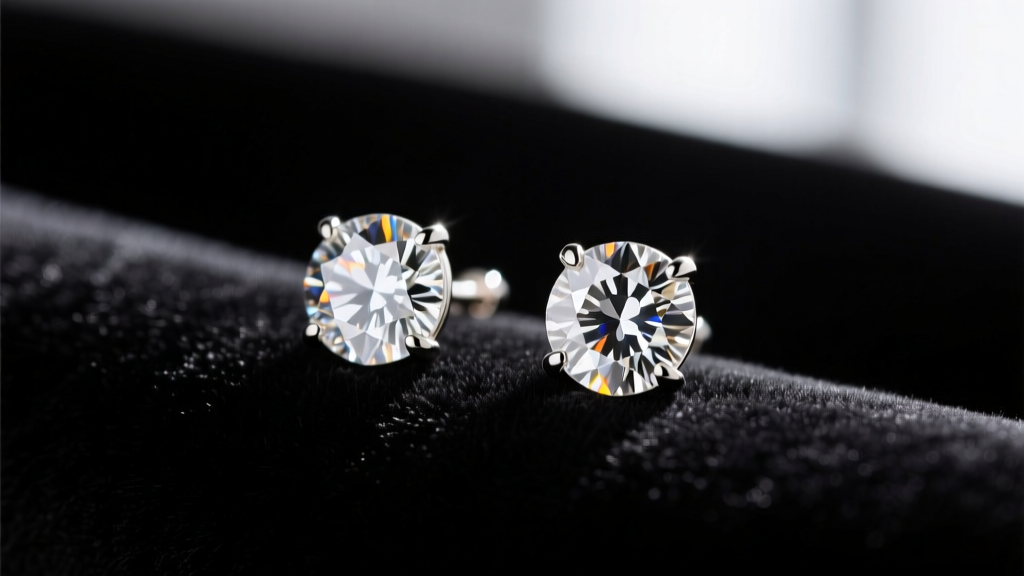
When navigating the fine jewelry market in 2026, few categories present as many hidden value traps as diamond stud earrings. Specifically, the search for 0.75 carat diamond earrings sits in a fascinating middle ground: large enough to command attention and offer brilliant light return, yet accessible enough to fit within a moderate luxury budget. However, not all 0.75 carat earrings are created equal. Between confusing grading metrics, fluctuating lab-grown prices, and deceptive setting styles, maximizing your investment requires a strategic approach. This comprehensive guide breaks down exactly how to evaluate, price, and purchase three-quarter carat diamond studs this year.
The "Total Carat Weight" Trap: Decoding the 0.75 Metric
The most common mistake buyers make is misunderstanding how carat weight is advertised. In the jewelry industry, earrings are almost universally priced and described by their Total Carat Weight (TCW), not the weight of each individual stone.
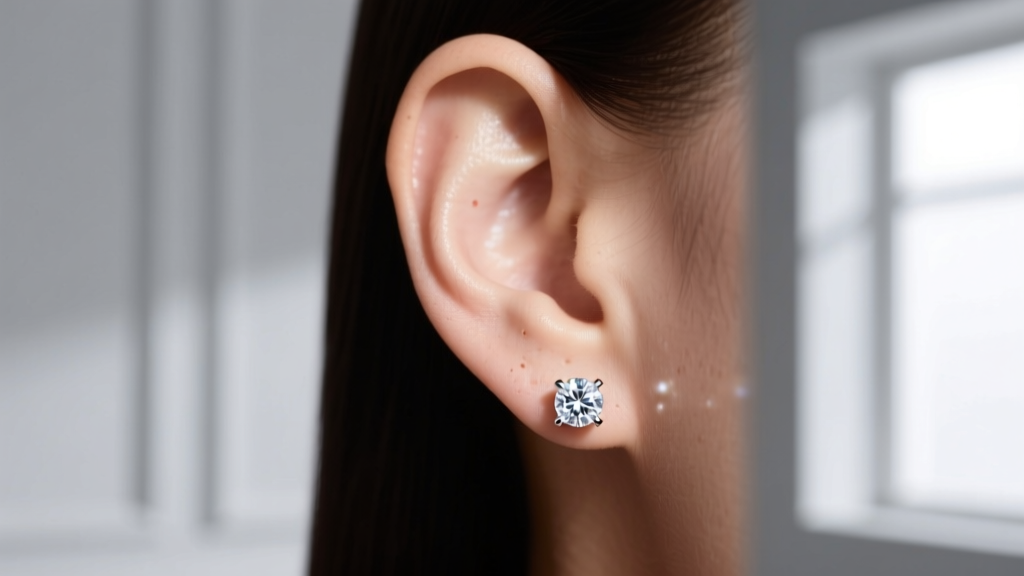
- 0.75 Carat TCW: This means the pair weighs 0.75 carats combined. Each ear wears a diamond weighing approximately 0.375 carats, which translates to a visual diameter of about 4.6mm to 4.8mm (assuming an ideal cut).
- 0.75 Carat Each (1.50 Carat TCW): If a retailer advertises "0.75 carat diamond earrings" without specifying TCW, they might mean each stone is 0.75 carats. These will measure roughly 5.8mm to 6.0mm per ear and cost significantly more.
For this guide, we are assessing the highly popular 0.75 Carat TCW (0.375 ct per ear) category, which remains the ultimate "sweet spot" for everyday wear, office environments, and second-hole pairings.
Natural vs. Lab-Grown: 2026 Pricing Reality
The market for lab-grown diamonds has matured significantly by 2026. While natural diamonds hold their geological rarity, lab-grown diamonds offer identical optical and chemical properties at a fraction of the cost. According to the Gemological Institute of America (GIA), lab-grown diamonds are graded on the exact same 4Cs scale as mined stones, allowing for direct value comparisons.
| Specification | Natural Diamond (0.75 TCW) | Lab-Grown Diamond (0.75 TCW) |
|---|---|---|
| Ideal Cut, F Color, VS1 Clarity | $1,600 - $2,200 | $450 - $650 |
| Excellent Cut, G Color, VS2 Clarity | $1,200 - $1,600 | $350 - $500 |
| Very Good Cut, I Color, SI1 Clarity | $700 - $950 | $200 - $300 |
| Resale Value Retention (Est.) | 30% - 50% | Negligible (Treat as a sunk cost) |
The 2026 Verdict: If you view jewelry purely as an aesthetic purchase and want to maximize visual size and quality for your budget, lab-grown is the undisputed winner. If you value the geological origin and potential (though never guaranteed) resale value, stick to natural stones but compromise slightly on color and clarity to stay within budget.
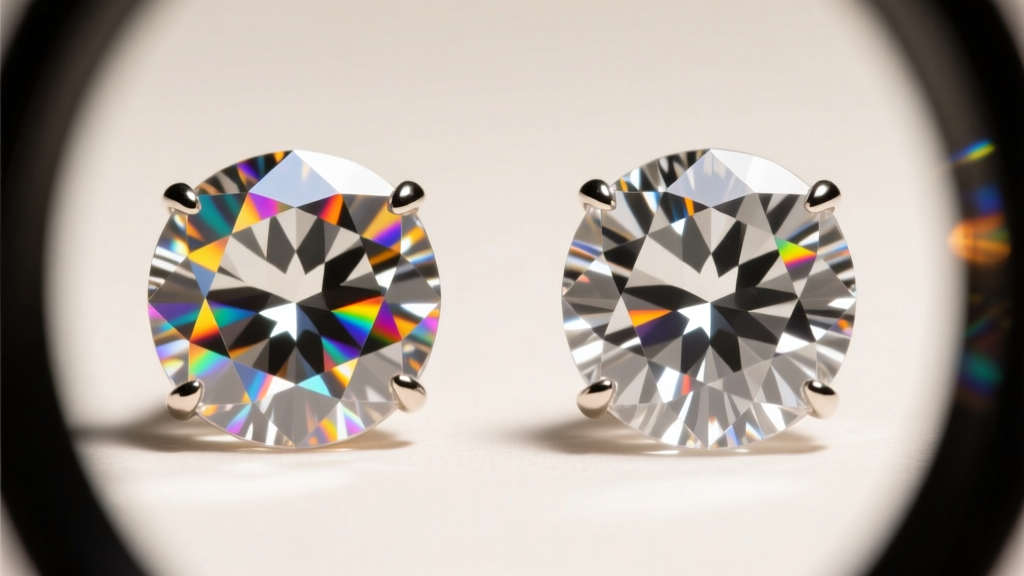
The 4Cs Decoded for Three-Quarter Carat Studs
Because earrings are viewed from a distance (usually at least two feet away), you can strategically downgrade certain grading metrics without sacrificing visual beauty. Here is how to allocate your budget across the 4Cs.
Cut: The Non-Negotiable Factor
Never compromise on cut. A poorly cut 0.50 carat diamond will look duller and smaller than an ideally cut 0.375 carat stone. For round brilliants, only accept Excellent (GIA) or Ideal (AGS/IGI) cut grades. The precision of the facets dictates the stone's ability to reflect light back to the viewer's eye, which is the entire purpose of wearing diamond studs.
Color: The Metal Matters
Diamond color is heavily influenced by the metal setting.
- White Gold or Platinum: Stick to G or H color. Anything lower (I, J, K) will show a faint yellow tint against the bright white metal.
- Yellow or Rose Gold: You can safely drop down to I or J color. The warm reflections of the metal will mask the faint warmth in the diamond, saving you 15-20% on the total price.
Clarity: The Distance Advantage
Unlike engagement rings, which are scrutinized up close, earrings are viewed from a conversational distance. You do not need flawless (FL) or internally flawless (IF) stones. VS2 or SI1 clarity grades are the ultimate budget hacks for earrings. As long as the inclusions are not black carbon spots located directly under the table (center) of the diamond, an SI1 stone will look completely eye-clean when worn on the ear. Always review high-resolution 360-degree videos or consult the American Gem Society (AGS) plotting diagrams to ensure no structural clouds ruin the stone's transparency.
Setting Styles and Hardware: Maximizing Spread and Security
The way your 0.75 carat diamonds are mounted drastically affects both their perceived size and your daily comfort.
Visual Spread Enhancers
- The Bezel Setting: A thin rim of metal surrounds the diamond. While it covers about 0.1mm of the diamond's edge, a well-crafted bezel creates a continuous metallic halo that tricks the eye into perceiving a larger overall footprint.
- The Halo Setting: A micro-pave ring of smaller diamonds surrounds the center stone. This can make a 0.75 TCW pair look like 1.50 TCW, but be warned: halos can sometimes look dated and are prone to snagging on knitwear.
- The Martini (3-Prong) Setting: The classic choice. It exposes maximum light to the pavilion of the diamond but offers the least physical protection to the girdle.
The Hardware: Earring Backs
Do not overlook the earring back. Standard "butterfly" push-backs are notorious for slipping off and losing the diamond. For 0.75 carat studs, invest in La Pousette backs (which click into place like a watch clasp) or locking screw-backs. Furthermore, ensure the post itself is at least 0.9mm thick; thinner posts will bend easily when inserting them into the earlobe, potentially stressing the prongs and loosening the diamond.
Red Flags: Avoiding Overpriced and Undersized Stones
When shopping for 0.75 carat diamond earrings in 2026, watch out for these common retail traps:
- "Promotional" or "I1-I3" Clarity Sales: Many mall jewelers run aggressive sales on 0.75 TCW studs for under $600. These almost always feature I2 or I3 clarity diamonds with heavy black inclusions, poor symmetry, and opaque clouds. They will look dead and lifeless on the ear.
- Shallow Cuts for Weight Retention: Some cutters sacrifice depth to make a 0.35 carat diamond measure like a 0.40 carat diamond (e.g., 5.0mm instead of 4.7mm). While it sounds like a win, shallow diamonds suffer from "fish-eye" effects and severe light leakage, robbing the earring of its sparkle.
- Missing Grading Reports: Never buy natural diamond studs over $800 without a verifiable GIA or AGS report. For lab-grown stones, insist on an IGI or GIA report. "In-house appraisals" are largely marketing documents and do not guarantee the specifications you are paying for.
Final Verdict: Where to Buy in 2026
To secure the best value for 0.75 carat diamond earrings, bypass traditional brick-and-mortar mall jewelers where overhead inflates prices by up to 40%. Instead, utilize reputable online vendors that offer 360-degree diamond imaging, transparent return policies, and direct access to global diamond inventories. By prioritizing an Ideal/Excellent cut, opting for G-H color in white gold, and selecting VS2-SI1 clarity, you will secure a brilliant, eye-catching pair of studs that punch far above their price class. Whether you choose the enduring romance of a natural stone or the pragmatic brilliance of a lab-grown diamond, understanding these metrics ensures your investment shines as brightly as the diamonds themselves.


