Expert Care Guide: Cleaning Your Purple Flower Earrings
Learn how to safely clean and maintain purple flower earrings. Expert tips for enamel, resin, amethyst, and anodized titanium floral jewelry.

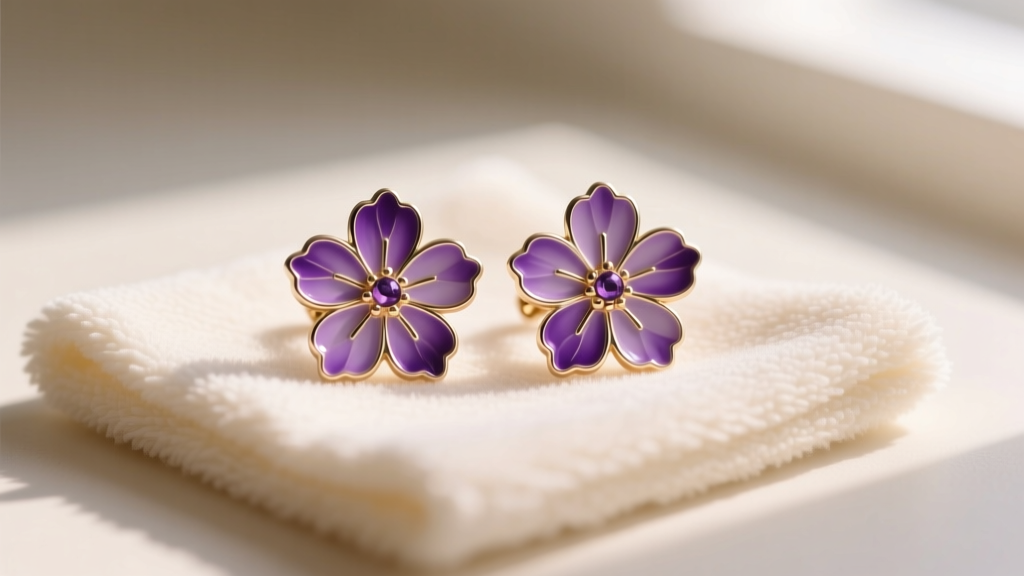
Material Identification: The First Step in Floral Earring Care
Purple flower earrings are a captivating staple in both botanical-inspired fine jewelry and contemporary fashion accessories. However, the aesthetic combination of "purple" and "flower" dictates a wide variety of underlying materials, each with distinct chemical vulnerabilities. Before applying any cleaning solution, you must accurately identify whether your floral earrings are crafted from vitreous enamel, cold enamel (epoxy), polymer resin, amethyst, purple sapphire, or anodized titanium. Using the wrong cleaning protocol can permanently cloud a resin petal, strip an anodized titanium oxide layer, or fracture a heat-sensitive gemstone.
In 2026, advancements in jewelry manufacturing mean that synthetic resins and cold enamels are more vibrant than ever, but they remain highly sensitive to alcohol-based solvents and ultrasonic vibrations. True expertise in jewelry maintenance begins with material diagnostics. If your purple flower earrings feature a glass-like, hard surface that feels cool to the touch, they are likely vitreous enamel. If they feel slightly warm, lightweight, and have a high-gloss plastic finish, they are cold enamel or resin. Gemstone florals will have distinct faceting or cabochon cuts, while anodized titanium will exhibit a metallic luster beneath the purple hue.
The Ultrasonic Trap: What NEVER to Do
The most common and catastrophic mistake jewelry owners make is placing botanical-themed earrings into an ultrasonic cleaner. Ultrasonic machines use high-frequency sound waves to create microscopic cavitation bubbles in a liquid solution. While this is excellent for dislodging sebum from diamond solitaires, it is utterly destructive to most purple flower earrings.
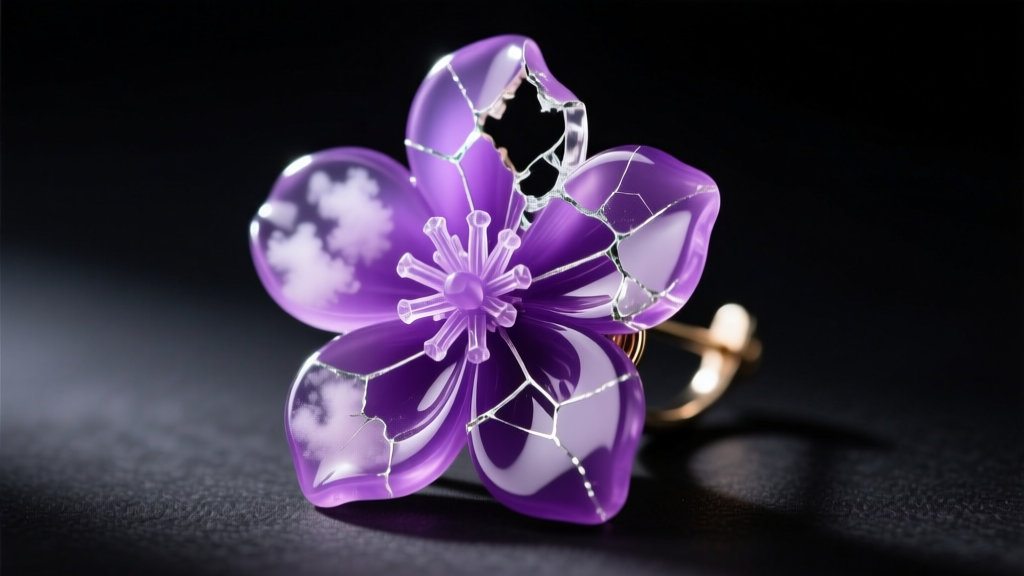
For resin and cold enamel florals, the cavitation process will cause micro-fractures, leading to irreversible cloudiness and structural weakening. For vitreous enamel, the intense vibrations can shatter the glass coating right off the metal base. Furthermore, if your purple flowers are crafted from amethyst, the ultrasonic heat and vibrations can exacerbate internal inclusions, causing the gemstone to fracture along its cleavage planes. The Gemological Institute of America (GIA) explicitly warns against using ultrasonic cleaners for amethyst, especially if the stone has been treated with fracture-filling oils or dyes to enhance its purple saturation.
Step-by-Step Cleaning Protocols by Material
Enamel and Resin Purple Florals
To clean enamel and resin flower earrings, you must avoid harsh chemicals, alcohol, and extreme temperatures. Alcohol will degrade the glossy topcoat of modern 2026 cold-enamel formulations, leaving a permanently dull, matte finish.
- The Solution: Mix three drops of pH-neutral, fragrance-free dish soap (such as original Dawn) into a bowl of lukewarm distilled water. Distilled water is critical; tap water contains calcium and magnesium that will leave hard water spots on the smooth resin petals.
- The Tool: Use an extra-soft baby toothbrush or a dedicated, clean makeup blending brush. Standard toothbrushes have bristles that are too stiff and will leave micro-scratches on resin.
- The Technique: Dip the brush into the solution and gently sweep the bristles along the crevices of the flower petals where dead skin cells and cosmetics accumulate. Rinse quickly under a slow stream of lukewarm distilled water and immediately pat dry with a lint-free microfiber cloth. Never use paper towels, as wood pulp fibers will scratch high-gloss resin.
Amethyst and Purple Sapphire Gemstone Flowers
Gemstone florals require an understanding of the Mohs hardness scale and thermal shock resistance. Amethyst (Mohs 7) and purple sapphire (Mohs 9) have vastly different care requirements.
For amethyst flower earrings, the primary threat is UV radiation and heat. Prolonged exposure to direct sunlight or hot water will cause the purple color centers in the quartz lattice to fade, turning your vibrant purple petals into a washed-out gray or yellow. Clean amethyst florals using the same mild soap and distilled water method as resin, but ensure the water is strictly room temperature to prevent thermal shock. According to the GIA Sapphire Care Guide, purple sapphires are far more durable and can withstand warm water and mild ultrasonic cleaning, provided they are not heavily included or fracture-filled.
Anodized Titanium Floral Clickers and Studs
Anodized titanium achieves its purple hue not through dye, but through an electrochemical process that thickens the natural oxide layer on the metal's surface, refracting light to create color. Harsh chemicals, chlorine, and abrasive polishing cloths will physically strip this oxide layer, reverting the metal to its natural silver-gray color.
To clean anodized titanium flower earrings, use only sterile 0.9% saline solution or a specialized, chemical-free anodized jewelry spray. Wipe gently with a microfiber cloth. The Association of Professional Piercers (APP) emphasizes that anodized titanium is highly biocompatible but requires gentle, non-abrasive maintenance to preserve its color integrity.
Storage Solutions to Prevent Tarnish and Fading
Proper storage is just as critical as the cleaning process. Floral earrings often feature intricate, three-dimensional petal structures that can easily snag, bend, or crush if tossed into a communal jewelry box. Furthermore, the backing hardware (often sterling silver or brass) can tarnish if exposed to ambient humidity, transferring corrosive compounds to the flower's base.
| Material Type | Primary Environmental Threat | Ideal Storage Environment |
|---|---|---|
| Cold Enamel / Resin | Heat warping, alcohol degradation | Climate-controlled, away from direct sunlight |
| Vitreous Enamel | Impact shattering, metal base tarnish | Padded, individual compartments with anti-tarnish strips |
| Amethyst | UV fading, thermal shock | Opaque, velvet-lined boxes (zero light exposure) |
| Anodized Titanium | Friction stripping, chlorine exposure | Soft pouches, isolated from harder gemstones |
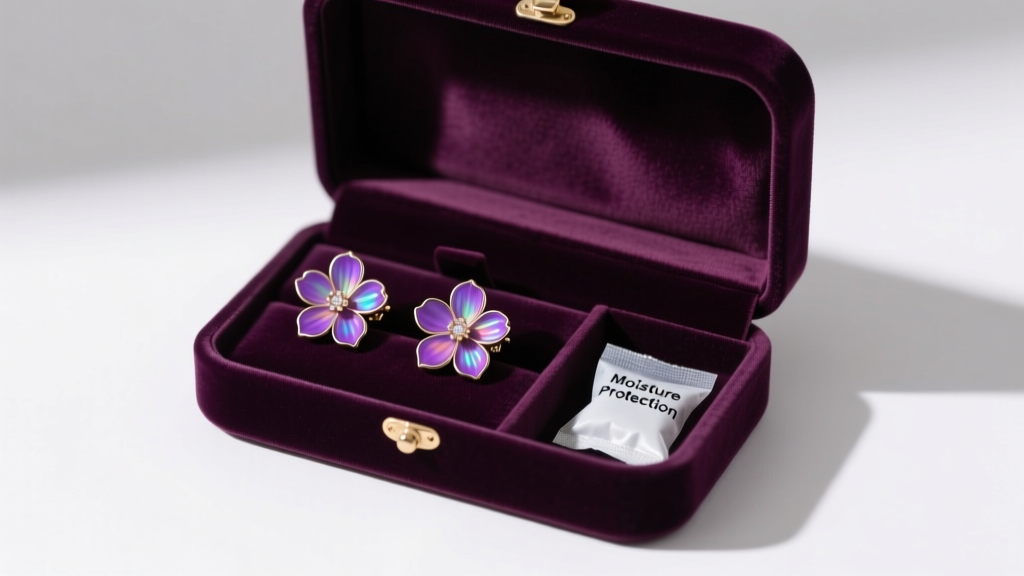
Always store your purple flower earrings in individual, opaque compartments. Including a small silica gel packet in your jewelry box will regulate humidity and prevent the metal posts and butterfly backs from oxidizing, which can otherwise lead to a buildup of copper or silver sulfide that is difficult to remove from intricate floral crevices.
Troubleshooting Common Issues
Cloudy Resin Petals: If your resin flowers have lost their shine due to contact with hand sanitizer or perfume, you can sometimes restore the gloss by applying a microscopic drop of mineral oil to a microfiber cloth and buffing the surface in circular motions. This temporarily fills micro-scratches and restores light refraction.
Sebum Buildup in Crevices: The center of a flower earring (the stamen or pistil area) is a prime trap for sebum, dead skin, and hair products. If a soft brush fails, use a wooden cuticle stick or a toothpick wrapped in a single layer of cotton pad to gently pick out the debris. Never use metal needles, as they will scratch the surrounding enamel or resin.
Sticky Posts and Backings: If the metal post feels sticky or has a greenish-black crust, soak only the metal hardware in a small cap of 70% isopropyl alcohol for five minutes. Be extremely careful not to let the alcohol touch the purple resin or enamel flower head, as it will cause immediate chemical degradation.
Expert Maintenance Schedule
To keep your purple flower earrings looking pristine, adopt this professional maintenance schedule:
- After Every Wear: Wipe the earrings down with a dry, clean microfiber cloth to remove body oils, sweat, and acidic skin secretions before storing them.
- Monthly Deep Clean: Perform the distilled water and pH-neutral soap wash to remove accumulated cosmetic residues like hairspray and foundation.
- Bi-Annual Hardware Check: Inspect the earring posts for bending, check the tension of butterfly backs, and ensure that any prongs holding gemstone petals are tight and not catching on fabrics.
By respecting the unique material science behind your jewelry, you can ensure that your purple flower earrings remain as vibrant and structurally sound as the day you acquired them.


