How to Authenticate & Repair Pools of Light Earrings
Learn how to authenticate, clean, and repair vintage pools of light earrings. Expert troubleshooting for rock crystal quartz and sterling silver.

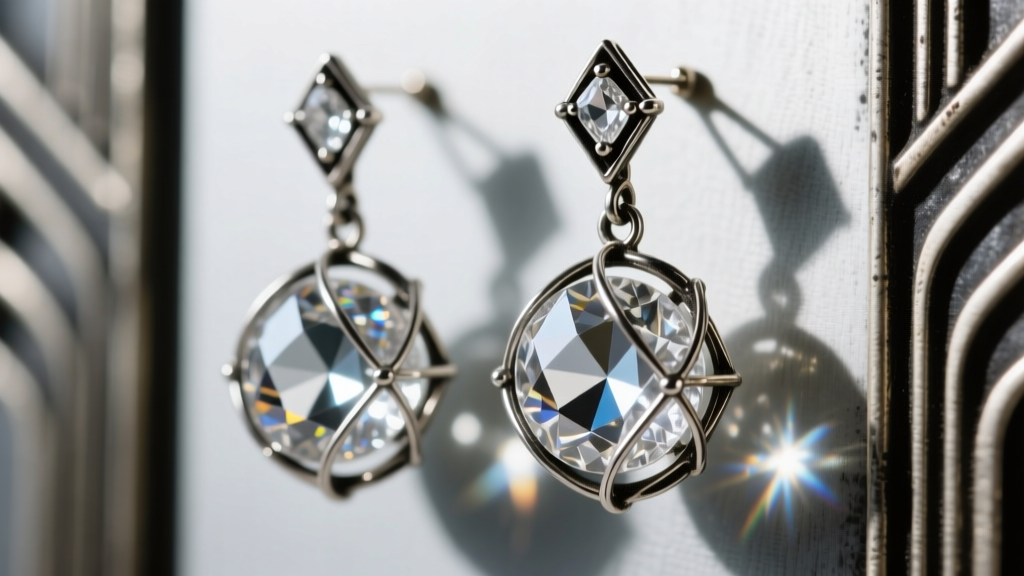
The term 'pools of light' refers to a highly specific, captivating style of jewelry that originated in the late 1920s and flourished during the Art Deco era. True pools of light earrings feature clear, faceted rock crystal quartz spheres or teardrops that are carved with intricate ridges or highly polished to refract light, creating a glowing, liquid-like orb effect. Originally set in sterling silver or white gold, these earrings remain highly sought after by vintage collectors and antique jewelry enthusiasts today.
However, owning and maintaining vintage pools of light earrings comes with a unique set of challenges. The secondary market is heavily saturated with 1980s glass reproductions, modern resin fakes, and poorly executed wire-wrapped replicas. Furthermore, the delicate sterling silver wire wraps and filigree caps are prone to metal fatigue, tarnish, and breakage over the decades. Whether you have just inherited a pair, purchased them at an estate sale, or are looking to restore a damaged set, this comprehensive troubleshooting guide will help you authenticate, clean, and repair your pools of light earrings with professional precision.
Authenticating Vintage Pools of Light vs. Glass Replicas
The most common issue collectors face is distinguishing genuine 1920s rock crystal quartz from later glass or lead-crystal imitations. Because the 'pools of light' effect relies entirely on the optical clarity and refractive index of the stone, identifying the exact material is critical for valuation. According to the Gemological Institute of America (GIA), quartz has distinct physical properties that glass simply cannot replicate.
The Visual and Inclusion Test
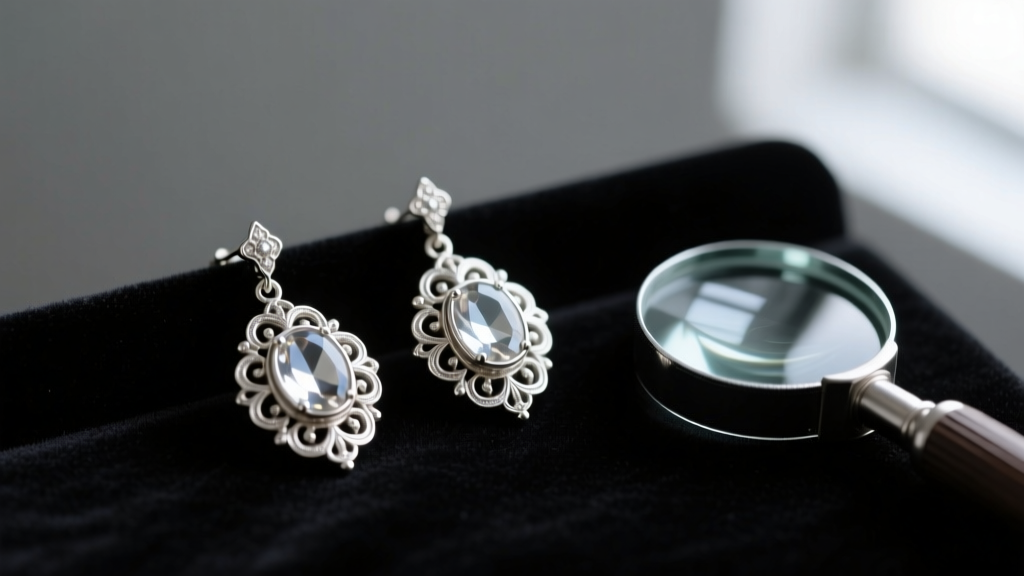
Grab a 10x triplet jeweler's loupe and examine the interior of the crystal sphere. Glass manufacturing inherently traps air, meaning glass replicas will almost always contain tiny, perfectly spherical bubbles. Genuine rock crystal quartz, on the other hand, will never contain round air bubbles. Instead, look for natural liquid inclusions, microscopic 'feathers' (internal fractures), or two-phase inclusions (a liquid with a tiny gas bubble inside). If the stone is completely flawless under 10x magnification, it is highly likely to be synthetic glass or modern lab-grown quartz, not vintage natural rock crystal.
The Thermal Conductivity Test
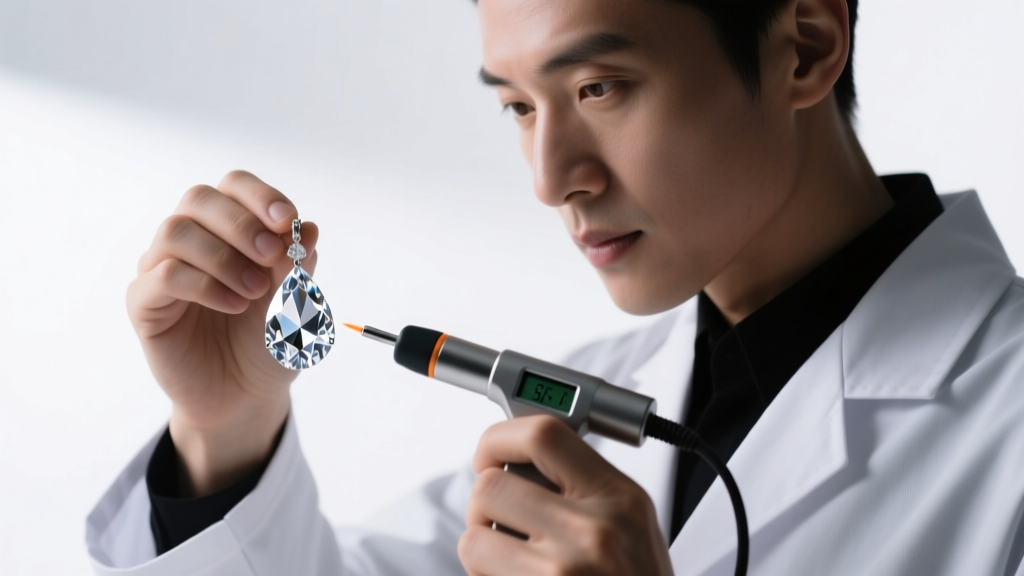
Quartz is a highly effective thermal conductor compared to glass. If you hold a genuine quartz sphere against your lower lip or the inside of your wrist, it will feel distinctly icy and cold, taking several seconds to warm up to your body temperature. Glass, being an insulator, will feel room temperature or warm almost immediately. For a more scientific approach, jewelers use a thermal conductivity diamond tester; while designed for diamonds, these tools will easily differentiate the rapid heat dispersion of quartz from the slow heat retention of glass.
Troubleshooting Cloudiness and Surface Scratches
Over decades of wear, pools of light earrings often lose their signature glow, appearing cloudy or dull. This is rarely due to the quartz itself scratching—quartz ranks at a 7 on the Mohs hardness scale, making it highly resistant to everyday abrasion. Instead, the cloudiness is usually a combination of oxidized silver tarnish transferring to the stone's crevices, trapped skin oils, and hardened cosmetic residues.
The Ultrasonic Cleaner Danger
Never place vintage pools of light earrings in an ultrasonic jewelry cleaner. While quartz is hard, it possesses a conchoidal fracture and often contains internal tension lines or liquid inclusions. The high-frequency acoustic cavitation bubbles generated by ultrasonic waves can easily cause 'crazing' (a network of fine surface cracks) or completely shatter the crystal sphere. Additionally, the vibrations can loosen the delicate wire wraps securing the filigree caps.
Safe Step-by-Step Cleaning Protocol
- Step 1: Prepare a lukewarm bath using distilled water and a few drops of pH-neutral dish soap (like Dawn). Avoid hot water, which can shock the crystal.
- Step 2: Submerge the earrings for exactly 5 to 10 minutes to soften trapped lotions and oils.
- Step 3: Using an extra-soft baby toothbrush, gently agitate the bristles around the silver filigree cap and the wire-wrap bail. Do not scrub the quartz aggressively.
- Step 4: Rinse thoroughly under a gentle stream of lukewarm distilled water to prevent hard water spots.
- Step 5: Pat dry with a lint-free microfiber cloth. Use a wooden toothpick to carefully dislodge any remaining moisture trapped between the silver cap and the quartz sphere.
'The secret to restoring the optical brilliance of a pools of light piece isn't just cleaning the stone; it's polishing the inside of the silver cap. The silver acts as a mirror backing; if it's tarnished, the light refraction is dead.' — Master Bench Jeweler
Repairing Broken Wire Wraps and Filigree Caps
The most frequent structural failure in vintage pools of light earrings is the snapping of the wire wrap that secures the crystal to the ear wire or filigree cap. Early 20th-century jewelers typically used dead-soft sterling silver wire, which work-hardens over time and becomes brittle due to sulfur exposure and repeated mechanical stress.
Selecting the Correct Wire Gauge
When re-wrapping a loose or detached quartz sphere, using the correct wire gauge is paramount. Wire that is too thick will obscure the light refraction and risk cracking the stone's drill hole or carved ridge. Wire that is too thin will not support the weight of the quartz, leading to immediate failure.
| Wire Gauge | Diameter (mm) | Application in Pools of Light Repair |
|---|---|---|
| 28-Gauge | 0.32mm | Used for delicate decorative coiling around the main bail; too weak for structural support. |
| 26-Gauge | 0.40mm | The industry standard for wrapping the main bail and securing the filigree cap to the quartz sphere. |
| 24-Gauge | 0.51mm | Used for heavy-duty structural wraps on larger teardrop stones (over 15mm) or replacing broken ear wires. |
Always use nylon-jaw pliers when manipulating the wire around the quartz to prevent marring the silver or scratching the crystal surface. After wrapping, the wire ends must be trimmed flush and filed with a cup bur to ensure no sharp edges catch on hair or clothing.
Converting Vintage Screw-Backs to Modern Lever-Backs
Many authentic 1920s and 1930s pools of light earrings were originally manufactured with screw-back or tension-clip fittings, as pierced ears were less culturally prevalent at the time. For modern wearers, these vintage fittings are often uncomfortable, heavy, and prone to slipping off the earlobe. Converting them to modern lever-back or post-and-friction fittings is a standard bench repair, but it requires careful execution to preserve the antique value.
The conversion process involves using a jeweler's saw to carefully sever the old screw-back mechanism from the main body of the earring. The remaining silver post is then filed flat and polished. A new 14k white gold or sterling silver lever-back finding is attached. While some jewelers use traditional silver solder, laser welding is highly preferred for this specific repair. Laser welding localizes the heat, ensuring that the thermal shock does not travel down the wire wrap and fracture the adjacent quartz crystal. Expect to pay between $65 and $120 per pair for a professional laser-welded conversion by a certified bench jeweler.
Sourcing Replacements and Valuation in 2026
If you are troubleshooting a missing earring or looking to appraise a pair, understanding the current market dynamics is essential. According to data from Antique Jewelry University, the provenance and hallmarks heavily dictate the price. Authentic 1920s sterling silver pairs featuring high-quality, hand-carved rock crystal quartz typically retail between $450 and $850, depending on the complexity of the filigree caps and the presence of original hallmarks (such as '925' or the English lion passant).
Conversely, 1980s reproductions—which often feature molded glass and cast, rather than die-struck, silver caps—generally trade in the $40 to $90 range. When sourcing replacement parts or single earrings to complete a pair, specialized vintage jewelry forums and estate liquidation auctions remain your best resources, as modern mass-market jewelers no longer produce genuine hand-carved rock crystal spheres with traditional Art Deco proportions.
By mastering these authentication techniques, safe cleaning protocols, and structural repair methods, you can ensure that your vintage pools of light earrings continue to captivate and refract light beautifully for generations to come.


