Are Magenta Earrings Worth It? 2026 Budget & Value Guide
Discover if budget magenta earrings are worth your money in 2026. We analyze anodized titanium, dyed gems, and enamel to find true value.

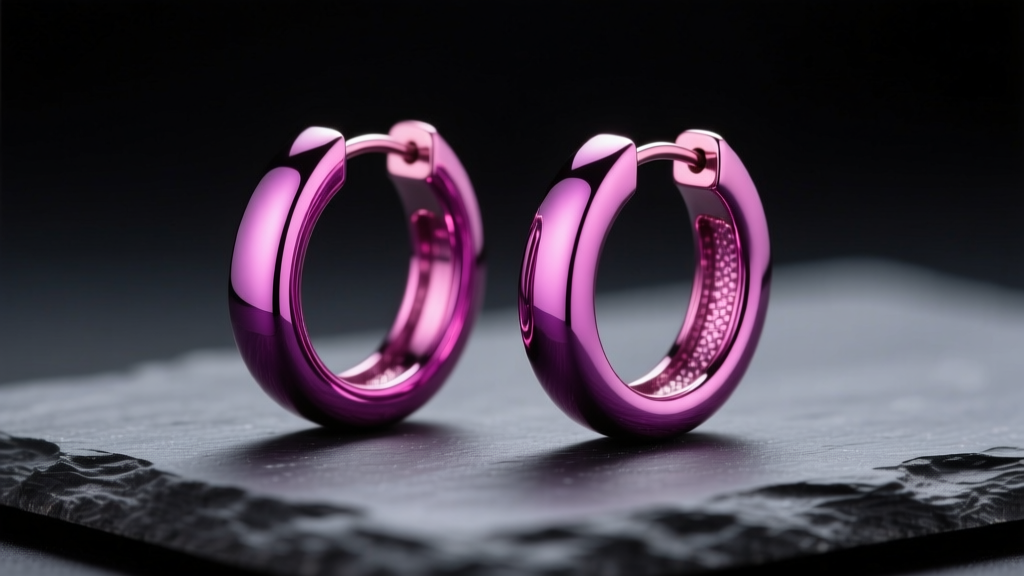
Magenta is arguably the most demanding color in jewelry. It sits precisely on the spectrum between aggressive red and calming purple, requiring high-quality materials to maintain its visual impact without degrading into a muddy, oxidized mess. As we navigate the 2026 trend cycle, fast-fashion retailers and boutique brands alike are flooding the market with vibrant pink-purple accessories. But when you are shopping on a budget, how do you separate genuine value from overpriced, skin-irritating junk?
In this comprehensive budget and value assessment, we dissect the true cost of magenta earrings. We will evaluate material longevity, dye stability, and dermatological safety to help you make informed purchasing decisions, whether you are outfitting a fresh cartilage piercing or looking for an affordable statement stud.
The Magenta Earring Market in 2026: Hype vs. Reality
The current jewelry market leverages magenta as a "power color" for 2026, heavily marketing it for both minimalist huggies and maximalist chandelier drops. However, the budget sector (defined here as earrings priced between $12 and $45) is rife with hidden compromises. The primary issue is that true, colorfast magenta is exceptionally difficult to achieve in cheap metals and synthetic stones.
When you buy budget magenta earrings, you are typically paying for one of three color-delivery methods: chemical dyes, painted enamel, or voltage anodization. Each method has a drastically different lifespan and failure rate. Understanding these mechanisms is the first step in assessing true value.
Material Breakdown: What Are You Actually Paying For?
Anodized Titanium (The Cartilage Champion)
If you are buying magenta earrings for a healing or sensitive cartilage piercing, anodized titanium is the only budget-friendly option that offers genuine value. Anodization is an electrochemical process that thickens the natural oxide layer on the metal's surface. By running a current at precisely 70 to 75 volts, jewelers can force the titanium to refract light in the magenta spectrum.
Because the color is structural rather than a surface paint, it will never chip, peel, or flake into your piercing channel. When shopping, look for ASTM F136 compliant titanium (Ti-6Al-4V ELI), which is the medical standard for implant-grade jewelry. A pair of 16-gauge anodized titanium magenta captive bead rings or threadless ends typically costs between $18 and $35, offering a lifetime of wear for the price of a few coffees.
Enamel and Resin (The Fading Fakes)
Enamel-coated brass or sterling silver is the most common material for budget magenta huggies and drop earrings. While initially glossy and vibrant, enamel is essentially fused glass. On budget pieces, the enamel is often applied over a poorly prepared metal base, leading to micro-fractures.
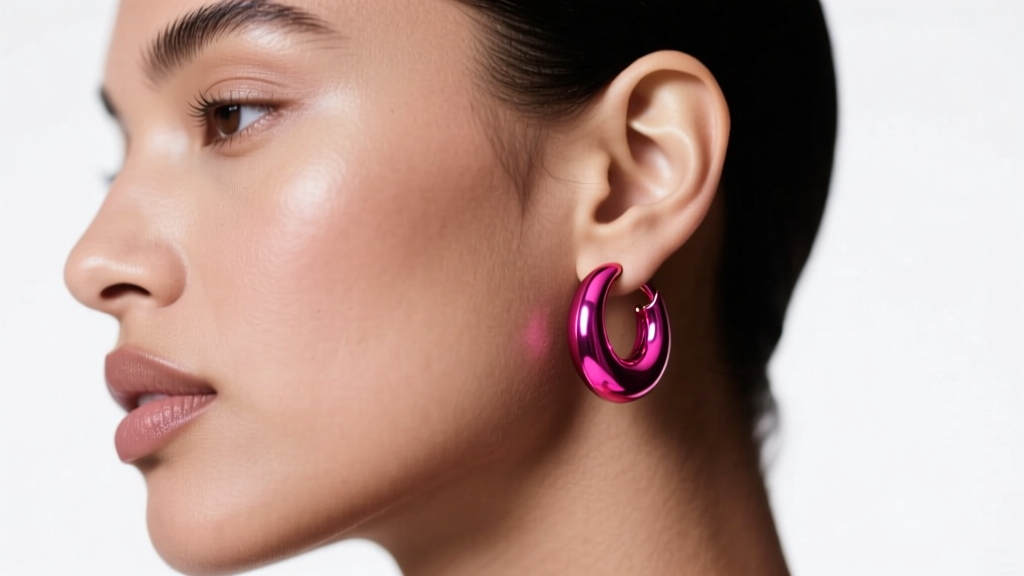
Within three to six months of daily wear, the friction of putting the earrings on and taking them off will cause the magenta enamel to chip, exposing the base metal. If that base metal is a copper-brass alloy, your skin will react. Enamel is acceptable for occasional-wear dangles, but it represents poor value for everyday studs or sleepers.
Dyed Gemstones vs. Natural Rubellite
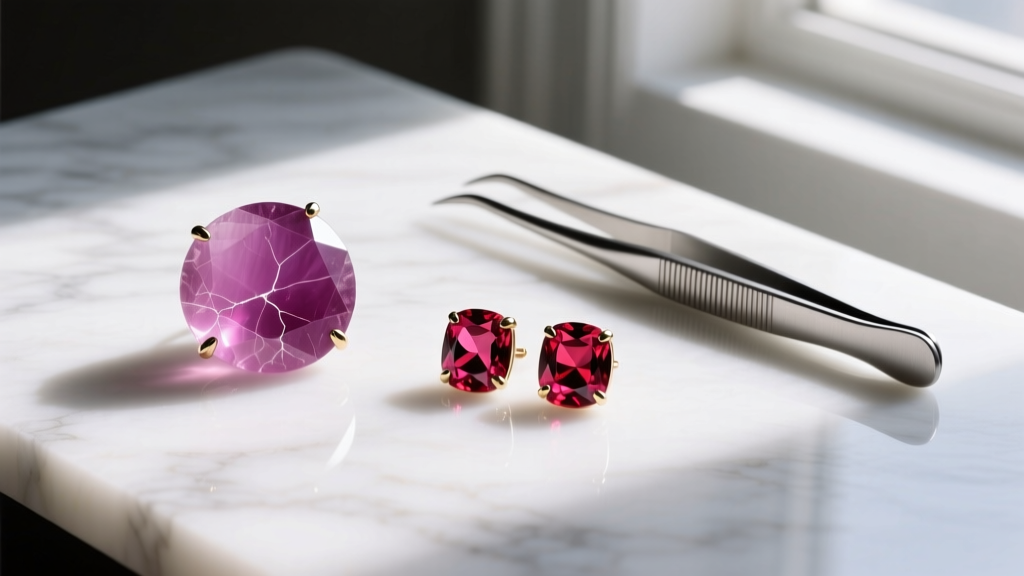
Natural magenta gemstones, specifically rubellite (magenta tourmaline), are incredibly rare and average $100 to $300+ per carat. Therefore, any "magenta gemstone" earring priced under $50 is almost certainly a dyed stone. According to the Gemological Institute of America (GIA), beryl, quartz, and howlite are routinely irradiated and dyed to mimic expensive magenta stones.
The failure mode here is UV and chemical degradation. Dyed quartz will fade to a pale, sickly pink when exposed to direct sunlight over a summer, and the dye can bleed when exposed to the acidic pH of human sweat or alcohol-based cleaning solutions. If you want the look of a gemstone on a budget, opt for lab-created magenta sapphires or cubic zirconia (CZ) with a pink coating, which offer superior color stability compared to dyed natural stones.
The Budget vs. Value Matrix
To help you quickly evaluate the earrings in front of you, use this comparative matrix. True value is calculated by dividing the upfront cost by the expected months of wearable life before degradation or skin irritation occurs.
| Material / Method | Avg. Budget Price | Color Longevity | Hypoallergenic? | Best Use Case |
|---|---|---|---|---|
| Anodized Titanium (70-75V) | $18 - $35 | Permanent (Lifetime) | Yes (Implant Grade) | Cartilage, fresh piercings, daily wear |
| Dyed Quartz / Beryl | $25 - $45 | Low (Fades in UV/Sweat) | Depends on Setting | Occasional evening wear |
| Enamel over Brass | $15 - $30 | Medium (Chips easily) | No (Nickel/Copper risk) | Statement drops, clip-ons |
| Pink CZ (Coated) | $20 - $40 | High (Scratch resistant) | Yes (if 316L/Ti post) | Stud earrings, huggies |
Failure Modes: Why Cheap Magenta Earrings Turn Your Lobes Green
The most common complaint with budget colored earrings is contact dermatitis and the dreaded "green lobe" effect. This is rarely caused by the magenta color itself, but rather the structural failure of the jewelry's plating.
"Allergic contact dermatitis from nickel and cobalt remains one of the most prevalent skin conditions associated with fashion jewelry. Even trace amounts exposed through worn plating can trigger severe localized eczema." — American Academy of Dermatology
Budget manufacturers often use a zinc-copper alloy (brass) as a base, flash-plate it with a microscopic layer of silver or gold, and then apply magenta resin on top. Human sweat has a pH between 4.5 and 7.0. When the sweat breaches the micro-cracks in the cheap plating, it oxidizes the copper core, creating copper chloride (verdigris), which stains the skin green and causes intense itching. If a pair of magenta earrings leaves a metallic smell on your fingers after handling them, the protective plating has already failed. Discard them immediately.
How to Spot High-Value Magenta Earrings Under $50
Finding genuine value requires looking past the vibrant color and inspecting the structural engineering of the earring. Use this checklist next time you are shopping:
- Check the Post Gauge and Stamp: For standard lobe piercings, look for 20G or 18G posts. For cartilage, you need 16G or 14G. High-value budget brands will stamp their titanium with "Ti" or "ASTM F136".
- Inspect the Closure Mechanism: Avoid cheap butterfly friction backs on heavy magenta drops; they cause earlobe drooping and trap bacteria. Opt for secure latch-backs, clickers, or flat-back labret posts.
- The Scratch Test (Visual): Look closely at the edges of the magenta enamel or dye. If you see pooling, uneven thickness, or micro-bubbles, the piece will chip within weeks.
- Verify the Stone Setting: Budget stones should be prong-set or bezel-set. Avoid glued-in stones, as the adhesive degrades when exposed to makeup removers and natural skin oils, leading to lost gems.
Final Verdict: Where to Invest and Where to Save
When evaluating magenta earrings on a budget, the golden rule is to prioritize the metal that touches your skin over the size of the stone. You can safely save money by choosing lab-created coated CZ or voltage-anodized titanium, as these materials offer exceptional color fidelity and dermatological safety at a fraction of the cost of natural rubellite or solid gold.
Conversely, never compromise on the base metal to get a larger, flashier stone. A $20 pair of anodized titanium threadless ends will provide years of vibrant, irritation-free wear, making it the undisputed champion of budget value in 2026. Meanwhile, a $30 pair of dyed stone earrings set in unverified brass will likely end up in the trash—and trigger a dermatologist visit—before the season is over. Spend smart, check your stamps, and let the science of metallurgy guide your style.


