Rhodium Plated Earrings Troubleshooting: Tarnish, Wear & Care
Is your rhodium plated jewelry fading or causing irritation? Learn expert troubleshooting for tarnish, wear, and allergies to restore your earrings.

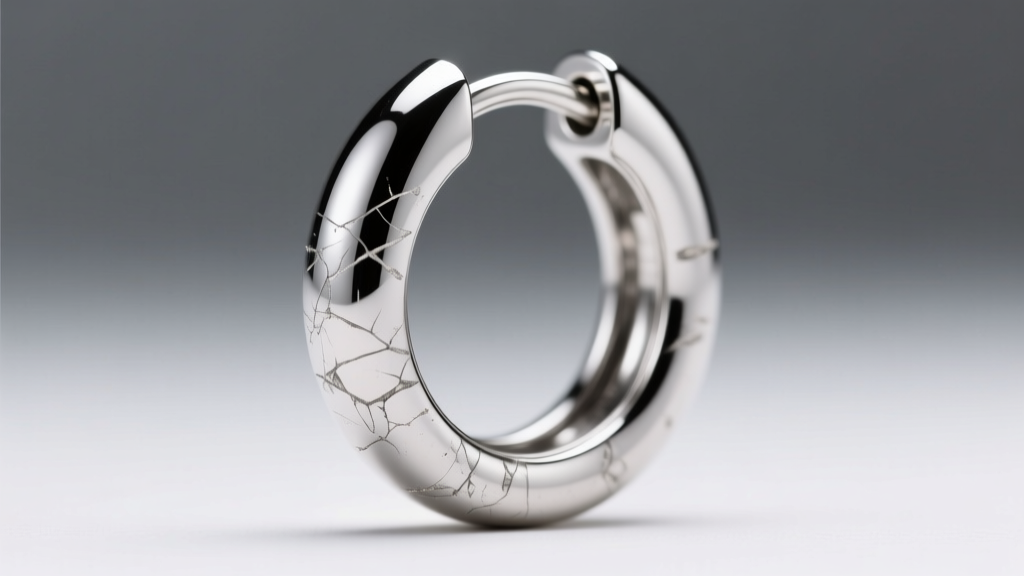
The Reality of Rhodium: Surface Science vs. Solid Metal
Rhodium is a platinum-group metal prized for its brilliant, mirror-like white finish and exceptional hardness (6.0 on the Mohs scale). However, when you purchase rhodium plated earrings, you are not buying solid rhodium. Because rhodium is extraordinarily brittle and prohibitively expensive (often fluctuating between $4,000 and $15,000 per troy ounce), it is applied via electroplating as a microscopic surface layer over a base metal—typically sterling silver, brass, or white gold.
Understanding this fundamental metallurgical reality is the first step in troubleshooting why your favorite studs or hoops are failing. The lifespan of your earrings is entirely dictated by the thickness of this plating, the chemistry of the underlying base metal, and your unique biological and environmental exposure.
Troubleshooting Matrix: Diagnosing Your Earring Failure
Before attempting to fix your jewelry, you must accurately diagnose the failure mode. Use the troubleshooting matrix below to identify what is happening to your rhodium plated earrings.
| Symptom | Underlying Cause | Base Metal Culprit | Actionable Solution |
|---|---|---|---|
| Skin turns green/black behind the lobe | Oxidation of copper alloys reacting to acidic sweat | Brass or Copper | Stop wearing; requires complete stripping and replating or clear nail polish barrier (temporary). |
| Itchy, red, flaky earlobes | Allergic Contact Dermatitis from nickel exposure through micro-fractures | Nickel-bearing White Gold or Brass | Immediate removal. Replate with a palladium or platinum under-layer before re-rhodiuming. |
| Yellowish or dull grey tint on high-friction zones | Normal mechanical wear exposing the base metal | Sterling Silver (925) or Yellow Gold | Professional polishing and electroplating restoration. |
| Cloudy, milky, or spotted finish | Chemical damage from chlorine, sulfur, or ultrasonic cleaners | Any | Mild soap wash; if persistent, requires professional repolishing. |
The Anatomy of Plating Thickness and Wear
Not all rhodium plated earrings are created equal. The jewelry industry lacks strict, universal labeling standards for plating thickness, which leads to massive discrepancies in consumer expectations. According to metallurgical standards referenced by institutions like the Silver Institute, the longevity of your earrings is directly tied to micron depth.
Flash Plating (0.01 to 0.05 Microns)
Often found in fast-fashion or ultra-budget jewelry. This is essentially a microscopic wash of rhodium designed to make a dull brass or silver earring look brilliant in the display case. It will wear off within weeks of daily friction, exposing the base metal almost immediately.
Standard Commercial Plating (0.5 to 0.75 Microns)
The industry standard for mid-tier fine jewelry. With proper care and occasional removal, standard plating on earrings (which experience less friction than rings) can last 1 to 3 years before requiring maintenance.
Heavy or Mil-Spec Plating (1.0 to 2.5+ Microns)
Reserved for high-end luxury pieces or bespoke commission work. This thickness provides a robust, durable barrier that can withstand years of daily wear, though it significantly increases the manufacturing cost.
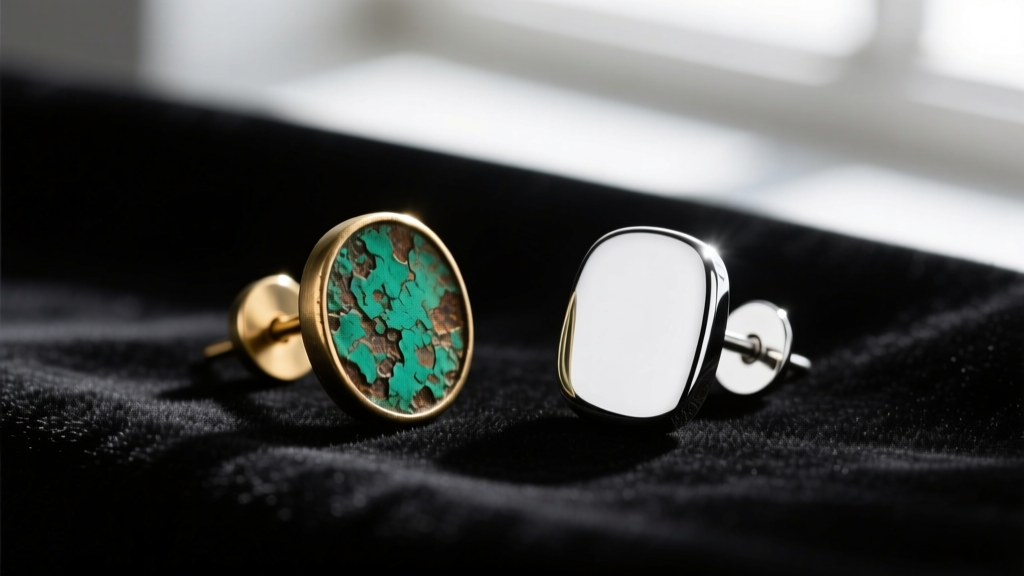
The Green Ear and Allergy Dilemma: Base Metal Chemistry
One of the most frequent complaints we troubleshoot is the sudden onset of skin discoloration or allergic reactions from earrings that were previously problem-free. Rhodium itself is entirely hypoallergenic and biologically inert. If your rhodium plated earrings are causing a reaction, the rhodium is no longer between your skin and the base metal.
The Copper Oxidation Factor (Green/Black Skin)
If your earlobe or the skin behind your ear turns green or black, your earrings are likely plated over a brass or copper alloy. When the rhodium wears thin, your natural sweat (which contains salts and lactic acid) reacts with the copper, creating copper chloride—a green salt that transfers to your skin. This is not dangerous, but it is highly annoying. Fix: You can temporarily seal the post with a coat of clear, flexible jewelry guard or nail polish, but professional replating over a nickel-free barrier is the only permanent fix.
The Nickel Leakage Factor (Contact Dermatitis)
If you experience itching, redness, or weeping skin, you are likely reacting to nickel. Many white gold alloys and cheaper brass mixes contain nickel to achieve a white color. When micro-abrasions occur in the rhodium layer, nickel ions leach into the skin, triggering an immune response. The Gemological Institute of America (GIA) frequently notes that nickel allergies can develop at any point in life, meaning a pair of earrings you wore safely for years can suddenly become unwearable once the plating breaches.
Professional Restoration: The Replating Protocol
When your rhodium plated earrings fade, you cannot simply dip them in a new solution. Replating is a multi-step metallurgical process. If you attempt DIY rhodium pens or home electroplating kits, you will likely trap dirt and oils under the new layer, resulting in a peeling, blistered finish.
A master jeweler never plates over scratches. The electroplating process will actually amplify surface imperfections. The piece must be stripped, polished to a mirror finish, ultrasonically cleaned, and steamed before it ever touches the rhodium bath.
What to expect from a professional jeweler:
- Stripping & Polishing: The jeweler will use a mild acid bath or reverse-electrolysis to strip the remaining rhodium, then use a rouge wheel to buff out micro-scratches in the base metal.
- Ultrasonic & Electro-Cleaning: The earrings are submerged in an ultrasonic tank to dislodge microscopic debris, followed by an electro-cleaning bath to ensure zero surface oils remain.
- The Rhodium Bath: The earrings are submerged in a heated rhodium sulfate solution, and a direct electrical current bonds the new rhodium layer to the metal.
- Cost Expectation: Expect to pay between $35 and $75 per pair for standard stud or hoop replating, depending on the complexity of the setting and the condition of the base metal.
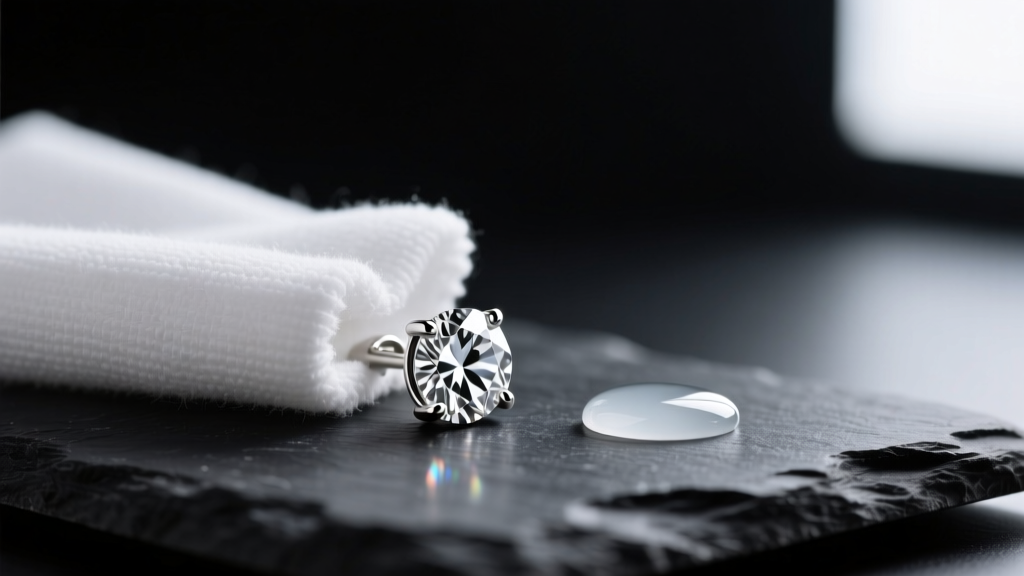
Preventative Maintenance: Protecting Your Investment
To maximize the lifespan of your rhodium plated earrings, you must adopt a strict maintenance protocol that avoids chemical and mechanical degradation.
Chemical Threats to Avoid
- Chlorine: Never wear rhodium plated earrings in swimming pools or hot tubs. Chlorine aggressively attacks the microscopic pores in the plating, causing it to become brittle and flake.
- Silver Dip Cleaners: Never use commercial silver dip liquids on rhodium plated sterling silver. These solutions contain thiourea and harsh acids that will instantly strip or cloud the rhodium finish.
- Hairspray & Perfume: The alcohols and aerosol propellants in hair products can leave a cloudy, irreversible film on rhodium if not wiped away immediately.
The Correct Cleaning Method
For routine maintenance, use only a few drops of pH-neutral dish soap mixed with lukewarm distilled water. Soak the earrings for three minutes, gently agitate with a baby-soft toothbrush, rinse in distilled water, and pat dry with a lint-free microfiber cloth. Store them in an anti-tarnish cloth pouch to prevent environmental sulfur exposure when not in use.
By understanding the science behind the plating and treating your earrings with metallurgical respect, you can maintain that brilliant, mirror-white finish for years to come.


