Troubleshooting the Perfect Small Hoop Earring Men Wear Daily
Fix common issues with your small hoop earring men wear daily. Troubleshoot gauge sizes, closure failures, and metal allergies with our expert guide.


The Evolution of Men's Ear Jewelry and the Fit Problem
The modern man's jewelry drawer is no longer limited to a simple watch and a wedding band. As ear piercings become a staple of masculine style, the small hoop earring men favor for its subtle, rugged edge has surged in popularity. However, wearing hoops isn't without its mechanical and biological challenges. From mysterious skin irritations to closures that refuse to snap shut, finding the perfect fit requires more than just picking a design off a rack. It requires an understanding of anatomy, metallurgy, and mechanical tension.
In this comprehensive troubleshooting guide, we will diagnose the most common issues men face with small hoop earrings and provide actionable, expert-level solutions to fix them.
The Anatomy of Fit: Troubleshooting Gauge and Diameter
The most frequent complaint regarding the small hoop earring men wear is discomfort or the dreaded "cheese cutter effect." This occurs when the wire gauge is too thin for the piercing, causing the metal to slowly migrate through the tissue under the weight of the hoop or tension from snagging.
Decoding the Gauge Dilemma
Most mass-market men's jewelry defaults to 20-gauge (0.81mm) or 18-gauge (1.02mm) to save on material costs. However, professional piercers typically use a 16-gauge (1.29mm) or 14-gauge (1.60mm) needle for standard lobes to ensure structural integrity. If you force a 20G hoop into a 16G healing fistula, you will experience friction, micro-tearing, and eventual migration.
The Fix: Purchase digital calipers to measure your current jewelry or the piercing hole. If your lobe was pierced with a standard gun, it is likely 20G or 18G. If pierced by a professional with a needle, it is almost certainly 16G. Always match the hoop's gauge to the original piercing size. For long-term lobe health, consider having a professional piercer taper your lobes up to 14G, which provides a much sturdier foundation for heavier hoops.
Inner Diameter (ID) Troubleshooting Chart
Choosing the wrong Inner Diameter (ID) results in a hoop that either chokes the earlobe or hangs too low, catching on collars. Use this chart to diagnose your fit:
| Inner Diameter (ID) | Best Placement | Fit Profile | Troubleshooting Notes |
|---|---|---|---|
| 8mm (5/16") | Helix / Tragus / Snug Lobe | Tight, hugging the tissue | Too tight for standard lobes; will cause swelling if worn immediately after piercing. |
| 10mm (3/8") | Standard Earlobe | Classic small hoop | The gold standard for men's lobes. Allows 2-3mm of breathing room for washing. |
| 12mm (1/2") | Lobe / Lower Cartilage | Loose, slight dangle | Prone to snagging on towels and shirt collars; avoid for active lifestyles. |
Mechanical Failures: Fixing Closure Mechanisms
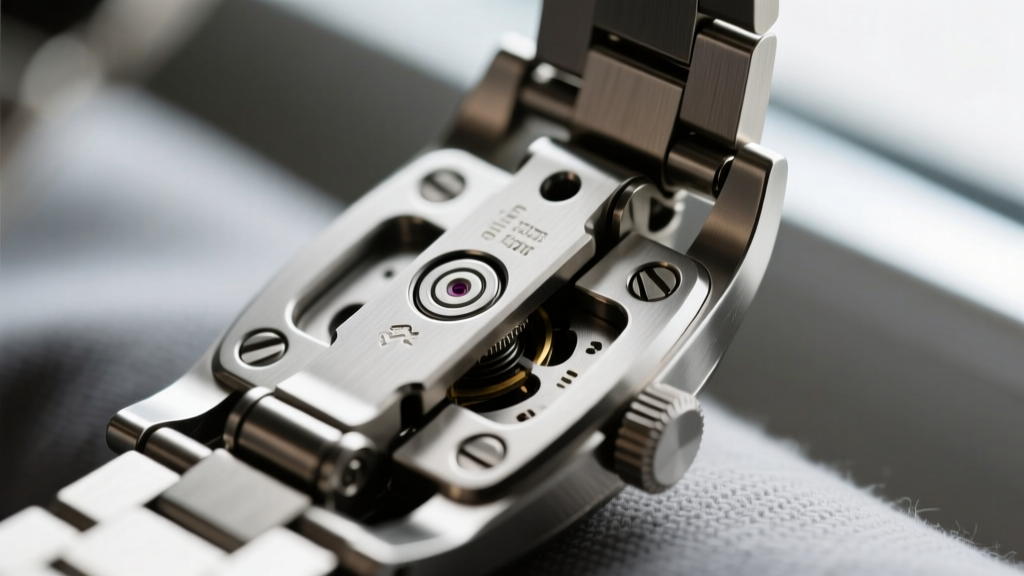
The hardware on a small hoop earring men rely on is subjected to sweat, friction, and accidental pulls. When closures fail, the jewelry becomes unwearable. Here is how to troubleshoot the three most common mechanisms.
Clicker Hinges: Debris and Tension Loss
Clickers are popular for their secure snap, but the tiny hinge barrel easily traps dead skin cells, soap residue, and lint. If your clicker won't snap shut, do not force it with pliers, as the microscopic pin will snap.
- Step 1: Soak the earring in warm water with a drop of mild, fragrance-free dish soap for 10 minutes.
- Step 2: Use an ultra-soft baby toothbrush to gently scrub the hinge barrel.
- Step 3: If the clasp still won't catch, the tension arm may be bent. Use nylon-jaw jewelry pliers to apply microscopic upward pressure on the male clasp end until the click returns.
Captive Bead Rings (CBRs): The Missing Bead
CBRs rely on the natural spring tension of the metal ring to hold the bead in place. Over time, opening and closing the ring fatigues the metal, causing the gap to widen and the bead to fall out. To restore tension, you must use specialized ring-opening and ring-closing pliers. Gently expand the ring by 2mm, then use the closing pliers to compress it back to its original shape, restoring the factory temper and grip strength.
Material Reactions: Solving the "Green Ear" and Itch
If your earlobe is red, itchy, or flaking around the piercing site, you are likely experiencing allergic contact dermatitis. Many budget brands market their products as "surgical steel," which is a largely unregulated term. Most 316L stainless steel contains 8% to 12% nickel, a known allergen that leaches when exposed to the salt and acidity of human sweat.
According to the Mayo Clinic, nickel allergy is one of the most common causes of skin rashes, and once developed, the sensitivity is lifelong. To solve this, you must audit your jewelry materials.
The Hypoallergenic Upgrade Path
The Association of Professional Piercers (APP) strictly recommends specific materials for long-term wear in the body. When shopping for a small hoop earring men can wear without irritation, look for these exact material grades:
- ASTM F136 Implant-Grade Titanium: Contains 0% nickel. It is lightweight, highly polished, and the absolute gold standard for sensitive ears. It will never turn your skin green.
- Niobium: A highly reactive element that is safely anodized to create vibrant colors without using surface plating that can chip and cause reactions.
- Solid 14k or 18k Gold: Ensure it is nickel-free and alloyed with silver or copper. Avoid gold-plated or gold-filled hoops, as the thin outer layer will eventually wear away, exposing the reactive base metal underneath.
Daily Wear: Preventing Snags and Sleep Irritation
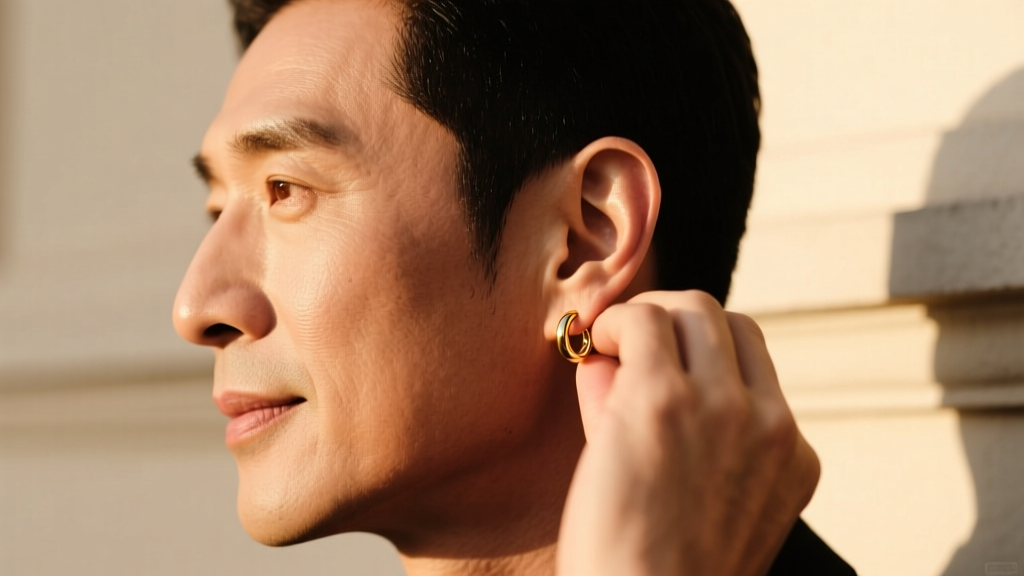
Even a perfectly sized, hypoallergenic hoop can cause problems if it interacts poorly with your daily routine. Snagging on towel loops or hoodie strings can result in traumatic tearing of the earlobe.
The Pillow Friction Problem
Waking up with a sore, swollen earlobe is usually caused by pillow friction. When you sleep on your side, the hoop is pressed into the mattress, creating a pressure point on the back of the fistula. If you are a side sleeper, the best troubleshooting method is to switch to a seamless continuous hoop for sleeping, as it lacks the bulky hinge or bead that digs into the skin. Alternatively, invest a travel neck pillow and sleep with your ear in the center hole to eliminate pressure entirely.
The Towel Snag Hazard
The most common cause of torn lobes for men with small hoops is the bath towel. The looped terrycloth acts like a net, catching the hoop when you dry your face. The permanent fix is to switch to seamless hoops for daily wear, or adopt a "pat-dry" method with a microfiber cloth around the face and ears, avoiding the dragging motion that leads to catastrophic jewelry failures.
Final Diagnostics
Troubleshooting the perfect small hoop earring men wear daily comes down to respecting the physics of the piercing and the biology of the skin. By verifying your exact gauge with calipers, upgrading to ASTM F136 titanium, and properly maintaining your hinge mechanisms, you can transform your hoops from a source of daily irritation into a permanent, comfortable fixture of your personal style.