Sun Earrings Gold: Troubleshooting Droop, Snags & Tarnish
Fix common issues with sun earrings gold. Expert troubleshooting for earlobe droop, hair snags, post bending, and deep crevice tarnish.

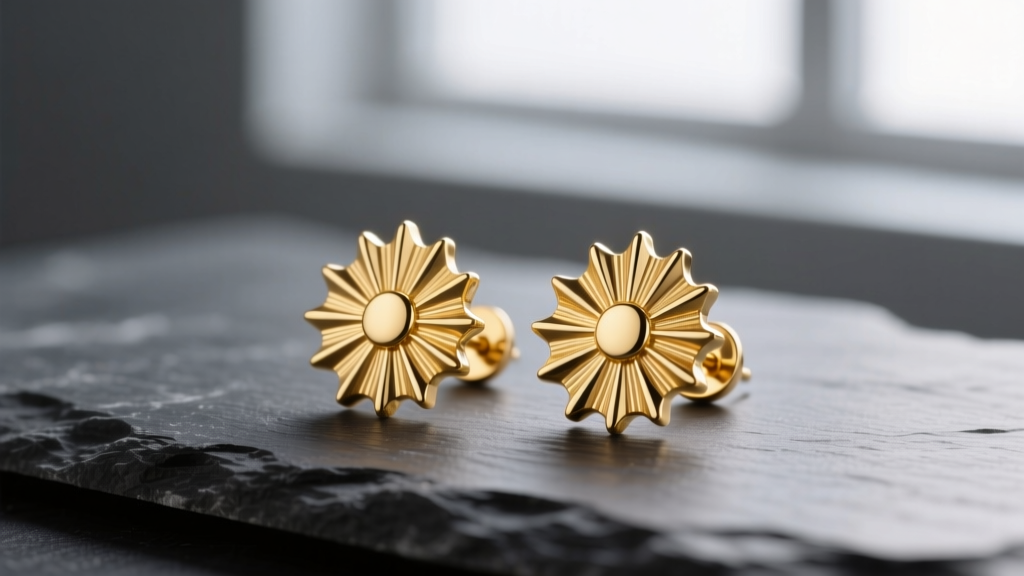
Sunburst motifs have dominated jewelry design for centuries, symbolizing vitality and energy. However, the unique geometry of sun earrings gold designs introduces a specific set of structural and maintenance challenges that standard studs or hoops simply do not face. The radiating rays create a wide surface area, shifting the center of gravity and creating microscopic crevices that trap debris.
As a senior jewelry analyst, I frequently see collectors and daily wearers struggle with forward drooping, persistent hair snagging, and accelerated plating loss in the ray grooves. This comprehensive troubleshooting guide addresses the mechanical failures of sunburst earrings and provides actionable, expert-level solutions to restore their function and brilliance.
The Unique Physics of Sunburst Jewelry
Unlike a simple spherical stud or a continuous hoop, a sun motif is inherently asymmetrical in its weight distribution relative to the earlobe's piercing axis. Most sun earrings range from 20mm to 45mm in diameter. When the post is soldered to the exact geometric center of the sun's face, the longer bottom rays act as a lever, pulling the earring forward and down.
Furthermore, the standard 20-gauge (0.81mm) post used in most commercial gold earrings lacks the shear strength to support a 35mm gold-plated brass sunburst without bending when subjected to lateral force—such as pulling a sweater over your head. Understanding these mechanical stress points is the first step in troubleshooting your pair.
Troubleshooting Earlobe Droop and Leverage
The most common complaint regarding sun earrings gold styles is the "forward tilt," where the bottom rays rest against the neck while the top rays point outward. This occurs when the earring's center of mass falls below the piercing hole.
The Post-Placement and Backing Matrix
To counteract droop, you must manipulate the fulcrum point or increase the surface area of the backing. Below is a diagnostic matrix for selecting the right hardware based on your earring's diameter and weight.
| Earring Diameter | Estimated Weight | Optimal Post Placement | Required Backing Type |
|---|---|---|---|
| 15mm - 20mm | 2g - 4g | Dead Center | Standard Butterfly or Silicone Bullet |
| 21mm - 30mm | 5g - 8g | 2mm Above Center | Wide-Disc Friction Back (10mm+) |
| 31mm - 45mm | 9g - 15g | Top Ray or Offset High | Omega Clip or Jumbo Silicone Patch |
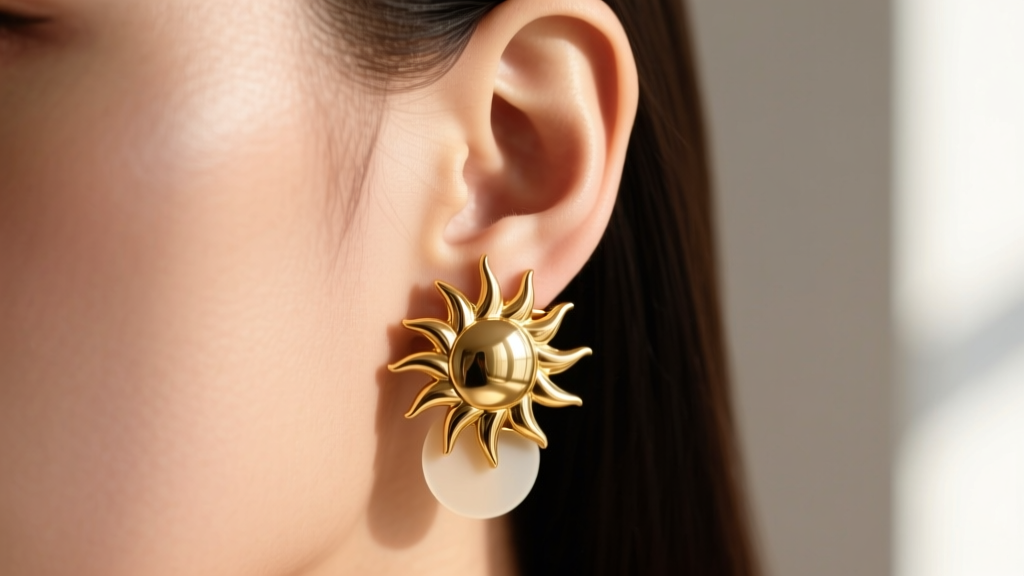
Actionable Fix: If your sun earrings are already manufactured with a centered post and are drooping, purchase jumbo silicone earring support patches (often sold under brand names like Lobe Wonder). These 12mm adhesive-backed silicone discs sit flush against the back of your earlobe, distributing the 30mm sunburst's weight across a wider area of cartilage and skin, effectively eliminating the forward tilt.
Solving the Snagging and Hair-Tangling Nightmare
Art Deco and celestial sun designs frequently feature sharp, tapered rays. These points act like microscopic grappling hooks for fine hair, lace, and knitwear. Over time, snagging doesn't just pull your hair; it bends the posts and warps the soft gold alloy of the rays themselves.
Modifying the Ray Tips
If you wear your sun earrings daily, the sharp points must be neutralized. You can perform a micro-filing technique at home to blunt the tips without destroying the design's integrity.
- Tools Required: A 400-grit jeweler's needle file and a piece of 1000-grit wet/dry sandpaper.
- Technique: Hold the earring firmly by the post. Gently pass the 400-grit file over the sharp tip of each ray exactly twice. This removes the needle-point but leaves the tapered aesthetic intact.
- Finishing: Rub the blunted tip against the 1000-grit sandpaper for three seconds to polish away any micro-scratches left by the file, preventing the newly flattened tip from catching on silk fabrics.
If you are purchasing new sun earrings gold styles and want to avoid this entirely, search specifically for "blunted ray" or "coin-style" sunbursts, where the rays are cast as a solid, continuous outer halo rather than individual protruding spikes.
Crevice Tarnish: Cleaning Intricate Gold Rays
Gold vermeil and gold-plated sun earrings are notorious for rapid tarnishing in the "valleys" where the rays meet the central face. These 90-degree internal angles trap sebum, dead skin cells, and sulfur-rich sweat. This organic buildup creates a localized acidic environment that eats through the 0.5-micron gold plating, exposing the brass or copper base metal beneath, which then oxidizes green.
Step-by-Step Deep Cleanse Guide
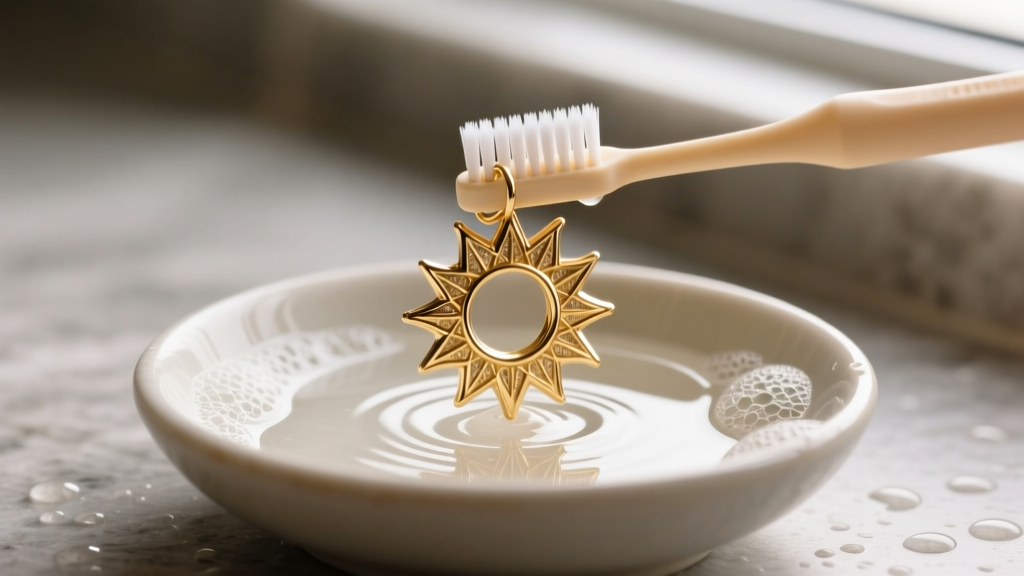
Standard jewelry polishing cloths are useless for sunburst crevices; they only glide over the high points of the rays. To troubleshoot deep-set tarnish without stripping the gold plating, follow this protocol recommended by gemological conservationists:
- The Soak: Mix 1 cup of distilled water with two drops of pH-neutral dish soap (avoid harsh detergents like Dawn, which can strip thin plating). Submerge the earrings for exactly 4 minutes to soften the sebum.
- The Agitation: Use a soft-bristled baby toothbrush. Do not use a standard adult toothbrush, as the medium bristles will scratch 14k or 18k gold. Brush in a circular motion, focusing the bristle tips directly into the ray valleys.
- The Drying Phase: This is where most failures occur. If water dries in the crevices, it leaves mineral spots. Use a can of compressed air (held 6 inches away) to blast the moisture out of the ray gaps instantly.
According to conservation guidelines published by the Gemological Institute of America (GIA), avoiding ultrasonic cleaners is critical for plated sunburst earrings, as the high-frequency vibrations can cause micro-fractures in the gold layer where it wraps around the sharp internal angles of the rays.
Material Upgrades for Long-Term Wear
If you have tried the mechanical fixes above and your sun earrings gold pair continues to fail—specifically regarding bent posts or irreversible base-metal tarnish—it is time to evaluate the metallurgy. The surface area of a sun earring demands higher structural integrity than a simple stud.
Comparing Gold Alloys for Sunburst Designs
When replacing or upgrading your sun earrings, the karat weight of the gold dictates both its color and its structural viability. Pure 24k gold is far too soft for the wide levers of a sunburst design; the posts will bend within weeks. Furthermore, 24k gold lacks the alloyed metals necessary to hold crisp casting details in the ray tips.
- 18k Gold (75% Gold): Offers the rich, buttery yellow hue desired in sun motifs, but is still relatively soft. Best for smaller sunbursts (under 25mm) or designs reinforced with a titanium core post.
- 14k Gold (58.3% Gold): The Bureau of Indian Standards and global jewelers recognize 14k as the optimal balance for large statement pieces. The higher copper and zinc content provides the tensile strength required to keep 35mm sun rays from warping when bumped.
- PVD Gold Coating over 316L Steel: For budget-friendly troubleshooting, Physical Vapor Deposition (PVD) gold over surgical steel eliminates the tarnish issue entirely. The steel core prevents post bending, and the PVD layer is 10x thicker than traditional electroplating, surviving the friction of the ray crevices.
Final Diagnostic Checklist
Before storing your sunburst jewelry, run through this rapid diagnostic checklist to ensure longevity:
- Post Check: Roll the post on a flat glass surface. If it wobbles, it has suffered lateral bend damage and needs professional straightening with a nylon-jaw plier.
- Crevice Check: Inspect the ray valleys under a 10x jeweler's loupe. If you see dark green or black pitting, the plating has breached, and the earring must be re-plated or retired to prevent skin contact dermatitis.
- Hardware Check: Ensure the butterfly backing or Omega clip is providing adequate friction. If the earring spins freely on the post, the backing's clutch mechanism is worn out and must be replaced.
By addressing the specific mechanical and chemical vulnerabilities of sun earrings gold designs, you can transform a problematic, snag-prone accessory into a structurally sound, radiant staple in your daily rotation. Proper weight distribution and targeted crevice cleaning are the true secrets to mastering this iconic celestial motif.


