Turkish Eye Earrings: A Material Guide to Glass, Enamel & Gems
Discover the best materials for Turkish eye earrings. We compare glass, enamel, CZ, and metal alloys for durability, allergies, and style.

The Anatomy of a Turkish Eye Earring
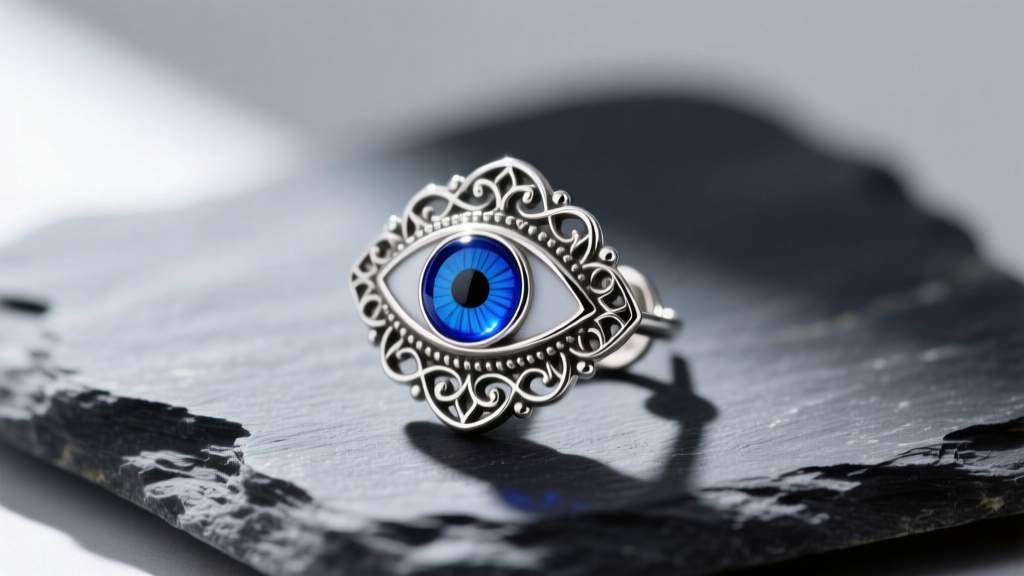
The Turkish eye, traditionally known as the Nazar Boncuğu, has transcended its ancient origins as a protective talisman to become a global jewelry staple. However, when shopping for Turkish eye earrings in 2026, the aesthetic is only half the battle. The materials dictating the "eye" itself, alongside the metal housing it, determine the earring's longevity, weight, and biocompatibility.
Unlike standard geometric studs, Turkish eye earrings require a complex layering of materials to achieve the iconic concentric circles of dark blue, white, light blue, and black. Understanding how these layers are constructed—and what metals are used to suspend them from your earlobe—is critical for avoiding allergic reactions, premature tarnishing, and structural failure.
The Core "Eye" Materials: Glass vs. Enamel vs. Gemstones
The focal point of the earring is the eye itself. Jewelers utilize three primary material categories to create the Nazar effect, each with distinct physical properties.
Traditional Hand-Blown Glass
Authentic Turkish eye beads are crafted from hand-blown glass, primarily composed of silica, soda ash, and limestone, with cobalt oxide used to achieve the signature deep blue. Pros: Glass offers unparalleled optical clarity and an authentic, slightly asymmetrical charm that mass-produced items lack. Cons: Glass sits at roughly 5.5 to 6 on the Mohs hardness scale, making it susceptible to scratching and shattering upon impact. Glass eyes are not recommended for active wearers or heavy dangle styles where the risk of dropping is high.
Cold Enamel and Vitreous Enamel
To solve the fragility of glass, modern jewelers often turn to enamel. According to the Gemological Institute of America (GIA), it is vital to distinguish between cold enamel (an epoxy resin) and vitreous enamel (fused glass powder). Cold enamel is shatterproof and cost-effective but is prone to UV degradation, often yellowing or peeling after 3 to 5 years of daily wear. Vitreous enamel, fired at high temperatures, is permanent, brilliant, and highly scratch-resistant, though it commands a premium price and requires master artisans to execute the concentric eye pattern without bleeding.
Sapphire, Lapis Lazuli, and Cubic Zirconia Inlays
For the luxury market, the Turkish eye is constructed using precision-cut gemstone inlays or layered CZ. Blue sapphire (Mohs 9) offers supreme scratch resistance and brilliance, making it ideal for heirloom-quality stud earrings. While these materials lack the cultural authenticity of traditional Anatolian glass, they provide unmatched durability for fine jewelry collections.
Metal Backings and Settings: What Touches Your Skin
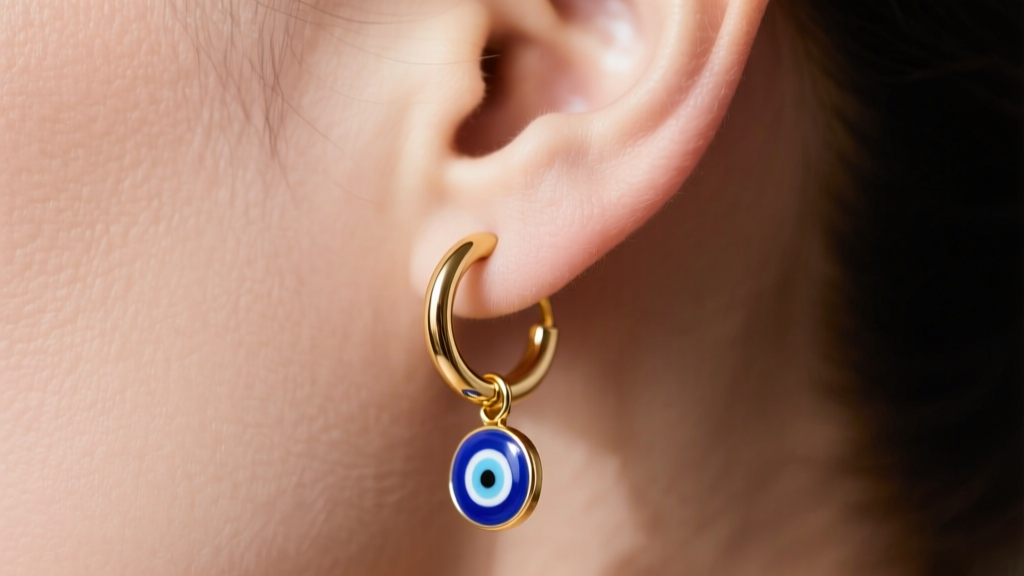
The metal hardware of a Turkish eye earring is just as important as the focal bead, particularly regarding skin sensitivity. The American Academy of Dermatology notes that nickel allergy is one of the most common causes of allergic contact dermatitis, frequently triggered by cheap jewelry alloys.
- Sterling Silver (925): An excellent mid-tier choice. However, raw silver tarnishes when exposed to sulfur and moisture. Ensure your Turkish eye earrings are rhodium-plated to create a hypoallergenic, tarnish-resistant barrier.
- Solid Gold (14k vs. 18k): 14k gold contains more alloy metals (like copper and zinc), making it harder and more durable for earring posts and wire. 18k gold is softer but significantly more hypoallergenic, making it the superior choice for newly pierced or highly sensitive lobes.
- Brass and Base Metals: Often found in fast-fashion Turkish eye earrings, brass is typically plated with a microscopically thin layer of gold or silver. Once this plating wears away through friction, the exposed copper and zinc will oxidize, leaving a green verdigris stain on your skin and potentially triggering severe contact dermatitis.
Material Durability and Pricing Matrix
Use the following matrix to determine which material combination aligns with your lifestyle, budget, and piercing health requirements.
| Eye Material | Metal Setting | Shatter/Chip Risk | Hypoallergenic Rating | Avg. Price Range | Best Earring Style |
|---|---|---|---|---|---|
| Hand-Blown Glass | Sterling Silver (925) | High | High (if Rhodium plated) | $35 - $85 | Dangles, Threaders |
| Cold Enamel (Resin) | Gold-Plated Brass | Low | Low (Degrades over time) | $15 - $40 | Huggies, Lightweight Studs |
| Vitreous Enamel | Solid 14k Gold | Medium | Very High | $150 - $350 | Everyday Studs, Hoops |
| Sapphire / CZ Inlay | Solid 18k Gold | Very Low | Excellent | $400 - $1,200+ | Heirloom Studs, Cartilage |
Gauges, Weight, and Piercing Health
A frequently overlooked aspect of Turkish eye earrings is the relationship between the bead's weight and the wire gauge. Traditional 10mm glass Nazar beads can weigh upwards of 1.5 grams each. When suspended on a thin 22-gauge (0.64mm) ear wire, this concentrated weight can lead to the "cheese-cutter effect," gradually stretching and thinning the earlobe tissue over time.
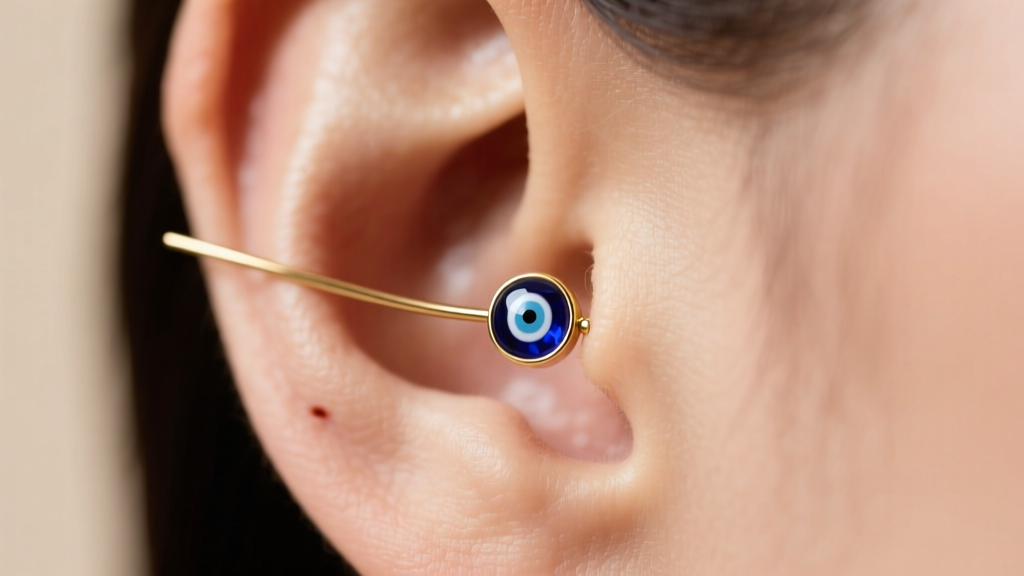
Expert Recommendation: If you prefer authentic, heavier glass Turkish eye earrings, opt for designs featuring 20-gauge (0.81mm) or 18-gauge (1.02mm) posts and wires to distribute the weight more effectively. Alternatively, choose lever-back closures which provide structural support to the back of the earlobe. If your lobes are already stretched or sensitive, pivot to lightweight cold enamel or micro-CZ designs that weigh less than 0.5 grams, allowing you to wear delicate 22-gauge threaders comfortably.
Care and Maintenance by Material Type
Because Turkish eye earrings are multi-material constructs, they require specific cleaning protocols to avoid irreversible damage.
Warning: Never place traditional glass or cold enamel Turkish eye earrings in an ultrasonic jewelry cleaner. The high-frequency vibrations can exploit micro-fractures in the glass, causing it to shatter, and can easily strip cold enamel resin from its metal backing.
For glass and gemstone eyes, use a lint-free microfiber cloth and a mild solution of warm water and phosphate-free dish soap. Gently brush the metal settings with a soft-bristled baby toothbrush to remove sebum and lotion buildup. For vitreous enamel, avoid harsh chemical dips (like silver polish), as the chemicals can dull the glass-like finish of the fired enamel. Always store your Turkish eye earrings in individual soft pouches; the cobalt glass and metal settings can easily scratch softer gemstones or become scratched themselves if tossed loosely into a jewelry box.
By carefully selecting the right combination of focal material and metal hardware, your Turkish eye earrings will remain a vibrant, protective, and skin-safe staple in your collection for years to come.