The Rise of Ugly Earrings: 2026 Anti-Fashion Trend Analysis
Discover why ugly earrings dominate 2026 fashion. Explore the anti-aesthetic trend, from melted resin to asymmetrical metal, and how to style them.

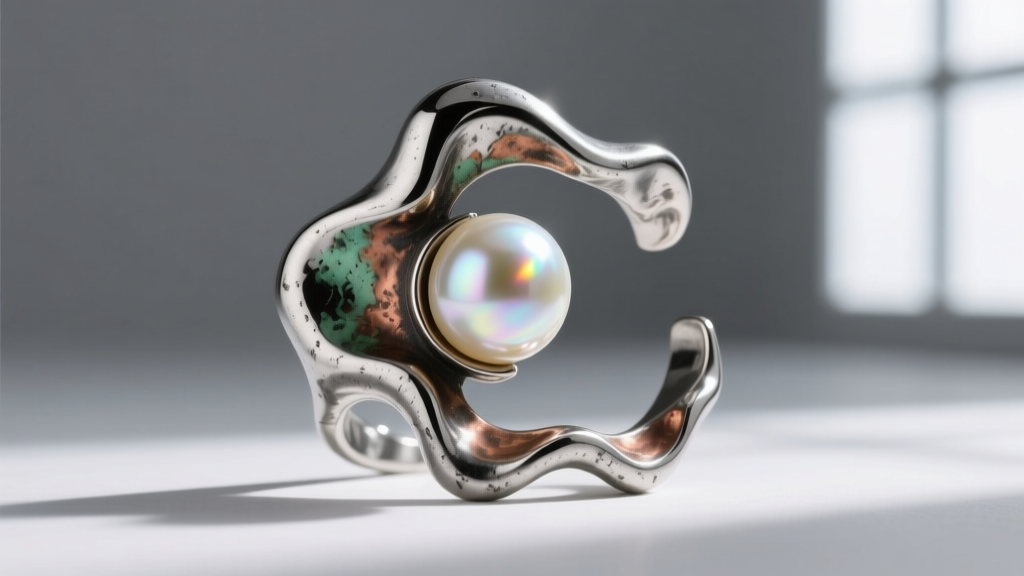
The 'Ugly Chic' Paradigm Shift in Ear Adornment
If the early 2020s were defined by the hyper-polished, minimalist 'clean girl' aesthetic, 2026 has officially swung the pendulum in the opposite direction. The rise of ugly earrings is not a mistake of craftsmanship, nor is it a fleeting meme. It is a calculated, post-ironic rejection of traditional beauty standards that has taken root in both high-fashion runways and independent jewelry studios. As trend forecasters at Business of Fashion have noted, consumers are experiencing 'perfection fatigue.' They no longer want symmetrical, high-polish gold hoops; they want chaos, texture, and subversion.
Ugly earrings—characterized by clashing materials, intentional patina, bio-morphic shapes, and asymmetrical weight distributions—serve as a sartorial middle finger to algorithmic homogenization. This anti-fashion movement embraces the grotesque, the melted, and the seemingly unfinished. But beneath the chaotic exterior lies a rigorous framework of avant-garde design, structural engineering, and deliberate styling. To understand the ugly earring trend of 2026, we must dissect its anatomy, its physical toll on the earlobe, and the precise methodology required to style it without crossing the line into mere messiness.
Anatomy of an Anti-Aesthetic Earring: Materials and Mechanics
The creation of an authentic ugly earring requires a mastery of materials that are traditionally considered 'flawed.' Independent jewelers and avant-garde houses are deliberately utilizing oxidation, raw edges, and unstable inclusions to craft pieces that look as though they were excavated from a dystopian future or a forgotten attic.
Intentional Oxidation and Raw Casting
Unlike traditional fine jewelry, which relies on rhodium plating and high-polish finishes, the ugly earring trend heavily features oxidized 925 sterling silver and raw, unpolished brass. Jewelers are using liver of sulfur to create deep, blackened crevices that mimic decay or tarnish. Furthermore, 'sand-casting' techniques are being employed to leave pitted, rough textures on the metal surface, giving the illusion that the earring was melted down and hastily reformed.
Hyper-Resin and Bio-Morphic Polymers
UV-cured epoxy resins are being pushed to their limits. Instead of crystal-clear pours, artisans are intentionally trapping lint, air bubbles, and even dried organic matter inside neon or muddy-toned resins. Additionally, 3D-printed PA12 nylon is being used to create bio-morphic, spine-like structures that mimic alien cartilage. These materials allow for massive, gravity-defying volumes that would be impossibly heavy if cast in solid metal.
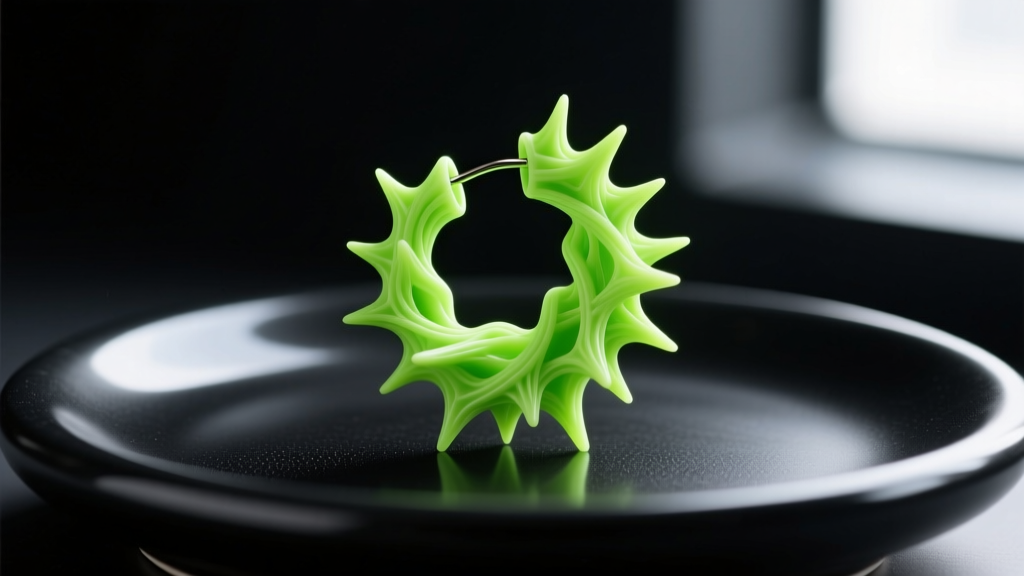
Gauge and Weight Considerations for Avant-Garde Pieces
The most critical failure mode of the ugly earring trend is structural damage to the earlobe. Because these pieces often feature heavy, asymmetrical resin blocks or thick, melted metal clusters, they frequently exceed the weight limits of standard jewelry wire. Standard fashion earrings are typically crafted at 20-gauge (0.81mm) or 18-gauge (1.02mm). When a heavy, chaotic earring is hung from an 18-gauge wire, the 'cheese cutter' effect occurs: the thin wire slowly slices through the delicate tissue of the earlobe, leading to irreversible stretching or tearing.
To combat this, reputable avant-garde jewelers are engineering their ugly earrings with 16-gauge (1.29mm) or even 14-gauge (1.63mm) wire for the primary load-bearing hooks. According to the Association of Professional Piercers (APP), thicker gauge jewelry distributes weight more evenly across the fistula, significantly reducing the risk of migration and tearing. For pieces that exceed 25 grams, designers are increasingly utilizing flat-back labret posts with silicone O-ring backings, which grip the earlobe securely and prevent the heavy, asymmetrical earring from spinning or dragging the piercing downward.
2026 Trend Matrix: The Four Pillars of Anti-Aesthetic Earwear
The 'ugly' umbrella is vast. To navigate the market, one must understand the distinct sub-categories that define the 2026 landscape. Below is a breakdown of the primary design pillars, their material compositions, and their current market positioning.
| Sub-Trend | Primary Material | Avg. Weight | Price Tier (Indie/Luxury) |
|---|---|---|---|
| Melted Metal | Oxidized Brass / 925 Silver | 12g - 18g | $80 - $350 |
| Bio-Morphic | 3D Printed PA12 Nylon | 4g - 8g | $45 - $150 |
| Hyper-Resin | UV-Cured Epoxy / Trapped Debris | 15g - 25g | $60 - $200 |
| Clashing Vintage | Mixed Bakelite, Glass & Base Metal | 20g - 30g | $30 - $120 |
As highlighted by recent runway analyses in Vogue, luxury houses are charging upwards of $800 for 'Clashing Vintage' styles that mimic thrift-store chaos, making the independent artisan market the true driving force behind accessible, high-quality anti-fashion earwear.
How to Style Chaotic Ear Curation Without Looking Messy
Wearing ugly earrings requires a strategic approach to styling. The goal is to project intentional subversion, not accidental disarray. If you are adopting this trend, you must balance the visual noise of the jewelry with extreme sartorial discipline.
- The Rule of Negative Space: If you are wearing a massive, asymmetrical melted-metal ear cuff that wraps around the entire helix and lobe, the rest of your ear must remain entirely bare. Do not pair a chaotic ugly earring with a curated 'ear party' of delicate diamond studs. The ugly piece demands isolation to function as a focal point.
- Sartorial Contrast: Ugly earrings thrive when juxtaposed against severe, minimalist clothing. A heavy, clashing vintage resin earring paired with a crisp, architectural black turtleneck or a sharply tailored blazer creates a high-fashion tension. Wearing these earrings with bohemian or overly patterned clothing dilutes the irony and simply looks unkempt.
- Hair as a Framing Device: Because ugly earrings often feature complex, 3D textures and unconventional silhouettes, they must be visible. Slicked-back buns, severe middle parts, or tightly cropped haircuts are the preferred hairstyles of 2026 anti-fashion enthusiasts, ensuring the ear remains the undisputed center of gravity.
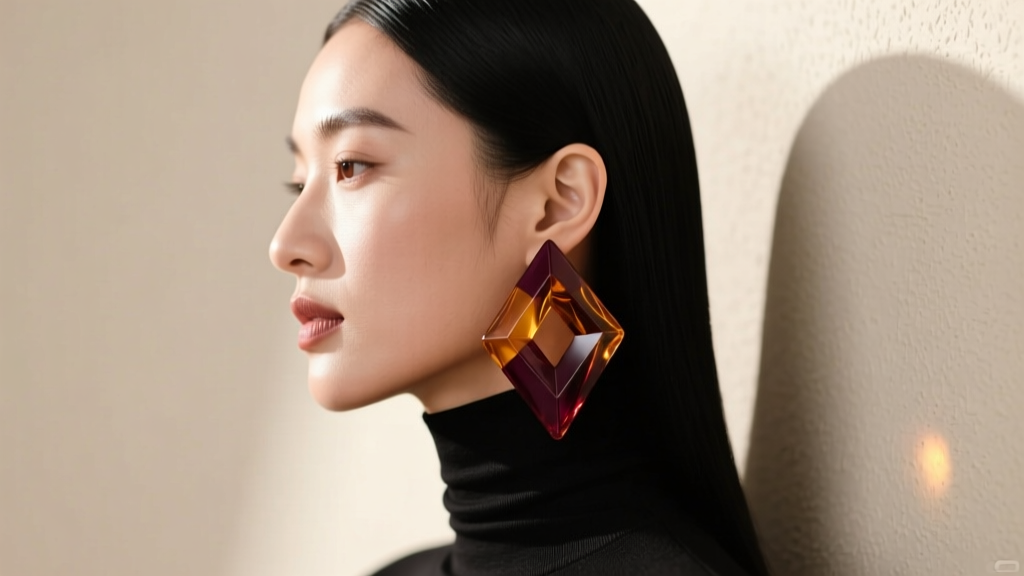
Where to Source Authentic Anti-Fashion Earrings
As with any disruptive trend, the market is currently flooded with cheap, fast-fashion knockoffs. Mass-produced 'ugly' earrings from ultra-fast-fashion retailers often fail on two fronts: they use highly allergenic nickel-brass alloys that cause severe contact dermatitis, and they ignore the 14g/16g weight-bearing requirements, guaranteeing lobe damage.
To source authentic, structurally sound ugly earrings, buyers should look toward independent jewelers who specialize in avant-garde casting and experimental resin work. Platforms like Instagram and specialized digital showrooms are the best places to find artisans who understand the precise chemistry of UV-cured epoxies and the structural integrity of sand-cast metals. Expect to pay between $60 and $150 for a single, high-quality statement piece from an independent maker. This price point ensures you are receiving hypoallergenic base metals, properly engineered ear wires, and a piece that genuinely pushes the boundaries of contemporary jewelry design rather than merely mimicking the aesthetic of decay.
'The ugly earring is the ultimate 2026 status symbol. It signals that the wearer has transcended the need for traditional, algorithmic approval and is instead operating on a frequency of pure, unfiltered self-expression.'


