Understanding Pearl Earrings Cost: A Troubleshooting Guide
Confused by pearl earrings cost? Learn how to troubleshoot thin nacre, spot fake treatments, and decode pricing for Akoya, Tahitian, and South Sea pearls.

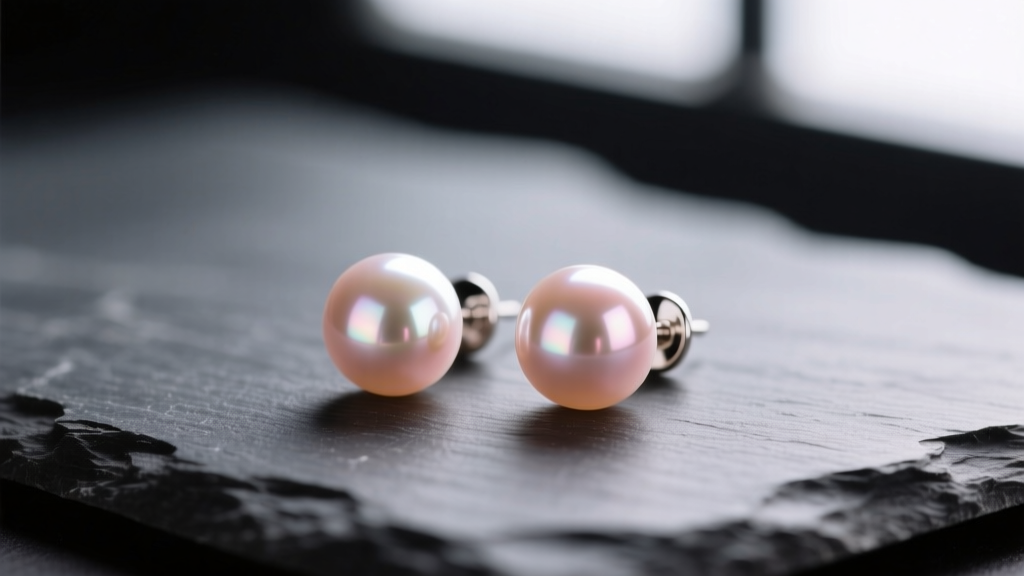
When shopping for fine jewelry, few categories generate as much confusion and buyer's remorse as pearls. You might find a pair of seemingly identical white pearl studs priced at $40 on one website and $4,000 on another. Understanding pearl earrings cost requires looking past the surface and diving into gemological realities. Many consumers purchase expensive earrings only to face severe disappointment when the pearls begin to peel, lose their luster, or reveal themselves as heavily treated imitations within a year. This troubleshooting guide is designed to help you decode the hidden variables behind pearl pricing, identify structural failures before they happen, and ensure your investment holds its value and beauty for decades to come.
The Core Drivers Behind Pearl Earrings Cost
The price of pearl earrings is not arbitrary; it is dictated by a strict hierarchy of gemological factors. According to the Gemological Institute of America (GIA), the value of a cultured pearl hinges on seven primary factors: size, shape, color, luster, surface quality, nacre quality, and matching. However, when troubleshooting a bad purchase or trying to understand why a specific pair commands a premium, nacre thickness and luster are the two most critical metrics.
Nacre is the crystalline substance secreted by the mollusk that forms the pearl. In bead-nucleated pearls (like Akoya and Tahitian), a mother-of-pearl bead is implanted into the oyster. If the oyster is harvested too early to cut farming costs, the resulting nacre layer is dangerously thin. Thin-nacre pearls are structurally compromised and will eventually peel off the bead core, rendering the earring worthless. Conversely, thick nacre allows light to penetrate and reflect off multiple microscopic layers of aragonite crystals, creating the deep, mirror-like glow known as high luster.
Another major factor influencing pearl earrings cost is the origin and rarity of the pearl type. Freshwater pearls are tissue-nucleated and can be harvested in massive quantities (up to 30+ pearls per mollusk), keeping costs low. Saltwater pearls like South Sea and Tahitian yield only one pearl per oyster and require years of meticulous ocean farming, drastically increasing their baseline market value.
Troubleshooting Common Pearl Earring Failures
If you have already purchased pearl earrings and are experiencing issues, or if you are inspecting a vintage pair, here is how to troubleshoot the most common structural and aesthetic failures.
Problem 1: Peeling, Flaking, and Chipping
The Symptom: The outer layer of the pearl is flaking away near the drill hole or on the high points of the surface, revealing a dull, chalky, or plastic-like bead underneath.
The Cause: Extremely thin nacre. In Akoya pearls, nacre thickness should ideally be above 0.4mm. In Tahitian pearls, French Polynesian law mandates a minimum export thickness of 0.8mm. When nacre is thinner than 0.2mm, it behaves like a brittle eggshell. Everyday friction from putting on earrings, or even the pressure of the earring post rubbing against the drill hole, will cause the nacre to fracture and peel.
The Fix: Unfortunately, nacre loss is irreversible. If your pearls are peeling, they were likely sold as "commercial grade" or "chalkies" disguised with heavy surface polishing. Your only recourse is to leverage the retailer's return policy or have the pearls replaced. Always demand an X-ray or nacre-thickness guarantee when purchasing high-end saltwater pearls.
Problem 2: Chalky Loss of Luster and Yellowing
The Symptom: Pearls that looked brilliantly white and shiny in the store gradually turn dull, chalky, or slightly yellow after a few months of wear.
The Cause: Over-processing and aggressive chemical treatments. To maximize profit, some mass-market suppliers subject low-grade, yellowish Akoya pearls to intense bleaching and a Japanese heat treatment called Maeshori. While mild Maeshori tightens the nacre layers to enhance luster, excessive heat and chemical bleaching strip the pearl of its natural moisture and conchiolin (the organic protein binding the crystals). Once the conchiolin degrades, the pearl loses its luster permanently and becomes brittle.
The Fix: Store pearls in a soft cloth pouch away from extreme heat and never wear them while applying hairspray or perfume. If they have already turned chalky due to chemical stripping, they cannot be restored.
Price vs. Reality: What Should Pearl Earrings Cost?
To avoid overpaying, you must align your expectations with current market realities. The table below outlines the expected 2026 pricing tiers for standard 8mm to 10mm round pearl stud earrings, factoring in recent fluctuations in global pearl farming yields and inflation.
| Pearl Type | Nucleation Method | Ideal Nacre Thickness | Stud Cost Range (Fine Grade) | Drop/Dangle Cost Range |
|---|---|---|---|---|
| Freshwater | Tissue | Solid Nacre (100%) | $30 - $150 | $80 - $300 |
| Akoya | Bead | 0.4mm - 0.8mm | $150 - $800 | $300 - $1,500 |
| Tahitian | Bead | 0.8mm - 2.0mm+ | $250 - $1,200 | $500 - $3,500 |
| White South Sea | Bead | 1.0mm - 3.0mm+ | $400 - $2,500 | $800 - $6,000+ |
Note: Prices scale exponentially with size and perfect roundness. A pair of flawless 14mm South Sea drops can easily exceed $15,000, while heavily blemished or baroque (off-round) shapes will sit at the very bottom of these ranges.
How to Authenticate and Avoid Overpaying
Before finalizing a purchase, especially from secondary markets or vintage estate sales, use these gemological troubleshooting steps to verify authenticity and quality:
- The Tooth Test: Gently rub the pearl against the biting edge of your front tooth. A genuine cultured pearl will feel distinctly gritty or sandy due to the microscopic crystalline structure of the nacre. Glass or plastic fakes coated in synthetic pearl essence will feel perfectly smooth and slippery.
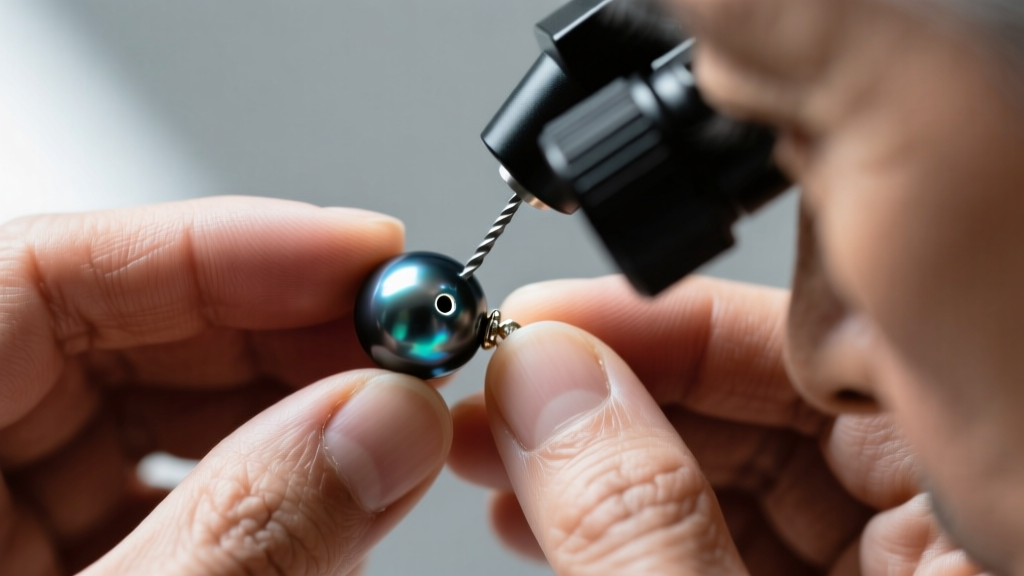
- Drill Hole Inspection: Use a 10x jeweler's loupe to examine the drill hole. On a real pearl, the hole will be sharp and clean, and you should be able to see the distinct boundary between the outer nacre and the inner bead nucleus (in saltwater pearls). On fakes, the coating often pools, chips, or peels around the edges of the drill hole, revealing clear glass or plastic beneath.
- Temperature Check: Real pearls are cold to the touch initially and take a few seconds to warm up against your skin. Plastic fakes feel room-temperature immediately, while glass fakes stay cold much longer than genuine pearls.
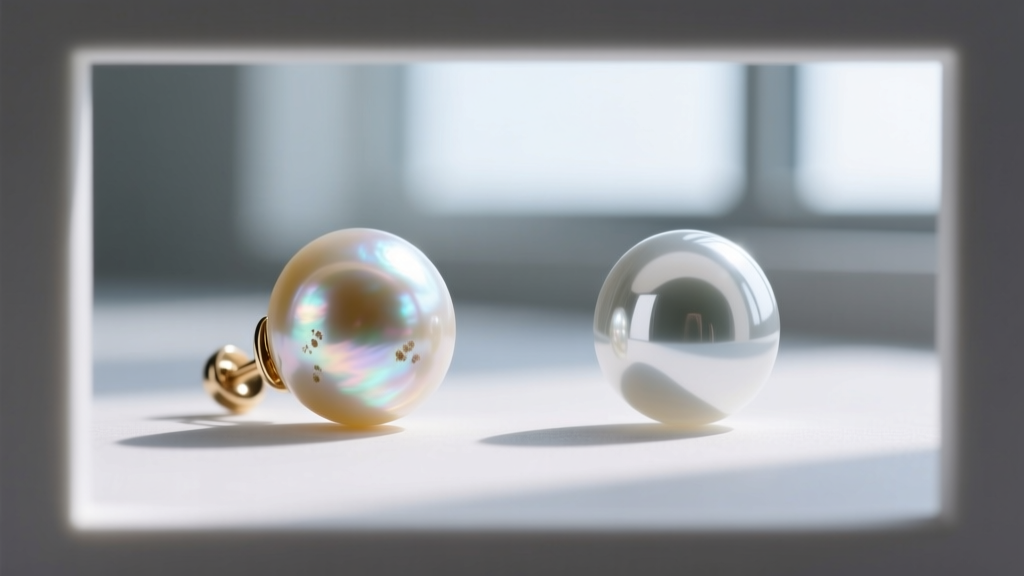
- Look for "Orient": High-quality pearls exhibit orient—an iridescent rainbow-like shimmer that seems to move just below the surface as you rotate the earring. Fakes and heavily treated pearls only show surface color (overtone) without the deep, optical play of light.
Expert Verdict: Fixing a Bad Purchase
If you have discovered that your expensive pearl earrings are heavily treated, thin-nacre, or outright counterfeit, your immediate next step is documentation. Take high-resolution macro photos of the drill holes and any surface peeling. According to the GIA's Pearl Description guidelines, full disclosure of treatments (like bleaching, dyeing, or irradiation) is mandatory for ethical gemstone trading. If a jeweler failed to disclose that your "Tahitian" pearls were actually dyed Freshwater pearls, you have grounds for a chargeback or a formal complaint to consumer protection agencies.
"The most common reason buyers feel cheated by pearl earrings cost is a fundamental misunderstanding of nacre thickness versus surface polish. A heavily polished, thin-nacre pearl looks spectacular on day one, but it is a structural liability. Always prioritize deep, inner luster over superficial shine."
— Dr. Elena Rostova, Graduate Gemologist
Ultimately, mastering the nuances of pearl earrings cost transforms you from a vulnerable consumer into an informed collector. By prioritizing thick nacre, demanding transparency regarding treatments, and understanding the baseline pricing matrices of different pearl varieties, you can confidently invest in earrings that will retain their breathtaking luster for generations.


