Victorian Style Earrings: 2026 Trend Forecast & Style Guide
Discover the 2026 resurgence of Victorian style earrings. Explore modern interpretations, authentic materials, gauge sizes, and styling tips for today.

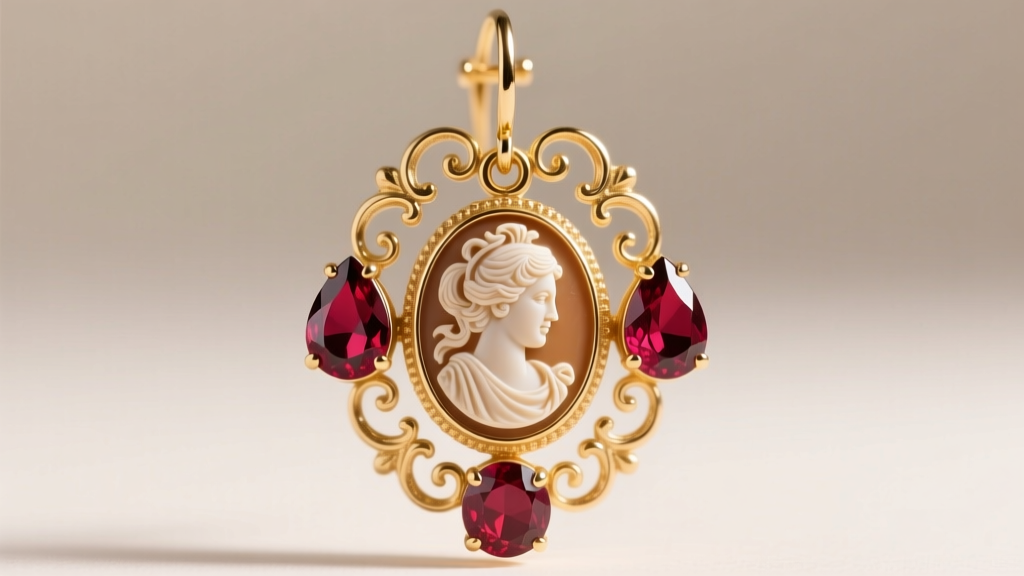
The Neo-Victorian Resurgence: Why 2026 is the Year of Ornate Elegance
As we navigate the 2026 fashion landscape, the stark minimalism and 'quiet luxury' that dominated the early 2020s have officially given way to Romantic Maximalism. At the forefront of this shift are Victorian style earrings, which have transitioned from niche vintage curiosities to highly coveted statement pieces on contemporary runways and in everyday street style. The Victorian era (1837–1901) was a period of immense technological, cultural, and aesthetic change, and its jewelry reflected strict societal codes regarding mourning, romance, and class. Today, the modern wearer is drawn to these pieces not just for their intricate craftsmanship, but for the narrative weight they carry. Whether it is the dark academia influence that has matured into sophisticated Gothic Romance, or the desire for heirloom-quality sustainability, Victorian style earrings offer a masterclass in historical elegance adapted for the modern ear.
However, integrating 19th-century aesthetics into a 21st-century wardrobe requires more than just buying a pair of antique drops. It demands an understanding of historical materials, structural limitations, and modern styling frameworks. This comprehensive guide breaks down the material science, technical specifications, and styling strategies you need to master the Neo-Victorian earring trend in 2026.
Decoding Authentic vs. Modern Victorian Earring Materials
The Victorians were masterful at utilizing both precious and unconventional materials. Understanding the difference between authentic antique materials and their 2026 modern equivalents is crucial for both collectors and trend-conscious buyers. For instance, the mourning jewelry boom of the 1860s popularized dark, somber materials that remain highly influential in today's dark-romantic aesthetics.
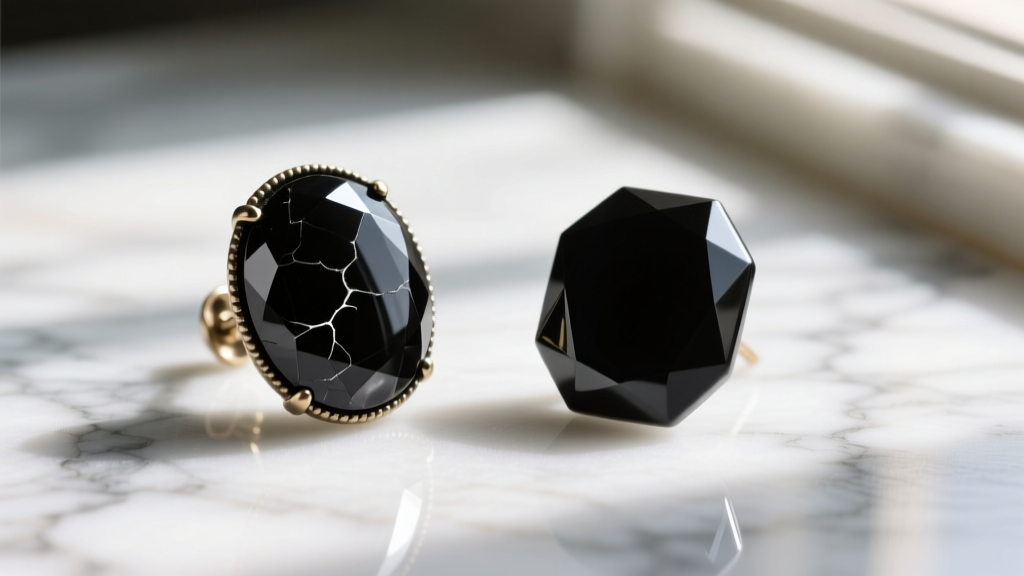
Authentic Whitby Jet, fossilized Araucaria wood found in England, is incredibly lightweight but fragile (Mohs 2.5-4.0). French Jet, which is actually black glass, offers sharper facets but carries significantly more weight. Gutta Percha, a natural rubber derived from Malaysian trees, was molded into intricate cameos and floral motifs. Today, contemporary jewelers replicate these historical textures using advanced bio-resins, black spinel, and ethically sourced onyx, providing the Victorian silhouette without the fragility of 150-year-old hardened rubber.
| Material | Era / Origin | Mohs Hardness | Weight Profile | 2026 Modern Equivalent |
|---|---|---|---|---|
| Whitby Jet | 1850s England | 2.5 - 4.0 | Ultra-Light | Black Onyx / Matte Spinel |
| French Jet | 1880s France | 5.5 (Glass) | Heavy | Faceted Black Zirconia |
| Gutta Percha | 1860s Global | 2.0 (Rubber) | Light | Bio-Acetate / Matte Resin |
| Pinchbeck | 18th-19th C. | 3.0 (Alloy) | Medium | 14k Gold Vermeil |
For a deep dive into the historical context of these materials, the Lang Antiques University provides an exceptional, scholarly breakdown of Victorian jewelry eras, including the distinct differences between Early, Mid, and Late Victorian manufacturing techniques.
Silhouette Breakdown: Girandoles, Pendeloques, and Ear Cuffs
The Victorians categorized earrings by their silhouette and function. In 2026, three specific silhouettes are dominating the market, each offering a distinct approach to facial framing and personal styling.
The Girandole Comeback
The girandole is the undisputed queen of Victorian evening wear. Characterized by a central top motif (often a bow, flower, or cameo) from which three pear-shaped or teardrop drops are suspended, this design was engineered to catch the candlelight of 19th-century ballrooms. In 2026, modern artisans are scaling down the girandole, utilizing 14k gold-filled wire and lightweight lab-created garnets to maintain the dramatic three-drop swing without the crushing weight of solid 18k gold and glass paste.
Pendeloques and the Sentimental Bow
The pendeloque features a single, elaborate drop suspended from a top motif. The most iconic Victorian pendeloque incorporates the 'lover's knot' or bow motif at the top, symbolizing eternal love. Contemporary brands like Erica Weiner and Cathy Waterman have revived this silhouette, often replacing traditional seed pearls with ethically sourced freshwater baroque pearls to give the 2026 pendeloque a slightly more organic, asymmetrical edge.
Cartilage Cuffs with Victorian Filigree
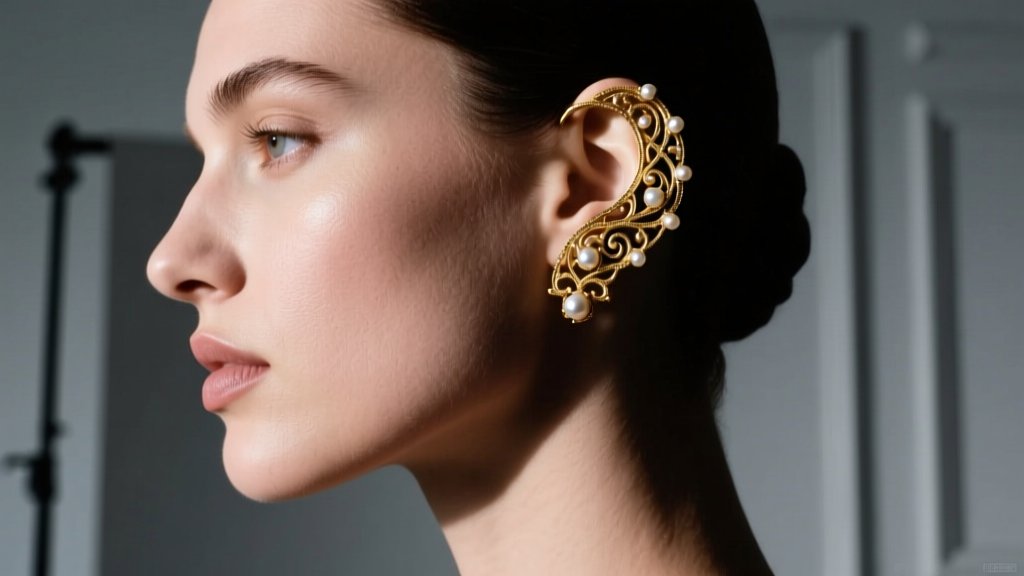
While ear cuffs as we know them today are a modern invention, their aesthetic roots lie in the elaborate Victorian hair combs and brooches that featured intricate, openwork filigree. Today's Neo-Victorian styling heavily incorporates helix and conch cuffs that mimic the lace-like metalwork of the 1880s. These pieces allow wearers to achieve a maximalist, historical look without requiring multiple cartilage piercings.
Technical Specs: Gauge, Weight, and Lobe Health
Wearing authentic antique earrings or heavy modern replicas requires a strict adherence to ear health and technical specifications. The failure to account for historical manufacturing differences can lead to micro-tears, lobe stretching, and irreversible tissue damage. According to the Victoria and Albert Museum's jewelry archives, the hardware used in the 19th century was vastly different from modern standardized body jewelry.
- Wire Gauge Discrepancies: Standard modern ear piercings are done at 20-gauge (0.81mm) or 18-gauge (1.02mm). However, authentic mid-Victorian earrings often feature thicker ear wires, sometimes ranging from 16-gauge (1.29mm) to 14-gauge (1.63mm). This was necessary because the softer gold alloys of the era required thicker wire to support heavy drops without bending. Forcing an 18g antique wire into a 20g modern piercing will cause immediate pain and micro-tears. Always have a bench jeweler swap the antique wire for a modern 20g friction post, or use a professional taper to safely stretch your lobe.
- Weight Tolerances & Tissue Fatigue: A standard, healthy earlobe can comfortably support 10 to 14 grams of weight before experiencing tissue fatigue. Authentic Victorian girandole earrings frequently weigh between 18 and 28 grams per earring. If you are wearing heavy drops, you must use silicone earring support patches (such as Bling Guards or Lobe Wonder) to distribute the weight across a larger surface area of the back of the lobe.
- Backing Mechanisms: Early Victorian earrings utilized simple shepherd hooks, while the screw-back was not invented until the 1890s. Modern friction backs (butterfly clutch) or secure locking lever-backs are vastly superior for heavy 2026 Neo-Victorian dangles. Never rely on a 130-year-old bent shepherd hook to secure a $500 piece of jewelry.
Where to Source: Estate vs. Contemporary Artisans
Building a Neo-Victorian earring collection in 2026 involves navigating two distinct markets: authenticated estate jewelry and contemporary heritage-inspired artisans. Each offers different benefits regarding price, durability, and historical provenance.
The Estate Market: For purists seeking authentic 19th-century pieces, vetted platforms like 1stDibs, Etsy's curated vintage sellers, and specialized dealers like Lang Antiques are the gold standard. Expect to pay between $400 and $1,500 for a pair of authentic Mid-Victorian Whitby Jet drops, and upwards of $3,000 for intact 15k gold girandoles featuring natural turquoise or garnets. The primary drawback is the fragility of the original hardware and the need for immediate professional refurbishment.
Contemporary Artisans: For those who want the Victorian aesthetic with modern structural integrity, brands like Missoma, Alighieri, and Erica Weiner offer brilliant interpretations. These pieces are cast in durable 14k gold vermeil or solid recycled gold, feature secure modern clasps, and are priced accessibly between $80 and $600. They capture the romantic, slightly melancholic soul of the Victorian era while surviving the rigors of daily modern wear.
Final Verdict: Integrating Heirloom Aesthetics into Daily Wear
The key to mastering Victorian style earrings in 2026 is contrast. The Victorians wore these pieces with high-collared blouses, corseted silhouettes, and elaborate updos. To prevent looking like you are wearing a museum costume, pair heavy, ornate Neo-Victorian dangles with stark, modern tailoring—a crisp oversized white button-down, a minimalist silk slip dress, or a sharp, structured blazer. Let the intricate filigree and dark gemstones serve as the sole focal point of your styling. By respecting the technical limits of your earlobes and understanding the rich material history behind the designs, you can seamlessly weave the romance of the 19th century into your 2026 jewelry rotation.


