Rhodolite Earrings: Gemstone Properties & Metal Pairings
Discover the material properties of rhodolite earrings. Compare hardness, refractive index, and ideal metal pairings for this raspberry garnet.

The Mineralogy of Rhodolite Garnet
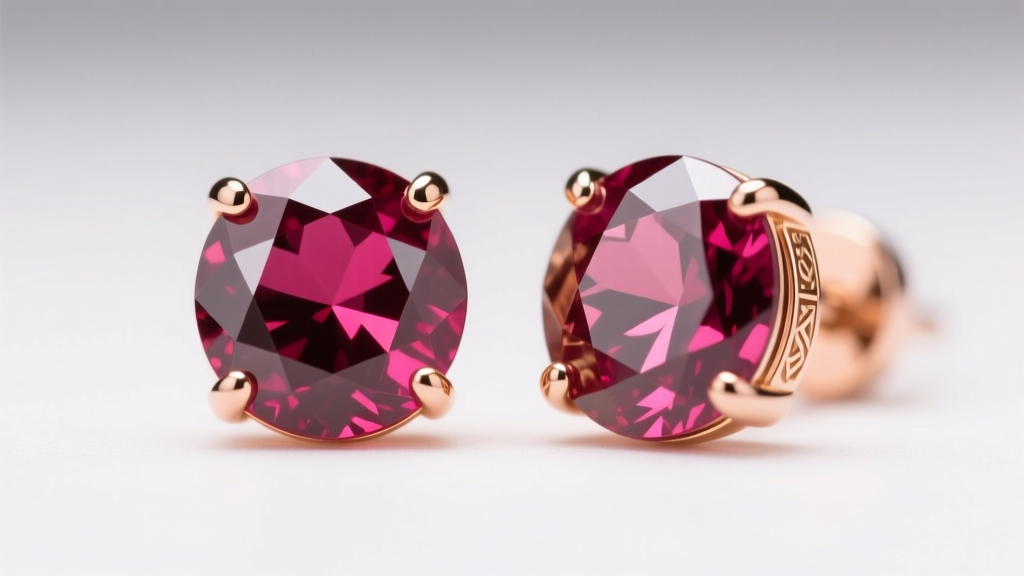
Rhodolite is not a distinct mineral species in its own right; rather, it is a highly prized variety of garnet that exists as a solid solution between pyrope and almandine. The chemical formula for the garnet group is X3Y2(SiO4)3, and in the case of rhodolite, the X sites are occupied by a mix of magnesium (from pyrope) and iron (from almandine). Typically, a genuine rhodolite specimen consists of approximately 70% pyrope and 30% almandine. This specific mineralogical ratio is what grants the gemstone its signature purplish-red to raspberry hue, distinguishing it from the deeper, blood-red almandine or the lighter pink pyrope varieties. According to the Gemological Institute of America (GIA), the presence of trace elements like chromium and vanadium can subtly influence the saturation, but the primary color driver remains the iron-to-magnesium ratio. For jewelry designers and collectors, understanding this baseline mineralogy is critical, as it dictates how the stone will interact with light, heat, and various metal settings.
Physical Properties and Earring Durability
When evaluating gemstones for daily wear, durability is paramount. Rhodolite garnet registers between 7.0 and 7.5 on the Mohs scale of mineral hardness. While this makes it softer than sapphire (9) or diamond (10), it is significantly harder than opal (5.5-6.5) or tanzanite (6-7). More importantly, rhodolite lacks any distinct cleavage planes. Cleavage refers to the tendency of a crystal to break along specific structural weaknesses, a trait that makes stones like topaz highly vulnerable to chipping. Instead, rhodolite exhibits a conchoidal fracture, meaning it breaks with smooth, curved surfaces similar to glass. This structural integrity makes rhodolite earrings exceptionally resilient against the accidental knocks and drops that jewelry frequently endures.
Furthermore, rhodolite possesses a specific gravity ranging from 3.84 to 4.02, making it a relatively dense gemstone. A 2-carat rhodolite will appear slightly smaller in diameter than a 2-carat diamond, which has a lower specific gravity of 3.52. For earring designs, this density means that larger carat weights can exert substantial downward force on the earlobe. Jewelers must account for this by reinforcing the post gauge—typically upgrading from a standard 20-gauge (0.8mm) post to a thicker 18-gauge (1.0mm) or 16-gauge (1.2mm) post for drops exceeding 3 carats to prevent the earring from drooping or tearing the piercing over time.
Optical Traits: Refractive Index and Color Science
The visual appeal of rhodolite earrings lies in their exceptional brilliance, which is governed by their optical properties. Garnets are isotropic, meaning they are singly refractive. Light entering the stone is not split into two rays (as it is in doubly refractive stones like tourmaline or zircon). Rhodolite boasts a high refractive index (RI) of 1.760 to 1.820. This high RI ensures excellent light return, giving the gemstone a vibrant, glassy luster that rivals more expensive precious stones. Unlike the vast majority of rubies and sapphires on the market, rhodolite is almost never subjected to heat treatment or irradiation to enhance its color. The International Gem Society notes that the color you see in a rhodolite is entirely natural, a massive selling point for purists and collectors seeking untreated gemstones.
Comparative Gemstone Matrix
To contextualize rhodolite's position in the fine jewelry market, it is helpful to compare its physical and optical metrics against other popular red and pink gemstones frequently used in earrings.
| Property | Rhodolite Garnet | Ruby (Corundum) | Pink Tourmaline | Pink Spinel |
|---|---|---|---|---|
| Mohs Hardness | 7.0 - 7.5 | 9.0 | 7.0 - 7.5 | 8.0 |
| Refractive Index | 1.760 - 1.820 | 1.762 - 1.770 | 1.624 - 1.644 | 1.712 - 1.736 |
| Crystal System | Isometric (Singly Refractive) | Trigonal (Doubly Refractive) | Trigonal (Doubly Refractive) | Isometric (Singly Refractive) |
| Common Treatments | None (Untreated) | Heat, Glass Filling | Heat, Irradiation | None (Rarely Heat) |
| Cleavage | None | None | None | None |
Ideal Metal Alloys and Earring Settings
The purplish-red undertones of rhodolite demand careful consideration when selecting metal alloys. The goal is to either amplify the warmth of the stone or create a striking visual contrast. 14k and 18k rose gold are widely considered the optimal pairings for rhodolite earrings. The copper content in rose gold harmonizes with the raspberry and magenta flashes within the gemstone, creating a cohesive, romantic aesthetic. Conversely, platinum and 18k white gold provide a high-contrast, icy backdrop that forces the eye directly to the saturated red of the stone. Yellow gold can sometimes muddy the purplish secondary hues, though it remains a popular choice for vintage-inspired, heavily milgrained settings.
Setting selection is equally critical. For rhodolite studs, the three-prong martini setting is highly recommended. Because rhodolite is singly refractive and relies on precise facet alignment for brilliance, a minimal prong footprint allows maximum ambient light to enter the crown and pavilion. For active wearers or those purchasing rhodolite huggies and hoops, a full bezel setting is superior. The bezel protects the girdle—the widest and most vulnerable edge of the gemstone—from abrasion against hair, clothing, and environmental debris. When designing heavy rhodolite drop earrings, jewelers should utilize la pousette backs or secure omega clips rather than standard friction backs, ensuring the dense gemstone remains securely anchored to the earlobe throughout the day.
Pricing Metrics and Value Factors
Rhodolite offers a compelling value proposition in the colored gemstone market. While a high-quality, untreated ruby can easily exceed $10,000 per carat, rhodolite remains accessible without sacrificing visual impact. Commercial-grade rhodolite with slight inclusions and lighter pinkish-red tones typically ranges from $50 to $150 per carat. However, the premium tier—often referred to in the trade as 'grape' or 'raspberry' rhodolite—commands between $300 and $800 per carat. These top-tier stones exhibit a highly saturated, medium-dark purplish-red color with no visible extinction (dark, lifeless areas) and are eye-clean. When purchasing rhodolite earrings, buyers should prioritize color saturation over sheer carat weight, as a perfectly cut 1.5-carat 'grape' rhodolite will offer vastly superior visual appeal compared to a washed-out 3-carat stone.
Care and Maintenance Protocols
Despite its excellent toughness, rhodolite requires specific care protocols to maintain its optical clarity. Because garnets can contain microscopic liquid inclusions or internal stress fractures, they should never be cleaned using ultrasonic cleaners. The high-frequency vibrations can cause these internal flaws to expand, potentially shattering the stone. Similarly, steam cleaners should be avoided, as sudden thermal shock can fracture the crystal lattice. The safest and most effective method for cleaning rhodolite earrings is to soak them in a bowl of lukewarm water mixed with a few drops of mild, phosphate-free dish soap. After ten minutes, gently agitate the water and use a soft-bristled baby toothbrush to dislodge any sebum, lotion, or dust accumulated behind the pavilion facets. Rinse thoroughly with distilled water and dry with a lint-free microfiber cloth to prevent water spots from dulling the gemstone's natural luster.