Authentic 60s Earrings: A 2026 Budget & Value Guide
Discover how to value authentic 60s earrings in 2026. Explore pricing tiers, designer hallmarks, material grades, and budget tips for vintage clip-ons.

The 2026 Market Landscape for Vintage 60s Earrings
The market for mid-century costume jewelry has undergone a significant transformation over the last decade, and as we navigate 2026, authentic 60s earrings remain one of the most dynamic sectors for both seasoned collectors and budget-conscious vintage enthusiasts. Unlike the heavy, ornate Victorian pieces or the delicate Art Deco platinum designs, 1960s jewelry was defined by its bold experimentation, pop-art influences, and the widespread use of innovative synthetic materials. For buyers assessing value today, understanding the nuances of this specific decade is critical to avoiding overpriced replicas and securing genuine historical pieces at fair market value.
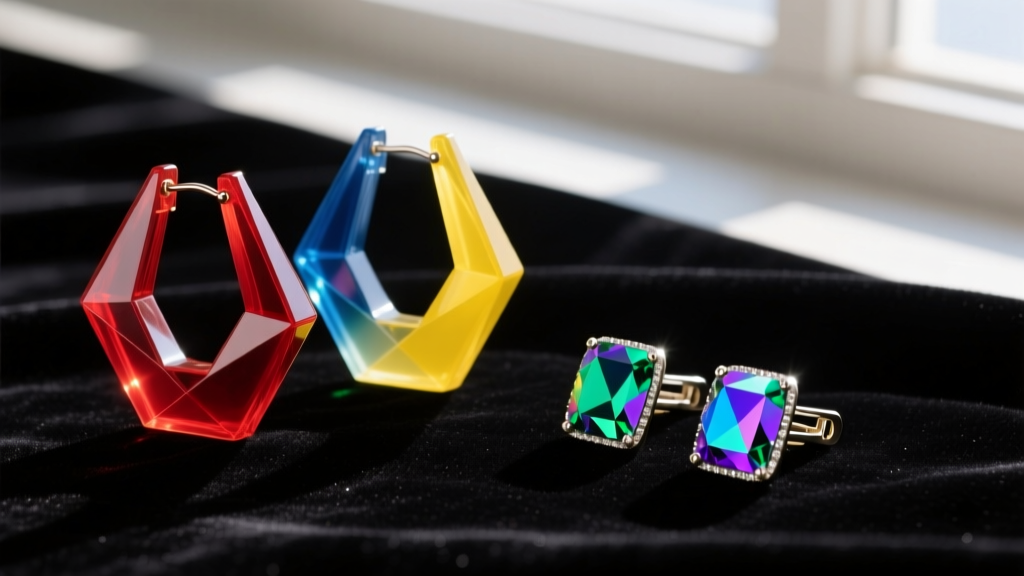
The 1960s was not a monolith; it was a decade of three distinct style phases. Early 60s earrings mirrored the refined, elegant aesthetic of First Lady Jacqueline Kennedy, featuring faux pearls, button clips, and refined gold-tone metals. By the mid-60s, the Mod and Space Age movements introduced massive geometric shapes, bright opaque enamels, and futuristic plastics. Finally, the late 60s ushered in the Bohemian and counterculture movements, characterized by natural motifs, turquoise cabochons, and hammered brass. In 2026, the mid-60s Mod pieces—particularly large geometric lucite hoops and kinetic dangles—are commanding the highest premiums, often seeing a 15% to 20% year-over-year appreciation due to the resurgence of retro-futurism in contemporary fashion.
Decoding Materials: What Drives the Price?
When conducting a budget and value assessment of 60s earrings, the material composition is your primary indicator of authenticity and price ceiling. The 1960s saw the mass production of high-quality costume jewelry, but not all materials age equally, nor do they hold the same financial weight in today’s secondary market.
Lucite, Acrylic, and the Plastic Revolution
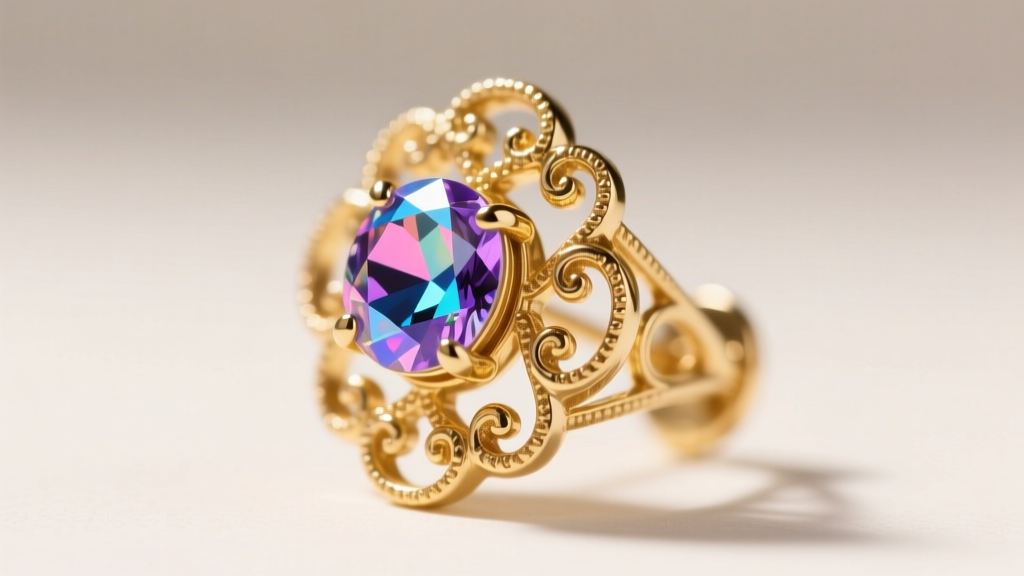
While Bakelite is the darling of 1930s and 1940s collectors, the 1960s belonged to Lucite and molded acrylic. High-end designers like Trifari and Coro used thick, heavily polished Lucite that was often carved or embedded with metallic flakes. Budget lines used thinner, injection-molded acrylic which is prone to stress fractures near the clip-on hinges. In 2026, a pair of thick, hand-carved Lucite drop earrings from a recognized designer will easily fetch between $85 and $150, whereas unbranded, mass-produced acrylic hoops typically languish in the $15 to $30 bargain bins.
Aurora Borealis (AB) Rhinestones
Invented by Swarovski in 1956, the Aurora Borealis coating became a staple of 1960s evening wear. This micro-thin metallic vapor coating gives glass rhinestones their signature iridescent, oil-slick rainbow reflection. When valuing AB earrings, inspect the stones under a loupe. Original 60s AB stones have a distinct, slightly uneven vapor distribution, whereas modern reproductions often look overly uniform or exhibit a synthetic, plastic-like sheen. According to the experts at Lang Antiques University, the condition of the AB coating is paramount; once it wears off due to friction or harsh cleaning, the stone’s value drops by nearly 60%.
Material Value Matrix (2026 Estimates)
| Material | Base Value (Unbranded) | Premium Value (Signed Designer) | Key Value Drivers |
|---|---|---|---|
| Carved Lucite | $20 - $45 | $85 - $250+ | Thickness, color rarity (e.g., marbled tortoise), lack of stress cracks. |
| AB Rhinestones | $15 - $35 | $60 - $180 | Intact vapor coating, prong-set vs. glued, foil backing condition. |
| Gilt / Gold-Tone Metal | $10 - $25 | $50 - $120 | Retention of original matte or brushed finish, lack of brass show-through. |
| Enamel over Metal | $25 - $50 | $90 - $300 | Guilloché techniques, absence of chipping or crazing on the enamel surface. |
Designer Hallmarks & Investment Tiers
A hallmark or signature is the single most significant multiplier for vintage 60s earrings. However, the presence of a stamp does not automatically guarantee a high payout; you must understand the hierarchy of mid-century costume jewelers. Resources like Collectors Weekly emphasize that condition and rarity of the specific designer line matter just as much as the name itself.
Top-Tier Investment Designers
- Miriam Haskell: Known for intricate Russian gold filigree, faux seed pearls, and baroque pearls. A signed 1960s Haskell clip-on pair in excellent condition routinely sells for $150 to $400 in 2026. Look for the oval plaque signature, which became standard in the late 50s and persisted through the 60s.
- Trifari (Alfred Philippe Era): Pieces featuring the “Crown” mark or the “Trifari TM” stamp are highly sought after. Trifari’s 1960s botanical and geometric enamel pieces are currently experiencing high demand, with premium pairs trading between $90 and $220.
Mid-Tier Collectibles
- Coro & Vendome: Coro’s high-end line, Vendome, produced stunning 60s aurora borealis and geometric designs. Standard Coro script pieces are excellent budget entry points ($35 - $75), while signed Vendome pieces push into the $80 - $150 range.
- Weiss & Kramer: Both companies excelled in high-quality rhinestone work. Weiss is particularly noted for its black diamond and jet crystal pieces, which fit the mod aesthetic perfectly. Expect to pay $50 to $120 for authenticated, complete sets.
Condition Grading: The Make-or-Break Factor
Unlike fine jewelry, which can often be melted down or easily repaired, vintage costume jewelry relies heavily on its original structural and cosmetic integrity. A missing stone or a degraded foil backing can render a rare piece virtually unsellable to serious collectors.
The 4-Point Vintage Inspection Checklist
- Foil Backing Integrity: Many 60s rhinestones are foil-backed to increase brilliance. If moisture has breached the setting, the foil will turn black or flake away, resulting in a “dead” or gray stone. Dead stones reduce the overall value of the earrings by at least 40%.
- Verdigris Check: Inspect the crevices of the metal settings for verdigris—a green, crusty copper oxidation. While light surface verdigris can be carefully removed with a dry toothpick, deep oxidation that has pitted the base metal or compromised the prongs is a major red flag.
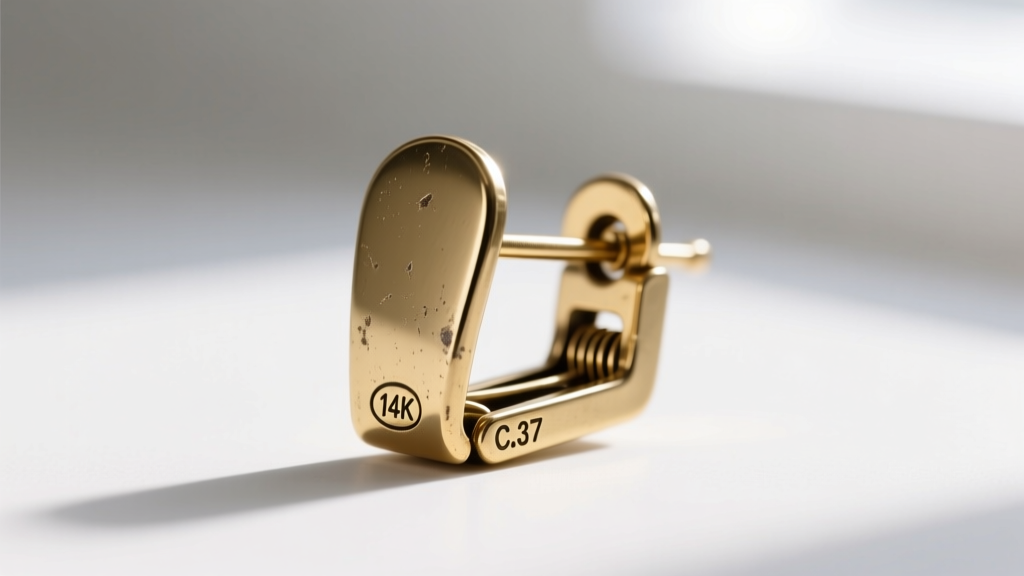
- Clip-On Tension and Mechanism: The 1960s utilized both screw-back and paddle-back (clip) mechanisms. Paddle-backs should have a firm, snapping tension. If the metal is bent outward and lacks grip, the earrings will not stay on the lobe. Professional retensioning is possible but factors into your acquisition cost.
- Enamel and Plating Wear: Check the high-contact points for gold-plating loss (brassing) and inspect enameled surfaces under direct light for micro-crazing (a web of tiny cracks in the glaze).
Budgeting Strategies & Sourcing in 2026
Sourcing authentic 60s earrings requires a strategic approach to avoid the flood of “vintage-washed” modern replicas currently saturating online marketplaces. Fast-fashion brands frequently produce 60s-inspired geometric and daisy-motif earrings, artificially aging them with dark oxidized washes to deceive novice buyers.
For budget-conscious collectors aiming to spend under $50 per pair, local estate sales and regional antique malls remain your best defense against modern fakes. Online, platforms like Ruby Lane offer vetted, professional dealers who guarantee authenticity, though you will pay a 20% to 30% premium for this security compared to unvetted auction sites. When negotiating on peer-to-peer platforms, always request a macro photograph of the hallmark and the back of the clip mechanism; modern reproductions almost always feature lightweight, hollow-cast pot metal and generic, unbranded clip hardware.
Expert Sourcing Tip: When browsing estate sales, look for “parures” (complete matching sets of necklace, earrings, and brooch) that have been broken up. Dealers often sell the earrings separately. Buying orphaned 60s earrings from a recognized high-end set is a proven strategy to acquire premium designer materials at a fraction of the cost of a complete, boxed set.
Care and Maintenance for Long-Term Value
Preserving the value of your 60s earrings requires abandoning modern jewelry cleaning habits. Never use ultrasonic cleaners, silver dip, or ammonia-based solutions on vintage costume jewelry. Ultrasonic vibrations will shatter glued-in Lucite elements and strip the delicate Aurora Borealis vapor coating right off the glass. Instead, use a barely damp microfiber cloth with a drop of mild dish soap to gently wipe the metal and stones, followed by immediate drying with a soft lint-free towel. Store your 60s clip-ons in individual acid-free tissue pouches to prevent the gilt metals from scratching and to protect the rhinestones from ambient humidity, ensuring your investment retains its brilliance and market value for decades to come.


