The True Cost of Losing an Earring: Value & Prevention
Discover the true financial cost of losing an earring. Compare earring back security, upgrade options, and insurance value to protect your jewelry budget.

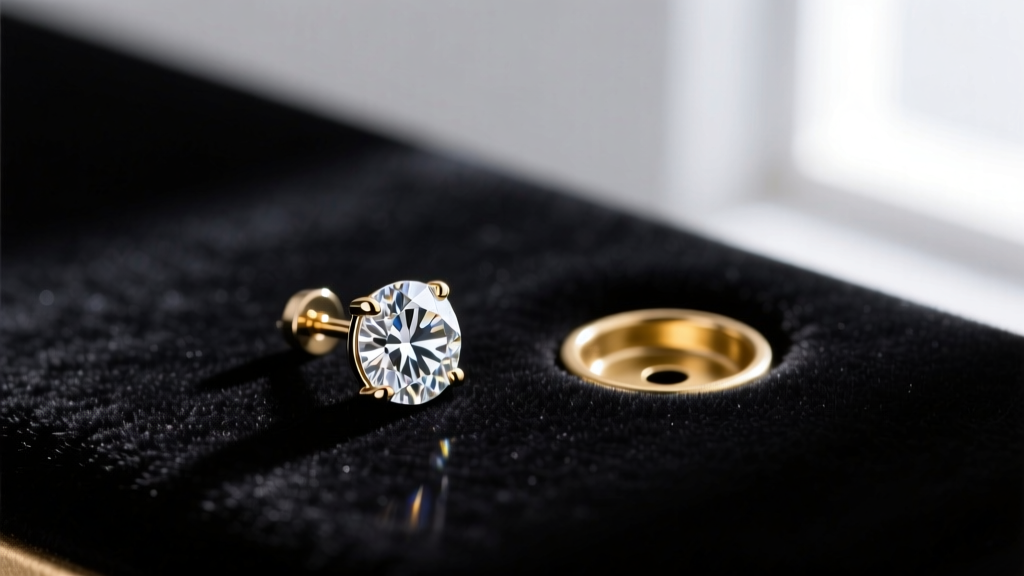
The moment your hand brushes your earlobe and feels nothing but skin is a universal jewelry owner’s nightmare. While the emotional sting of losing an earring is immediate, the financial ramifications are often misunderstood until you attempt to replace or sell the orphaned half. As we navigate the 2026 jewelry market—where precious metal fluctuations and lab-grown diamond price compressions are redefining asset value—understanding the true cost of earring loss is critical for any serious collector or everyday wearer.
This guide moves beyond simple frustration to conduct a rigorous budget and value assessment of earring security. We will analyze hardware failure points, calculate the depreciation of an orphaned earring, and provide a concrete framework for deciding between hardware upgrades and comprehensive insurance riders.
The Financial Breakdown of an Orphaned Earring
When you purchase a pair of fine earrings, you are paying for a matched set. The moment you lose one, the remaining piece suffers catastrophic depreciation. Let us look at the actual math behind a lost 1.00 Carat Total Weight (CTW) diamond stud pair, originally purchased for $3,000.
- Original Value: $3,000 (Matched pair, 0.50 CT each, VS clarity, F color).
- Replacement Cost (2026 Market): $3,200 (Accounting for inflation and diamond market shifts).
- Resale Value of the Orphan: $350 - $500. Jewelers and pawn brokers will typically only pay scrap value for the 14k or 18k gold post and setting, plus a fraction of the single stone's wholesale melee price. The premium you paid for the "matched pair" grading report from the Gemological Institute of America (GIA) is instantly voided.
From a budget perspective, losing an earring doesn't just cost you half the purchase price; it destroys the liquidity and resale multiplier of the entire asset. This makes the initial investment in secure hardware not just a safety measure, but a vital wealth-preservation strategy.
Hardware Failure Analysis: Why Earrings Fall Out
To prevent losing an earring, we must first understand the mechanical failure points of standard jewelry hardware. The vast majority of lost earrings are the result of inadequate backing mechanisms failing under the stress of daily wear, hair snagging, and friction.
| Backing Type | Security Rating | Avg. Cost (14k Gold) | Primary Failure Mode |
|---|---|---|---|
| Standard Friction (Butterfly) | Low (3/10) | $15 - $25 / pair | Metal fatigue, loss of tension after ~50 removals |
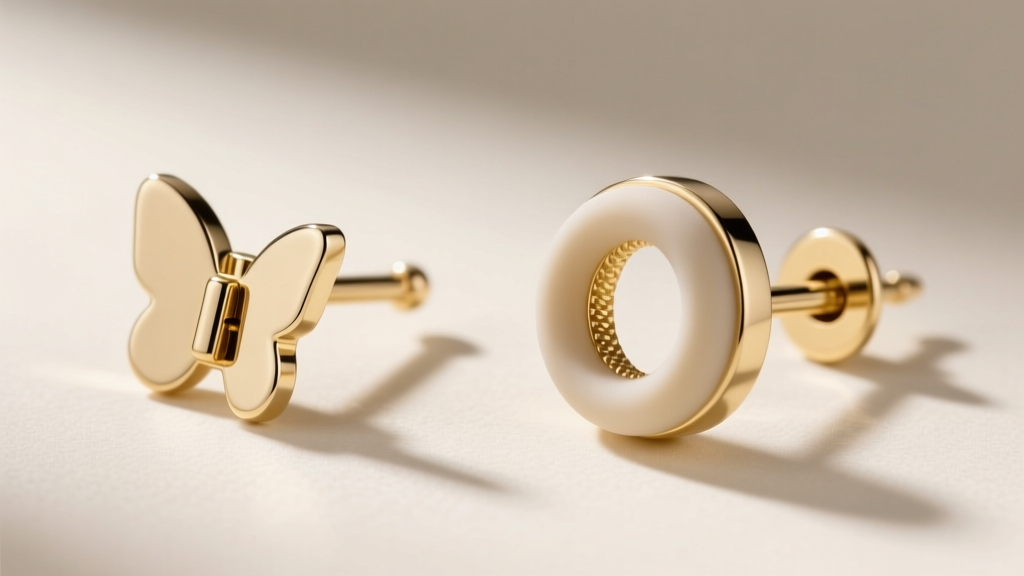
| Silicone O-Ring | Medium (6/10) | $5 / pack of 50 | Material degradation from skin oils and perfumes |
| Screw-Back | High (8/10) | $45 - $70 / pair | Cross-threading, stripped post grooves |
| Locking Clutch (e.g., La Pousette) | Maximum (10/10) | $85 - $120 / pair | Internal spring failure (extremely rare) |
The Friction Back Trap and Gauge Vulnerabilities
Standard butterfly backs rely entirely on the tension of the metal loops gripping the earring post. Most fine jewelry uses a 20-gauge (0.81mm) or 18-gauge (1.02mm) post. Over time, the friction loops stretch. Furthermore, if a 20-gauge post is accidentally bent while inserting the backing, the microscopic grooves that hold the friction back are compromised, allowing the earring to slide out silently when pulled by a sweater or pillowcase.
Upgrading to Mechanical Locking Systems
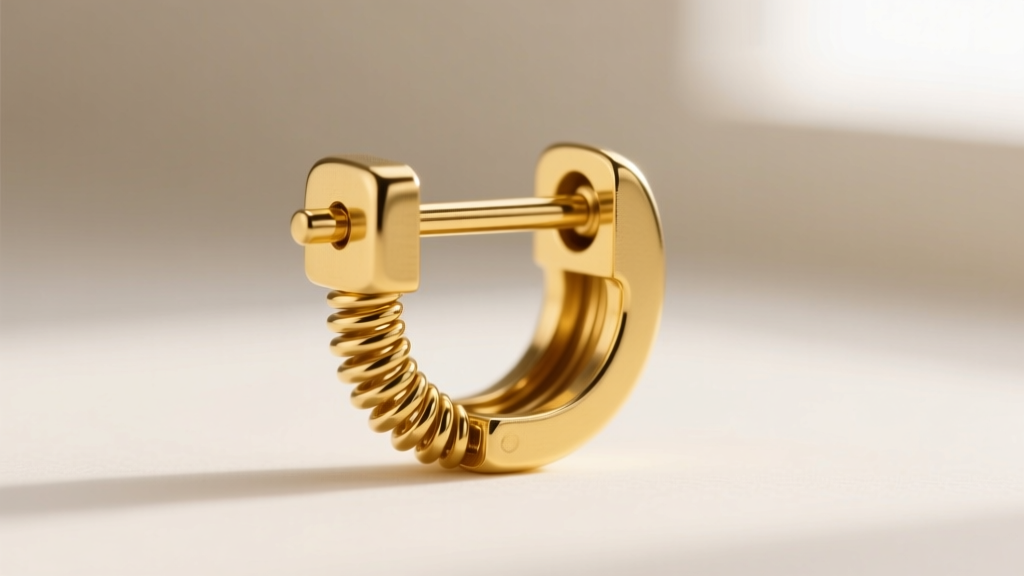
For high-value pieces, mechanical locking backs are the gold standard. Brands like La Pousette utilize a dual-spring mechanism inside a 14k or 18k gold housing. When pushed onto the post, an internal collet locks behind the grooved notch of the earring post. To remove it, you must pinch the sides to retract the collet. This completely eliminates the risk of the backing sliding off due to friction loss or snagging, effectively neutralizing the primary cause of losing an earring.
The ROI of Earring Security Upgrades
Many consumers balk at spending $100 on a pair of locking earring backs. However, when viewed through the lens of Return on Investment (ROI) and risk mitigation, the math heavily favors the upgrade.
Consider a pair of 18k gold hoop earrings with diamond pavé, valued at $4,500. Upgrading the hinged snap-bar closures to a secondary locking silicone O-ring system costs less than $5 and takes two seconds. If the hoops are solid gold with screw-backs, upgrading to a premium locking clutch system costs roughly $110.
The 3% Rule of Earring Security: As a general budget framework, you should be willing to spend up to 3% to 5% of a jewelry item's total appraised value on aftermarket security hardware. Spending $110 to protect a $4,500 asset is a 2.4% premium for near-absolute peace of mind.
Insurance vs. Hardware: A Budget Framework
When does it make sense to rely on insurance rather than hardware? According to data from Jewelers Mutual, the average premium for a dedicated jewelry insurance policy is roughly $1.50 to $2.00 per $100 of appraised value annually.
Scenario A: Everyday Diamond Studs ($2,000 Value)
- Insurance Cost: ~$35/year ($175 over 5 years).
- Hardware Upgrade: $90 (One-time cost for 14k locking backs).
- Verdict: Hardware upgrade is the superior budget choice. It prevents the hassle of filing claims, paying deductibles, and waiting for a jeweler to source a matching replacement stone.
Scenario B: High-End Designer Drops ($15,000 Value)
- Insurance Cost: ~$250/year.
- Hardware Upgrade: $120 + Custom jeweler fabrication for proprietary clasps ($300).
- Verdict: Insurance is mandatory here. While hardware prevents losing an earring via clasp failure, it does not protect against theft, mugging, or the earring being dropped down a storm drain. For pieces over $10,000, the American Gem Society strongly recommends maintaining an up-to-date appraisal and a dedicated insurance rider, alongside utilizing the most secure mechanical clasps available.
Actionable Steps to Audit Your Earring Collection
Do not wait until the panic of a lost earring sets in. Conduct a 15-minute audit of your jewelry box this weekend using this checklist:
- Inspect Post Integrity: Hold your earrings up to a light. If the 20G or 18G posts are bent even slightly, take them to a jeweler to be straightened and re-grooved. Bent posts are the leading cause of friction-back failure.
- Test Tension: Slide a standard butterfly back onto the post. If it requires less than a firm tug to pull it off, the metal is fatigued. Discard it immediately.
- Identify High-Risk Pieces: Any earring weighing more than 8 grams (heavy gold hoops or large gemstone drops) requires a secondary security chain or a locking mechanism. Gravity will eventually pull a standard friction back off a heavy earring.
- Verify Appraisals: Ensure any pair valued over $3,000 has an updated 2026 insurance appraisal that accounts for current gold spot prices and diamond market values.
Conclusion
The true cost of losing an earring extends far beyond the immediate replacement fee; it destroys the resale value of the remaining half and disrupts your jewelry budget. By shifting your perspective from passive wearing to active asset management, you can make informed decisions about hardware upgrades and insurance. Investing in mechanical locking backs and understanding the specific gauge vulnerabilities of your jewelry ensures that your most treasured pieces remain exactly where they belong—securely on your ears.


