Amethyst Earrings Vintage Authentication & Era Identification Guide
Master the technical authentication of amethyst earrings vintage styles. Explore gemological traits, era-specific hallmarks, and valuation metrics.

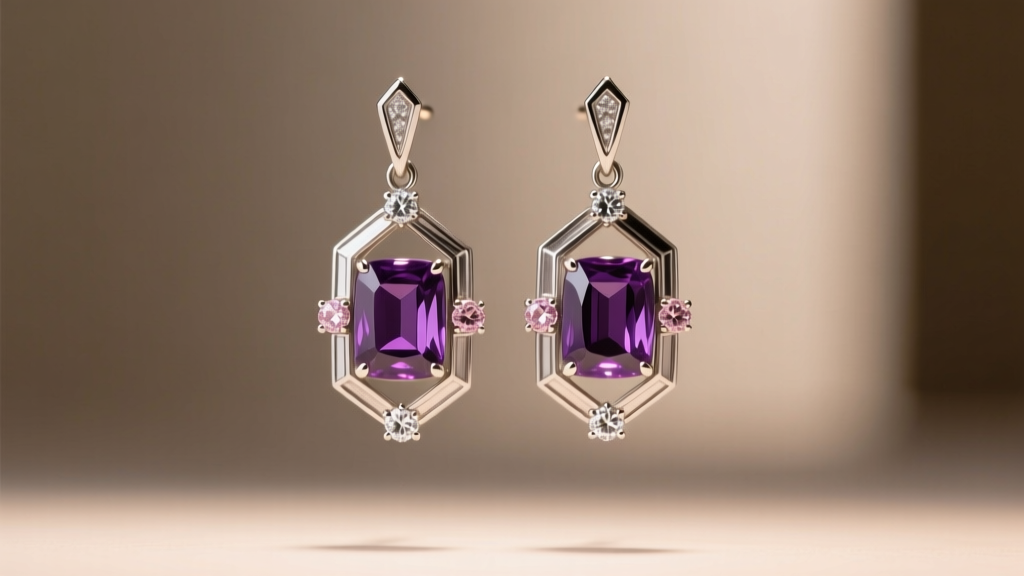
The Gemological Signature of Vintage Amethyst
Evaluating vintage amethyst earrings requires a fundamental understanding of quartz gemology. Amethyst (SiO2) registers a 7 on the Mohs hardness scale and possesses a specific gravity of 2.65. In the context of antique and vintage jewelry, the origin and color saturation of the stone dictate both its historical significance and its market value. The most prized historical specimens are classified as 'Siberian' amethyst, characterized by a deep purple primary hue (75-80%) with secondary flashes of red and blue (15-20%). While true Siberian mines are largely depleted, the term is now used gemologically to describe this specific color saturation, regardless of origin.
When examining amethyst earrings vintage collectors must also look for natural color zoning. Unlike synthetic alternatives, natural vintage stones often exhibit angular color banding—alternating stripes of deeper and lighter purple—when viewed under diffused lighting. According to the Gemological Institute of America (GIA), the presence of these distinct color zones, alongside natural mineral inclusions like negative crystals or 'tiger stripe' fractures, serves as a primary indicator of natural earth-mined origin.
Chronological Anatomy: Decoding the Eras
The design architecture of vintage amethyst earrings shifted dramatically across the 20th century. Identifying the correct era requires analyzing the metal alloys, cutting styles, and structural motifs.
Edwardian (1901–1915): Platinum and Filigree
Edwardian earrings favored platinum, which allowed for intricate, lace-like filigree work. Amethysts from this era were typically cut into oval or cushion shapes and accented with rose-cut or old European cut diamonds. Look for 'milgrain' detailing—tiny beaded edges along the metalwork—which was a hallmark of the period. Because platinum was scarce and expensive, pieces were crafted with extreme lightness and precision.
Art Deco (1920–1935): Geometry and Calibré Cuts
The Art Deco movement introduced stark geometry and high-contrast color palettes. Amethyst earrings from this era frequently feature 'calibré' cuts—custom-faceted stones designed to fit seamlessly into geometric channels or alongside contrasting black onyx. White gold (often 14k or 18k) became a popular, more affordable alternative to platinum. Drop earrings with articulated, dangling geometric plaques are highly representative of this era.
Retro (1935–1950): Bold Gold and Cabochons
Driven by the metal shortages of World War II, Retro jewelry shifted to large, bold designs in 14k rose and yellow gold. Amethysts were often cut as massive, smooth-domed cabochons or large emerald-cut stones. Earrings from this period are predominantly clip-ons or large screw-backs, designed with a three-dimensional, sculptural aesthetic that emphasized volume over intricate detailing.
Technical Authentication: Findings and Hallmarks
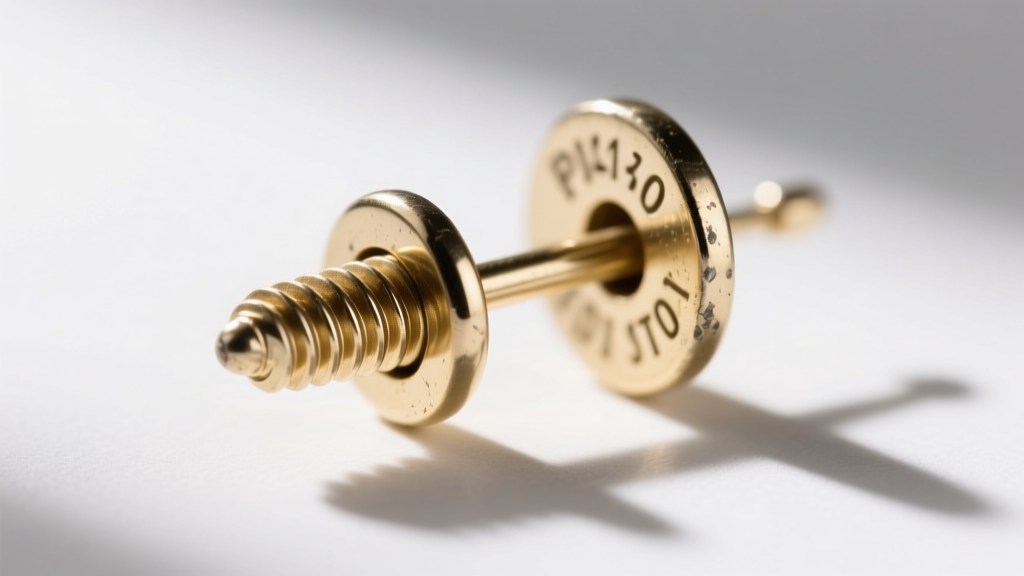
The earring finding—the mechanical clasp or post—is often the most reliable indicator of a piece's age. Over the decades, earring mechanisms evolved to match changing fashion and patent laws. Lang Antiques' Antique Jewelry University notes that analyzing the wear patterns on these findings can separate genuine vintage pieces from modern reproductions.
| Earring Finding | Era of Popularity | Technical Identifiers |
|---|---|---|
| Shepherd's Hook / Kidney Wire | Victorian - Edwardian | Simple wire loop, often lacking a secure clutch; high wear on the insertion curve. |
| Screw-Back (Threaded) | 1920s - 1950s | Patented by Krementz in 1894; features a threaded post and a paddle-shaped nut. Look for worn threads and patent stamps. |
| Clip-On (Paddle Back) | 1930s - 1970s | Hinged metal pad that clips onto the lobe. Early versions lack the comfort pads introduced in the 1960s. |
| Friction Post & Clutch | 1960s - Present | Smooth, notched post. If found on a purported 'Art Deco' piece, it indicates a modern reproduction or a replaced finding. |
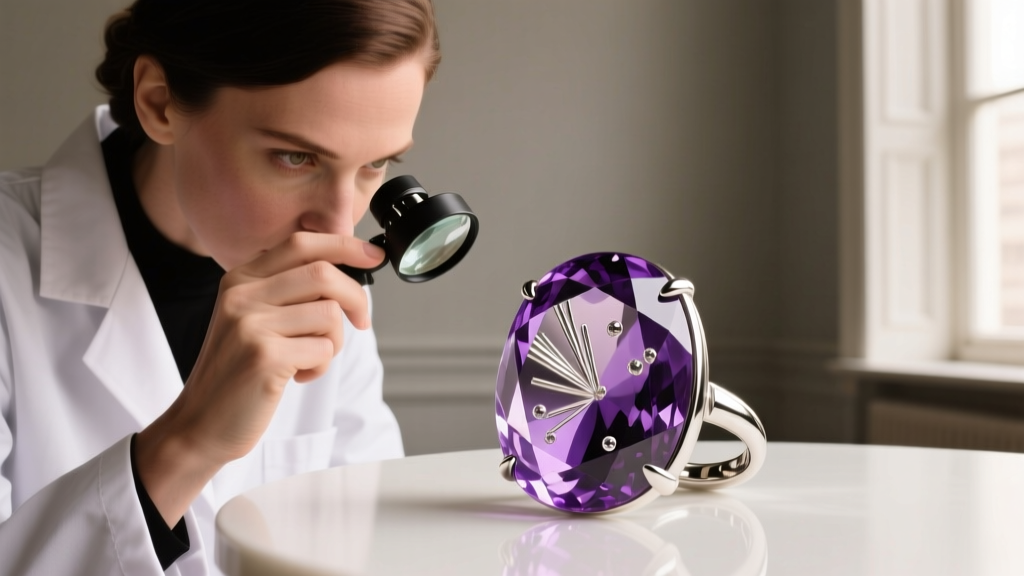
When inspecting screw-backs, use a 10x triplet loupe to examine the threading. Genuine vintage threads will show microscopic wear, polishing marks, and a slight accumulation of patina or cosmetic residue in the grooves. Modern reproductions often feature perfectly sharp, machine-cut threads with no historical wear.
The Synthetic Threat: Hydrothermal Quartz
A critical component of authenticating vintage amethyst is understanding the history of synthetic gemstones. Hydrothermal synthetic amethyst entered the commercial market in the 1970s. Therefore, earrings definitively dated to the Edwardian, Art Deco, or early Retro periods are virtually guaranteed to feature natural stones.
However, for 'vintage' pieces dating from the 1970s and 1980s, gemological scrutiny is required. Synthetic amethyst often lacks natural color zoning, appearing entirely uniform in color. Under high magnification, synthetics may reveal 'breadcrumb' inclusions or the remnants of a colorless quartz seed plate used in the hydrothermal growth process. Natural vintage stones will instead display two-phase liquid-gas inclusions and angular color banding.
Market Valuation and Pricing Tiers
The valuation of vintage amethyst earrings is driven by the rarity of the metalwork, the era, and the quality of the gemstones. Below is a general pricing framework based on current estate and auction market data:
- Edwardian Platinum Drops ($1,800 – $4,500): Command the highest premiums due to the scarcity of platinum filigree and the inclusion of old-cut diamond accents.
- Art Deco Geometric Studs & Drops ($900 – $2,500): Highly sought after for their wearable, modern aesthetic. Calibré-cut stones paired with onyx push these pieces to the upper end of the range.
- Retro 14k Gold Clip-Ons ($600 – $1,600): Valued primarily on the scrap weight of the heavy gold and the visual impact of the large cabochon stones.
- Mid-Century Silver/White Gold Studs ($250 – $600): More accessible entry points, though often featuring lighter, less saturated amethyst stones from Brazilian deposits.
Advanced Care and Restoration Protocols
Amethyst is relatively durable, but vintage settings require specialized care. Never place vintage amethyst earrings in an ultrasonic cleaner. Many historical stones were fracture-filled with lead glass or resins to improve clarity, and ultrasonic vibrations will shatter the stone or melt the filler. Furthermore, prolonged exposure to direct UV light or high heat (such as from a jeweler's torch during prong retipping) can cause the iron impurities in the amethyst to oxidize, permanently turning the purple stone into a yellowish-brown citrine.
Restoration Rule of Thumb: When having a jeweler retip worn prongs on Art Deco or Edwardian earrings, insist on using a heat sink (like tweezers or thermal paste) and laser welding rather than a traditional soldering torch to protect the thermal sensitivity of the amethyst.
For routine maintenance, clean vintage amethyst earrings using only a soft-bristled brush, lukewarm water, and a mild, phosphate-free dish soap. Dry immediately with a microfiber cloth to prevent water spots from settling into the intricate filigree or milgrain details.


