Styling Vintage Boucher Earrings: A 2026 Trend Guide
Discover how to style vintage Boucher earrings in 2026. Explore authentication marks, pricing, and trend insights for Marcel Boucher's iconic designs.

The Resurgence of Archival Maximalism
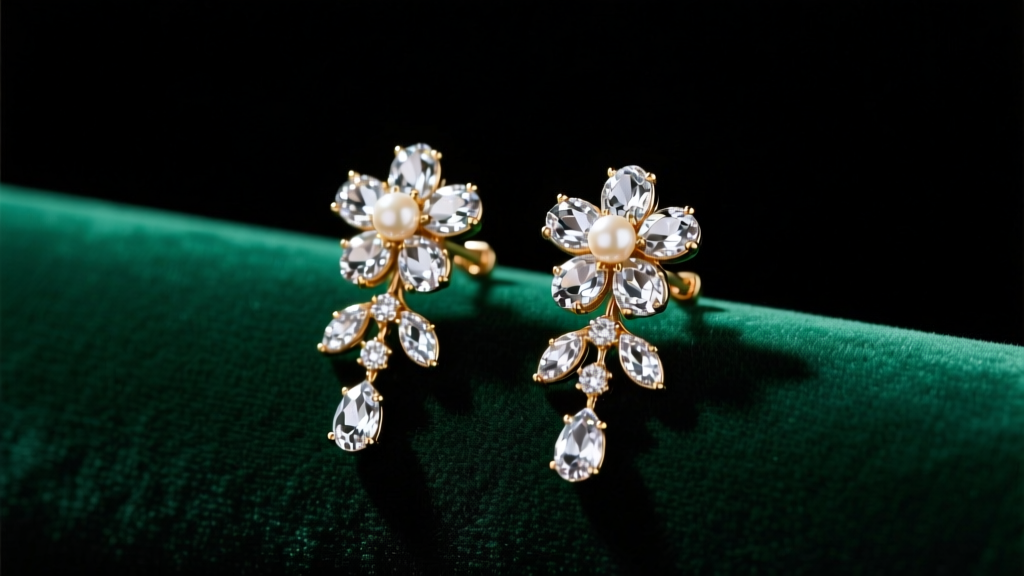
In the landscape of 2026 jewelry trends, the pendulum has swung decisively away from the ultra-minimalist "quiet luxury" aesthetic that dominated the early part of the decade. Today, we are witnessing the rise of "Archival Maximalism"—a movement that champions sculptural depth, historical provenance, and unapologetic glamour. At the very epicenter of this revival are vintage Boucher earrings. Marcel Boucher, a master jeweler who honed his craft at Cartier and Mazer Brothers before launching his eponymous line in 1937, created costume jewelry that rivaled fine jewelry in its architectural complexity and brilliance.
For modern collectors and style enthusiasts, Boucher earrings offer something that contemporary mass-market brands simply cannot replicate: three-dimensional metalwork, intricate pavé rhinestone settings, and a distinct mid-century elegance. Whether you are sourcing pieces for a curated vintage collection or looking for a statement accessory to elevate a modern wardrobe, understanding the nuances of Boucher's legacy is essential. This guide will decode the authentication marks, material science, and 2026 styling frameworks necessary to master the art of wearing Marcel Boucher.
Decoding Boucher Marks and the 4-Digit Matrix
Authentication is the cornerstone of vintage jewelry collecting. Marcel Boucher was meticulous about his branding, but the company's markings evolved significantly from its inception in 1937 until its acquisition by D'Orlan in the late 1970s. According to The Spruce Crafts, identifying the correct hallmark is the first step in dating a pair of earrings and determining its market value.
The Evolution of the Hallmark
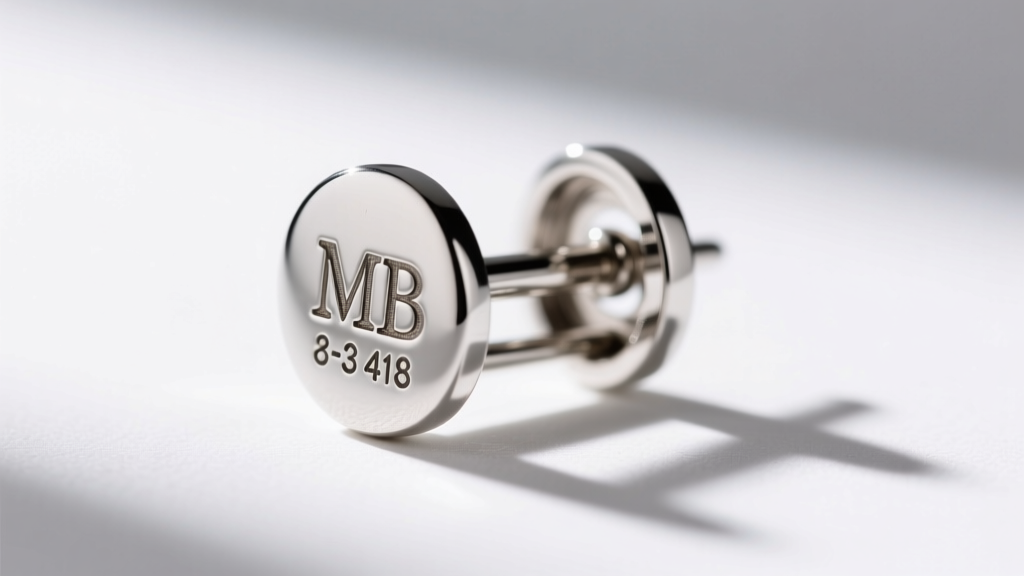
- 1937–Early 1940s: The earliest and most coveted pieces feature the letters "MB" enclosed in a small rectangle. Earrings from this era often exhibit Art Deco influences and heavy, geometric rhodium plating.
- Mid-1940s–1950s: The mark transitioned to a flowing script reading "Marcel Boucher." This era introduced the brand's signature naturalistic motifs, including sculptural florals, birds, and bows.
- Post-1955: You will often find the mark "Boucher" accompanied by a copyright symbol (©). This is a critical dating tool, as the copyright symbol was not widely used on costume jewelry until the mid-1950s.
The 4-Digit Inventory System
Around 1943, Boucher introduced a four-digit numbering system stamped alongside the signature mark. This is a goldmine for serious collectors. For example, numbers in the 8000 series generally correspond to designs produced in the late 1950s and 1960s. Cross-referencing these numbers with archival catalogs or databases like Collectors Weekly can help you identify rare, limited-run designs that command a premium on the secondary market.
Material Science: White Metal, Rhodium, and Rhinestones
To truly appreciate Boucher earrings, one must understand the materials that define them. Boucher was notorious for refusing to compromise on base metals. While many of his contemporaries used cheap, porous "pot metal" that degraded quickly, Boucher favored a dense, high-quality white metal alloy (often a zinc and copper blend) that provided a smooth, flawless canvas for plating.
Common Failure Modes in Vintage Boucher Earrings
When inspecting a potential purchase, be hyper-aware of these specific material vulnerabilities:
- Rhodium Wear-Through: Boucher heavily utilized rhodium plating to mimic platinum. While rhodium is incredibly hard, decades of friction can cause it to wear away at high-contact points (like the edges of clip-on mechanisms), revealing the dull gray base metal beneath. This cannot be easily replated without stripping the piece and risking the rhinestone foil.
- Foil Oxidation ("Dead Stones"): The brilliant sparkle of mid-century rhinestones relies on a delicate silver or gold foil backing. If moisture breaches the prong setting, the foil oxidizes and turns black, killing the stone's refractive index. Always inspect Boucher earrings under a bright LED light; if a stone looks gray or flat, the foil is compromised.
- Aurora Borealis (AB) Dating: Swarovski introduced the iridescent Aurora Borealis finish in 1955. If a pair of Boucher earrings features AB stones, they were unequivocally manufactured in 1955 or later. This is a vital authentication check against sellers misrepresenting pieces as pre-war Art Deco.
2026 Pricing Matrix: What to Pay for Boucher
The vintage jewelry market has stabilized in 2026, with buyers showing a distinct preference for pristine condition and rare motifs over standard floral designs. Based on current market data from platforms like Ruby Lane and recent auction results, here is a realistic pricing framework for vintage Boucher earrings.
| Era & Marking | Style Characteristics | Condition | 2026 Market Value (USD) |
|---|---|---|---|
| Early "MB" Rectangle | Art Deco geometric, heavy rhodium, baguette stones | Excellent (No wear) | $450 - $1,200+ |
| Script "Marcel Boucher" | Sculptural florals, bows, pavé chaton stones | Very Good (Minor foil loss) | $120 - $280 |
| "Boucher" with © | Aurora Borealis drops, enamel accents, dangles | Mint (All stones bright) | $180 - $350 |
| Rare Figurative (Any Era) | Swans, doves, crowns, or unusual animal motifs | Excellent | $600 - $1,500+ |
Styling Frameworks: Wearing Vintage in 2026
The challenge with mid-century earrings is that the vast majority are clip-ons or screw-backs, designed for an era when piercing was less common. Furthermore, vintage clip-on mechanisms were engineered with high-tension springs that can cause significant lobe fatigue. Here is how to seamlessly integrate Boucher earrings into a modern 2026 wardrobe without sacrificing comfort.
Engineering Comfort for Non-Pierced Ears
Do not attempt to bend the metal arms of vintage clip-ons to loosen them; you risk snapping the brittle white metal or warping the structural integrity of the setting. Instead, invest in high-grade silicone clip-on pads. For Boucher's wider, sculptural designs, 12mm or 14mm silicone cushions distribute the clamping force evenly across the lobe. If you are dealing with early screw-back earrings, apply a microscopic drop of clear jeweler's wax to the threads to prevent them from loosening throughout the day without having to over-tighten the screw against your skin.
Face Shape and Silhouette Pairings
Boucher's designs are inherently bold. To wear them effectively, you must balance their visual weight against your facial structure and outfit silhouette:
- Round Faces: Opt for Boucher's elongated drop earrings or geometric Art Deco dangles from the early "MB" era. The vertical lines create an illusion of length, while the sharp angles contrast beautifully with soft facial features.
- Square or Angular Faces: Lean into Boucher's mid-century naturalism. Sculptural floral clip-ons, curved ribbon motifs, and sweeping dove designs introduce organic, softening curves that balance a strong jawline.
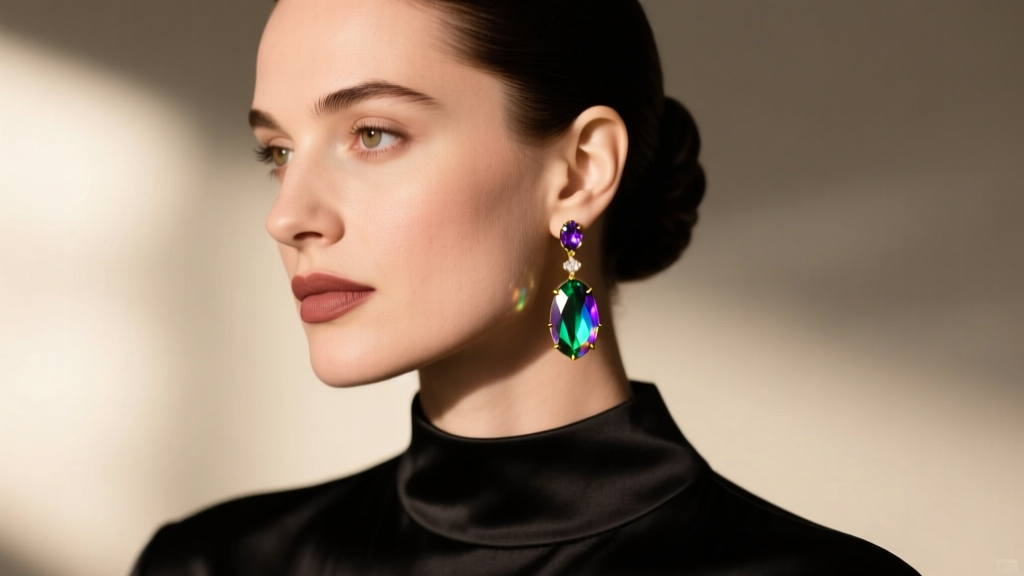
- The 2026 Outfit Formula: Because Boucher earrings are essentially wearable art, they require a canvas that doesn't compete. The prevailing 2026 styling rule is "Archival Maximalism meets Modern Minimalism." Pair heavy, rhodium-plated Boucher clip-ons with a stark, architectural black silk blouse, a structured blazer, and a sleek, pulled-back updo. Let the earrings occupy the negative space around your face.
Sourcing and Avoiding the "Boucher-Style" Trap
As the demand for archival costume jewelry peaks, the market has been flooded with "Boucher-style" pieces. These are not outright counterfeits, but rather unbranded vintage earrings that mimic Boucher's pavé techniques and floral motifs, often produced by lesser-known manufacturers like Selini or unmarked European imports.
Expert Authentication Tip: Flip the earring over. Boucher's backings are as immaculate as the fronts. The metal should be smooth, the prong settings should be uniform and hand-finished, and the clip-on mechanism should feel robust and heavily plated. If the back looks messy, porous, or features generic, stamped-in-place prongs, walk away.
When sourcing, prioritize specialized vintage dealers on Ruby Lane or 1stDibs who provide high-resolution macro photography of the hallmarks and the foil backing of the stones. By understanding the precise history, material science, and styling potential of Marcel Boucher's work, you can confidently curate a collection that bridges the gap between mid-century mastery and 2026's most compelling fashion narratives.


