Vintage Coro Earrings Value Guide: Pricing, Marks & Budget Tips
Discover how to value vintage Coro earrings. Learn pricing tiers, authentication marks, material flaws, and budget tips for collecting Corocraft gems.

The Legacy of Coro: Understanding the Hierarchy
When navigating the 2026 vintage jewelry market, few names command as much respect—and present as many budget-friendly opportunities—as Coro. Founded in 1901 by Emanuel Cohn and Gerald Rosenberg, Coro grew from a small novelty shop into the largest costume jewelry manufacturer in the world. For collectors and budget-conscious fashion lovers, vintage Coro earrings offer a masterclass in mid-century design, but assessing their true value requires looking beyond the glitter. According to Collectors Weekly, Coro's massive production volume means that while some pieces are museum-worthy investments, others are mass-market remnants that should be priced accordingly.
To accurately assess value, you must first understand Coro's internal brand hierarchy. The company did not produce all its jewelry under a single moniker. Instead, they segmented their market with distinct labels, each carrying a different baseline value in today's secondary market:
- Coro (Mainline): The standard, mass-produced pieces. Often made of base metal or sterling silver. Highly variable in value, generally the most budget-friendly.
- Corocraft: Introduced in the late 1930s as a higher-end line featuring better rhinestones, thicker gold wash, and more intricate designs.
- Vendome: Coro's luxury tier, launched in 1944. Vendome earrings often feature high-quality aurora borealis stones, faux pearls, and sophisticated articulated links.
- Regent: A mid-tier line that bridged the gap between standard Coro and Corocraft, often featuring bold, chunky gold-tone designs.
Decoding Coro Hallmarks & Clasp Mechanisms
Authentication is the first step in any budget assessment. A missing or misread hallmark can lead to overpaying for a standard piece or underpricing a rare find. Morning Glory Antiques notes that Coro's hallmarks evolved significantly over the decades, and the stamp style can help date the earrings within a ten-year window.
Key Hallmarks to Look For:
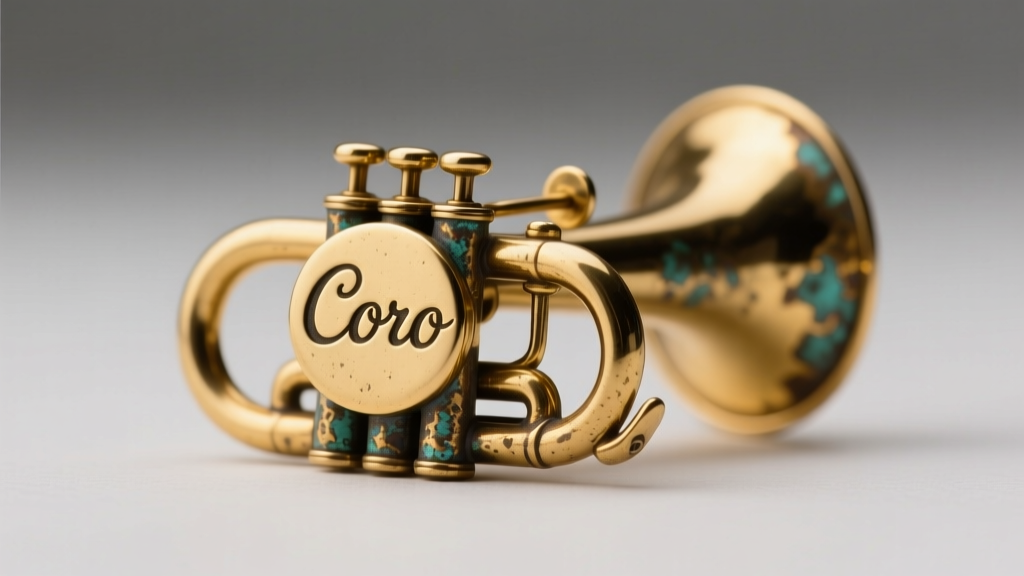
- Coro in Script: Often used in the 1930s and 1940s. If accompanied by a crescent moon, it dates to the late 1930s.
- Coro in Block Letters: Common in the 1950s and 1960s. Less desirable to high-end collectors than the script or earlier Art Deco marks.
- Corocraft / Vendome Script: Highly sought after. Vendome pieces with the 'V' superimposed over a crown are particularly valuable.
- Patent Marks: Look for 'Des. Pat. Pend.' or specific patent numbers. Coro's mechanical innovations, like the Duette, were heavily patented.
Clasp Mechanics as Dating Tools
The earring back is just as important as the front. Pre-1950s Coro earrings frequently utilize trombone clasps (a push-pull tube mechanism) or simple C-catches. Barrel clasps and modern safety catches with rolling latches indicate post-1950s production. Furthermore, nearly all vintage Coro earrings were designed for unpierced ears, utilizing heavy-duty paddle clips or screw-backs. Finding a pair of vintage Coro earrings already converted to pierced posts is common, but purist collectors will deduct 30% to 50% from the value due to the irreversible alteration of the original backing plate.
2026 Market Pricing Tiers for Vintage Coro Earrings
Valuing vintage Coro earrings requires a realistic look at current market data. While high-end auction houses might fetch record prices for rare figurals, the everyday collector operates in a different sphere. Below is a practical pricing matrix to help you assess whether a seller's asking price aligns with the actual market value.
| Value Tier | Price Range (USD) | Typical Characteristics & Lines | Investment Potential |
|---|---|---|---|
| Tier 1: Budget | $12 - $35 | Standard Coro mainline, 1960s block marks, basic geometric clips, minor wear, unbranded rhinestones. | Low (Wearability only) |
| Tier 2: Mid-Range | $40 - $95 | Corocraft lines, early Aurora Borealis (AB) stones, intact enamel, sterling silver vermeil pieces in good condition. | Medium (Stable value) |
| Tier 3: Premium | $100 - $250 | Vendome luxury sets, Coro Sterling 'Duette' double-clips, intricate floral figurals, pristine jelly belly lucite. | High (Appreciates slowly) |
| Tier 4: Collector | $300 - $800+ | 1930s Art Deco Mexican Silver Coro, rare patented mechanical earrings, museum-grade early Coro Craft. | Very High (Auction grade) |
Note: The introduction of Aurora Borealis (AB) rhinestones by Swarovski in 1955 is a hard dating marker. If a pair of Coro earrings features AB stones, they cannot predate 1955, regardless of the hallmark style.
Material Failure Modes: What Kills Coro's Value?
When conducting a budget assessment, you must inspect for structural and material failures. Costume jewelry is inherently fragile, and Coro's manufacturing techniques, while innovative, are prone to specific degradation patterns over a 70-year lifespan.
1. Pot Metal Degradation (Zinc Pest)
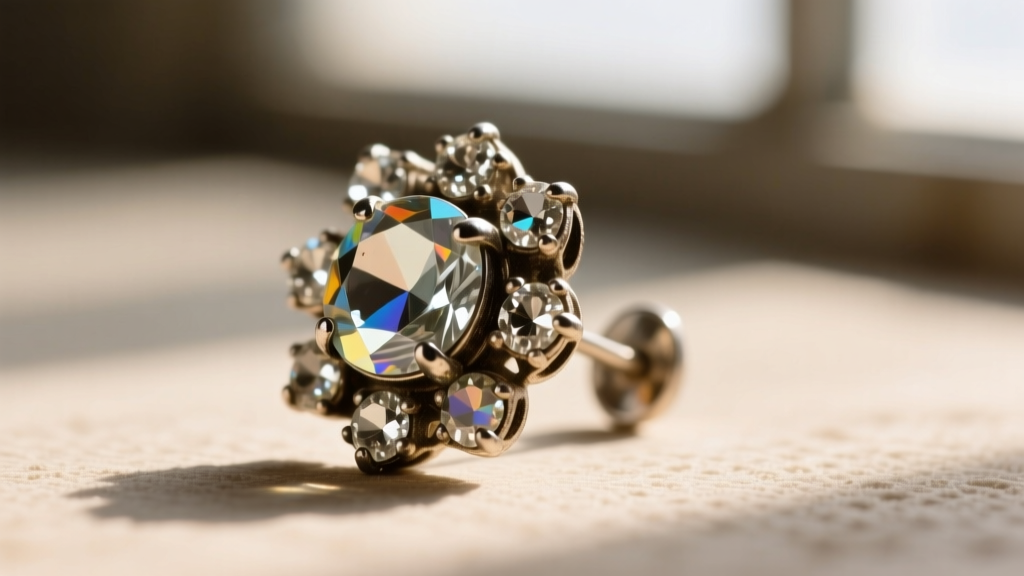
Many mid-century Coro pieces were cast from 'pot metal'—an inexpensive alloy of zinc, lead, and tin. Over decades, impurities in the alloy cause microscopic fissures, a phenomenon collectors call 'zinc pest' or casting disease. When moisture enters these fissures, the metal oxidizes and expands, causing the overlying gold wash or rhodium plating to blister and flake. If you see bubbling on the smooth surface of a gold-tone Coro earring, the structural integrity is compromised. Avoid these pieces entirely, as the metal will eventually crack and shatter.
2. Rhinestone Foil Death
Coro utilized high-quality glass rhinestones, but the sparkle was achieved by gluing a thin silver or gold foil to the pavilion (bottom) of the stone. If the metal prongs holding the stone loosen over time, moisture and skin oils seep behind the glass. This oxidizes the foil, turning the once-brilliant stone cloudy, grey, or completely black. This is known as 'foil death.' While a budget buyer might use this flaw to negotiate a 40% discount, be aware that replacing the stone requires specialized lapidary skills and will strip the piece of its original factory authenticity.
3. Enamel Chipping and Cold Paint Loss
Coro's figurative and floral earrings often featured guilloché enamel or hand-painted cold enamel details. Guilloché (fired enamel) is durable but will chip if dropped, revealing the dark base metal beneath. Cold paint, however, simply flakes off over time due to temperature fluctuations. Missing enamel on a figurative piece like a Coro poodle or bird earring drops the value from Tier 3 down to Tier 1 instantly.
Budget Strategies for Building a Coro Collection
For the savvy buyer, the vintage Coro market in 2026 is ripe with opportunities if you know where to look and what compromises to accept. Here are three actionable strategies to maximize your budget:
- Target 'Franken-Pairs' for Parts or Wear: Many sellers mistakenly pair two single Coro clip-ons that share a similar design but have different hallmarks or slight size variations. These 'franken-pairs' are shunned by serious collectors and sold at a steep discount. If you are buying for personal wear rather than investment, this is an excellent way to acquire high-end Corocraft aesthetics on a Tier 1 budget.
- Embrace Pierced Conversions: As mentioned, converting screw-backs or heavy clips to modern pierced posts destroys the collector value. However, it vastly improves wearability. You can often purchase premium Vendome or Corocraft earrings that have been converted for 50% less than their intact clip-on counterparts. You get the luxury stones and design without the premium collector tax.
- Focus on the 'Coro Sterling' Line: While Coro's base metal pieces are vulnerable to pot metal degradation, their 'Coro Sterling' line (marked clearly on the back) offers the durability of solid 925 silver. These pieces rarely suffer from structural rot, meaning your investment is physically secure, even if the rhodium plating has worn off to reveal the warm yellow silver beneath.
Final Verdict: Are Vintage Coro Earrings Worth the Investment?
Assessing the budget and value of vintage Coro earrings ultimately depends on your end goal. If you are a strict investment collector, you must demand pristine condition, original unconverted clasps, and verifiable hallmarks like the Vendome crown or early script marks, focusing your budget on the $100+ premium tiers. Resources from the Costume Jewelry Collectors International are invaluable for verifying these high-end acquisitions.
However, if you are a style-conscious buyer looking for historical weight, mid-century glamour, and exceptional craftsmanship on a budget, the standard Coro and Corocraft lines remain incredibly undervalued. By learning to identify and negotiate around minor flaws like foil death or cold paint loss, you can secure stunning, museum-quality designs for a fraction of the cost of contemporary luxury jewelry. Vintage Coro is not just a purchase; it is a wearable archive of 20th-century design innovation.