Vintage Jade Drop Earrings Buying Guide: What to Look For
Discover what to look for when buying vintage jade drop earrings. Learn to identify jadeite vs nephrite, spot treatments, and verify antique settings.

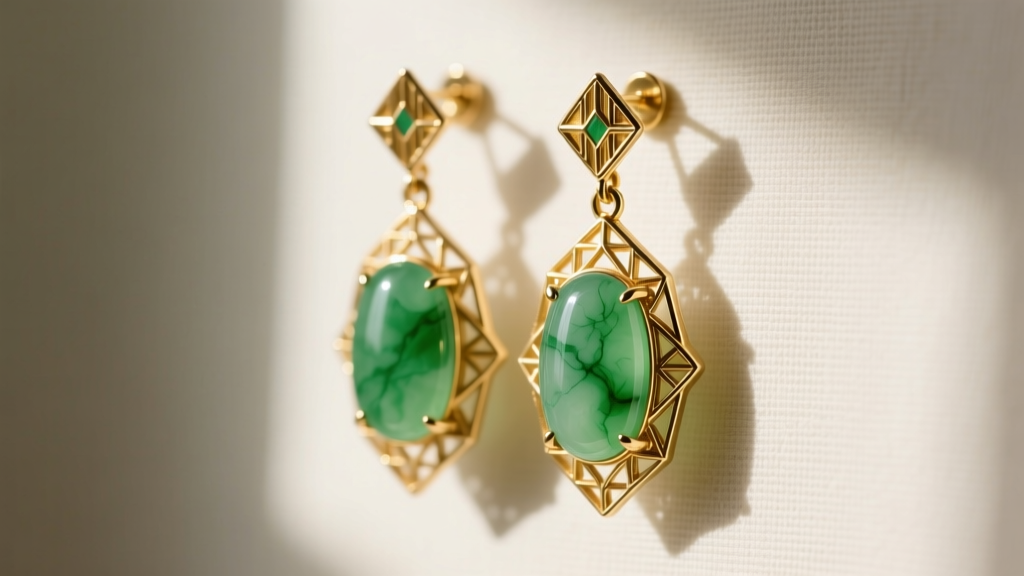
The Enduring Appeal of Vintage Jade Drops
As the 2026 jewelry market continues to pivot toward heritage pieces and "quiet luxury," vintage jade drop earrings have emerged as a highly sought-after category for collectors and everyday wearers alike. Unlike modern mass-produced jewelry, vintage drops offer a tactile connection to history, featuring hand-carved motifs and antique metalwork that cannot be replicated by today's CAD-designed molds. However, navigating the secondary market for antique jade requires a sharp eye. From distinguishing between nephrite and jadeite to identifying mid-century polymer treatments, this comprehensive buying guide will equip you with the gemological and historical frameworks needed to authenticate and appraise vintage jade drop earrings with confidence.
Jadeite vs. Nephrite: Identifying Your Stone
The term "jade" is an umbrella classification that encompasses two distinct metamorphic minerals: jadeite and nephrite. According to the Gemological Institute of America (GIA), understanding the difference between these two stones is the foundational step in evaluating any vintage piece.
Jadeite (Feicui)
Jadeite is the rarer and generally more valuable of the two. It possesses a higher Mohs hardness (6.5 to 7) and a distinct glassy luster when polished. In vintage Art Deco and Mid-Century pieces, jadeite was often sourced from Myanmar (Burma) and is prized for its semi-transparent "glassy" or "icy" varieties, as well as the highly saturated "Imperial Green." Vintage jadeite drops often feature cabochon briolettes or delicate, open-work filigree carvings.
Nephrite
Nephrite is tougher than jadeite due to its interlocking fibrous cryptocrystalline structure, making it a favorite for intricate, deep-relief carvings. It typically exhibits a softer, greasy, or matte luster and ranges in color from mutton-fat white to deep spinach green. Vintage Chinese export earrings from the early-to-mid 20th century frequently utilize nephrite carved into traditional motifs. As noted by The Metropolitan Museum of Art, motifs like the Lingzhi mushroom (longevity) or the Pi Xiu (wealth attraction) carry deep cultural significance and add historical provenance to the drops.
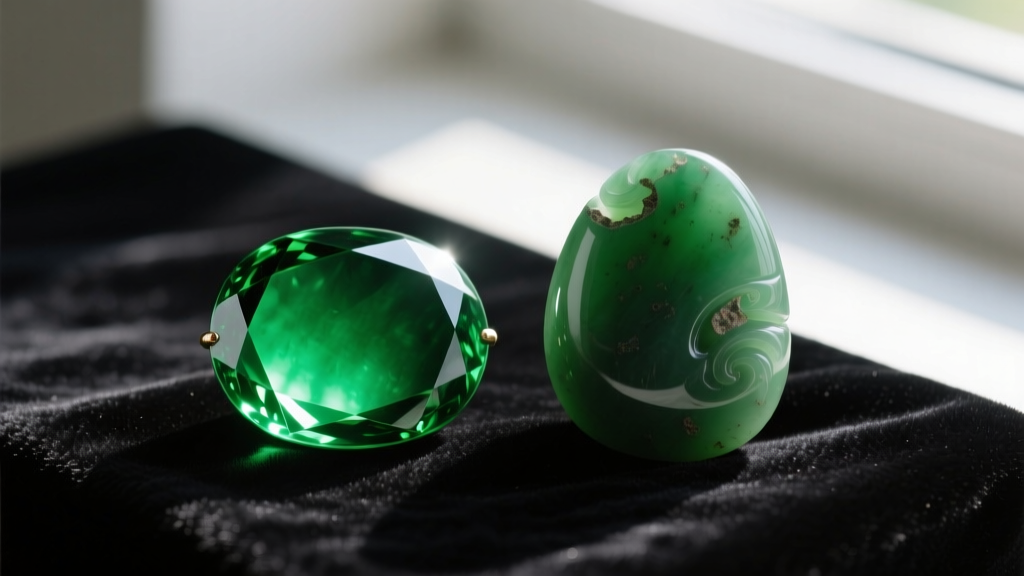
The ABCs of Jade Treatments
When investing in vintage jade drop earrings, verifying the treatment status of the stone is critical. The GIA categorizes jade treatments into three distinct types, which directly dictate the market value and longevity of the earrings.
| Treatment Type | Process | Impact on Vintage Value | Detection Method |
|---|---|---|---|
| Type A | Completely untreated, save for traditional plum-wax surface polishing. | Highest value. Essential for serious collectors and investment-grade vintage pieces. | Visual inspection, UV fluorescence (inert), FTIR spectroscopy. |
| Type B | Acid-bleached to remove brown/yellow impurities, then polymer-impregnated. | Severely diminishes value. Over time, the polymer yellows and the jade becomes brittle. | UV light (shows blueish-white polymer glow), FTIR spectroscopy. |
| Type C | Dyed to enhance or alter color (often to mimic Imperial Green). | Lowest value. Dyes fade over decades, leaving a mottled, grayish stone. | Chelsea filter (may turn pink/red), magnification (dye concentrates in cracks). |
Note: True vintage pieces from the 1920s–1950s should inherently be Type A, as acid-bleaching and polymer-impregnation techniques were not widely commercialized until the late 1970s and 1980s. If a purported 1930s piece tests as Type B, it is either a modern reproduction or a vintage stone that was "rehabilitated" and ruined in recent decades.
Evaluating Vintage Metalwork and Findings
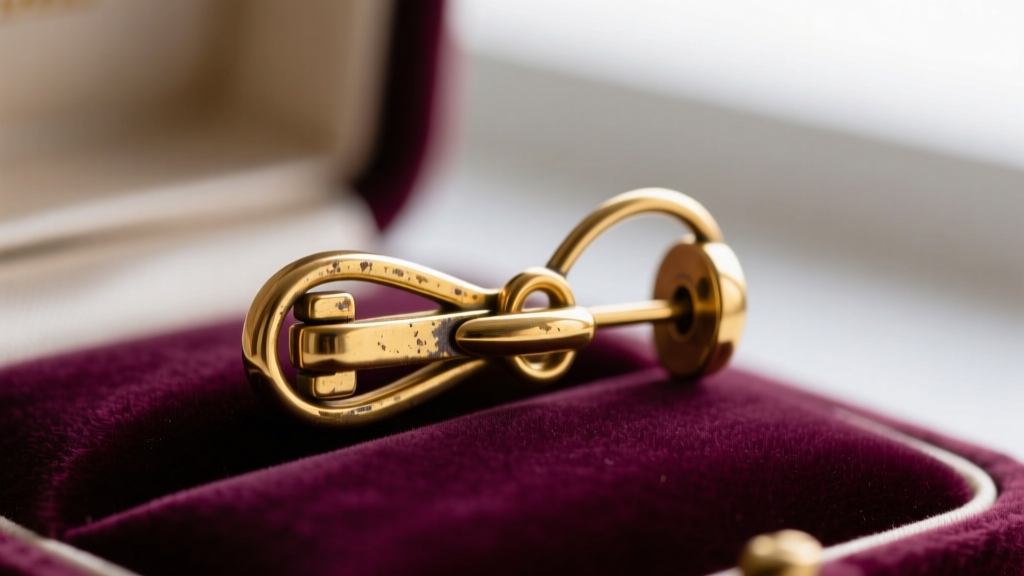
When evaluating vintage jade drop earrings, the metalwork tells as much of the story as the stone itself. The setting, hallmarks, and earring findings (the mechanism that attaches to the ear) are vital for dating the piece and ensuring secure wear.
Decoding the Findings
- Screw-Backs (1920s–1940s): Before the widespread adoption of pierced ears, screw-back findings were standard. If your jade drops feature original, unaltered screw-backs, it is a strong indicator of early 20th-century provenance.
- Early Leverbacks (1950s–1970s): Mid-century vintage drops often utilize simple leverback wires. Look for the thickness of the wire; vintage gauge wire was often slightly thicker (around 18-gauge) compared to the flimsy 20-gauge wires used in modern reproductions.
- Omega Clips & Posts (1980s): If the earrings feature a post with an Omega clip backing, they likely date to the late 20th century, an era characterized by bold, textured yellow gold settings.
Hallmarks and Metal Purity
Authentic vintage settings will typically bear stamps such as "14K," "18K," or "PT" (Platinum). Be wary of unmarked white metal settings, which may be base metals or silver that has been rhodium-plated to mimic platinum. In Art Deco jade drops, platinum or white gold filigree was heavily utilized to contrast with the deep green of the stone. According to GIA Jade Quality Factors, the contrast between the metal setting and the jade's translucency is a major driver of the piece's aesthetic and monetary value.
Market Pricing and Valuation Tiers in 2026
The secondary market for vintage jade has matured significantly. Pricing is no longer based solely on the weight of the gold, but heavily on the translucency, color saturation, and historical integrity of the carving. Here is a general pricing framework for vintage jade drop earrings in today's market:
- Tier 1: Opaque Nephrite & Base Metals ($150 – $400)
Typically mid-century tourist-trade pieces featuring opaque, dark green nephrite set in unmarked silver or gold-washed brass. Valued primarily for their vintage aesthetic and wearable charm. - Tier 2: Type A Jadeite & 14k Gold ($800 – $3,500)
Authentic 1950s-1970s drops featuring mottled or pale-green Type A jadeite cabochons or simple briolettes set in 14k yellow gold. These are highly wearable, durable, and hold their value well. - Tier 3: Imperial Jadeite & Art Deco Platinum ($15,000 – $50,000+)
Museum-quality investment pieces. These feature highly translucent, vivid emerald-green Type A jadeite, often paired with old European cut diamonds in intricate platinum milgrain settings. Provenance from auction houses like Sotheby's or Christie's commands a premium.
Pro-Tips for Authentication and Care
Beyond lab certification, seasoned buyers rely on sensory tests to evaluate vintage jade drops in the field. While not a replacement for a GIA report, these methods can help you weed out glass imitations and dyed quartz.
The Acoustic "Ping" Test: Jadeite has a unique acoustic resonance due to its dense, interlocking crystal structure. If you gently tap a jadeite briolette against another piece of jadeite or a glass surface, it should emit a clear, high-pitched, lingering chime. Nephrite will sound slightly duller, while glass or polymer-impregnated (Type B) jade will emit a flat, dead "clack." Exercise extreme caution to avoid chipping the vintage stone or bending the antique wire.
Finally, care for your vintage drops by keeping them away from ultrasonic cleaners. The high-frequency vibrations can fracture internal fault lines in antique carvings and degrade the silk threads that sometimes connect the jade drop to the metal cap. Instead, clean them gently with a soft, damp microfiber cloth and store them in individual velvet pouches to prevent the metal settings from scratching the stone's polished surface.
Conclusion
Acquiring vintage jade drop earrings is an exercise in historical appreciation and gemological detective work. By understanding the nuanced differences between jadeite and nephrite, rigorously checking for modern polymer treatments, and carefully examining the antique findings, you can confidently build a collection that is both historically significant and visually breathtaking. Whether you are hunting for an opaque nephrite carving with Art Deco flair or a translucent jadeite briolette set in Mid-Century gold, the key lies in prioritizing untreated stones and original, well-preserved metalwork.


