Vintage Moonstone Earrings: A Material & Authenticity Guide
Discover how to identify authentic vintage moonstone earrings. Compare material properties, adularescence, and metal settings in our expert guide.

The Allure and Mineralogy of True Moonstone
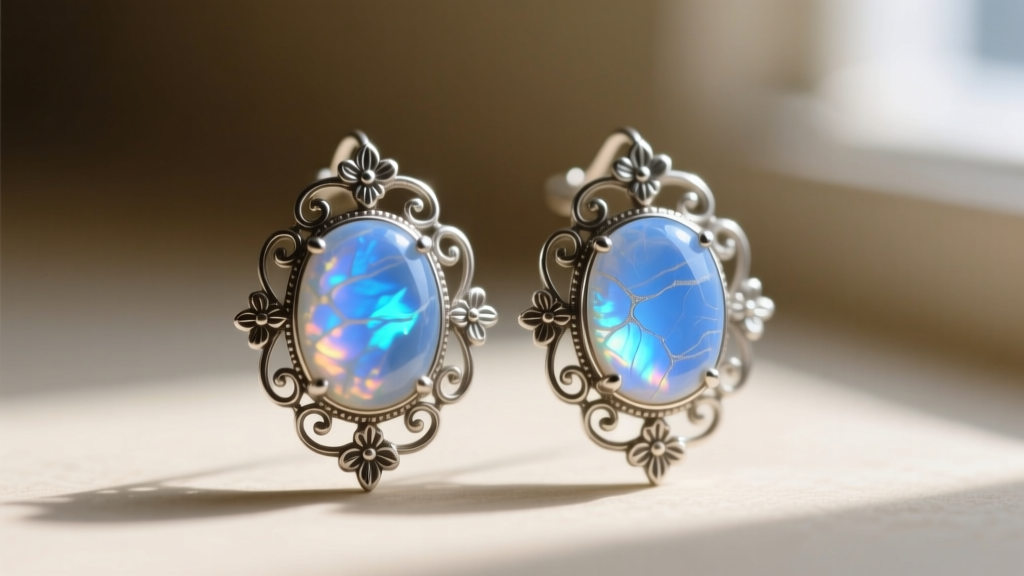
When evaluating vintage moonstone earrings, understanding the underlying mineralogy is the first step in separating genuine antique treasures from modern pastiches. True moonstone is a variety of the feldspar-group mineral orthoclase. Its defining optical phenomenon, adularescence, is caused by the diffraction of light as it strikes alternating microscopic layers of orthoclase and albite within the stone. According to the Gemological Institute of America (GIA), this internal exsolution lamellae structure scatters light, producing that coveted billowy blue or white floating glow.
From a durability standpoint, moonstone presents unique challenges for vintage jewelry wearers. It registers between 6 and 6.5 on the Mohs hardness scale, making it softer than quartz and highly susceptible to scratching. More critically, moonstone possesses two directions of perfect cleavage. This means that a sharp blow or excessive pressure from a tight prong setting can cause the stone to split cleanly along its internal planes. When inspecting vintage pieces, always check the girdle and the base of the cabochon for micro-fractures or cleavage separations.
Material Showdown: Genuine Moonstone vs. Common Imitations
The market for vintage moonstone earrings is heavily saturated with misidentified materials. Sellers frequently conflate different feldspar varieties or outright synthetics with true orthoclase moonstone. Below is a gemological comparison to help you accurately identify the material in your vintage finds.
| Material | Mineral Family | Optical Phenomenon | Refractive Index (RI) | Identifying Inclusions |
|---|---|---|---|---|
| True Moonstone | Orthoclase Feldspar | Adularescence (Blue/White) | 1.518 - 1.526 | Centipede-shaped tension cracks, needle-like inclusions. |
| Rainbow Moonstone | Plagioclase (Labradorite) | Labradorescence (Multicolor) | 1.559 - 1.573 | Dark magnetite inclusions, twinning planes. |
| Opalite | Synthetic Glass | Uniform milky opalescence | ~1.50 (Varies) | Gas bubbles, swirl marks, completely lacks natural layering. |
| Moonstone Glass | Lead/Barium Glass | Foil-backed sheen | 1.50 - 1.70 | Mold marks, high specific gravity, conchoidal fractures. |
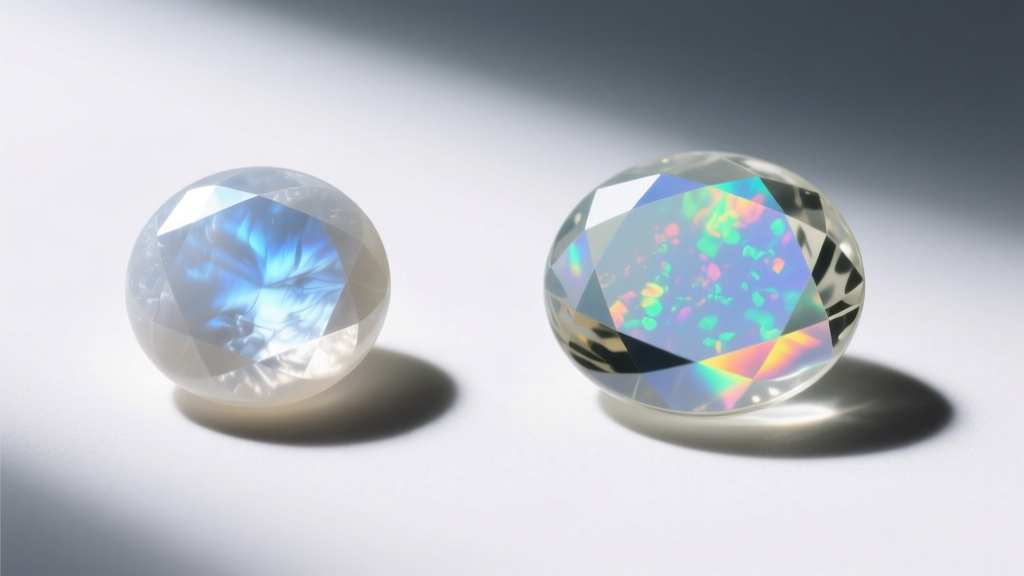
As noted by the Mindat Mineralogy Database, 'Rainbow Moonstone' is technically a misnomer; it is actually transparent to translucent labradorite. While beautiful and historically used in vintage bohemian and Art Nouveau pieces, it possesses a slightly higher density and different refractive index than true orthoclase. Opalite, a man-made glass, became prevalent in the late 20th century and is often artificially aged to mimic vintage moonstone earrings. Under 10x loupe magnification, opalite will reveal spherical gas bubbles, a dead giveaway of its glass origin.
Decoding Vintage Metal Settings by Era
The metalwork accompanying vintage moonstone earrings provides vital clues regarding their authenticity, age, and structural integrity. The interplay between the stone's softness and the metal's tensile strength dictates how well the piece has survived the decades.
Victorian and Art Nouveau (1880–1910)
Moonstone experienced a massive resurgence during the late Victorian and Art Nouveau periods, championed by designers like René Lalique who favored its mystical, ethereal glow. Earrings from this era are typically crafted in 9k or 15k yellow gold, or low-grade silver. Look for rose-cut diamond accents and intricate repoussé metalwork. Because early silver alloys were softer, prong settings from this era may be worn thin, posing a severe risk to the stone's cleavage planes.
Art Deco (1920–1935)
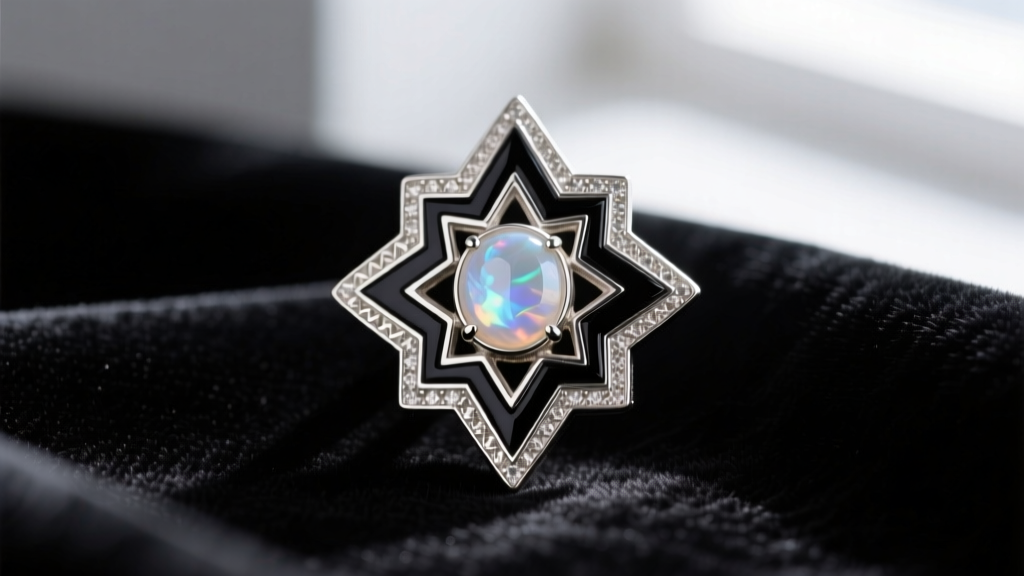
Art Deco designs favored stark geometric contrasts. Vintage moonstone earrings from the 1920s often feature cabochon moonstones set in platinum or white gold, juxtaposed against black onyx or carved jade. Platinum's immense strength allowed for secure, low-profile bezel settings, which are vastly superior for protecting the vulnerable edges of a moonstone cabochon.
1970s Bohemian Revival
The 1970s saw a return to naturalistic, 'earthy' aesthetics. Earrings from this decade are predominantly sterling silver (often stamped .925) and feature heavily included, almost opaque moonstones in elaborate wire-wrapped or bezel settings. While charming, the high sulfur content in the environment often causes these vintage sterling pieces to develop deep, stubborn tarnish in the crevices, requiring careful cleaning to avoid damaging the stone.
The Role of Cut and Cabochon Proportions
The material properties of orthoclase feldspar dictate that it is almost exclusively cut en cabochon to maximize adularescence. For vintage moonstone earrings, the proportions of this cabochon are critical to both optical performance and structural survival. A high-dome cabochon will exhibit a more concentrated, localized flash of light, but it significantly raises the stone's profile, making it vulnerable to lateral impacts against doorframes or hard surfaces.
Conversely, vintage pieces from the mid-20th century often feature flatter, low-dome cabochons. While these offer better physical protection within a bezel setting, the adularescence is spread over a wider surface area, sometimes diluting the intensity of the blue sheen. When examining a vintage pair, hold the earrings under a single, direct light source (such as a penlight) and rotate them slowly. The sheen should glide smoothly across the entire surface of the dome. If the flash is restricted to only one small corner, the stone was likely cut with the albite layers at an improper angle to the base, a common flaw in mass-produced vintage costume jewelry from the 1950s and 60s.
Evaluating Condition and Pricing in the 2026 Market
Pricing for vintage moonstone earrings varies wildly based on era, metal purity, and the quality of the adularescence. In the current collector's market, pieces are generally segmented into three tiers:
- Entry-Level / 1970s Sterling ($80 – $250): Typically features opaque or heavily included stones with weak, white adularescence. Silver settings may show significant oxidation or minor dents.
- Mid-Tier / Edwardian & Retro ($300 – $850): Better quality cabochons with visible blue sheen. Settings often include seed pearls or small transition-cut diamonds in 14k gold or platinum.
- Museum-Quality / Art Nouveau & Signed Art Deco ($1,200 – $5,000+): Pieces featuring exceptional, unbroken blue adularescence, signed by notable houses (e.g., Boucheron, Lalique), or featuring complex plique-à-jour enamel work.
When negotiating a purchase, always factor in the cost of potential restoration. Re-tipping worn prongs on a soft feldspar stone requires a master jeweler who can work without applying thermal shock or mechanical pressure, often adding $100 to $200 to your total investment.
Expert Care Protocols for Feldspar Jewelry
'Never subject vintage moonstone to ultrasonic or steam cleaning. The high-frequency vibrations will exploit the stone's natural cleavage planes, causing internal shattering.'
To maintain the optical brilliance of your vintage moonstone earrings, adopt a conservative cleaning regimen. Use only lukewarm distilled water and a drop of pH-neutral dish soap. Gently agitate with a soft, untreated goat-hair brush—never a stiff toothbrush, which can leave micro-scratches on the 6.0 Mohs surface. Dry immediately with a lint-free microfiber cloth. Store the earrings in a separate, fabric-lined compartment to prevent contact with harder gemstones like sapphires or diamonds, which will easily abrade the moonstone's polished dome.


