How to Wear a Dangly Cross Earring Without Lobe Stretching
Learn how to style and secure a heavy dangly cross earring without stretching your lobes. Expert tips on backings, gauge sizes, and lobe care.

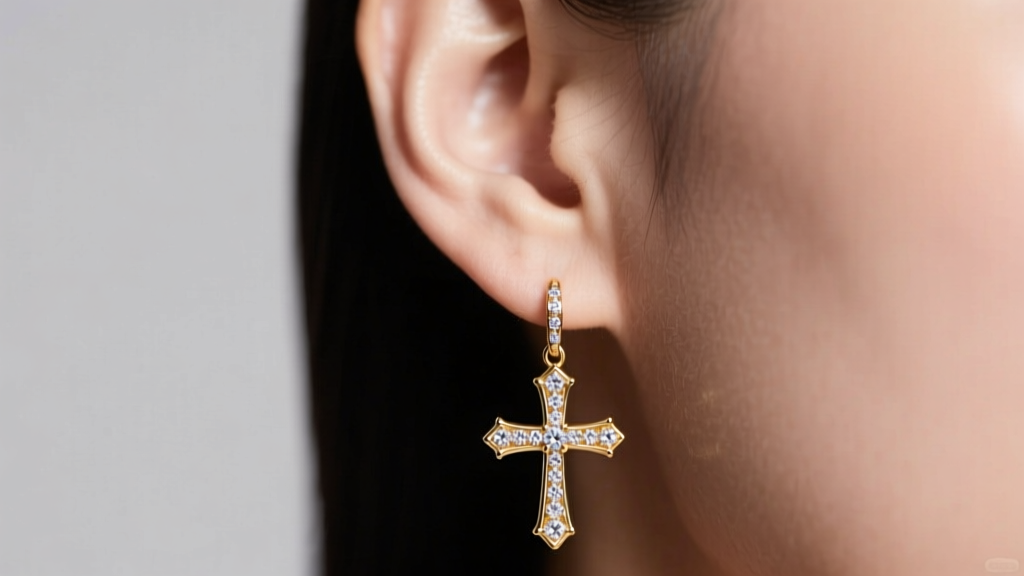
The dangly cross earring is a timeless jewelry staple that bridges the gap between spiritual symbolism, gothic aesthetics, and high-fashion kinetic movement. However, the very feature that makes this style so captivating—the pendulum-like swing—also makes it a primary culprit for earlobe stretching, micro-tearing, and long-term fistula damage. When a heavy cross sways, it creates a lever effect that places disproportionate stress on the bottom ridge of your piercing.
As a senior jewelry stylist, I frequently see clients dealing with elongated piercing holes after years of wearing unsupported dangles. In this comprehensive guide, we will break down the physics of earring weight, provide a step-by-step framework for securing heavy crosses, and share actionable maintenance routines to keep your lobes healthy and perky.
The Physics of the Dangly Cross Earring
To understand how to protect your ears, you must first understand the mechanics of a dangle. Unlike a flush stud that distributes pressure evenly across the fistula (the skin tunnel of the piercing), a dangly cross earring hangs below the pivot point. This creates a class-three lever system. Every time you turn your head, walk, or nod, the kinetic energy multiplies the static weight of the earring.
For example, a static weight of 4 grams can exert up to 10 grams of dynamic downward force on the inferior ridge of your earlobe during normal movement. Over time, this repetitive stress breaks down collagen and elastin fibers in the skin, leading to irreversible sagging. According to guidelines discussed by the Association of Professional Piercers (APP), minimizing dynamic friction and supporting the jewelry's mass is critical for long-term tissue health.
Step-by-Step Guide to Securing Heavy Dangles
Step 1: Assess the Weight and Gauge
Before wearing a new piece, weigh it using a digital jewelry scale. The threshold for safe, all-day unsupported wear is generally 3 grams per earring. If your cross exceeds this, you must implement a support system. Next, check the wire gauge. Standard lobe piercings are usually 20-gauge (0.81mm). However, for a heavy cross, an 18-gauge (1.02mm) wire is vastly superior. The cross-sectional area of an 18G wire is roughly 58% larger than a 20G wire, drastically reducing the 'cheese-cutter' effect that slices through the bottom of the earlobe.
Step 2: Choose the Right Support Mechanism
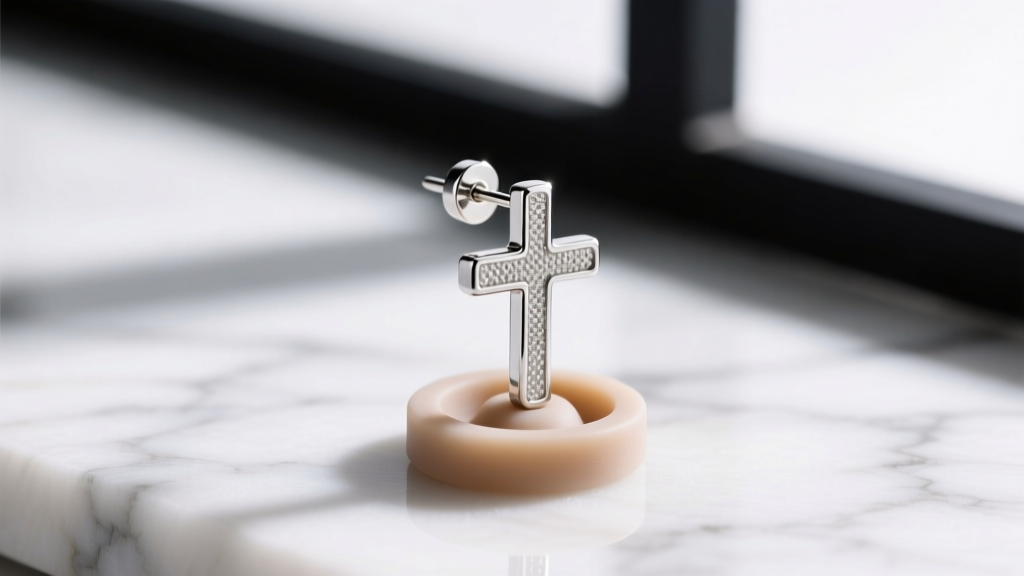
The traditional friction push-back (butterfly clutch) is entirely inadequate for heavy dangles. It provides a single point of pressure and frequently slips down the post, leaving the earring to droop forward. Instead, select a support mechanism based on the specific weight of your jewelry.
| Support Mechanism | Best Weight Range | Pros | Cons |
|---|---|---|---|
| Silicone O-Rings / Discs | 3g - 5g | Invisible, grips the post tightly, cheap. | Can trap moisture if not cleaned daily. |
| Adhesive Lobe Patches | 5g - 12g | Distributes weight across the entire back of the lobe. | Single-use, can irritate sensitive skin adhesives. |
| French Wire with Silicone Sleeve | 4g - 7g | Provides a cushioned buffer against the cartilage ridge. | Sleeves can degrade and tear over time. |
| Screw-Back Clutches | 2g - 4g | Will never fall off or slip down the post. | Does not lift the earring; only secures it. |
Step 3: Insertion and Alignment
When inserting your dangly cross earring, ensure the jump ring (the small loop connecting the cross to the post) is facing forward, not sideways. A forward-facing jump ring allows the cross to swing naturally in a pendulum motion. If it is twisted sideways, the metal will bind, creating torque that pulls awkwardly on the sides of your fistula.
Styling Without the Snags
The geometry of a cross presents a unique styling challenge: the horizontal arms are notorious for catching on loose-knit sweaters, scarves, and hair. A sudden snag can instantly tear an earlobe, turning a beautiful accessory into a medical emergency.
Managing Hair and Necklines
To mitigate snagging, the 'sweater test' is essential. Before wearing your dangles with a knit top, run the earring lightly across the fabric. If the terminals (the ends of the cross arms) are sharp or feature right-angled corners, they will catch. Opt for crosses with beveled, rounded, or teardrop-shaped terminals for winter wardrobes. For hair management, static flyaways are the enemy of dangles. Use a lightweight texturizing spray or a silk scrunchie to keep hair swept away from the ear. If you wear your hair down, tuck the front sections behind your ears and use a discreet bobby pin to anchor the hair away from the earring's swing zone.

Material Selection for Active Days
If you plan to wear your crosses on a busy day with lots of movement, material choice is paramount. Solid 14k or 18k gold is dense and heavy. Instead, look for Grade 23 Titanium (Ti6Al4V) or hollow-cast gold designs. Titanium offers an exceptional strength-to-weight ratio, allowing for larger, more dramatic cross silhouettes without the punishing mass. The Gemological Institute of America (GIA) frequently highlights the rise of alternative metals in fine jewelry specifically for their durability and lightweight properties, making titanium a premier choice for oversized dangles.
Long-Term Lobe Health and Maintenance
Even with the best support patches and proper gauges, wearing heavy jewelry causes fatigue in the earlobe tissue. Implementing a strict recovery protocol is non-negotiable for avid dangle wearers.
- The Two-Day Rule: Never wear heavy crosses (over 5 grams) more than two consecutive days. Give your lobes at least 48 hours of rest with lightweight titanium studs or no jewelry at all.
- Nightly Massage: Apply a drop of pure, cold-pressed jojoba oil or Vitamin E oil to your earlobes before bed. Gently massage the inferior ridge (the bottom of the hole) to stimulate blood flow and maintain skin elasticity.
- Ice Therapy: If your lobes feel tender, throbbing, or elongated after a long day, wrap a small ice cube in a clean paper towel and hold it against the back of the lobe for 60 seconds to reduce micro-inflammation.
'The fistula is living tissue, not a static hole. Treat your earlobes with the same rehabilitative care you would give to a strained muscle after a heavy workout. Rest, circulation, and proper load-bearing support are the keys to lifelong wearability.' — Master Piercer & Jewelry Biomechanics Expert
Final Thoughts
A beautifully crafted dangly cross earring is a stunning addition to any jewelry collection, but it demands respect for the delicate anatomy of the ear. By understanding the physics of the pendulum effect, upgrading to 18-gauge wires, utilizing silicone or adhesive support systems, and practicing rigorous lobe rehabilitation, you can enjoy the kinetic elegance of heavy dangles for decades to come. Never sacrifice the structural integrity of your piercings for the sake of a temporary aesthetic; with the right technical adjustments, you never have to compromise.


