How to Weave and Style Custom Chainmail Earrings
Learn how to weave, assemble, and style custom chainmail earrings. Our step-by-step guide covers jump ring gauges, materials, and face-shape styling.

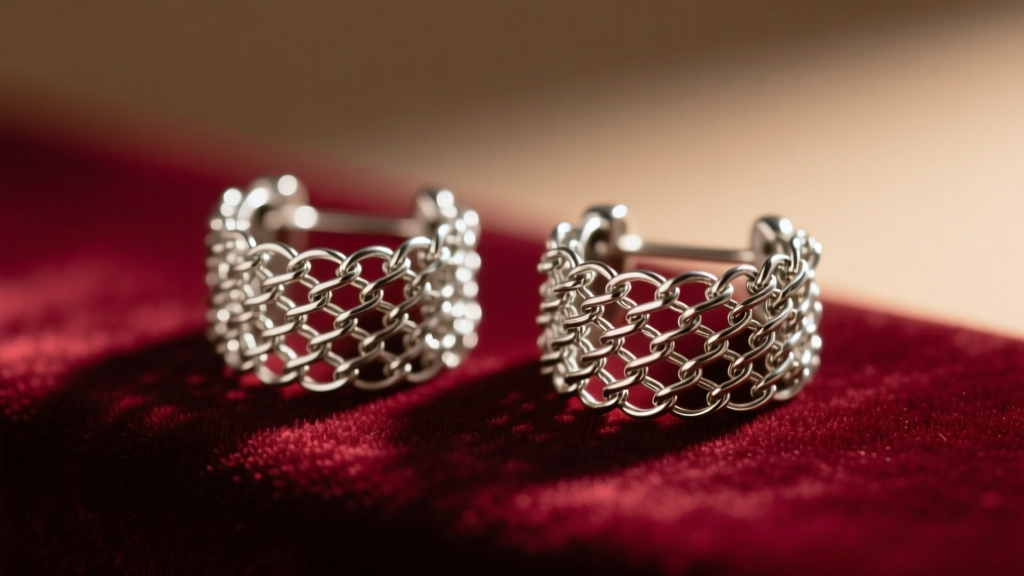
Chainmail earrings have evolved far beyond their historical armor roots, emerging in 2026 as a premier choice for fluid, kinetic jewelry that catches the light with every movement. Unlike rigid cast metals, woven chainmail offers a unique drape and texture, making it a favorite among avant-garde designers and DIY jewelry makers. However, crafting micro-mesh jewelry requires a precise understanding of metallurgy, geometry, and structural integrity. This comprehensive guide will walk you through the exact mechanics of weaving, assembling, and styling custom chainmail earrings, ensuring your creations are both durable and aesthetically flawless.
Understanding the Geometry: Aspect Ratio and Wire Gauge
The foundational secret to successful chainmail jewelry lies in the Aspect Ratio (AR). AR is the mathematical relationship between the Inner Diameter (ID) of the jump ring and the Wire Diameter (WD) of the metal itself. The formula is simple: AR = ID / WD. If your AR is incorrect, the weave will either be too stiff to drape properly or too loose, causing the rings to slip through one another and unravel.
For earrings, weight is a critical factor. We typically rely on the American Wire Gauge (AWG) system. A 20-gauge wire (0.81mm) or 22-gauge wire (0.64mm) provides the perfect balance of structural resilience and featherlight comfort for the earlobe. According to the Maille Artisans International League (M.A.I.L.), maintaining a strict tolerance on your jump ring cuts is vital; the 'kerf' (the gap left by the saw blade) must be flush to prevent snagging on hair or clothing.
Recommended Specifications for Popular Earring Weaves
| Weave Pattern | Ideal Aspect Ratio (AR) | Recommended Wire Gauge | Inner Diameter (ID) | Best Earring Style |
|---|---|---|---|---|
| Byzantine | 3.5 - 4.0 | 20g (0.81mm) | 2.75mm - 3.25mm | Dangle / Drop |
| European 4-in-1 | 4.5 - 5.0 | 22g (0.64mm) | 2.80mm - 3.20mm | Flat Geometric Studs |
| Helm Chain | 4.8 - 5.2 | 18g (1.02mm) | 4.90mm - 5.30mm | Bold Statement Hoops |
| Dragonscale | 3.5 (Large) / 5.3 (Small) | 20g & 22g Mixed | 2.75mm & 3.40mm | Textured Ear Cuffs |
Step-by-Step: Weaving the Byzantine Chain Pattern
The Byzantine weave is a classic, rope-like pattern that offers exceptional flexibility, making it the ultimate choice for dangle earrings. It requires a consistent AR of roughly 3.5. Here is how to execute the weave flawlessly using two pairs of flat-nose jewelry pliers.
Step 1: The Foundation Sequence
Begin by closing four jump rings completely. Open two additional jump rings, thread them through the four closed rings, and close them. You now have a 2-1-2 configuration. This is the base module of the Byzantine chain.
Step 2: Folding and Locking
Take the two rings at the end of your chain and fold them back over the middle two rings, creating a 'U' shape. Hold this fold securely with your non-dominant hand. Take a single open jump ring and pass it through the folded pair to lock them in place. Close the ring tightly.
Step 3: Expanding the Mesh
Open two new jump rings. Pass them through the single locking ring you just placed, as well as through each other. Close them. You have now completed one full Byzantine unit. Repeat Steps 2 and 3 to build the desired length for your earring drop.
Selecting Metals: Hypoallergenic and Tarnish-Resistant Options
When crafting earrings, the metal must interact safely with the skin while maintaining its visual appeal. Standard sterling silver (92.5% silver, 7.5% copper) is prone to rapid tarnishing, especially in the microscopic crevices of a chainmail weave where polishing cloths cannot reach. For high-end, low-maintenance chainmail earrings, consider these premium alternatives:
- Niobium: A highly reactive metal that is completely hypoallergenic. It can be anodized using a simple DC power supply to produce vibrant, permanent colors without dyes. It is exceptionally soft, making it easy to weave, though it does not work-harden like silver.
- Argentium Silver: An alloy containing 93.5% silver and germanium. According to Rio Grande, Argentium is highly tarnish-resistant and fuses to itself without solder, making it a favorite for advanced jewelers crafting seamless jump rings.
- Grade 5 Titanium (Ti-6Al-4V): Significantly stronger than pure titanium, this aerospace-grade alloy is ideal for micro-mesh weaves that require extreme durability without adding bulk. However, it is difficult to cut and requires carbide-tipped saw blades.
Pro Tip: Always purchase pre-cut, sawed jump rings rather than wire-wrapped ones. Wire cutters leave a sharp 'pinch' at the closure point that will scratch adjacent rings and compromise the fluid drape of your chainmail earrings.
Assembling and Securing Your Earring Hardware
The transition from the woven chain to the ear wire is the most common point of failure in DIY jewelry. Never rely on adhesive to secure jump rings; mechanical closure is mandatory. For dangle earrings, a 20-gauge or 18-gauge French hook ear wire is standard.
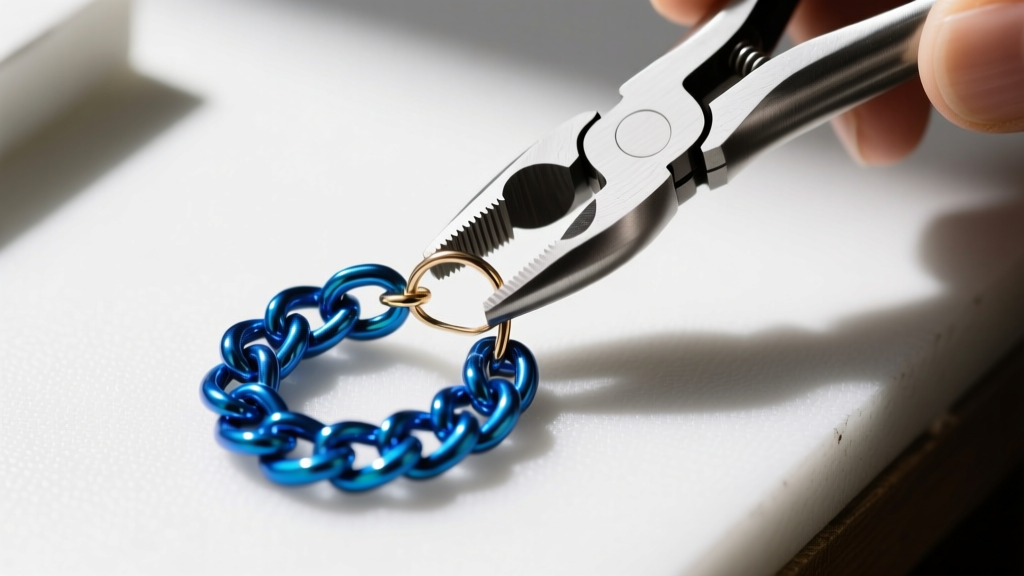
To attach the Byzantine chain to the ear wire, use a heavy-duty jump ring (18-gauge, 4mm ID) as a transition ring. This thicker ring prevents the delicate 20-gauge weave from pulling apart under the kinetic stress of daily wear. Use the 'twist' method to open and close jump rings: grip the ring with two pairs of pliers on either side of the kerf, and twist one hand toward you and the other away. Never pull the ring outward into an oval shape, as this weakens the metal's crystalline structure and prevents a flush closure.

Styling Chainmail Earrings for Your Face Shape
Because chainmail is inherently fluid, it behaves differently than rigid geometric jewelry. The way the mesh drapes can be used to visually balance facial proportions.
Round and Square Faces
Opt for elongated Byzantine or Helm chain drops that extend at least two inches below the earlobe. The vertical lines and kinetic movement of the chainmail draw the eye downward, creating the illusion of a longer, more oval face shape. Avoid tight, clustered weaves that sit flush against the lobe.
Oval and Heart Faces
These face shapes can carry wider, more voluminous weaves like the Dragonscale or European 4-in-1. A shorter, wider chainmail drop or a micro-mesh hoop adds visual weight to the jawline and cheekbones, complementing the natural symmetry of an oval face or balancing the narrower chin of a heart-shaped face.
Maintenance: Cleaning and Storing Woven Metals
Chainmail earrings trap skin oils, cosmetics, and environmental dust within their interlocking rings. Traditional polishing cloths are ineffective for woven mesh. Instead, utilize an ultrasonic jewelry cleaner filled with a mild, ammonia-free surfactant solution. Run the earrings for three to five minutes to dislodge microscopic debris from the kerfs.
For silver and gold alloys, tumble polishing is the professional standard. Place the earrings in a rotary tumbler with stainless steel shot, water, and a drop of burnishing compound. The steel pins will reach inside every woven gap, work-hardening the outer layer of the metal and restoring a brilliant, mirror-like finish without removing any precious metal. Always store chainmail earrings flat or hanging; tossing them into a crowded jewelry box will cause the flexible mesh to kink and tangle, requiring tedious untangling with fine-tipped tweezers.


